REVIEW · CUSCO
Sacred Valley Tour with Machu Picchu by Panoramic Train 2-Day
Book on Viator →Operated by Peruvian Culture Tours · Bookable on Viator
Two days, zero guesswork, big Inca payoff. This Sacred Valley + Machu Picchu trip strings together Chinchero, Moray, Maras salt mines, Ollantaytambo, and then a guided Machu Picchu visit—so you can focus on sights instead of schedules.
I especially like the way the day 1 stops connect culture to place: at Chinchero you’ll hear how textiles use colors from native plants and minerals in an eco-focused way. On day 2, the Machu Picchu guide (often named David) runs a structured 3-hour circuit that hits the Temple of the Sun, Royal Tomb, Intiwatana sundial, the 3 Windows, central square, Sacred Rock, and more. One consideration: you’ll need your passport for entry, and the bus round trip between Aguas Calientes and Machu Picchu costs extra ($24 per person).
In This Review
- Key highlights at a glance
- Why this 2-day Sacred Valley + Machu Picchu plan feels easier than DIY
- Day 1 in the Sacred Valley: Chinchero, Moray, Maras salt mines, and Ollantaytambo
- Chinchero’s textile craft: more than a craft market
- Moray: an Inca laboratory you can actually imagine
- Maras Salt Mines: why these white terraces matter
- Ollantaytambo: the last Inca bastion before the train
- The train to Aguas Calientes: Panoramic style and the value of being already there
- Day 2 Machu Picchu: bus up, passport entry, and a focused 3-hour guided visit
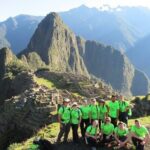
- What you’ll actually see in Machu Picchu during the guided route
- Returning from Machu Picchu: timing that protects your lunch and your train
- Getting back to Cusco and what the included transport really covers
- Meals, hotel, and pacing: the practical comfort pieces
- Price and value: is $668 fair for what you get?
- Who should book this Sacred Valley + Machu Picchu private tour
- Should you book Panoramic Train 2-Day Sacred Valley and Machu Picchu?
- FAQ
- How long is the Sacred Valley Tour with Machu Picchu by Panoramic Train?
- What’s the pickup time in Cusco on day 1?
- What’s included in the price?
- Do I need a passport for Machu Picchu?
- Is the bus from Aguas Calientes to Machu Picchu included?
- What does the Machu Picchu guided tour cover?
- Can I change or cancel the tour after booking?
Key highlights at a glance
- Chinchero textiles with plant-and-mineral color knowledge rather than a quick photo stop
- Moray as an ancient Inca laboratory plus time for lunch in Maras
- Maras Salt Mines in the Sacred Valley, with a longer on-site window
- 3-hour guided Machu Picchu route covering the main temples and signature spots
- Hotel in Aguas Calientes included so the night after the train is handled
Why this 2-day Sacred Valley + Machu Picchu plan feels easier than DIY
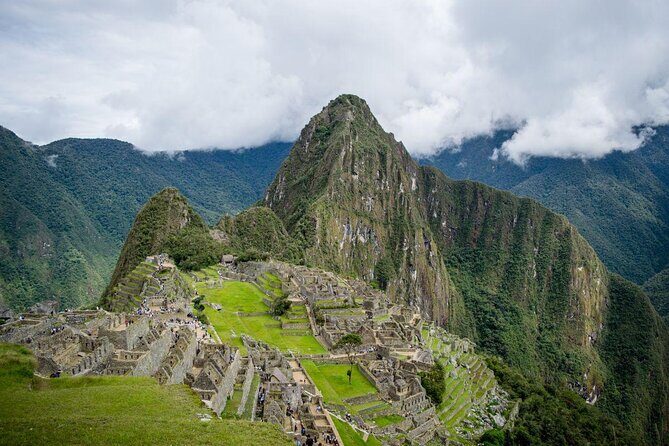
Machu Picchu is famous, but it’s also logistics-heavy. This trip reduces the stress by tying together the trains, the overnight in Aguas Calientes, local transport through the Sacred Valley, and a guided visit of the citadel.
The biggest value is how the experience is sequenced. You see the Sacred Valley archaeology first, then you sleep in the base town for Machu Picchu, then you go early the next day. That alone makes the whole thing feel calmer, because you’re not trying to cram the Sacred Valley sites into the same day as your Machu Picchu entry.
You also get a private setup. Your group only participates, and the transport is handled as private Cusco–Sacred Valley transport, plus a transfer when you arrive back in Cusco after the train.
You can also read our reviews of more tours and experiences in Cusco

Day 1 in the Sacred Valley: Chinchero, Moray, Maras salt mines, and Ollantaytambo
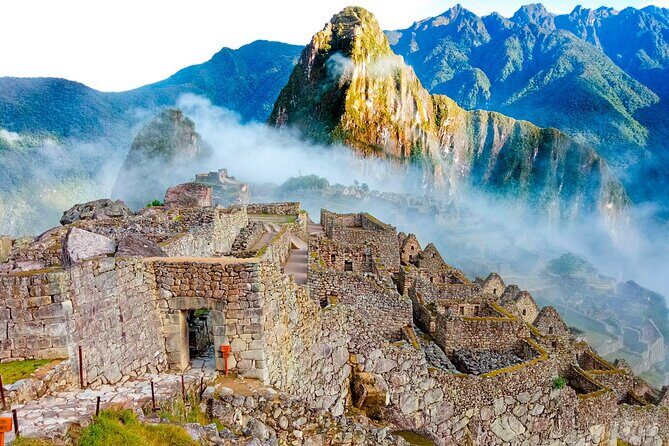
Day 1 starts with pickup from your hotel around 7:00 am. From there, it’s a full day of archaeological and cultural stops that builds a sense of how the Inca world worked across agriculture, craft, and water management.
Chinchero’s textile craft: more than a craft market
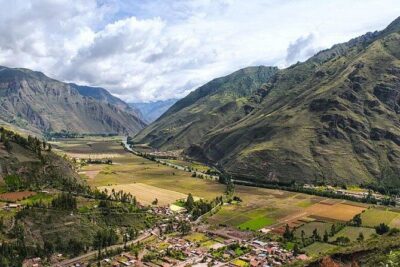
Chinchero (about 2 hours) is your first major cultural stop. You’re brought to the archaeological center, and the focus includes artisanal textile work—specifically how colors come from native plants and minerals, using an ecological approach.
What I like here is the payoff for people who care about meaning, not just landmarks. Chinchero gives you context you can carry into the rest of the Sacred Valley stops. Even if you’re not a “textile person,” it helps you notice craft and resource knowledge as part of Inca life, not something separate.
Possible drawback: since it’s a craft-and-history stop in a busy circuit, you’ll want to pace yourself and take your time with details. If you’re the type who gets restless during guided explanations, plan on bringing your attention back to the physical setting often.
Moray: an Inca laboratory you can actually imagine
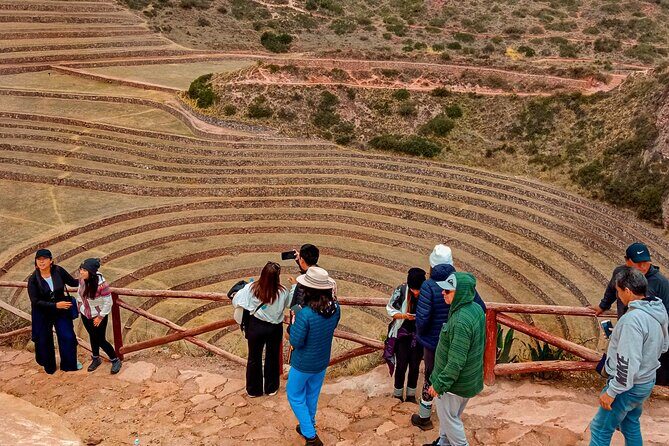
Next is Moray (around 1 hour). It’s described here as an ancient Inca laboratory. You’ll visit the archaeological center and explore as part of the same day’s flow.
Moray tends to feel like a “how did they think of this” kind of place. The site’s design makes it easier to picture experimentation with growing conditions. And because it’s short, you don’t lose the momentum of the day.
The timing works too: after Moray, you’ll enjoy lunch in the district of Maras. That break helps because the rest of the day includes descent and walking around the salt areas and then the transfer to dinner and the station.
Maras Salt Mines: why these white terraces matter
Then comes Salt Maras (about 2 hours). You’ll descend toward the salt mines located in the Sacred Valley of the Incas, where salt is harvested.
This is one of the stops that turns the Sacred Valley from “scenery and ruins” into “human industry.” The salt terraces are practical and physical. You’re not just looking at history; you’re seeing a landscape shaped by repeated work.
The main consideration is pace and comfort. Two hours down in and around the salt mines means you’ll likely be standing and walking more than at a typical city viewpoint. If you’re sensitive to uneven ground, comfortable shoes matter.






Ollantaytambo: the last Inca bastion before the train
You finish day 1 at Ollantaytambo (about 2 hours). The description frames it as the last Inca bastion. You’ll visit the archaeological center, have dinner in the town of Ollantaytambo, and then go to the train station.
This is a smart transition stop. Ollantaytambo is a historical anchor, but it’s also where the day pivots from sightseeing to travel. You get dinner time before you board, and you’re not arriving at the station hungry and rushed.
The train to Aguas Calientes: Panoramic style and the value of being already there
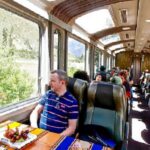
After Ollantaytambo, you take the train to Aguas Calientes, the base town for Machu Picchu. The ride is listed as about 3 hours, and you spend the night there in a hotel that’s included.
Even if you’re not a train fan, this part has real value. Aguas Calientes is where the rhythm of your Machu Picchu day begins. Staying overnight means you can wake up without an early scramble and get up to the citadel with the morning bus.
Also, you’re not left guessing about which end of the route you’ll start from. The package includes Expedition Touristic train ticket one way and Panoramic train ticket one way, matching the spirit of “do it for you” travel.
Day 2 Machu Picchu: bus up, passport entry, and a focused 3-hour guided visit
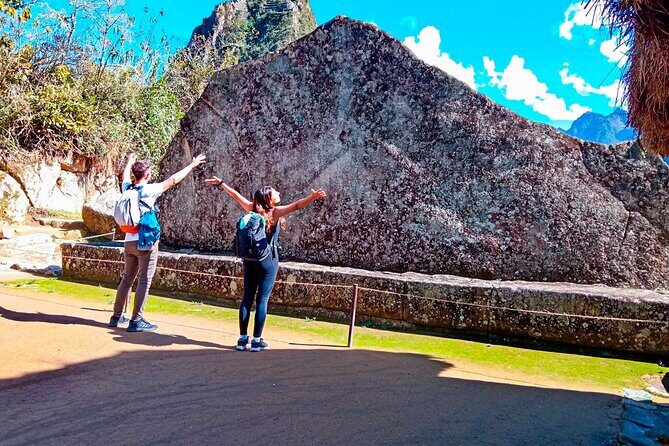
Day 2 begins early in Aguas Calientes. You board a bus up to the citadel of Machu Picchu, about a 40-minute journey.
Then you hit control points. Entry requires a Machu Picchu entrance ticket arranged by the guide and your personal passport. After you pass in, you get a 3-hour guided Machu Picchu tour.
This is the part where you’ll feel the difference between “I went there” and “I understood what I saw.” The guide explanation is tied to specific structures and engineering.
What you’ll actually see in Machu Picchu during the guided route
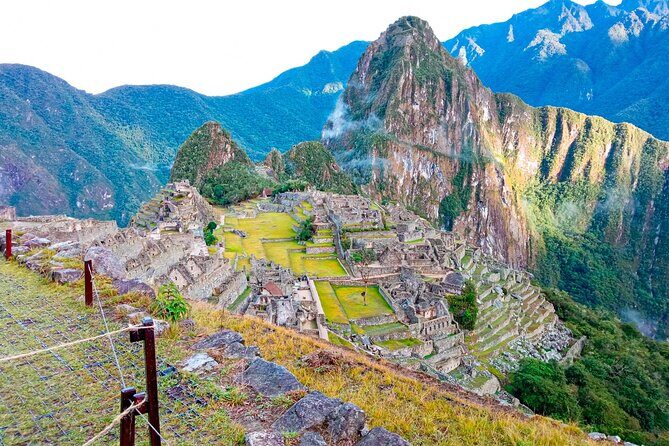
Your Machu Picchu tour includes observing Inca architecture and hydraulic engineering, plus key sites throughout the citadel. The tour also includes picture time at classic photo spots and guided visits to major landmarks.
Here’s the set of highlights you should expect during the tour:
- Temple of the Sun
- Royal Tomb
- Intiwatana sundial
- Temple of the 3 Windows
- Central square of Machu Picchu
- Sacred Rock of Machu Picchu
- Temple of the Condor
- plus other essential sites named as part of the route
I like that the list isn’t just “big view + photos.” It’s a guided walking sequence through recognizable anchors, and it pairs visuals with explanations about how the place worked.
One practical tip: you’ll want your energy for the full 3 hours, because Machu Picchu isn’t a drive-up-and-stroll. You’re moving between zones and listening while still keeping an eye out for photo moments.
Returning from Machu Picchu: timing that protects your lunch and your train
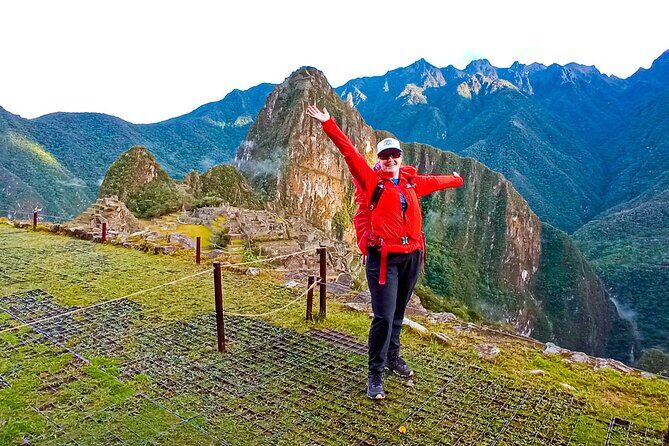
After the tour, the plan is to go back down to Aguas Calientes. You’re advised to return no later than 3 hours before your train, so you can have lunch at good restaurants in town.
Then it gets more precise: arrive at the Machu Picchu train station 35 minutes before your train departure to Ollantaytambo.
That may sound fussy, but it’s practical. Peru travel runs on time buffers, not exact minute precision. This timing guidance helps you avoid the common trap of rushing because you misread how long the down-bus and town return take.
Getting back to Cusco and what the included transport really covers
Once the train ride takes you from Aguas Calientes to Ollantaytambo (listed as 2 hours), a representative waits for you. You then take a 2-hour transport back to Cusco, and arrive in the evening.
This is a helpful inclusion because Cusco logistics can eat time. Having the transfer already built into the plan keeps the last day from turning into an unplanned puzzle.
Meals, hotel, and pacing: the practical comfort pieces
This package includes breakfast, lunch, and dinner, plus the hotel in Aguas Calientes.
On day 1, the day’s structure gives you meals that match the day’s rhythm: you start with breakfast, you get lunch during the Sacred Valley circuit, then you have dinner in Ollantaytambo before the train. Day 1 also ends with dinner and an overnight in Aguas Calientes.
On day 2, you’ll have time for a lunch option in Aguas Calientes before the train. Drinks at dinner time are not included, so budget for that if you drink.
Pacing-wise, the day 1 stops are scheduled back-to-back. That’s ideal if you want a full day, but if you’re the type who likes long unstructured downtime, you might feel “always moving.” The tradeoff is you see more Inca-world sites in one trip window.
Price and value: is $668 fair for what you get?
At $668 per person for a 2-day experience, the real question is what’s absorbed and what’s left for you to pay.
Included:
- Breakfast, lunch, and dinner
- Entrance tickets for Chinchero, Moray, Salt Mines (Maras), Ollantaytambo
- Entrance ticket to Machu Picchu Sanctuary (arranged for you)
- Private transport through the Sacred Valley
- Hotel in Aguas Calientes
- Train tickets one way each segment
- Transfer from Ollantaytambo back to Cusco
Not included:
- Bus tickets round trip between Aguas Calientes and Machu Picchu: $24 per person
- Drinks at your dinner time
- Tips
When you add it up, the $668 looks like value if you care about reducing friction. Machu Picchu alone is a ticket-and-timing game. Here, the entrance ticket process is handled by the guide, and the overnight stay in Aguas Calientes is already part of the plan. That removes a lot of decision fatigue.
So I’d frame the price as a “pay for coordination” cost, not just a sightseeing fee.
Who should book this Sacred Valley + Machu Picchu private tour
This is a good fit if:
- You want a private experience for your group, not a huge mixed crowd
- You like guided explanations and want the Machu Picchu visit structured
- You prefer trains and overnight logistics handled for you
- You want a strong one-day Sacred Valley sample: Chinchero crafts, Moray, Maras salt mines, and Ollantaytambo
It might not be your top choice if:
- You dislike tight schedules and long guided blocks
- You’re trying to keep costs ultra-low, since the package still requires you to cover the bus round trip ($24 per person) and meals’ drinks
Should you book Panoramic Train 2-Day Sacred Valley and Machu Picchu?
I’d book it if you want the classic Peru duo—Sacred Valley plus Machu Picchu—without the coordination headache. The combination of hotel in Aguas Calientes, a guided 3-hour Machu Picchu route, and the full-day Sacred Valley circuit makes it a practical way to get maximum meaning per day.
The decision comes down to one thing: how much you value someone else handling timing and tickets. If that’s your priority, this plan fits well. If you’re confident piecing everything together and you’re on a strict budget, you might compare it to DIY options where you control every line item.
FAQ
How long is the Sacred Valley Tour with Machu Picchu by Panoramic Train?
It’s about 2 days, with day 1 focused on the Sacred Valley sites and day 2 dedicated to the Machu Picchu guided visit and the train back.
What’s the pickup time in Cusco on day 1?
Pickup is around 7:00 am from your hotel in Cusco.
What’s included in the price?
Included are breakfast, lunch, dinner, private transport in the Cusco–Sacred Valley route, entrance tickets for Chinchero, Moray, Salt Mines, and Ollantaytambo (day 1), the Machu Picchu entrance ticket (day 2), the hotel in Aguas Calientes, and train tickets one way plus the return transfer back to Cusco.
Do I need a passport for Machu Picchu?
Yes. You’ll need your personal passport to pass control points for entry to Machu Picchu, where the entrance ticket is arranged by the guide.
Is the bus from Aguas Calientes to Machu Picchu included?
No. Bus tickets round trip between Aguas Calientes and Machu Picchu cost $24 per person and are not included.
What does the Machu Picchu guided tour cover?
The tour lasts about 3 hours and includes guided explanations of Inca architecture and hydraulic engineering, visits to major sites such as the Temple of the Sun, Royal Tomb, Intiwatana sundial, the Temple of the 3 Windows, central square, Sacred Rock, and the Temple of the Condor, plus classic photo spots.
Can I change or cancel the tour after booking?
No. The experience is non-refundable and cannot be changed for any reason. If you cancel or request an amendment, the amount you paid will not be refunded.