REVIEW · CUSCO
Classic Inca Trail Trek 4D/3N to Machu Picchu (Group Service)
Book on Viator →Operated by Alpaca Expeditions · Bookable on Viator
The classic Inca Trail is a serious wake-up call. This 4D/3N group trek with Alpaca Expeditions pairs the hard-earned trail with indigenous guides and chef-cooked campsite meals, so you’re not just moving through history. You also roll right into Machu Picchu via the Sun Gate, which feels like the whole point of the day.
I love how much support you get for a physically demanding route. You’ll hike with a small group (max 14), and the operation is built around keeping people together, including safety systems like a satellite phone and first-aid trained guides. There’s also a strong culture-focus here, with guides who explain what you’re seeing and even email the lecture materials after.
The main drawback is simple: this trek is tough. Day 2 climbs to Dead Woman’s Pass at 4,215 meters, and you’ll have early mornings plus the need to plan your sleep setup since a sleeping bag isn’t included.
Key Points to Know Before You Go
- Pick-up at 4:20 am in Cusco plus a briefing the night before, so you start organized
- Dead Woman’s Pass (Warmi Wañusqa) at 4,215 m makes day 2 the hardest push
- Happy hour at camp and meals cooked on-site keep energy up on summit days
- Safety-first kit includes satellite phone, oxygen tank, first-aid trained guides, and extra support from a guide behind the group
- Machu Picchu from Sun Gate (Intipunku) means you get a different first view before the guided circuit
- Small group and camp setup with tents used for two people each and a personal porter up to 7 kg
In This Review
- Why the classic Inca Trail route beats a day trip to Machu Picchu
- Price and logistics: what $795 really buys you
- Cusco pick-up at 4:20 am, plus the briefing that keeps the trek calm
- Day 1: Km 82 to Llactapata, and camp setup that feels like a luxury
- Day 2: Dead Woman’s Pass and Runccuracay, the day you’ll feel in your legs
- Day 3: Phuyupatamarka and Intipata, then Wiñay Wayna to save energy
- Day 4: Sun Gate (Intipunku) arrival, a guided Machu Picchu circuit, and train home
- Guides, porters, and the safety net you should care about on this trek
- Food and camp comfort: the stuff that keeps morale up past the hard parts
- Pacing and fitness: how to prepare for the steep days without burning out
- Who should book this Inca Trail group trek (and who should think twice)
- Should you book this Classic Inca Trail Trek with Alpaca Expeditions?
- FAQ
- What is the duration of the Classic Inca Trail Trek to Machu Picchu?
- Does the tour include hotel pick-up in Cusco?
- What is included with the trek meals?
- Is camping included, and what kind of tents do you use?
- Do I need a sleeping bag or trekking poles?
- How big are the groups?
- What about Machu Picchu tickets and Huayna Picchu?
- What happens if poor weather cancels the experience?
Why the classic Inca Trail route beats a day trip to Machu Picchu
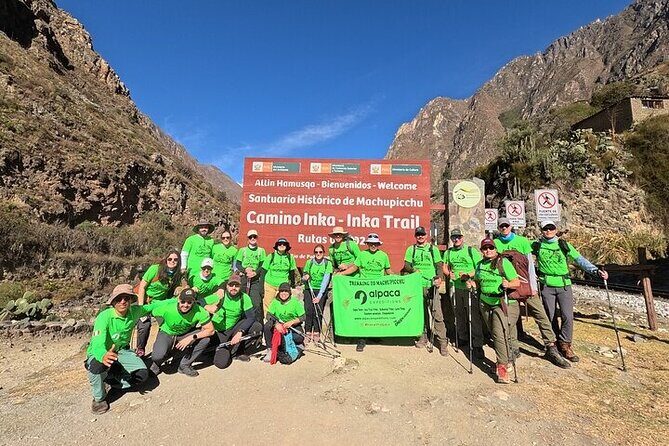
Machu Picchu is the headline, but the Inca Trail is the real story. Doing it this way means you earn your arrival. You don’t just arrive at a viewpoint and look up at stonework—you hike the same kinds of paths that link Inca sites across ridges and valleys.
What makes this route extra satisfying is the way the big moments are spaced out. You start on ancient trail segments, hit key Inca sites along the way, then come into Machu Picchu from the Sun Gate (Intipunku). That “first view” moment matters. It turns Machu Picchu from a photo stop into a lived-in arrival.
And because this is a group service with strong guide support, you get context while you walk. The guides are local and indigenous, and they’re set up to talk about what you’re seeing rather than just pointing and moving on.
Price and logistics: what $795 really buys you
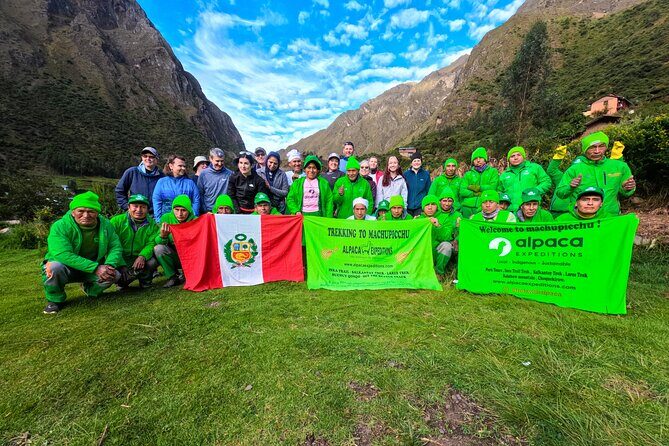
At $795 per person, you’re paying for far more than “a hike plus a ticket.” This package includes a lot of the stuff that usually eats budget time and energy when you try to DIY it.
Here’s what’s built in:
- Hotel pick-up in Cusco and transfers as part of the schedule
- Entrance tickets for the Inca Trail and Machu Picchu entry
- Camping setup (Eureka tents used for two people)
- A personal porter carrying up to 7 kg per person
- All meals: 4 breakfasts, 3 lunches, and 3 dinners, plus drinkable water during the trek
- A tourist-class train to return on the last day
- Safety gear support: first-aid kit, oxygen tank, and satellite phone
- A portable chemical toilet for the group
What’s not included:
- Sleeping bag, trekking poles, and air mats (these may be available for rent)
- Tips (optional)
- Travel insurance
So the value math is basically: you’re paying to show up with less planning and less gear pressure, while someone else handles the heavy logistics. If you want a “less stressful” version of a bucket-list trek, this price fits the model.
You can also read our reviews of more hiking tours in Cusco



Cusco pick-up at 4:20 am, plus the briefing that keeps the trek calm
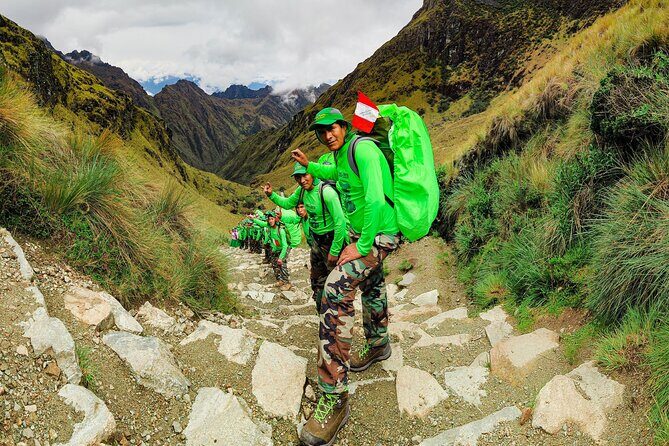
This trip runs on early starts, and that’s not a marketing trick. You’re picked up from your hotel in Cusco at 4:20 am, then you head toward the area around Ollantaytambo.
The night before, there’s a briefing at 6:00 pm in the office. That matters because it sets expectations. You’ll know what to do with your pack, what to focus on physically, and how the day flow works. When you get to the trail start, you’re not guessing.
Once you reach the porters’ house in Ollantaytambo, breakfast is ready. Then you drive roughly an hour to the trek start around Km 82 (Piscacucho). From there, you’ll spend some time getting organized before you begin hiking along the ancient path.
One small practical tip: plan to keep your “grab fast” items accessible for the cold mornings. You’ll be moving early, and you won’t want to play zipper gymnastics while everyone waits.
Day 1: Km 82 to Llactapata, and camp setup that feels like a luxury
Day 1 is your on-ramp. You start at Km 82 and hike toward Llactapata, your first Inca site stop. The day is about 7 hours of walking time, including breaks and the flow to lunch and camp.
After breakfast and setup, you’ll move from trailhead energy into that steady Inca Trail rhythm. Llactapata gives you a first sense of how the ruins relate to the terrain—Inca sites weren’t placed randomly, and the views help you understand why.
Lunch is served at your lunch spot, and this is where the “it’s not just survival” part kicks in. The team of porters and trekking chefs cook meals at camp. You’ll have a hot lunch, then you’ll settle into the first campsite.
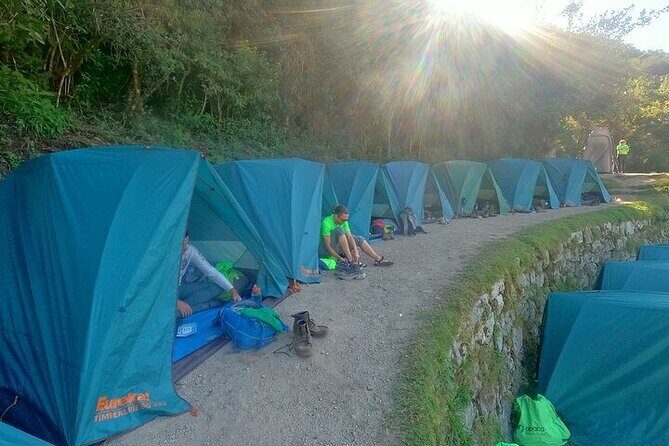
For your sleep setup: you’ll get camping tents (Eureka tents used for two people). What you won’t get is a sleeping bag, trekking poles, or an air mat—so if you’re bringing your own gear, this is where you’ll notice the difference.
Day 2: Dead Woman’s Pass and Runccuracay, the day you’ll feel in your legs
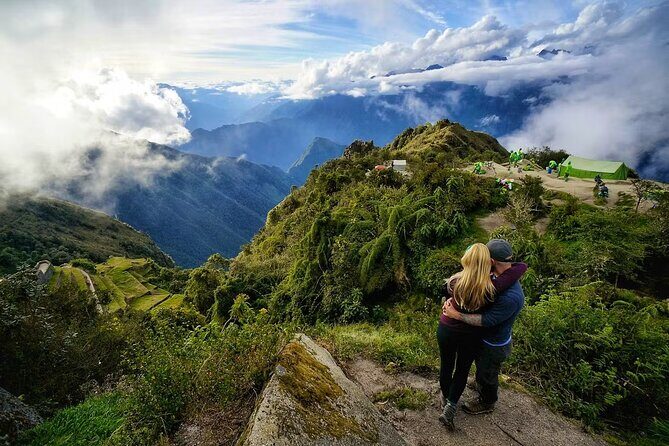
Day 2 is the hardest day, and the itinerary is built around that reality. After breakfast, you begin a 4-hour ascent to the highest point: Warmi Wañusqa (Dead Woman’s Pass) at 4,215 meters.
This isn’t the kind of climb you rush. You pace it. You focus on steady effort and controlled breathing. At the top, you get big views down the trail and across the ridges. Then you descend toward the river area.
After rest, you start the ascent to the second pass: Runccuracay Pass. Once you reach it, you also get archaeological context right alongside the scenery, plus two waterfalls in the view. The day then pushes down toward Chaquicocha (Dry Lake) where you sleep.
By the time you reach camp, your legs will know what happened. This is where the trek rewards you: you’re not just tired—you’re done with the toughest part. And camp life helps. There’s a happy hour provided by the trekking chef, then a dinner you’ll appreciate more than you expect after a long day.
If you’re going in for your first multi-day hike, this is the day you should treat like training. Slow is fast. Keep moving consistently rather than sprinting uphill in bursts.
Day 3: Phuyupatamarka and Intipata, then Wiñay Wayna to save energy
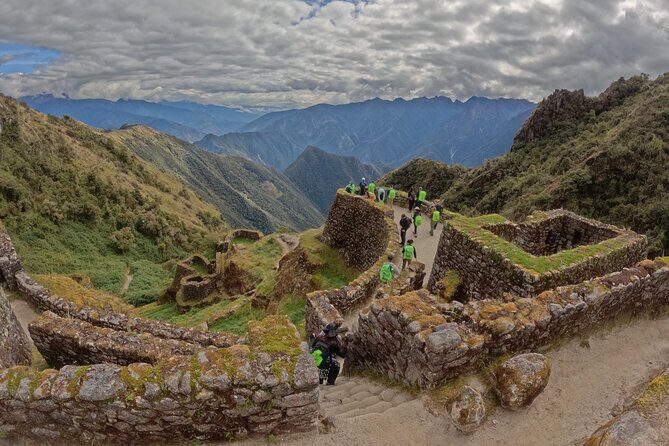
Day 3 is about “last hard effort, then payoff.” You start with amazing views, including glimpses of snowy peaks like Salkantay and the Vilcabamba region. Then the climb begins toward Phuyupatamarka (Town in the Clouds) at 3,600 meters.
A few hours of hiking later, you’ll have those ridge-top moments where you can see the Urubamba River and catch a distant look at Machu Picchu. That’s a morale boost. It makes the final day feel real instead of theoretical.
Then you walk down for about 3 hours to the last campsite, passing through sites like Phuyupatamarka and Intipata (Terraces of the Sun). Lunch is served at the last campsite, and then you continue to Wiñay Wayna (Forever Young), which is the biggest Inca Trail site you’ll hit on this schedule.
Even though Wiñay Wayna is a major stop, the day overall is easier than Day 2, which helps you save energy for Machu Picchu. You get the mix: effort, scenery, and sites without turning Day 3 into a second Dead Woman’s Pass.



Day 4: Sun Gate (Intipunku) arrival, a guided Machu Picchu circuit, and train home
Day 4 starts early again, after breakfast. Then you hike about 2 hours to Sungate (Intipunku). This is your “different view” moment—seeing the Machu Picchu area from the Sun Gate changes how the whole complex reads. It feels like you’re approaching from the Inca way of thinking, not the modern line of entry.
After your stop at Sun Gate, you continue into Machu Picchu for a guided tour lasting about 2 hours. Your guide covers the key parts of the citadel, and you’ll have time to ask questions as you move.
If you bought Huayna Picchu tickets (not included, listed at $75 each and you need to book in advance), you’ll have an extra hike after the guided circuit. That’s a big optional commitment, so only do it if you feel strong on your feet.
After the tour, your guide waits for you at Aguas Calientes. Then there’s lunch, and you head to the train station for the return by tourist-class train.
Guides, porters, and the safety net you should care about on this trek
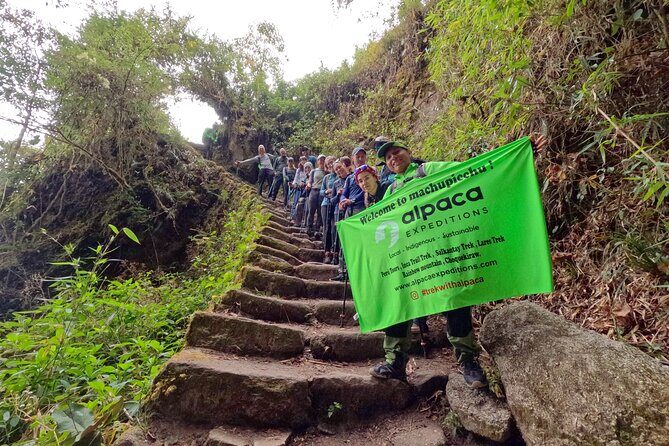
The strongest part of this trip is how it’s managed on the ground. You’re not dropped into the mountains with a vague plan. You’re hiking with an experienced team and a system that prevents stragglers.
One of the operational details I really like: there’s always at least one guide behind the group. That reduces the chance that someone gets isolated when they’re slowing down from altitude, fatigue, or just a bad moment.
Safety tools are part of the package too: first-aid kit, oxygen tank, and a satellite phone. And the porters aren’t an afterthought. You get a personal porter up to 7 kg per person, which is a huge deal when you’re carrying only the essentials and not your whole world.
The guide team is also local and indigenous, with educational content about Inca history. And there’s a nice extra: after the trek, lecture materials get emailed to you in written form.
In the reviews that shaped expectations, you’ll see guide names like Tino, Rodrigo and Soledad, Jose and Nancy, and others such as Jaime, Jan Carlo, Nilton, Isaac, Liz Andro, and Cipian. The point isn’t the celebrity of the names. The point is that the company uses a stable, prepared crew that people remember for being supportive and organized.
Food and camp comfort: the stuff that keeps morale up past the hard parts
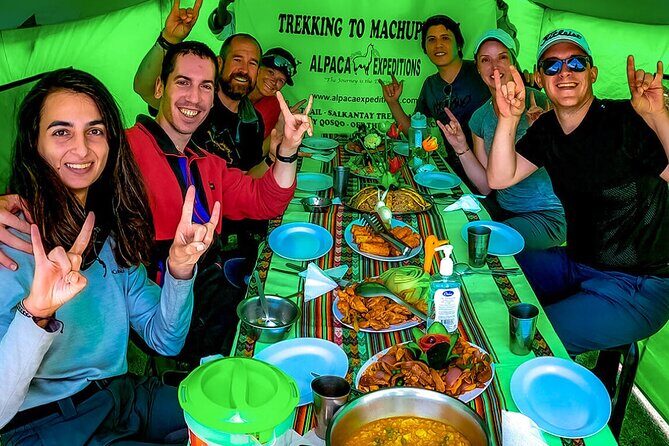
This trek runs on fuel. The good news is that the crew cooks meals at camp, not just “something warm.” The itinerary includes multiple breakfasts, lunches, and dinners, and the repeated theme in feedback is that the meals are genuinely good.
You’ll have:
- Hot lunch at the Day 1 lunch spot
- Dinner every night after a long hike
- A happy hour on Day 2
- Drinkable water provided along the trek
That “happy hour” detail sounds small, but it changes how you feel when the climb is done. It’s not just a snack. It’s a mental shift from effort to recovery.
On comfort, you’re sleeping in spacious tents designed for real overnight use (Eureka tents used for two people). You also have a portable chemical toilet for the group, which is part of why the camp setup stays clean and functional.
The one thing to plan carefully: your sleeping bag. Since it’s not included, you’ll want to either bring one or confirm the availability of rentals before you go. Cold nights can make a tough trek feel worse than it needs to.
Pacing and fitness: how to prepare for the steep days without burning out
This is rated for people with moderate physical fitness. In plain language, that means you should be comfortable walking several hours and handling steep sections without panicking.
The schedule is a hint:
- Day 1: about 7 hours
- Day 2: about 9 hours, with major climbs
- Day 3: about 5 hours
- Day 4: about 3 hours total for the final approach, tour time, and transfers
Your best strategy is pacing. On Day 2, you’ll be climbing to Warmi Wañusqa and you’ll feel the altitude and the grade. A steady pace wins over fast bursts.
Practical prep that helps:
- Train for uphill walking before you arrive in Cusco
- Don’t start Day 2 like you’re chasing a finish line
- Keep your layers ready for cold mornings
- Don’t ignore hydration, especially on the steepest climbs
And yes, you will have early mornings. That’s part of the deal on the Inca Trail. The bright side is you get the trail when the day is still fresh.
Who should book this Inca Trail group trek (and who should think twice)
This tour fits best if you want:
- A guided Inca Trail experience with expert local indigenous guides
- A small group setup (max 14)
- Chef-cooked meals and real camp organization
- Machu Picchu access via Sun Gate for a more meaningful arrival
- Safety support with oxygen and satellite phone systems
It also works well for people who want support on a first big overnight trek. Some feedback mentions it being a first major multi-day hiking experience, even for older hikers in mixed groups, with the key help coming from the team’s support.
You might think twice if you’re not comfortable with steep climbs and early wake-ups. Day 2 is truly the “make or break” day physically, and you should only book if you’re willing to take it slow and work through it.
Should you book this Classic Inca Trail Trek with Alpaca Expeditions?
If your main goal is to do the Inca Trail properly, with a well-run camp, strong safety systems, and guided meaning at the ruins, this is a strong choice. The value holds up because so much is included: meals, tents, porters, entrance fees, transfers, and the train.
Book it if:
- You want the classic 4D/3N experience to Machu Picchu via Sun Gate
- You’d rather pay for organization than gamble on logistics
- You want support for altitude days and long climbs
Consider another option if:
- You don’t want to deal with sleeping bag needs and early mornings
- You’re unsure about Day 2’s steep climb demands
For most people, the payoff is exactly what you came for: a real Inca Trail journey, not just a Machu Picchu photo mission.
FAQ
What is the duration of the Classic Inca Trail Trek to Machu Picchu?
It runs about 4 days (4D/3N), with hiking and camping for three nights and Machu Picchu on the final day.
Does the tour include hotel pick-up in Cusco?
Yes. The team picks you up from your hotel in Cusco at 4:20 am.
What is included with the trek meals?
Breakfast and lunch are included on the route, along with dinner each night. The schedule includes 4 breakfasts, 3 lunches, and 3 dinners.
Is camping included, and what kind of tents do you use?
Camping is included. You sleep in Eureka tents used for two people.
Do I need a sleeping bag or trekking poles?
A sleeping bag and trekking poles are not included, but they may be available for rent. An air mat is also not included.
How big are the groups?
The tour has a maximum of 14 travelers.
What about Machu Picchu tickets and Huayna Picchu?
Machu Picchu entrance is included. Huayna Picchu tickets are not included and cost $75 each, with advance booking required.
What happens if poor weather cancels the experience?
The experience requires good weather. If it’s canceled due to poor weather, you’ll be offered a different date or a full refund.