REVIEW · CUSCO
Half-Day Cusco City Tour: Four Ruins, Cathedral and Qorikancha
Book on Viator →Operated by Machu Picchu Peru Cusco · Bookable on Viator
Cusco gets complicated fast, and that is the point. This half-day tour pulls you through the places where Inca Cusco and Spanish Cusco overlap, with a small max group size and commentary that helps you make sense of what you’re seeing. I especially like the max 12-person group, since it keeps questions flowing and the pacing from feeling like a cattle run.
Second, I like that the itinerary goes beyond the two obvious stops and adds four archaeological sites that many first-timers miss. The one drawback to keep in mind is cost: the tour price does not include site entrance, and on a couple runs the guiding may not match every group’s expectations, so you’ll want to be clear about what you want to see.
In This Review
- Key things to know before you go
- A tight, smart route: why the 12-person group matters in Cusco
- Cost breakdown: what the $19.25 tour price covers (and what it doesn’t)
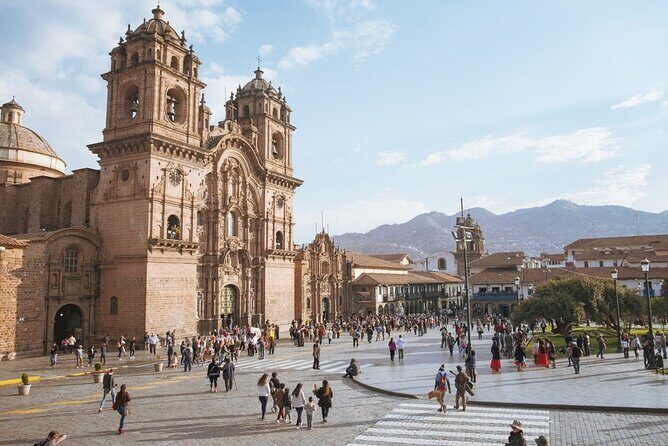
- Cusco Cathedral on Plaza de Armas: when Spanish builders took over an Inca palace
- Qorikancha (Temple of the Sun): the gold story, the earthquake story, and the stonework story
- The four ruins outside the center: Sacsayhuamán, Q’enqo, Puka Pucara, and Tambomachay
- Sacsayhuamán: zigzags, giant stones, and huge views
- Q’enqo: the carved monolith and the mystery canal
- Puka Pucara: uneven stones, canals, and a barracks-style vibe
- Tambomachay: terraces over a spring, with a “Bath of the Inca” theory
- Pacing and comfort: what to expect from a 1 pm start and a 6-hour day
- Guides and your experience: when the commentary hits and when it might not
- Who this tour fits best (and who might prefer a different plan)
- Should you book this half-day Cusco city tour?
- FAQ
- FAQ
- What is the duration of the Cusco city tour?
- How much does the tour cost?
- How many people are in the group?
- Is hotel pickup included?
- What time does the tour start?
- What languages does the guide speak?
- Are entrance tickets included in the price?
- What sites does the itinerary include?
- Is a mobile ticket used?
- Can I cancel and get a refund?
Key things to know before you go
- Small group (max 12): more attention, easier pace, and time to ask questions
- Good intro route: Cathedral and Qorikancha plus four “bonus” ruins
- Pickup in Cusco’s historic center: helps you avoid extra taxi hassle
- Tickets are separate: Qorikancha and general site access are not included
- English-speaking guide option: with bilingual support (English & Spanish)
- 1:00 pm start: a solid plan if you want time in the morning to acclimate
A tight, smart route: why the 12-person group matters in Cusco
Cusco can feel like three cities at once: Inca stonework, Spanish churches, and daily modern life spilling into the same few blocks. This tour helps you stitch those layers together because it keeps the group small and the schedule focused. With a max of 12 people, you’re not stuck waiting for slow walkers or people who wander off mid-explanation.
It also starts with hotel pickup within the historic center, which is a big deal in Cusco. A lot of tours work better when everyone meets at one convenient lobby. Here, the pickup means less time hauling your bags around and more time putting your eyes on the key sites.
The day runs about 6 hours (approx.), but the stops themselves are broken into manageable chunks—around 45 minutes at some highlights and about an hour at the ruins outside the center. That structure matters because Cusco altitude can turn a long “stay here all day” tour into a drag. Short, guided segments make it easier to keep moving without feeling rushed.
You can also read our reviews of more city tours in Cusco
Cost breakdown: what the $19.25 tour price covers (and what it doesn’t)
On paper, this tour looks like a bargain: $19.25 per person. But the fine print is important for budgeting. The tour includes transport and a bilingual guide (English & Spanish), plus mobile ticketing. What it does not include is site access.
You’ll want to plan for at least:
- Qorikancha entrance: 15 Soles
- General entrance tickets: 70 Soles for 2 Days or 130 Soles for 10 Days
And the tour notes that entrances aren’t included for the individual stops too. Practically, that means you should arrive ready to pay for access on the day, or you’ll lose time and momentum.
Still, even with entrances added, I think this can be good value if you like two things:
1) seeing multiple major stops in a single outing, and
2) having a guide connect the dots between Inca design and Spanish reuse of that same sacred architecture.
If you already planned your own self-guided route and you’ll pay entrance fees anyway, this tour can be a low-stress way to get the context without taking on navigation.
Cusco Cathedral on Plaza de Armas: when Spanish builders took over an Inca palace
This stop is all about the power struggle you can literally walk through. Before the Spanish arrived, the Incas had a major temple and palace complex on the main square area. Inca sources describe the site in connection with Viracocha and the Kingdom of Cusco long before the conquest. Even the city’s older name, Qusqu, ties into language roots in the Quechua and Aymara world.
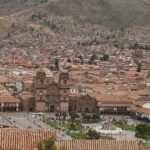
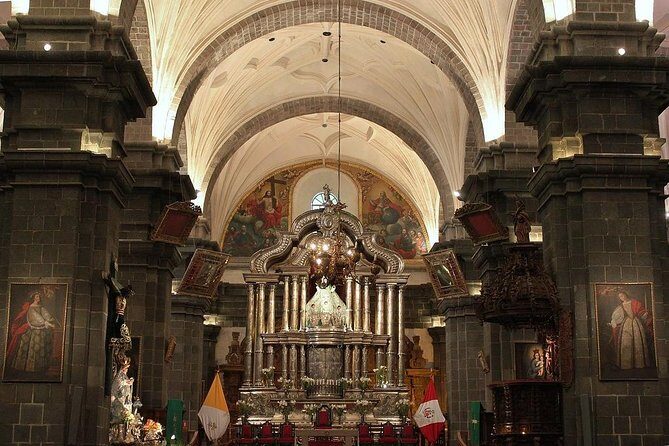
Then the Spanish chose the same prominent location to build a Christian cathedral. Work began in 1559, on foundations tied to that earlier Inca complex (Kiswarkancha), and the project took decades to complete, finishing in 1654. The cathedral’s form follows a Latin cross layout, with a roof supported by 14 pillars, and it reflects the Gothic-Renaissance style common in Spain during the conquest era—plus Baroque influence showing up on the facade.
Here’s what I like most about this stop: it’s not just “a pretty church.” It’s an explanation of how conquest worked on the ground. Stones were taken from Sacsayhuamán, the huge fortress and sacred complex above Cusco. Even sacred material from the plaza area—described as sacred sand—was removed and used in mortar for the cathedral. The cathedral doors also carry Inca religious symbolism, including a carved jaguar head, a motif tied to ancient Andean gods and religious imagery.
What to watch for in your 45 minutes:
- the cathedral’s Latin-cross shape when you step back and look at the overall plan
- the fact that the Inca meaning isn’t erased; it’s repurposed into a Spanish framework
- the door carvings, especially if you want a visible clue of Inca influence inside a Catholic building
Potential drawback: you do have limited time here. If you want a slower church visit—just reading every detail, then sitting down—this stop could feel a bit “hit and run.” The tradeoff is that the rest of the tour moves you through more sites.
Qorikancha (Temple of the Sun): the gold story, the earthquake story, and the stonework story
If Cusco Cathedral tells you how Spain replaced Inca worship, Qorikancha shows how they also couldn’t help reusing it.
The site was originally known as Intikancha or Intiwasi, dedicated to Inti, the Sun. After the 16th-century conflicts and Spanish takeover, much of the original structure was destroyed, but the stonework didn’t vanish. Instead, it became the foundation for the Santo Domingo church and convent, which took shape over about a century.
A key reason Qorikancha still feels impressive is the way the Incas built. The Inca used ashlar masonry: cuboid stones cut to fit extremely closely, without incorporating small imperfections. That’s not just a technical detail. It’s a statement about organized labor and power—choosing a construction method that demands exacting work signals how strongly the state could mobilize people.
The “gold” part of Qorikancha isn’t just legend; Spanish reports describe its opulence in dramatic terms. The walls were once covered with gold plates, the courtyard held golden statues, and the complex was packed with ritual objects connected to the Inca elite and religious ceremonies. When the Spanish demanded a ransom in gold connected to Atahualpa, a major share of that gold is described as coming from Qorikancha.
Then comes the earthquake layer. Even when the church structure was damaged, the Inca stone walls—built from massive, interlocking blocks—still stand in ways that show the durability of that original engineering.
If you’re in the 45-minute window, focus on:
- the sheer precision of the surviving Inca foundations (even where you can’t see the full original temple)
- the way the Santo Domingo structure sits on top of earlier stone
- nearby details tied to the site’s underground archaeological museum, where mummies, textiles, and sacred idols connected to the location are displayed
Budget note: entrance to Qorikancha costs extra (15 Soles on this tour).
The four ruins outside the center: Sacsayhuamán, Q’enqo, Puka Pucara, and Tambomachay
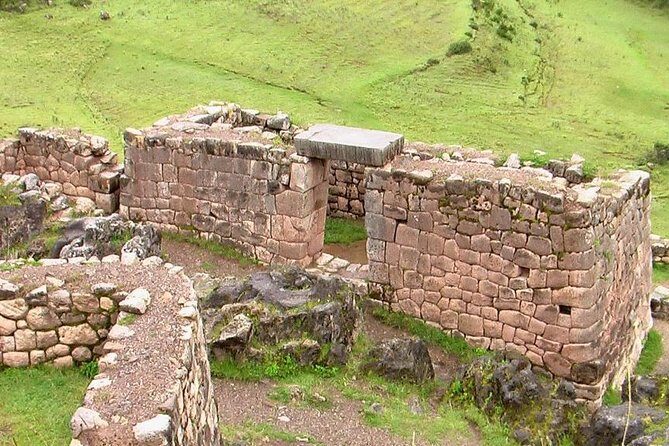
After Plaza de Armas, the tour shifts to the older Cusco—the surrounding archaeological complex that makes the city feel like it’s built on layers, not just pavement.
You can also read our reviews of more tours and experiences in Cusco
Sacsayhuamán: zigzags, giant stones, and huge views
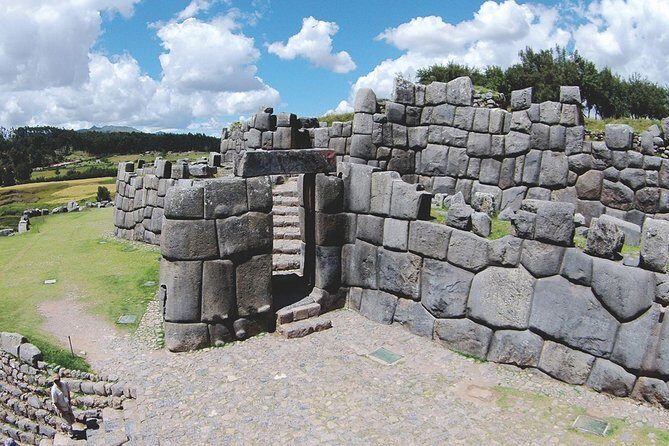
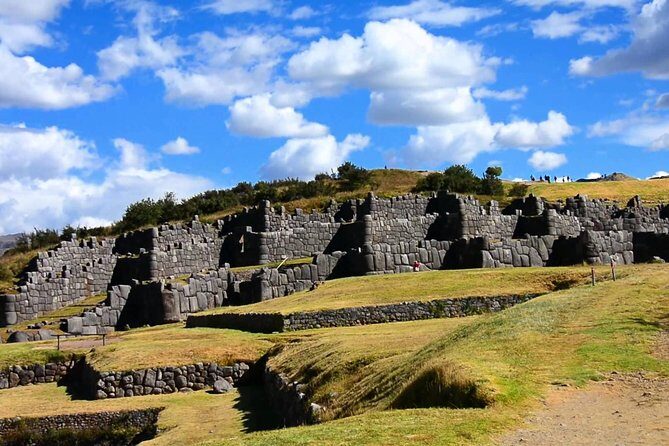
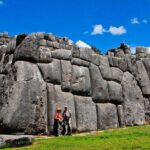
Sacsayhuamán is where you see the scale of Inca ambition. The name comes from Quechua and points to a place where hawks were satiated, likely due to the birds around the area. Inca-period sources describe a complex that likely served fortress and ceremonial roles. The Spanish also called it a fortress after arriving, and it’s tied to events during an Inca rebellion.
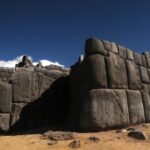
Architecturally, this site is known for its major wall system. The main wall uses a zigzag design with giant stones measuring up to about 5 meters high and 2.5 meters wide, weighing an enormous amount (the tour materials describe stones up to around 90–125 tons). That kind of weight and precision is hard to forget once you start looking at how the blocks fit together.
The other reason you’ll care about Sacsayhuamán is the view. On a clear day, you can see mountains and peaks considered sacred to the Incas, including Ausangate, Pachatusán, and Cinca.
Time reality: you’ll get about an hour. That’s enough to see the big walls and catch the views, but it’s not enough if you want to wander every nook slowly.
Q’enqo: the carved monolith and the mystery canal
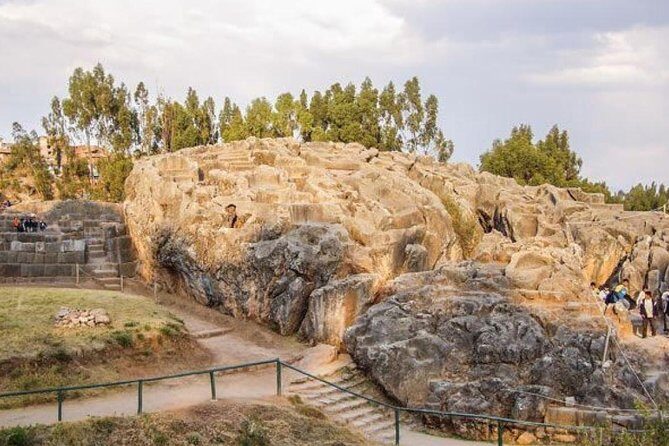
Next is Q’enqo, described as a labyrinth or zig-zag in Quechua, named for a crooked canal cut into the rock. That canal carried some kind of liquid, and the big theme here is uncertainty: historians and researchers have suggested different possibilities, including holy water, chicha (corn beer), or blood.
Why does that matter? Because the suggested uses connect to ritual ideas, including death-related ceremonies, and even the idea that the course of the liquid might have been interpreted to judge whether a person lived well.
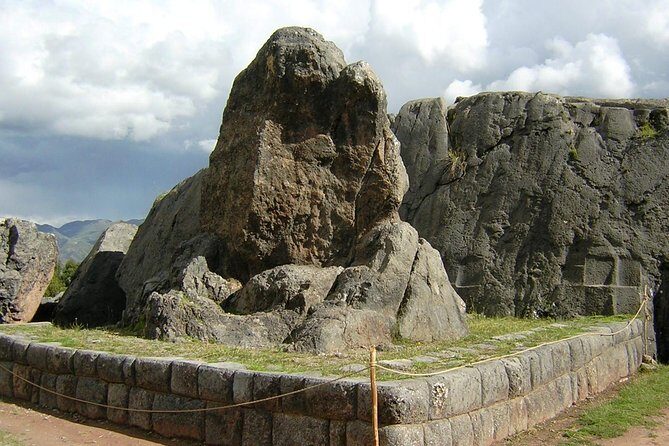
The engineering is what grabs your attention fast: Q’enqo is carved out of a gigantic monolith, with man-made tunnels meeting natural chambers. One chamber includes 19 small niches and is set up like an amphitheater. The original purpose of that theater element is also lost, but there’s a strong consensus that it related to sacrifice rituals connected to sun, moon, and star worship.
Expect about an hour here too. The benefit is you’ll learn how to look at “weird rock” as architecture and ritual space instead.
Puka Pucara: uneven stones, canals, and a barracks-style vibe
Puka Pucara translates to red fort, tied to the color of the earth and the site’s position. Compared with some more famous Inca complexes, it’s described as having rocks with a more uneven surface texture, which changes how the place feels under your eyes.
This site includes enclosures and features like canals, aqueducts, baths, and an ancient road that is described as part of Qhapaq Ñan, the Inca road system. It’s laid out in irregularly stepped levels created by three walls, and the planning avoids cutting across protruding rocks—meaning the architecture works around the ground rather than against it.
One of the most useful pieces of context here is the story connected to Tambomachay. Some chroniclers describe that when the Inca prepared to visit the baths at Tambomachay, the entourage of soldiers and dancers would wait here. That makes Puka Pucara sound more functional than ceremonial in everyday terms, potentially acting as barracks and hostel space (often referred to as tambo).
There’s also a rumor about a chincana (tunnel) that might have functioned as a communication channel between Puka Pucara and Tambomachay.
You’ll have about an hour. It’s a stop where you’ll enjoy the details if you like comparing how different Inca sites handle water, movement, and labor.
Tambomachay: terraces over a spring, with a “Bath of the Inca” theory
The last big site is Tambomachay, about four miles north of Cusco and at roughly 12,150 feet (3,700 meters). That elevation matters because it helps explain why the “spa” idea keeps popping up.
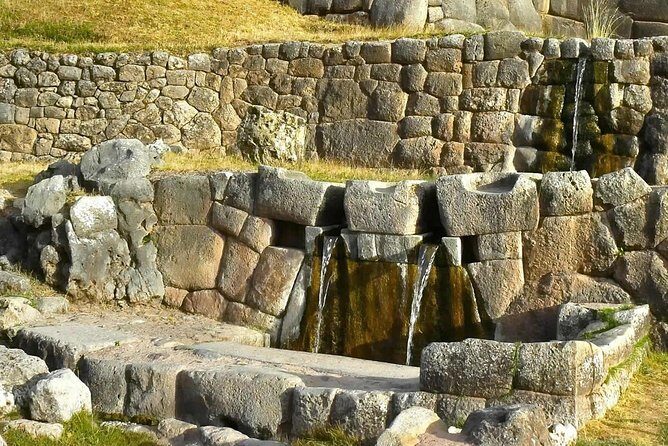
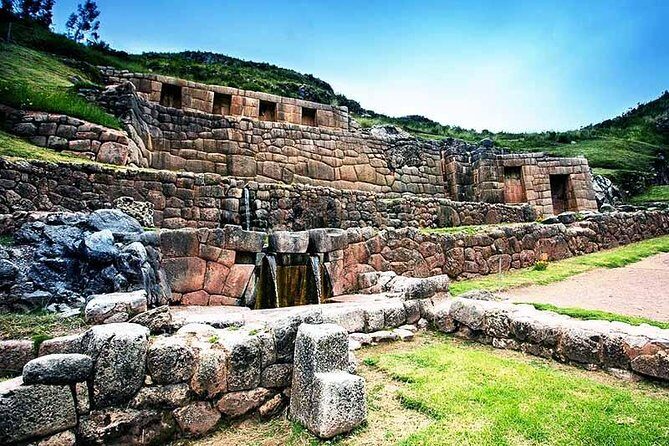
Tambomachay has three stepped terraces made from precise Inca stonework, with trapezoidal niches built into some retaining walls. The site sits over a natural spring, which continuously feeds aqueducts, canals, and small waterfalls built into those terraces.
What’s the function? The tour materials admit uncertainty: ceremonial site, Inca spa, military outpost—or a mix. But the popular theory is tied to the name El Baño del Inca (Bath of the Inca). In that view, it provided water and rest for the Inca ruler and maybe the broader nobility.
Even if you don’t buy one single theory, you can still enjoy the design logic. The water system isn’t decorative—it’s built into how the terraces work.
You’ll get about 45 minutes, which is ideal if you want a calmer finish without turning this into an all-day wandering session.
Pacing and comfort: what to expect from a 1 pm start and a 6-hour day
Starting at 1:00 pm is smart for a lot of people in Cusco. It gives you the morning to move slowly, drink water, and get your bearings.
The tour’s pacing is built around time boxes:
- about 45 minutes for Cathedral and Qorikancha
- about an hour at Sacsayhuamán, Q’enqo, and Puka Pucara
- about 45 minutes at Tambomachay
That means you’re not stuck “standing forever.” It also means you should come prepared to do short bursts of walking and looking, then listen, then look again. In places like Q’enqo and Puka Pucara, the more you look, the more the carved shapes and layout start making sense.
One more practical thought: you’re visiting multiple sites that require entrances, and Qorikancha has its own cost. You’ll save stress if you’re ready with cash (or a plan for payment) so you don’t slow down your own day.
Guides and your experience: when the commentary hits and when it might not
Two guide names come up strongly in the tour’s reputation: Elizabeth and Paul. Elizabeth is described as great, and Paul is described as passionate about Cusco’s city history and clearly able to pack a lot into a short schedule without killing your time to look on your own.
That’s the sweet spot: explanation plus time to explore. Because the stops are layered, you want a guide who doesn’t just list facts but helps you notice relationships, like:
- Inca sacred material reused in Spanish mortar at the cathedral
- gold opulence and later Spanish church placement at Qorikancha
- how fortress and ritual functions blur at Sacsayhuamán
Possible consideration: on at least one run, the tour did not include all planned archaeological stops and the guide didn’t match the group’s expectations. That can happen with any shared tour. If you’re picky about seeing every named site, confirm what your day includes and be ready to speak up politely.
Who this tour fits best (and who might prefer a different plan)
This is a solid match if you want:
- a small group and clear guidance
- a route that mixes major center highlights with surrounding ruins
- an easier way to acclimate while still seeing real archaeological sites rather than only museums
It’s also a good fit if you don’t want to manage tickets and navigation between multiple stops on your own.
You might want a different option if:
- you strongly prefer slower visits and lots of quiet time inside churches and archaeological areas
- you hate paying entrance fees separately and would rather include all ticket costs in one bundled price
- you want complete flexibility to change the order or skip stops, since this is scheduled and structured
Should you book this half-day Cusco city tour?
Yes, if you want an efficient introduction to Cusco’s big overlap points: Plaza de Armas Cathedral, Qorikancha, and the four surrounding ruins that show how the Incas shaped the area beyond the famous postcard spots. The small group size and the guided storytelling are the main reasons it works.
Hold off if you’d rather self-guide, or if you’re looking for a long, slow museum-and-church day. And budget carefully for entrances—because the tour price alone doesn’t cover site access.
FAQ
FAQ
What is the duration of the Cusco city tour?
The tour duration is listed as about 6 hours.
How much does the tour cost?
The price is $19.25 per person.
How many people are in the group?
This experience has a maximum group size of 12 travelers.
Is hotel pickup included?
Pickup is offered from hotels within Cusco’s historic center. Pickup is not included for private residences like Airbnb or hotels outside the historic center.
What time does the tour start?
The start time is 1:00 pm.
What languages does the guide speak?
English is offered, and the guide is described as bilingual (English & Spanish).
Are entrance tickets included in the price?
No. Qorikancha entrance is 15 Soles, and admission for sites is not included. The tour materials list options of 70 Soles for 2 Days or 130 Soles for 10 Days.
What sites does the itinerary include?
The stops are Cusco Cathedral, Qorikancha, Sacsayhuamán, Q’enqo, Puka Pucara, and Tambomachay.
Is a mobile ticket used?
Yes, the tour lists a mobile ticket.
Can I cancel and get a refund?
No. The experience is non-refundable and cannot be changed for any reason. If you cancel or amend, the amount paid is not refunded.