REVIEW · CUSCO
Full Day City Tour Cusco
Book on Viator →Operated by Peru Grand Travel · Bookable on Viator
Five Inca stops in one afternoon. This Cusco tour strings together major sights you can actually remember, with a professional guide and round-trip transport to keep the day moving smoothly. You’ll hit Qorikancha, then the big stone complex at Saqsayhuaman, and finish with two more Inca sites before getting dropped back in Cusco.
I love the built-in round-trip transport, because Cusco streets can be a workout by itself. I also like the small-group feel (up to 15 people), which means the guide can slow down when questions pop up. In one standout example, guide Silvia was described as patient and organized, and the tour included fun moments like feeding llamas and alpacas.
One possible drawback: you’ll be paying entrance fees at multiple stops, so the tour cost is only part of the budget. If you hate buying tickets on the spot or you’re hoping for a long, leisurely pace at every ruin, plan for the day to feel a bit packed.
In This Review
- Key points before you go
- The 12:30 afternoon format that keeps Cusco manageable
- Qorikancha: the Temple of Gold and what survives today
- Saqsayhuaman’s megaliths and the Temple of Lightning
- Q’enqo and the carvings tied to Pacha Mama
- Puka Pukara: Red Fortress and what the color tells you
- Tambomachay: water worship and a likely purification function
- Price and value: what $29.86 actually covers
- Transport and guide quality: why the day feels smoother
- Photo and pacing tips that make the afternoon better
- Should you book the Full Day Cusco City Tour?
- FAQ
- What time does the Cusco city tour start?
- How long is the tour?
- What’s included in the price?
- Do I need to pay entrance fees?
- Is food included?
- How big is the group?
- Quick call: book or pass?
Key points before you go
- Small group (max 15) helps the guide manage the pace and questions without chaos
- Round-trip transport means less time figuring out routes and more time at the sites
- Five Inca sites in ~5 hours gives you a fast, organized overview of Cusco
- Entrance fees are separate (Saqsayhuaman/Q’enqo/Puka Pukara/Tambomachay partial ticket + Qorikancha fee)
- Guide language options include Portuguese, English, or Spanish
- Silvia is a real highlight in the feedback, with good organization and patient explanations
The 12:30 afternoon format that keeps Cusco manageable
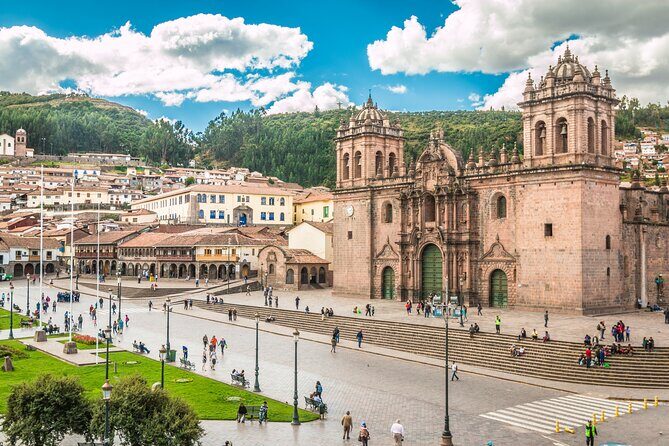
This is a full-day style tour, but it runs in the afternoon: start at 12:30 pm and finish later with drop-off back at your hotel or near the Plaza de Armas if you prefer. For many people, that timing is a smart way to avoid the hardest part of Cusco mornings, especially if you’re still adjusting to altitude or you want a calm start to your day.
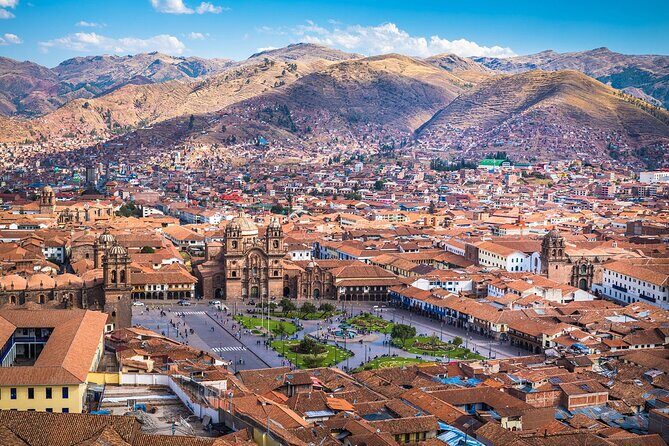
The route is built for orientation. You’ll leave central Cusco, visit major Inca sites, and come back the same afternoon. With five planned stops, you get a clear sense of how the city’s Inca-era walls, temples, and ceremonial spaces connect—without needing to plan buses, taxis, or ticket stops yourself.
Group size matters here. With a maximum of 15 travelers, the tour tends to feel orderly rather than crowded. You’ll still walk and you’ll still move from place to place, but the guide can keep you on track and help with what to look for at each site.
Who this suits best:
- First-timers who want the big Cusco hits in one organized loop
- People who prefer a guide’s context instead of wandering solo
- Travelers who are okay paying entrance fees separately for best access
Who might find it less ideal:
- Anyone who wants to linger for hours at one ruin
- Travelers who hate ticketing stops or want every minute included
You can also read our reviews of more city tours in Cusco
Qorikancha: the Temple of Gold and what survives today
Your first stop is Qorikancha, which means Temple of Gold in Quechua. It was the first temple built by the Incas, and it was once covered in large quantities of gold and silver. Today, it’s one of those places where you can feel the difference between what the Inca world meant and what still physically remains.
You’ll typically get about 30 minutes here. That’s not long, but it’s usually enough time to grasp the layout, notice key stonework, and understand why this site mattered so much. The guide is important at this stop because Qorikancha isn’t just one wall or one view—it’s about connecting the religious purpose with the way the Inca built and aligned structures.
Entrance matters. Qorikancha’s entrance fee is PEN 20.00 per person, and it’s not included in the tour price. If you want to move quickly through the site and not lose time, have your Peruvian soles ready before you arrive.
What to look for (and why it’s worth your time):
- Inca construction techniques embedded in the complex
- The sense of layered history—how an original sacred space connects to later changes
- Any visual details the guide points out that help you read the stones
Saqsayhuaman’s megaliths and the Temple of Lightning
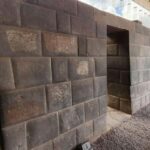
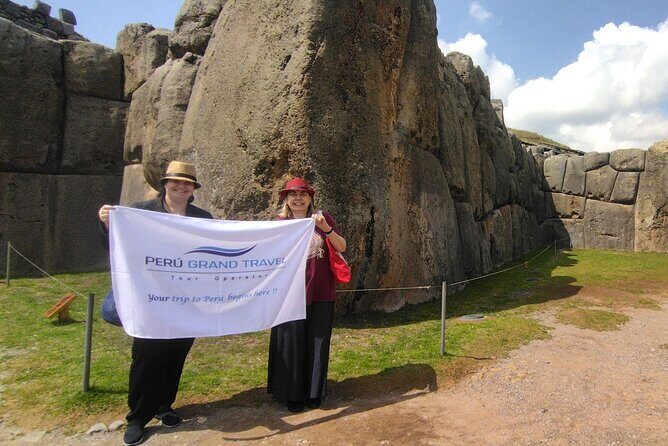
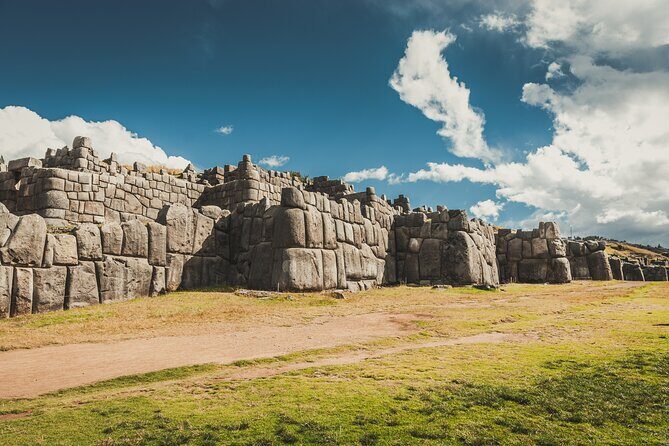
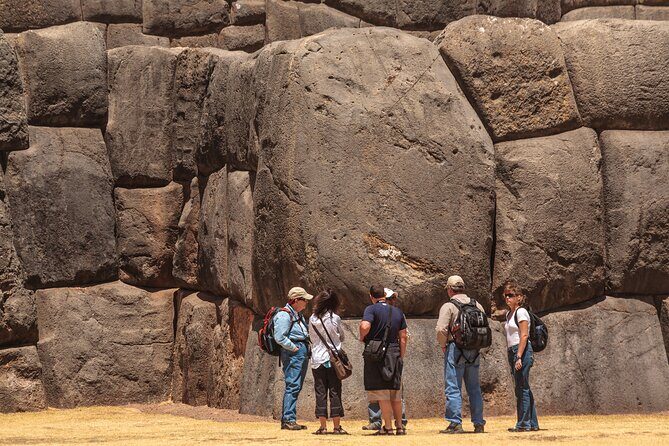
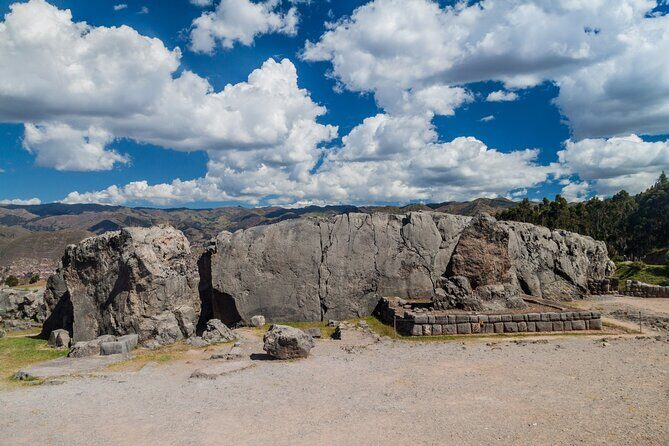
Next comes Saqsayhuaman, the complex known for its huge megalithic stones, weighing over 150 tons. If you’ve ever seen photos of Cusco’s Inca walls, this is the place they come from. The scale here is the story. Even if you’re not a stone-nerd (no judgment), it’s hard not to stare at the sheer mass and precision.
You’ll get about 45 minutes at Saqsayhuaman, which is a little more generous than some other stops. That extra time helps, because this site rewards slow looking—especially for understanding how the stones sit and how different areas relate to each other.
In the Inca Empire, Saqsayhuaman was considered the Temple of Lightning, dedicated to Illapa. That name is useful because it gives your brain a theme: this wasn’t just construction for looks. It tied to weather, power, and ceremony.
Entrance is separate, and for this tour you’ll need the partial ticket that covers Saqsayhuaman, Q’enqo, Puka Pukara, and Tambomachay. The listed entrance cost for that partial ticket is PEN 70.00 per person.
Practical advice:
- Expect more walking than you think, even if you don’t plan to
- Bring comfortable shoes; the ground can be uneven
- Give yourself time to stop for photos—this is where your camera will earn its keep
Q’enqo and the carvings tied to Pacha Mama
After the big stone complex, you head to Q’enqo, a temple dedicated to Pacha Mama, also known as Mother Earth. This stop is shorter—about 20 minutes—so it’s best when you treat it like a focused stop rather than a wandering one.
Q’enqo is known for intricate stone carvings. The guide’s job here is to translate what you’re seeing into something meaningful: which carvings matter, how the site is arranged, and why it was linked to Mother Earth worship. When you know the theme, the carvings stop looking random and start looking purposeful.
Like the other ruins, entrance fees apply. Q’enqo is covered under the PEN 70.00 partial ticket for the group of sites that includes Saqsayhuaman, Q’enqo, Puka Pukara, and Tambomachay.
A good way to handle a short stop:
- Listen closely to the first explanation
- Then do a quick re-look: read the carvings again with that new context
- Take photos, but don’t let your camera run the whole show
Puka Pukara: Red Fortress and what the color tells you
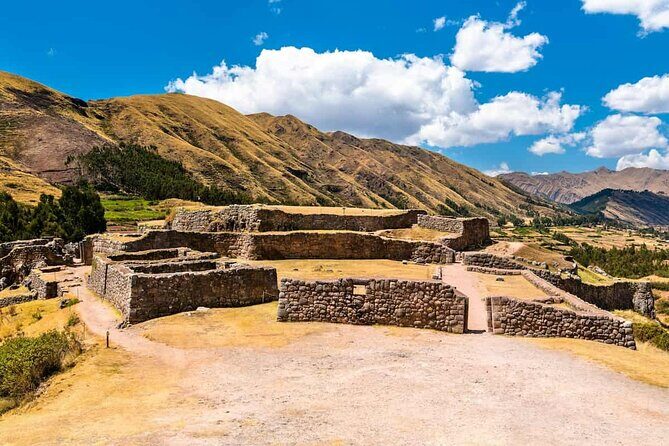
Next is Puka Pukara, meaning Red Fortress in Quechua, named for the reddish stone structures that make up its walls and buildings. The name matters here because the site’s look is part of the message: color, material, and construction all blend into one strong visual identity.
You’ll typically get about 20 minutes at Puka Pukara. At this length, you’ll want to aim for understanding rather than perfection. You’re there to grasp how the fortress-like elements connect to Inca life and ritual practices, and to appreciate the stone coloration up close.
Entrance is again part of that PEN 70.00 partial ticket covering Saqsayhuaman, Q’enqo, Puka Pukara, and Tambomachay.
What I like about including Puka Pukara in the same afternoon:
- It breaks up the day visually, so you don’t feel like you’re repeating one kind of ruin
- It adds a different kind of structure—more fortress vibe than carved temple vibe
- It gives you another theme to connect back to the Mother Earth and lightning references
You can also read our reviews of more tours and experiences in Cusco

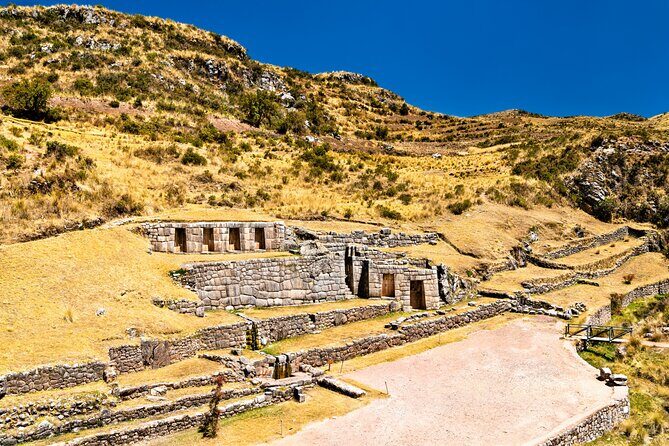
Tambomachay: water worship and a likely purification function
Your final stop is Tambomachay, a sacred temple dedicated to water worship. Water is one of those themes that shows up again and again across the Andes, because it’s life—and ritual. The site likely also served as a purification bath for Inca rulers, which is a fascinating angle because it shifts Tambomachay from scenery into function.
You’ll spend about 30 minutes here. That extra half-hour at the end is helpful because it lets you slow down slightly after a day of shorter stops.
Tambomachay is part of the PEN 70.00 partial ticket group. Just like at the earlier ruins, entrance is not included in the base price.
Why this stop is a strong closer:
- Water worship gives you a mental break from stone-only descriptions
- The purification angle ties back to how Inca ritual likely worked
- It’s a good finale because it’s memorable and different from the other four stops
Price and value: what $29.86 actually covers
The tour price is $29.86 per person and it’s listed as about 5 hours long. For a Cusco city tour with round-trip transport and a professional guide in Portuguese, English, or Spanish, that base price is usually good value—especially when the itinerary is tight and timed.
But here’s the key budget truth: entrance fees are not included, and that’s the part that changes the final number.
From the listed fees, you should plan for:
- Saqsayhuaman, Q’enqo, Puka Pukara, Tambomachay partial ticket: PEN 70.00 per person
- Qorikancha entrance: PEN 20.00 per person
- Cathedral entrance: PEN 40.00 per person (this is listed as not included)
Food, drinks, and snacks are also not included. So while the $29.86 covers the tour service and transportation, you’ll likely spend extra on:
- Entrance tickets
- A simple meal or snacks during the afternoon
My practical take: this tour is a value if you want a guide-led overview and you’re comfortable paying museum-style entrance fees separately. It’s less of a steal if you’re trying to keep spending ultra-low, because the fees add up fast. Still, paying for access is often what lets you get the full experience instead of looking from the outside.
Transport and guide quality: why the day feels smoother
This tour includes round-trip tourist transportation and an agency service. Translation: you’re not wrestling with pickup confusion or last-minute route changes. In the feedback, people praised the way the operator reached out after booking and kept them updated each step. That matters in Cusco, where schedules can shift based on traffic, altitude, or simple logistics.
The guide experience is also a standout. One mentioned highlight was Silvia, described as knowledgeable and patient, with good organization and a friendly group flow. Even without getting extra details, the takeaway for you is clear: a good guide helps you avoid the most common problem on Inca-site days—confusing yourself by seeing stones without a thread.
Because the tour supports guides in Portuguese, English, or Spanish, it can feel easier to ask questions. And with a max group of 15, you’re more likely to get answers rather than just being marched along.
Photo and pacing tips that make the afternoon better
A tour like this moves fast. You’ll still have moments to enjoy the sites—just don’t plan to do everything slowly at every stop.
A few tactics that help:
- Have cash ready for the PEN entrance fees so you don’t stall the group
- Use the guide’s first explanation as your photo checklist, then shoot after you know what you’re looking for
- Start your day with energy: since food and snacks aren’t included, bring water and plan a snack break
- Wear shoes that handle uneven ground, especially at Saqsayhuaman
Also, keep your expectations realistic about time. Qorikancha gets about 30 minutes, Q’enqo about 20, Puka Pukara about 20, and Tambomachay about 30. Saqsayhuaman is the longest stop at 45 minutes. If your favorite ruin is one of the shorter stops, treat it like a quick hit rather than a full-length visit.
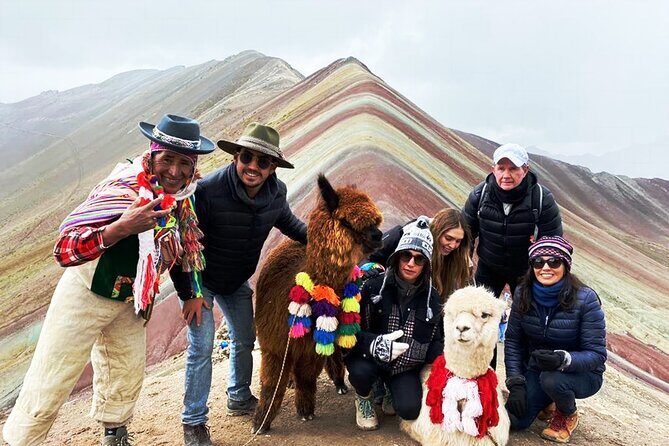
One more note: in the feedback, people said they had a chance to feed llamas and alpacas. That’s the kind of extra moment that makes a city tour feel less like a checklist and more like a day you remember.
Should you book the Full Day Cusco City Tour?
I’d book this tour if you’re in Cusco for a short stay and want a structured overview of the Inca sites around town. It’s also a strong pick if you want the convenience of round-trip transport and a guide who can connect what you’re seeing—gold at Qorikancha, lightning and Illapa at Saqsayhuaman, Mother Earth at Q’enqo, the Red Fortress at Puka Pukara, and water worship at Tambomachay.
I’d skip it if you’re the type who wants to sit with one site for a long time, or if you’re trying to minimize extra spending on entrances. The base price is attractive, but the separate ticket costs mean you should budget ahead.
If you decide to go, do yourself a favor: plan your afternoon around being flexible. This is a thoughtful loop that gives you real context, and it’s the kind of tour that helps Cusco click into place fast.
FAQ
What time does the Cusco city tour start?
It starts at 12:30 pm.
How long is the tour?
The duration is about 5 hours.
What’s included in the price?
The tour includes round-trip tourist transportation, a professional guide in Portuguese, English, or Spanish, and agency services.
Do I need to pay entrance fees?
Yes. Entrance fees for Saqsayhuaman, Q’enqo, Puka Pukara, and Tambomachay are listed as PEN 70.00 per person (partial ticket). Qorikancha is PEN 20.00 per person. The Cathedral entrance is listed as PEN 40.00 per person. Entrance fees are not included in the tour price.
Is food included?
No. Food, drinks, and snacks are not included.
How big is the group?
The tour has a maximum of 15 travelers.
Quick call: book or pass?
If you want a guide-led, efficient Cusco afternoon with five major Inca stops and the convenience of pickup and drop-off, this tour is a solid buy. If you want slow, ticket-free sightseeing or you’re allergic to paying entrance fees at multiple sites, you’ll likely be happier with a more flexible plan.