REVIEW · CUSCO
Historic/music Cusco FreeWalkingTour “free drink” Group Tour
Book on GetYourGuide →Operated by Real Cusco Walking tour · Bookable on GetYourGuide
Cusco walks better with a guide and a drink. This 2-hour historic walking tour strings together Plaza de Armas, Qoricancha, and the artistic lanes of San Blas, with stories that help those stones make sense fast. I especially like the way the guide connects landmarks to what you see in front of you, and I really enjoy the stop for a complimentary Pisco Sour (or Chicha Morada at the end).
One thing to plan for: the tour is loud-outdoors style, and if the sound system or street noise makes it hard to hear, you may need to lean closer to your guide (for example, Erick’s explanations). Also, it’s not suitable for wheelchair users or people over 95 years old.
In This Review
- Key highlights before you go
- A smart way to “read” Cusco in just two hours
- Starting at Plaza de Armas’ Inca Fountain: your orientation hub
- Cathedral views and Jesuit-era details you’ll actually notice
- Qoricancha Sun Temple: the stop that makes the route click
- The angled stones and the balcony: small details, big payoff
- Andean Trilogy carvings: Condor, Puma, Snake on Inca walls
- San Blas: art, craft, and streets with character
- The luthier workshop and live Andean performance with city views
- 7 Borreguitos Street: where the photos come from
- Ending at Manco Capac: the closing temple moment
- Price and tips: what you should plan financially
- Pace, comfort, and who this tour fits
- Should you book this Cusco free-walking tour?
- FAQ
- FAQ
- Where do we meet for the tour?
- How long is the walking tour?
- What drinks are included?
- What languages is the guide available in?
- Is a tip required?
- Is water included?
- Is the tour suitable for wheelchair users or very elderly participants?
- Is free cancellation available?
Key highlights before you go
- Meet at Plaza de Armas’ Inca Fountain for an easy start and quick orientation
- Qoricancha Sun Temple plus clear context on what you’re looking at
- The Andean Trilogy carvings (Condor, Puma, Snake) and the story behind them
- San Blas + a luthier stop followed by live Andean music with panoramic city views
- 7 Borreguitos Street photos near the end of the walk
- Choose your final drink: Pisco Sour or Chicha Morada
A smart way to “read” Cusco in just two hours
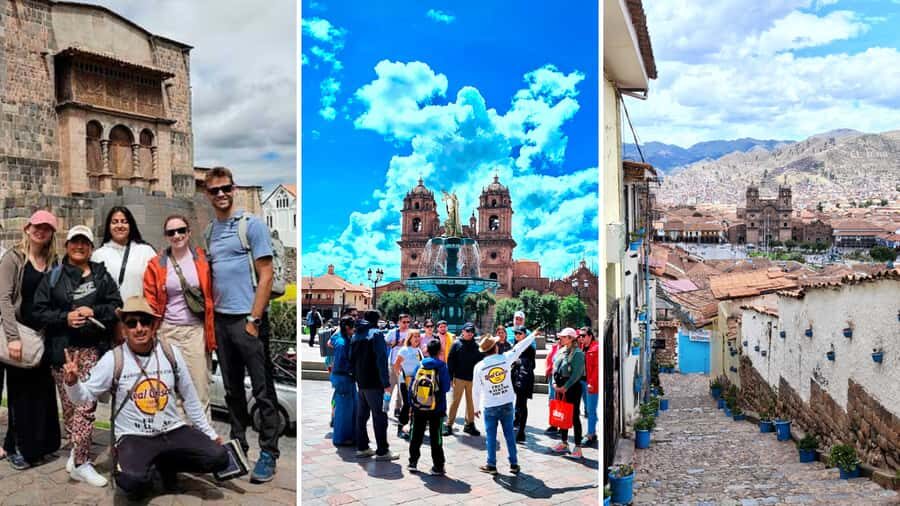
This is a walking tour built for momentum. You get a tight route through Cusco’s big visual hits—churches, Inca stonework, and the craft-and-music vibe of San Blas—without spending your whole day wandering in circles. The group stays small (about 10 people), which matters because you can actually follow the guide’s pace instead of tuning out.
I also like that the tour isn’t only photos and names. You get commentary that helps you interpret details like carved symbols, landmark architecture, and the famous angled-stone features. That turns a quick stop into something you can remember.
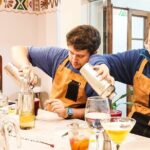
And yes, there’s a drink element. The “free drink” idea here is very literal: you’ll get a complimentary Pisco Sour tasting, and at the end you can swap to Chicha Morada if you prefer something non-alcoholic.
You can also read our reviews of more historical tours in Cusco
Starting at Plaza de Armas’ Inca Fountain: your orientation hub
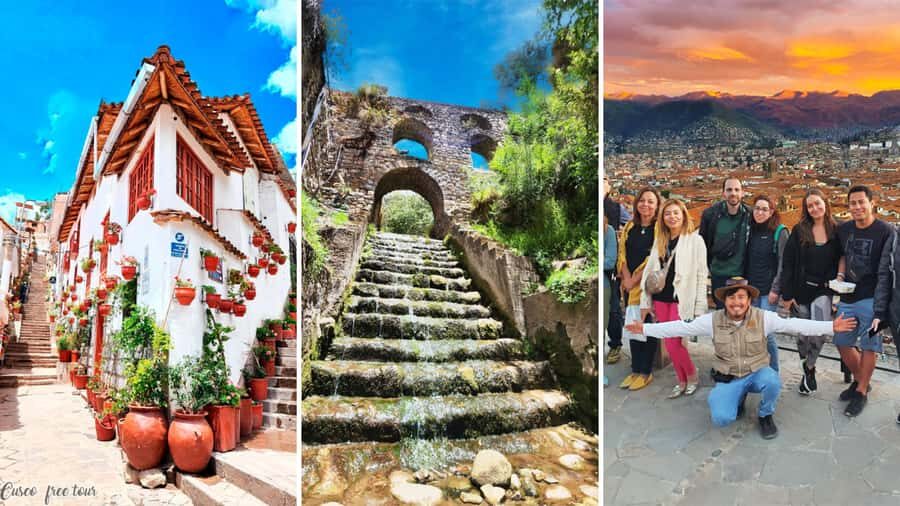
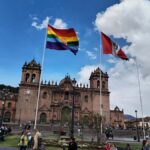
You’ll meet at the Inca Fountain on Cusco’s Main Square (Plaza de Armas). If you like arriving prepared, use the coordinates given in the tour info (-13.5167681, -71.9787795) to pinpoint the exact spot.
From there, the tour immediately frames Cusco’s “two worlds.” First, you’ll look at the Cathedral on the plaza and then the Company of Jesus architecture nearby. These aren’t just scenic buildings. They’re part of the layering that shaped Cusco—Inca foundations and Spanish-era power—so the tour starts by showing you how the city’s story overlaps in the same streets.
A practical tip: since you’re meeting in a central square, plan to arrive a few minutes early. Cusco intersections can be busy, and you don’t want to miss the group briefing.
Cathedral views and Jesuit-era details you’ll actually notice
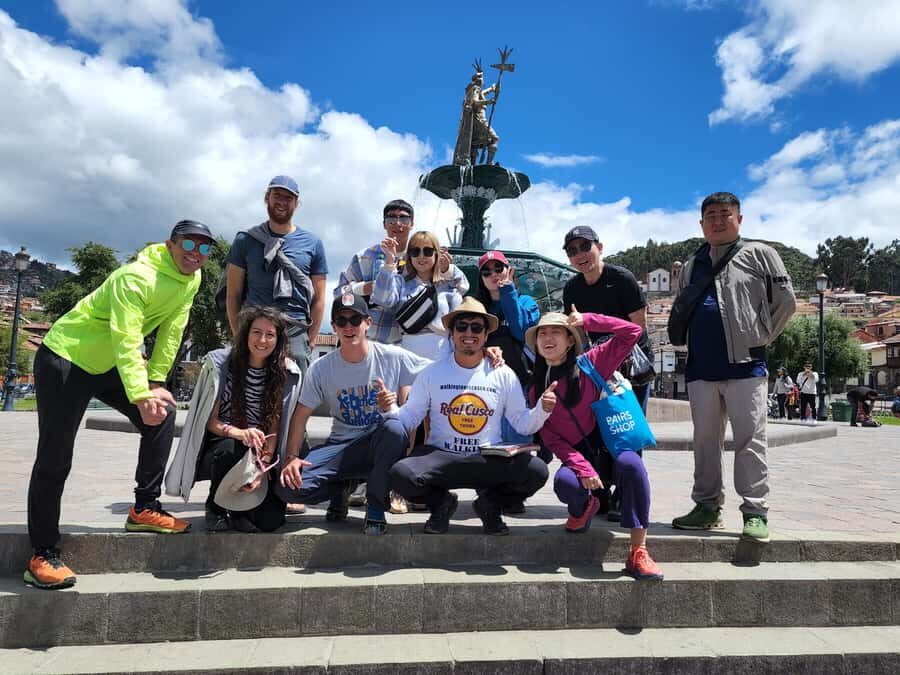
After you settle the meeting-point jitters, you’ll move through the plaza area with commentary aimed at getting you to see beyond the postcard. The Cathedral and the Company of Jesus stop work because they give you a baseline: you learn what to look for in style, placement, and historical importance before you head toward the Inca stonework.
If you’re the type who likes architecture, this early segment pays off. If you’re not, it still helps—because once you understand the plaza’s role, the later stops feel more connected instead of random.
Qoricancha Sun Temple: the stop that makes the route click
Next comes Qoricancha (Sun Temple), one of the most important places in Cusco. You’re not just touring ruins—you’re being guided through why the site mattered and what it represents. This is where your guide’s explanation helps you “read” the stone and layout instead of simply walking past it.
I love Qoricancha on a route like this because it sets your eyes correctly. After the guide frames it, the rest of the walk feels like you’re following a theme: sacred space, symbolism, and how later construction interacted with older power.
One consideration: this portion is popular with lots of visitors. Give yourself a little patience for group spacing so you can hear the commentary and take photos without constantly crowding others.
The angled stones and the balcony: small details, big payoff
Cusco has a talent for turning legends into visible objects. In this tour you’ll get to see a famous set of features known as the 12 and 13 angled stones. The guide’s storytelling around these stones is useful because it turns the sight into an explanation—why people talk about them, and what they represent in the bigger Inca engineering and design conversation.
You’ll also spot a beautiful balcony and get context for what makes it notable. Balconies in Cusco aren’t all just decorative. In a place where different eras share the same streetscape, those details help you connect architecture to identity and tradition.
If you like “look-for-this” sightseeing, this is one of the best segments. You come away remembering specific shapes and features, not just a list of stops.

Andean Trilogy carvings: Condor, Puma, Snake on Inca walls
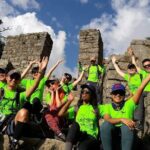
One of the tour’s most memorable elements is the Andean Trilogy, featuring carved forms of the Condor, Puma, and Snake on an ancient Inca wall. The guide’s job here is to help you make sense of the imagery—what you’re seeing and why these symbols show up in Inca contexts.
I like this kind of stop because it’s interpretive. You’re not relying on guesswork. You get a plain explanation that helps the carvings feel meaningful rather than decorative. It’s also a strong example of why a guided walk beats solo wandering: the symbols are right there, but it takes context to feel their weight.
San Blas: art, craft, and streets with character
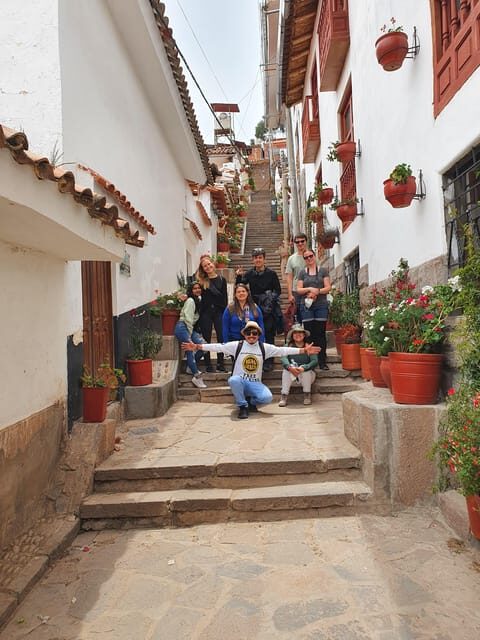
After the Inca-focused stops, you shift into San Blas, known for its artistic charm. This neighborhood walk works because it changes your pace and your mental focus. Instead of only monumental sites, you’re moving through streets where craft is part of daily life.
San Blas is also where the tour becomes more sensory. You’ll have time to look at storefronts and street corners with a guide pointing out what to pay attention to. The goal is simple: you leave with a clearer picture of how Cusco creativity shows up in real places, not just museum labels.
The luthier workshop and live Andean performance with city views
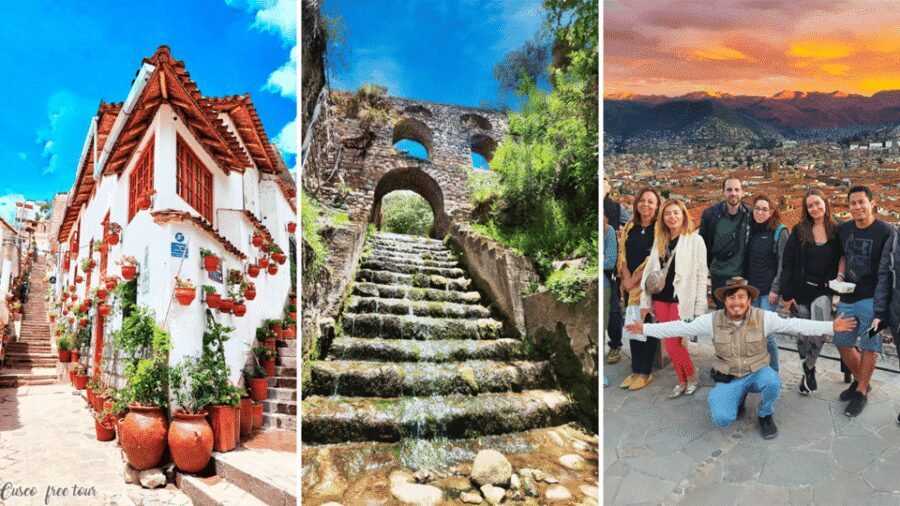
This part is a favorite for good reason. You’ll visit a skilled luthier (someone who works with string instruments) and then enjoy an Andean musical performance. The timing matters, too: the music is paired with panoramic views of the city, so your ears and your eyes get to work together.
From the experience side, this is where the tour feels distinctly Cusco. It’s not only history in stone; it’s culture in sound. If you enjoy music, you’ll probably find yourself listening more carefully than you expected, because the guide’s framing makes the instruments and performance feel connected to what you’ve been seeing.
Practical note: you’ll likely be standing during the performance. If you’re sensitive to crowds, aim to stay near the front edge so you can see and hear without strain.
7 Borreguitos Street: where the photos come from
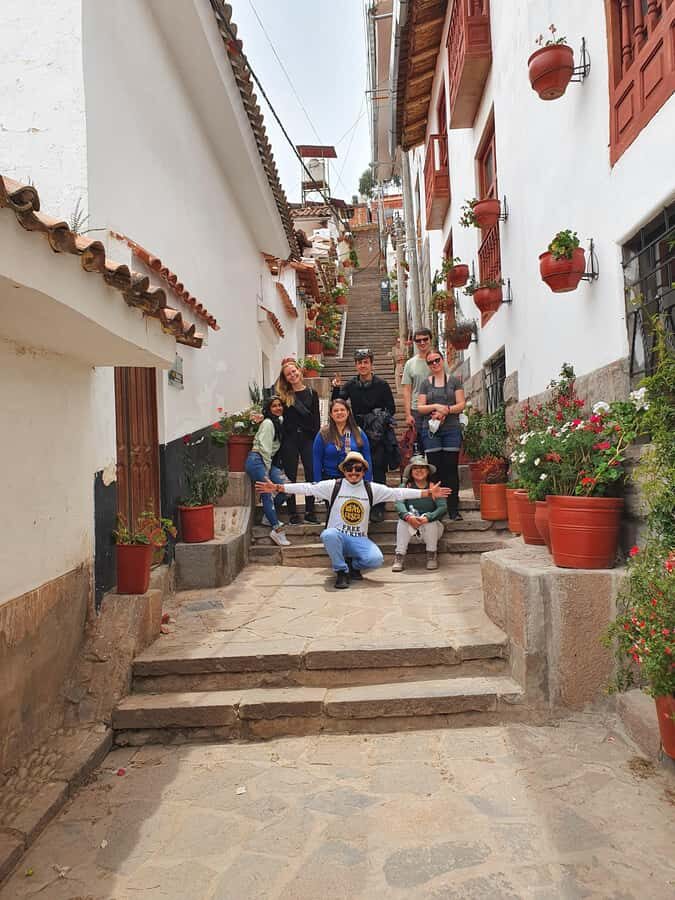
Near the end, you’ll stop at 7 Borreguitos Street, widely known as Cusco’s most picturesque thoroughfare. This is the kind of street where the details do the heavy lifting—angles, facades, and that classic Cusco look that photographers chase.
I like placing a photo-famous street toward the end of the walk. By then, you’ve already learned enough to appreciate what you’re photographing. It stops being only an Instagram moment and becomes the “final chapter” to everything you saw earlier.
Ending at Manco Capac: the closing temple moment
Your tour concludes at the Temple of the First Inca Ruler, Manco Capac. This ending fits the whole theme: you started in the colonial-era face of Plaza de Armas and worked toward the Inca sacred story thread.
At this final stop, you also get your drink choice. You can have either a Pisco Sour or Chicha Morada. If you want something lighter, Chicha Morada is the easy non-alcoholic pick. If you want the classic Cusco flavor, go for the Pisco Sour.
Either way, it’s a satisfying wrap-up: you finish with a moment that feels like part of the culture, not just a reward for walking around.
Price and tips: what you should plan financially
On paper, the price is startlingly low: $2.00 per person. Here’s how to think about value without getting surprised later.
This tour still uses professional guidance, includes tastings, and adds local artisan stops. With that, the realistic model becomes: the advertised price is the entry fee, but the guide service relies on the required gratuity. The tour info says you should plan to tip around 30 soles (about 10 USD) for the guide service.
So the true budget should be: your $2 + your tip. If you’re willing to tip appropriately, the value is excellent. You’re paying for a tight route, curated context, and cultural extras like the music segment and tasting.
Also plan for essentials: water is not included. Bring some if you can, especially if you run hot while walking.
Pace, comfort, and who this tour fits
This is a 2-hour walking experience in a compact part of Cusco. You’ll be moving between major stops and spending time at each one for explanation and photos. That means you should expect regular pauses, but also a steady rhythm.
It’s well suited for:
- First-timers who want a guided route that hits big Cusco landmarks in a short window
- People who like meaningful symbols (like the Condor-Puma-Snake carvings) rather than only architecture
- Anyone who wants an intro to San Blas craft and music without booking separate activities
It’s not a fit for:
- Wheelchair users
- People over 95 years
If you’re traveling with mobility limitations, it’s worth looking for something less step-heavy. The tour’s structure assumes you can do a standard walking pace.
Should you book this Cusco free-walking tour?
If your goal is to get your bearings fast, understand what you’re seeing, and end with music and a drink, I’d say yes, book it—as long as you’re ready for the tipping expectation.
This tour is also a great first activity in Cusco because it teaches you how to “read” the city: why Qoricancha matters, how Inca symbolism appears in the stones, and why San Blas feels like a different side of Cusco from Plaza de Armas. The $2 price makes it easy to try, but the real value is the guide’s explanations and the cultural stops you’d likely skip if you walked on your own.
FAQ
FAQ
Where do we meet for the tour?
You meet at the Inca Fountain on Cusco Main Square (Plaza de armas), with coordinates -13.5167681, -71.9787795.
How long is the walking tour?
The tour lasts about 2 hours.
What drinks are included?
The tour includes complimentary Pisco Sour tastings. At the end, you can choose between Pisco Sour or Chicha Morada.
What languages is the guide available in?
The tour is available in English and Spanish.
Is a tip required?
Yes. A gratuity of around 30 soles (about 10 USD) for the guide service is required.
Is water included?
No, water is not included.
Is the tour suitable for wheelchair users or very elderly participants?
No. It is not suitable for wheelchair users, and it’s not recommended for people over 95 years.
Is free cancellation available?
Yes. You can cancel up to 24 hours in advance for a full refund.
If you want, tell me your travel dates and whether you prefer Pisco Sour or Chicha Morada—I can help you plan where to place this as your first Cusco activity.