REVIEW · CUSCO
Maras, Moray and Salt Mines Half-Day Tour Including Entrance Fee
Book on Viator →Operated by CrossoverPeru Tours · Bookable on Viator
Salt and terraces in one tight morning.
This Maras and Moray half-day tour is a smart way to tick off two big Sacred Valley sights without spending the whole day on logistics, with hotel pickup/drop-off plus a guided run-through that keeps you from wandering around confused. I like the small group cap (just eight), which makes it easier to ask questions and get pointed toward the best places to look and photograph.
The main catch is the short 4–5 hour pace: you’ll see a lot, but you won’t have hours at each viewpoint. Also, food and drinks aren’t included, so you’ll want to plan for a morning that’s a bit longer than a quick grab-and-go.
In This Review
- Key highlights at a glance
- Half-Day Value in the Sacred Valley: What You Really Get
- Price and Logistics: Where Your $89 Actually Goes
- Maras Salt Mines Lookout Point: Salt Pans, Big Views, and a Built-In Story
- The one thing to consider
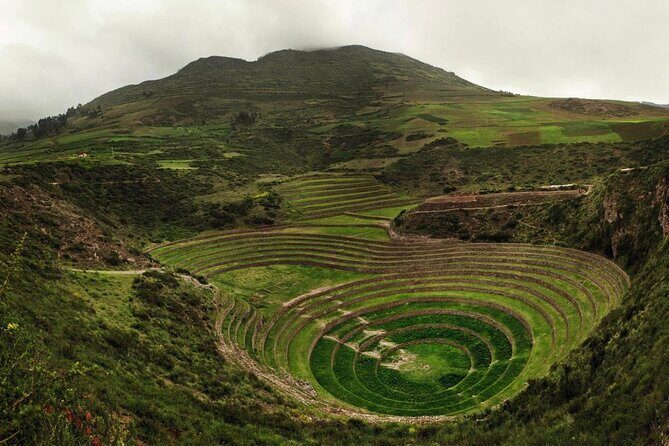
- Moray Ruins: Concentric Terraces and an Open-Air Climate Idea
- Photography and pacing tip
- Guides Make the Difference: What to Expect from the Day’s Teaching
- Small Group, Big Clarity: Why Eight People Works
- Who This Tour Fits Best (and Who Might Want More Time)
- Should You Book This Maras, Moray and Salt Mines Half-Day Tour?
- FAQ
- How long is the Maras, Moray and Salt Mines half-day tour?
- What time does the tour start?
- Is hotel pickup and drop-off included?
- Are entrance fees included?
- What language is the guide?
- Is food and drinks included?
Key highlights at a glance
- Two major stops in one morning: Maras salt mines lookout point and Moray ruins
- Small group limited to eight for more personal attention
- Hotel pickup and drop-off so you don’t hunt for a meeting point
- Entrance fees included (no surprise ticket add-ons) with a mobile ticket
- Maras views over the Urubamba Valley plus time to take photos
- Moray explained as concentric crop terraces used for studying climate effects
Half-Day Value in the Sacred Valley: What You Really Get
If your Cusco schedule feels packed, this tour is designed for that reality. Starting around 8:30 am, you’re out the door early, then you hit Maras and Moray back-to-back without needing to piece together separate tickets and transport.
The structure matters. A half-day tour usually fails when it feels rushed for the sake of rushing. Here, the timing is built around two clear experiences: first the strange, visually striking salt works at Maras, then the terraced ruins at Moray. Each stop gets about an hour, so you can actually take in what you’re seeing rather than just getting a drive-by.
You’re also not stuck decoding the sites alone. The tour includes a Spanish–English professional guide, and the tour is offered in English. That language setup is useful because you’ll get clear explanations without relying on luck to find someone bilingual at the site.
You can also read our reviews of more tours and experiences in Cusco
Price and Logistics: Where Your $89 Actually Goes
At $89 per person, the biggest thing I like is that the cost is tied to a complete visit, not a transport-only excursion. Entrance fees are included, and the itinerary isn’t framed like you’ll pay later for the core sights.
The same goes for the logistics. You get hotel pickup and drop-off, plus transport between the two areas. That matters in and around Cusco because getting yourself across the Sacred Valley can eat time fast, especially if you’re using public transport or trying to coordinate rides yourself. With pickup handled, you can keep your morning simple.
One more small but important detail: you get a mobile ticket. That reduces time spent at ticket counters and helps the day run smoothly. It’s also a good sign for peace of mind because everything you need is meant to be in place before you arrive.
Maras Salt Mines Lookout Point: Salt Pans, Big Views, and a Built-In Story
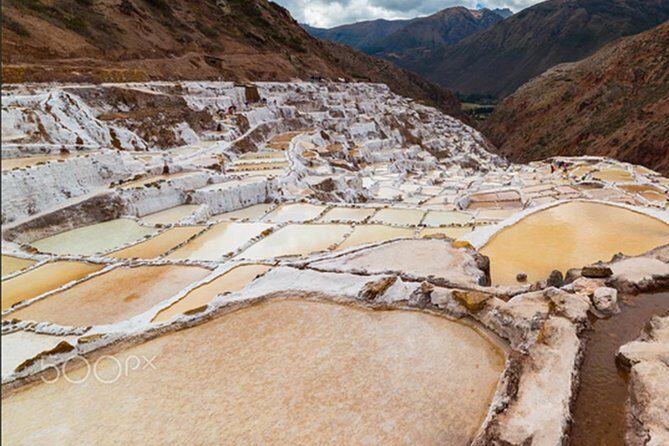
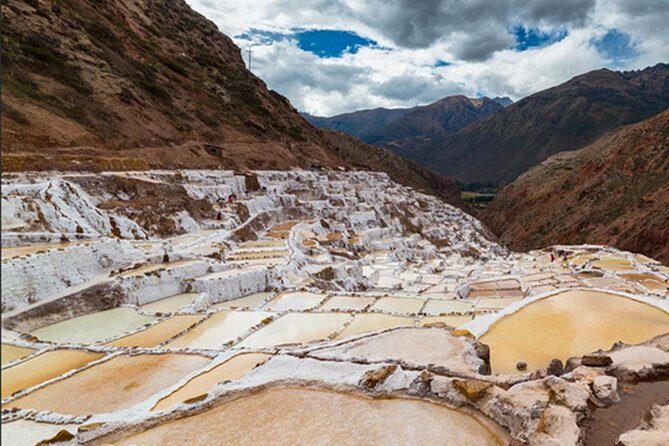
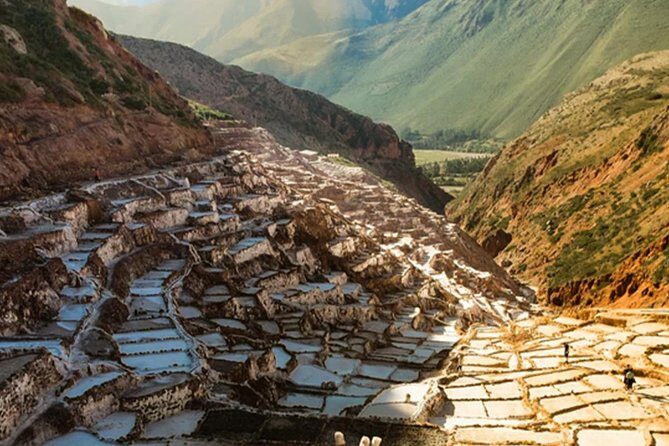
Maras is the kind of place that looks unreal even after you understand it. You start by driving a short distance, then you’re directed to a lookout point with views over Maras town and the Urubamba Valley. This is one of the smart choices of the itinerary: you get the wide context first, so the salt ponds make sense as more than just a grid of white squares.
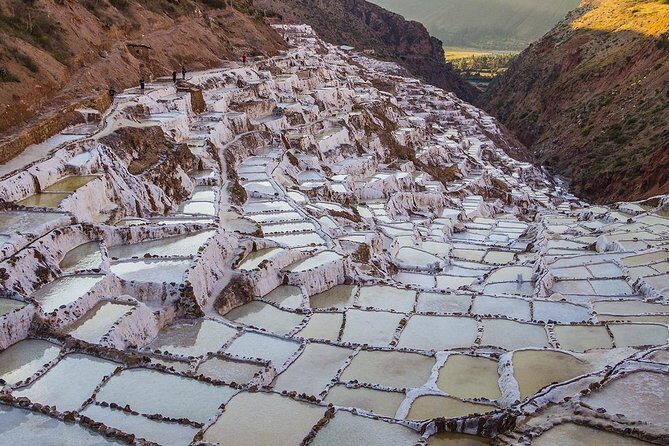
What you’re looking at is tied to a process that’s been going on for a very long time. The salt mines are described as a bizarre spectacle of beauty where a natural salt-water stream runs underground, then salty water is evaporated, leaving salt deposits behind. In pre-Incan times, the method was used to harvest the salt as it dried and concentrated.
That explanation is more than trivia. Without it, it’s easy to see the salt pans as a purely visual oddity. With the guide’s context, you can connect the geography to the water source and understand why these terraces exist where they do. You end up looking longer because you’re not just scanning for photos—you’re following the logic of the place.
You’ll have about one hour here. That’s long enough to:
- get a few viewpoint photos at the lookout,
- walk in the area around the salt works where you can see the pattern and scale,
- and still absorb the story instead of sprinting.
The one thing to consider
Maras can be windy and cooler than you expect in the morning, especially when you’re at a viewpoint. Dress for layers. And since the tour doesn’t include food or drinks, don’t treat this stop like a late breakfast plan. Bring a small snack if you like being comfortable.
Moray Ruins: Concentric Terraces and an Open-Air Climate Idea
After Maras, you head to Moray, a site made of three coliseum-like ruins with terraces arranged in concentric circles. The guide’s job here is huge because Moray can feel mysterious if you only see the shapes. The key interpretation is that the Incas used it as a kind of open-air crop laboratory.
Here’s why the terraces matter: the setup is thought to let people study how different climatic conditions affect crops. So as you stand there looking down the tiers, you’re not only admiring an archaeological layout—you’re imagining a controlled way of testing growing conditions without modern lab equipment. It’s a place where the design tells a scientific story.
The guide’s explanation also helps you notice structure. Those concentric circles aren’t decorative. They’re part of an experimental system. If your guide is strong (and the tour has a track record of detailed guiding), you’ll probably find yourself thinking about how climate varies across elevation and how that would affect plants.
You’ll also have about one hour here. For many people, that’s a sweet spot: enough time to understand the terraces and walk around the main areas, without feeling like you’re stuck in a long waiting game.






Photography and pacing tip
Moray’s best images often come from stepping back and aligning the circular terraces. If you’re the kind of photographer who likes to find the angles yourself, you’ll appreciate the guide time being focused on orientation. If you’re not, you’ll still get enough help to avoid wandering in circles at the entrance.
Guides Make the Difference: What to Expect from the Day’s Teaching
This tour stands or falls on the guide, and the evidence is that the guiding is a core strength. You may be paired with someone like Alejandro, who connects Maras salt mines to family history and the origins of the salt works. Or you might get Nico, who uses story telling and an archaeology-style approach to help you read the sites instead of just looking at them. Able is another example of a guide who brings archaeology background into the explanation, and Felix or Milton have shown up as punctual, professional guides on similar outings.
What I’d pay attention to, as you’re booking, is not just language. It’s the way the guide turns the facts into something you can picture. At Maras, that means linking the underground salt-water story to what you see on the terraces. At Moray, it means explaining why the circles could function like a climate-testing setup.
There’s also a hands-on moment that shows up in real-life experiences. In at least some cases, guides have helped visitors connect with local involvement in the salt mines. You might even get to see salt carving done by local community members who have a share in the mines. That’s not something you should count on like a guaranteed show, but it’s a strong example of why having a guide can add an extra layer beyond the basic site visit.
Small Group, Big Clarity: Why Eight People Works
The tour caps the group at eight travelers, and that number is meaningful. In larger groups, you often spend time waiting for the leader to check everyone’s pace. In a group this size, you’re more likely to get the guide’s attention when you have questions, and you’re less likely to lose track of where the group is headed.
It also changes the feel of the day. A half-day can get stressful if your group is trying to move quickly and nobody wants to be the slow one. With eight people, it’s easier to settle into a rhythm: stop, listen, look, ask, photo, then move on.
Also, having pickup and drop-off reduces stress before you even reach Maras and Moray. You don’t have to manage finding the right meeting point at the right time. For a short tour, eliminating that friction is a big deal.
Who This Tour Fits Best (and Who Might Want More Time)
This is a strong fit if:
- you want two Sacred Valley highlights in one morning,
- you prefer a guided explanation over self-guided wandering,
- you like small groups and a clear plan,
- and you appreciate when entrance fees are included upfront.
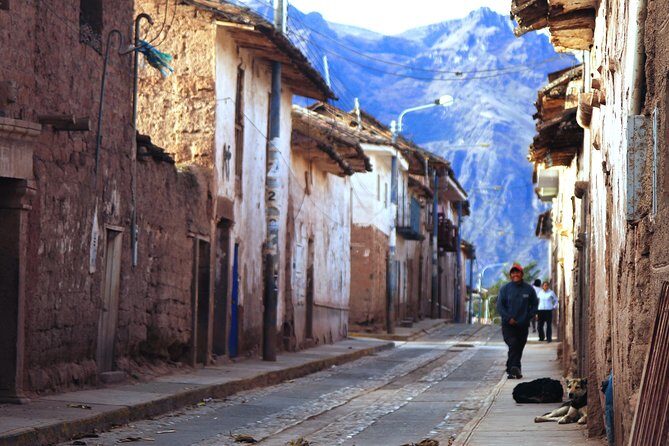
It’s also a good option for first-time visitors to the Cusco area who feel nervous about transport, because hotel pickup/drop-off handles the hard part.
You might consider a longer or more flexible option if:
- you hate time limits and want multiple long pauses at viewpoints,
- you’re traveling at a very slow pace and don’t like moving after an hour,
- or you’re the type who likes to linger with sketches, long photo sessions, or deep reading at sites.
If that sounds like you, you won’t be unhappy—you’ll just be working within a tighter window than you might want.
Should You Book This Maras, Moray and Salt Mines Half-Day Tour?
Yes, I’d book it if you’re aiming for maximum value in minimal time. The math is good because the price covers transport, a professional guide (Spanish–English), pickup/drop-off, and entrance fees. You’re not paying to ride in a van to two places where you then have to figure out tickets.
I’d also book it if you want the sites explained in plain terms. Maras becomes more interesting when you understand the underground salt-water setup, and Moray gets more meaningful when you hear the idea of an open-air crop laboratory. With a small group, you’re more likely to absorb that explanation without feeling like you’re rushing.
One last decision rule: because food and drinks aren’t included, plan a morning snack and water so you don’t feel annoyed halfway through. If you take that small step, this tour can feel like a highlight—two unforgettable Sacred Valley stops, handled with less hassle than most solo plans.
FAQ
How long is the Maras, Moray and Salt Mines half-day tour?
The tour runs about 4 to 5 hours.
What time does the tour start?
The start time is 8:30 am.
Is hotel pickup and drop-off included?
Yes. Hotel pickup and drop-off are included, so you don’t need to find a meeting point on your own.
Are entrance fees included?
Yes. Entrance fees are included and handled as part of the tour, using a mobile ticket.
What language is the guide?
The guide is a Spanish–English professional guide, and the tour is offered in English.
Is food and drinks included?
No. Food and drinks are not included, so you’ll want to plan for a morning without meals provided.
If you’d like, tell me your travel dates and whether you’re staying near central Cusco, and I’ll suggest a simple morning game plan (when to eat, what to wear, and how to time photos at the viewpoints).