REVIEW · CUSCO
5 Day – Salkantay Trek
Book on Viator →Operated by Inca Path Tour Operator · Bookable on Viator
One big mountain trek, and it starts ridiculously early. This 5-day Salkantay route threads Humantay Lake scenery, a serious climb to Salkantay Pass (4650 m), and then lands you at Machu Picchu with a guided visit and return train. I like two things most: the balance of hard hiking with built-in breaks and camp support, and the way the trip sets you up for Machu Picchu without leaving you to scramble. The one drawback to know up front is altitude plus long walking days, so you’ll want a realistic fitness level before you commit.
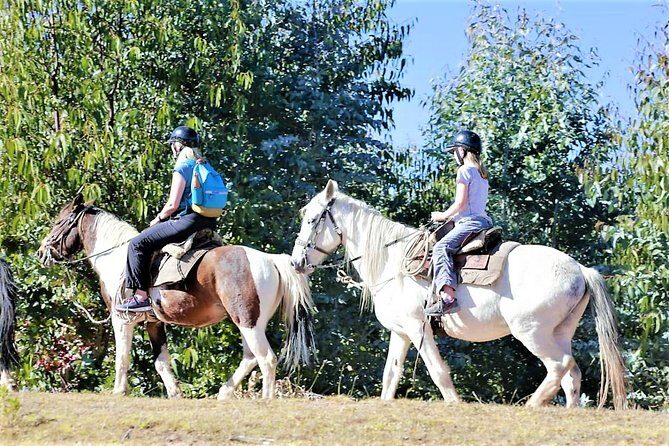
I also like that this is organized like a trek should be: hotel pickup, a night-before briefing, and even horses for carrying up to 8 kg of your baggage. And yes, you’ll camp with tents and sleeping mats rather than hauling everything yourself. If you’re someone who hates cold nights or gets grumpy before sunrise, you’ll still probably make it through, but you’ll want proper gear and a patient attitude.
Finally, this is a small-group trek (maximum 15 travelers) with an English-speaking guide, which keeps things calmer when you’re adjusting to altitude and moving as a team. Guides such as Nidia and Olger are known for focusing on nature and how the region connects to its origins, and that kind of context can make the miles feel shorter.
In This Review
- Key points to know before you go
- Cusco pickup and Humantay Lake at 4:30 a.m. (Day 1)
- Salkantay Pass and the orchid-and-waterfall forest (Day 2)
- Santa Teresa drop-off: coca leaves, avocado plantations, and hot springs time (Day 3)
- Hydroelectric station day: zip-line (300–500 m) or a simpler hike (Day 4)
- Machu Picchu at 4:30 a.m.: sunrise options and a guided 2-hour tour (Day 5)
- Price and logistics: what $456 buys you (and what you’ll pay extra)
- Gear and altitude: how to avoid feeling miserable on purpose
- Who this Salkantay Trek is best for
- Should you book? My honest take
- FAQ
- What is included in this 5-day Salkantay trek price?
- What time do you leave for Humantay Lake on Day 1?
- How high does the trek go on the highest day?
- Is Machu Picchu entrance included?
- Do I have to hike to Machu Picchu from Aguas Calientes?
- Is breakfast on the first day included?
- What are the Day 4 options before you reach Aguas Calientes?
- Is the thermal bath on Day 3 included?
- Do I need a sleeping bag?
- Can I cancel for a full refund?
Key points to know before you go
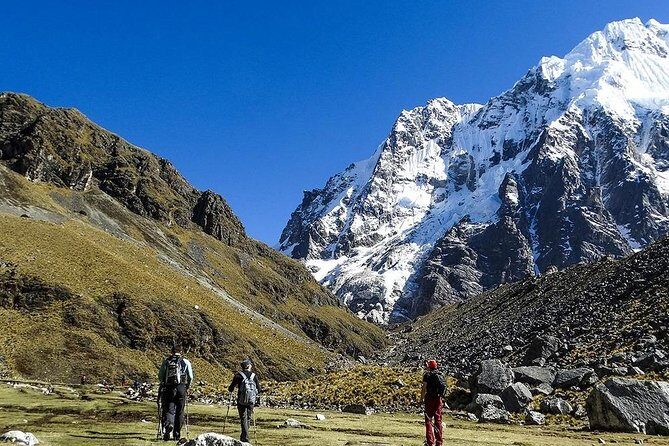
- Salkantay Pass at 4650 m: highest point on the entire trek, plus big views that earn the effort.
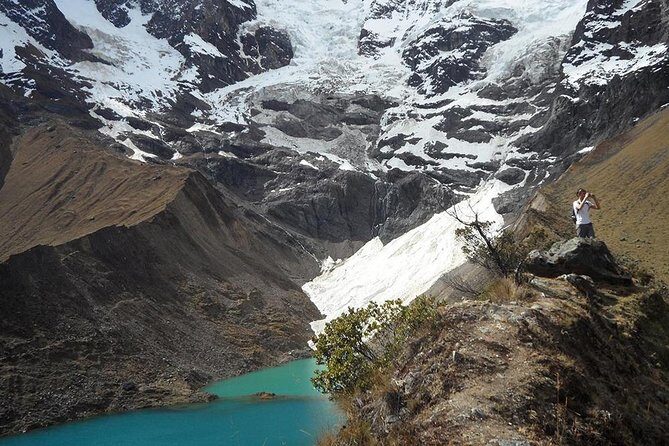
- Humantay Lake timing and acclimation: a first-day climb to 4220 m that includes a short acclimation walk and briefing.
- Horse support for 8 kg per person: your pack feels lighter, which matters on steep switchbacks.
- Day 4 has real choices: walk to the hydroelectric station, take local transport (pay extra), or try a zip-line in the 300–500 m range.
- Machu Picchu is guided, not a free-for-all: about a 2-hour tour, plus time to explore key spots like the Inca Bridge and Sun Gate.
- English guide + max 15: easier communication and more space in the rhythm of a trekking group.
Cusco pickup and Humantay Lake at 4:30 a.m. (Day 1)
Day 1 begins with a pickup from your hotel at 4:30 a.m.. That early start is not for drama. It’s for logistics: you’ll drive through the villages of Izcuchaca and Limatambo, then reach Mollepata for breakfast before the hike begins.
From there, you continue by vehicle to Challacancha, then start walking toward Soraypampa (around 3900 m) and camp for the night. Even before you reach the main payoff, you’re already climbing—so your body gets a chance to adjust.
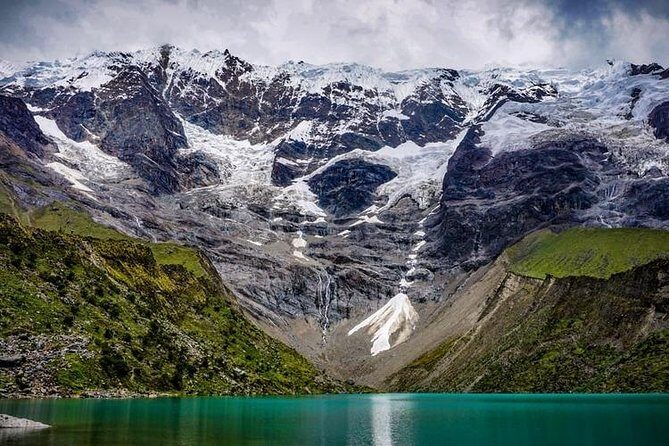
Lunch comes mid-route with a briefing before you push on to Lake Humantay, where the highest point today is 4220 m. The route is about making the first day work: you’re hiking long enough to feel like a trek, but not so long that you blow your energy before the real Salkantay climb.
Practical notes I’d watch on Day 1:
- You’re at high altitude early. Take it slow on the first hours, even if you feel fine.
- Lake Humantay requires good timing and steady walking. Wear grippy shoes; the trail can feel slick depending on conditions.
Admission note: Lake Humantay has an admission component listed as not included, so budget for it separately.
You can also read our reviews of more hiking tours in Cusco



Salkantay Pass and the orchid-and-waterfall forest (Day 2)
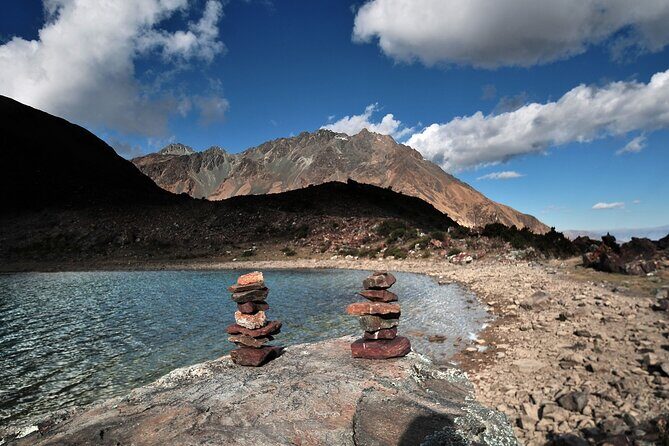
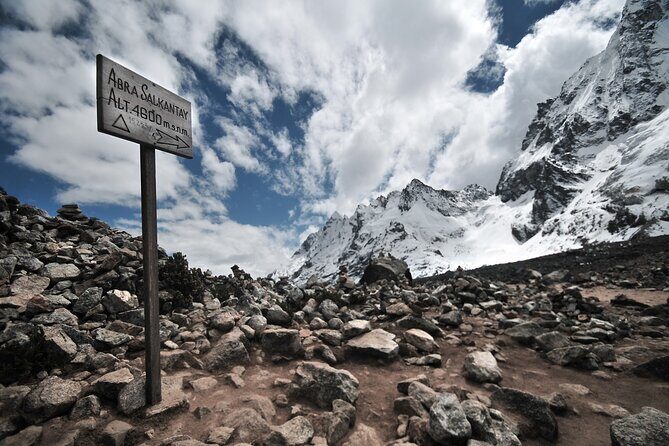
Day 2 is the heart of the trek for most people. Around 6:00 a.m., you eat breakfast and start your climb toward Salkantay Pass (4650 m)—the highest point on the entire route.
You’ll spend hours moving upward through scenery that changes as the altitude climbs. Then the plan shifts: after reaching the pass area, you head toward Huayracmachay for lunch. Later, you descend along a valley and enter high forest. This is a different kind of hiking: less exposed, more shaded, and often more interesting for small things you might miss in open terrain—like orchids and the sound-and-sight of a large waterfall.
You finish with your second camp at Chaullay, then dinner comes after a roughly 7-hour hike.
What makes Day 2 valuable isn’t only the summit point. It’s the transition. You get the big altitude effort first, then relief in a greener environment. That rhythm helps you avoid the mental whiplash that sometimes happens on mountain trips.
Admission note: Salkantay-related entrance is listed as included here (the itinerary notes an admission component with ticket included), so you won’t be juggling that particular payment on this day.
Santa Teresa drop-off: coca leaves, avocado plantations, and hot springs time (Day 3)
Day 3 is described as easier because you begin descending. You start at high forest and move to lower altitudes, which is a huge deal after the pass day.
You’ll walk about 6 hours, passing avocado plantations and also coca leaves, described as sacred to the Incas. The cultural detail matters because it turns the scenery into something you can read, not just look at.
There’s a lunch break and rest on the way. Then you switch from hiking to getting to town: you take local transport to Santa Teresa for the night.
Here’s the clever part: upon arrival you can leave your gear at camp, and take local transport to the medicinal thermal baths. You return for dinner in the evening.
Practical advice for Day 3:
- Bring insect repellent. The itinerary specifically recommends it for this section.
- Use the hot springs time wisely. If you go too long, you might end up feeling stiff instead of recovered.
Admission note: the hot spring entrance is listed as not included (and the thermal baths entry fee is shown), so plan to pay that separately if you want the soak.
Hydroelectric station day: zip-line (300–500 m) or a simpler hike (Day 4)
Day 4 is built around choices, and that flexibility is worth real money to some travelers—especially if you’re feeling good and want an extra thrill, or if you’re tired and want fewer steps.
Your day starts from Santa Teresa, and you have three options:
- Walk from Santa Teresa to the hydroelectric station
- Take local transport to the hydroelectric station (you cover the cost)
- Take a zip-line excursion, with cables ranging from 300 to 500 meters
After the zip-line or whichever option you take, you get transported to the hydroelectric station, then have lunch. From there, the plan is to walk to the small town of Aguas Calientes. Along the route, orchids are mentioned again, which feels like a theme rather than a random bonus.
When you arrive in Aguas Calientes, your guide provides a briefing in a room at the hotel. This briefing is focused on your Machu Picchu visit—how the timing works and what to expect—so you’re not doing guesswork at sunrise.
One thing to know: the day is about positioning. You’re moving from trek mode to Machu Picchu mode. Keeping your energy for the next morning matters.
Machu Picchu at 4:30 a.m.: sunrise options and a guided 2-hour tour (Day 5)
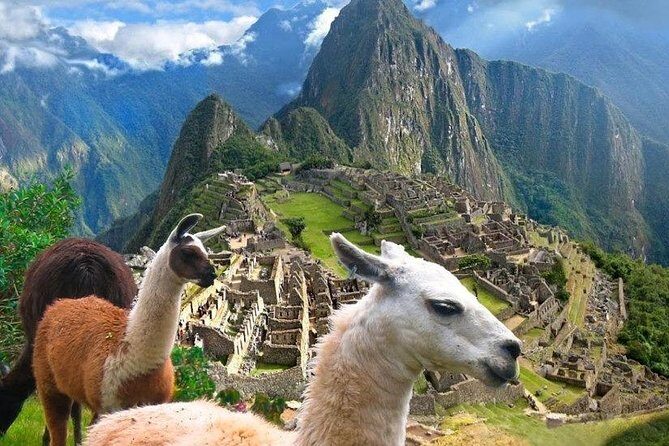
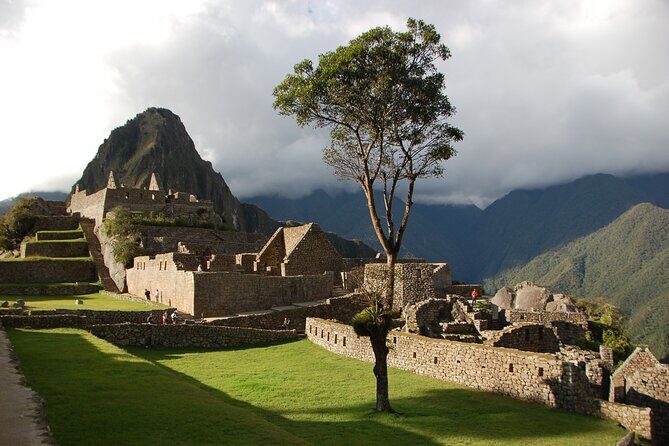
Day 5 begins in the dark: around 4:30 a.m., you start walking toward Machu Picchu and meet your guide and the group at the ruins.
This day has a key decision. You can:
- Go on foot to try for sunrise, or
- Take the bus
At the citadel, you get a guided tour of about 2 hours. After that, there’s free time to explore other parts of the site—mentioned highlights include the Inca Bridge and the Sun Gate. Then you descend back to Aguas Calientes on foot or by bus (based on the plan you agree on with your guide).
From Aguas Calientes you board your return train in Expeditions class to Ollantaytambo, and then a bus takes you back to Cusco.
Why I think this format works:
- You get the guide in charge when navigation and timing matter most.
- You still get your own time after the tour to focus on what you care about.
- The train and onward transport are included, which means fewer moving pieces on your last day.
Admission note: Machu Picchu entrance is included. If you want extras like Huayna Picchu or Machu Picchu Mountain, those have separate fees listed as not included.
You can also read our reviews of more tours and experiences in Cusco
Price and logistics: what $456 buys you (and what you’ll pay extra)
At $456 per person for about 5 days, the value comes from how much is already stitched together. You get hotel pickup, a professional guide, transport from Cusco to the trailhead, camping gear (tents and sleeping mats), horses to carry baggage up to 8 kg, plus meals across the days. You also get a full Machu Picchu day with entrance included, one night in Aguas Calientes (hostel), and the return train ticket in the specified class.
But there are predictable add-ons, mostly tied to admissions and optional upgrades:
- Day 1 breakfast is not included (shown as $7 per person).
- Lake Humantay admission is not included.
- Hot springs admission is not included.
- Bottled water/snacks are not included (budget a fixed amount).
- Bus tickets to and from Machu Picchu are not included (listed as $24 per person).
- Sleeping bag is not included ($10 per person).
- Optional Machu Picchu add-ons like Huayna Picchu and Machu Picchu Mountain cost extra.
- If you choose an option that changes transport from the hydroelectric area, there’s also a train fare from hydroelectric station to Aguas Calientes listed as $33 per person.
My practical rule: if you plan to do everything comfortably—pay admissions, bring water, maybe rent a sleeping bag, and use the bus at Machu Picchu—your final spend will be higher than $456. If you keep it simple (walk when possible, skip optional add-ons, and plan snacks), you can hold closer to that number.
Gear and altitude: how to avoid feeling miserable on purpose
This trek asks you for moderate physical fitness. The itinerary includes long hike blocks (often around 6–7 hours) and multiple altitude highs, including the pass at 4650 m.
Here’s what the trip gives you:
- Camping equipment: tents and sleeping mats
- Horses for up to 8 kg baggage per person
- Food support via meals included across the trekking days
What you may still need:
- A sleeping bag (listed as not included, $10 per person)
- Enough water and snacks for your preferences (bottled water/snacks budget is listed)
- Insect repellent for the Day 3 forest section (explicit recommendation)
Altitude reality check:
- Take the first day slowly even if you feel strong.
- On summit-style climbs, your breathing will lead. If you start sprinting early, you’ll pay for it later.
Who this Salkantay Trek is best for
I’d put this trek in the “serious hike, supported experience” category. It suits you best if:
- You can handle long days on foot without needing lots of amenities
- You want guided logistics so you can focus on the trail and Machu Picchu
- You’re okay with early mornings and cold or changeable mountain weather
- You like small-group travel (maximum 15)
It might not be your best fit if:
- You’re very sensitive to altitude and don’t have experience hiking at high elevations
- You hate paying for admissions and optional extras (bus tickets, mountain add-ons, sleeping bag)
- You’re looking for a gentle stroll rather than a real trek with a high pass
Should you book? My honest take
If your goal is Machu Picchu with real trekking miles behind it, this is a strong match. The combination of Humantay Lake, the climb to Salkantay Pass, a descent through forest, and then a structured Machu Picchu day is the kind of route that feels earned.
Book it if you:
- Want guided support all the way to Machu Picchu
- Appreciate the horse baggage help (8 kg is a lifesaver on steep days)
- Plan to budget for key add-ons like bus tickets to Machu Picchu and any optional mountain hikes
Hold off if you:
- Don’t want to pay extra for admissions, transportation segments, and add-on ruins
- Can’t commit to long early mornings and multi-hour hikes
One last practical thought: this trek is commonly booked well ahead (on average around two months), so earlier planning tends to reduce stress when Machu Picchu timing and group capacity matter.
FAQ
What is included in this 5-day Salkantay trek price?
You get hotel pickup, a night-before briefing, transport from Cusco to Challacancha, a professional guide, horse support for up to 8 kg baggage per person, camping equipment (tents and sleeping mats), Machu Picchu entrance, one night in Aguas Calientes (hostel), and the return train from Aguas Calientes to Ollantaytambo in Expeditions class plus transport back to Cusco. Meals are also included across the days (breakfasts, lunches, and dinners).
What time do you leave for Humantay Lake on Day 1?
You’re picked up from your hotel at 4:30 a.m. and drive to the trailhead, with breakfast in Mollepata before starting the hike.
How high does the trek go on the highest day?
The highest point is Salkantay Pass at 4650 meters on Day 2.
Is Machu Picchu entrance included?
Yes, entrance to Machu Picchu is included, and you also get a guided tour of about two hours on the ruins.
Do I have to hike to Machu Picchu from Aguas Calientes?
No. On Day 5 you have two options for the ascent: go on foot for sunrise or take the bus. Your guide will brief you on how the plan works.
Is breakfast on the first day included?
Breakfast on the first day is listed as not included, priced at $7.00 per person.
What are the Day 4 options before you reach Aguas Calientes?
You can walk from Santa Teresa to the hydroelectric station, take local transport to the hydroelectric station (cost paid individually), or take a zip-line excursion with cables ranging from 300 to 500 meters. After that you’re transported to the hydroelectric station for lunch, then you walk to Aguas Calientes.
Is the thermal bath on Day 3 included?
No. The hot spring entrance fee is listed as not included.
Do I need a sleeping bag?
The sleeping bag is listed as not included (shown as $10 per person). The trip does include sleeping mats and tents.
Can I cancel for a full refund?
Yes. Free cancellation is available up to 24 hours before the experience’s start time for a full refund.