REVIEW · CUSCO
Sacred Valley Tour Vip Chinchero Ollantaytambo and Pisac
Book on Viator →Operated by Machupicchu Adventour · Bookable on Viator
Six-thirty in Cusco can feel brutal. This full-day Sacred Valley circuit is still a great deal because you get five major stops with a bilingual guide and real time at the big sights, plus a proper buffet lunch in Urubamba.
I like how the day mixes standout architecture and Inca engineering. Chinchero gives you those high-altitude views and an old-school village feel, while Moray’s circular terraces show the Incas treating farming like science. The one catch is the trade-off: it’s an 11–12 hour day, and some sites can feel rushed if you want deep explanations, plus you’ll pay extra for the park ticket (Partial Ticket III) and Maras salt mines entry.
In This Review
- Key points to know before you go
- Planning Your 6:30 am Start in Cusco
- Value Math: $29 plus the Peru ticket costs
- Chinchero: Adobe houses, the rainbow legend, and a quieter Sunday market
- Moray’s circular terraces: the Incas’ microclimate lab
- Maras salt mines and the Tiobamba adobe sanctuary
- Urubamba lunch: buffet break with music and mountain views
- Ollantaytambo: fortress thinking, water worship, and stepped terraces
- Pisac: precision stonework and the Intihuatana ceremony site
- How the bilingual guide (and driver) shape your day
- Best for who: efficient highlights for a budget, not a slow history seminar
- Should you book this Sacred Valley loop?
- FAQ
- What time does this tour start?
- How long is the Sacred Valley tour?
- What’s included in the $29 price?
- What entrance fees should I budget for?
- Is lunch included?
- How large is the group?
Key points to know before you go
- Early pickup at 6:30 am means more daylight for photos and less waiting around
- Four archaeology parks are covered by the Partial Ticket III (Chinchero, Moray, Ollantaytambo, Pisac)
- Moray’s circular terraces are the highlight if you love irrigation and clever Inca agriculture
- Maras salt pools are excellent for photography and offer an easy-to-find area for short walks
- Urubamba lunch is a real break with a buffet and live Andean-style music
- Small group size (max 19) and a bilingual guide help the day move smoothly
Planning Your 6:30 am Start in Cusco
This is a long day out of Cusco. The meeting time is 6:30 am, and the whole experience runs about 11 to 12 hours. Expect a schedule that moves—this tour is built to cover multiple Sacred Valley sites in one go, not to linger.
The upside is simple: you’ll see a lot while the roads and the sites are still waking up. You’ll also be in a group capped at 19 people, which usually keeps the vibe calmer than the mega-tour buses.
Bring the usual high-altitude day-trip stuff: a warm layer for mornings, sunscreen for daytime sun, and water. Chinchero sits at 3,765 m, so even if you feel fine in Cusco, the cold wind can still surprise you.
You can also read our reviews of more tours and experiences in Cusco

Value Math: $29 plus the Peru ticket costs
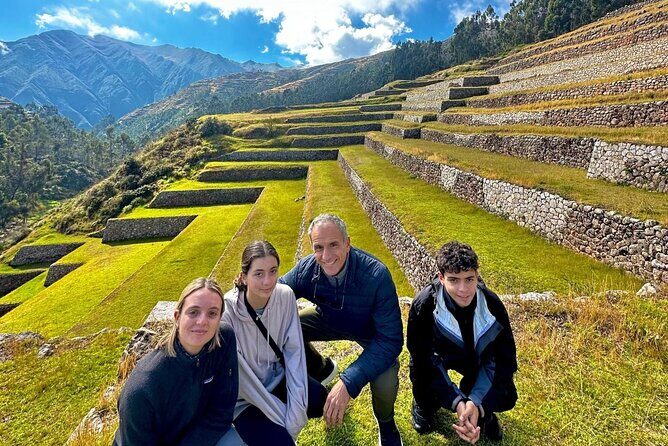
At $29 per person, the price sounds almost unreal for a day that includes transfers from your Cusco hotel, a bilingual guide, guided visits, and lunch in Urubamba. The value is real, but you do need to plan for add-on entrances.
What’s not included:
- Partial Ticket III (S/.70) for entrance to four parks: Ollantaytambo, Pisac, Chinchero, and Moray
- Maras salt mines entry (S/.20)
So your total cost is really the base price plus those entrances. If you’re comparing tours, don’t just compare the headline number—compare what you’ll pay at the gate.
Chinchero: Adobe houses, the rainbow legend, and a quieter Sunday market
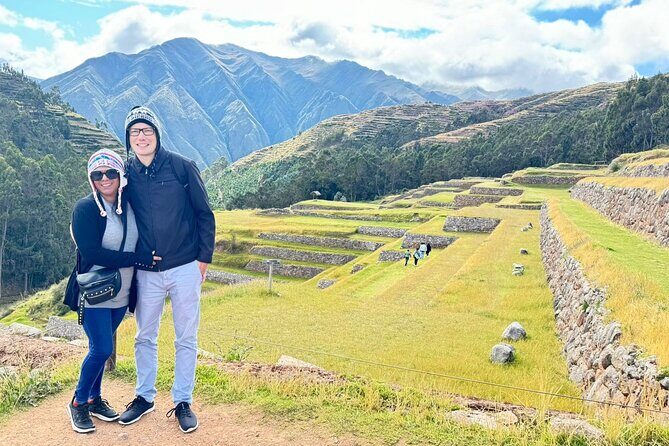
Chinchero is one of those places where the scenery feels like it has depth, not just height. After about 1 hour of driving, you arrive in the windswept Andean plains near Anta, around 30 km from Cusco.
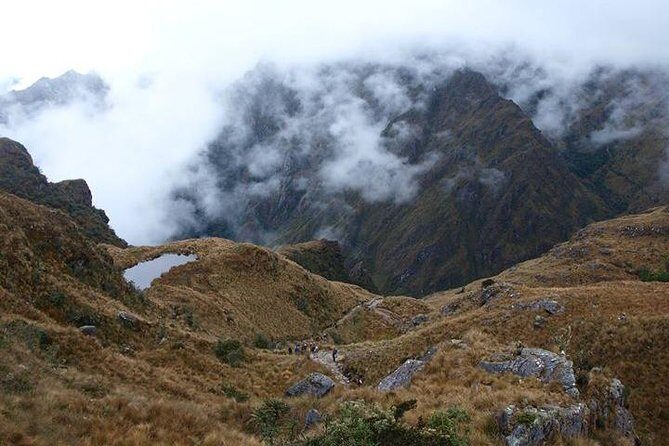
What I like here is the mix of daily life and Inca-era stone. Chinchero is a small indigenous village with mud brick (adobe) homes and locals moving through their routine in traditional dress. The views are part of the reason people remember this stop: the Sacred Valley stretches out with the Vilcabamba Mountain Range and Salkantay watching from the west.
Then there’s the historical detail. The big vestige tied to Inca times is an enormous stone wall in the main square with ten trapezoidal niches. It’s not a single-photo wonder; it’s something you can actually study as you walk around.
A note on the market: Chinchero is known for its colorful Sunday market, and it’s often described as less tourist-oriented than the Pisac market. If your day happens to line up with market hours, you’ll get a more authentic feel. If not, you’ll still enjoy the village square, the wall, and the high-altitude atmosphere.
Admission for this stop isn’t included, so budget your time—and your ticket—accordingly.
Moray’s circular terraces: the Incas’ microclimate lab
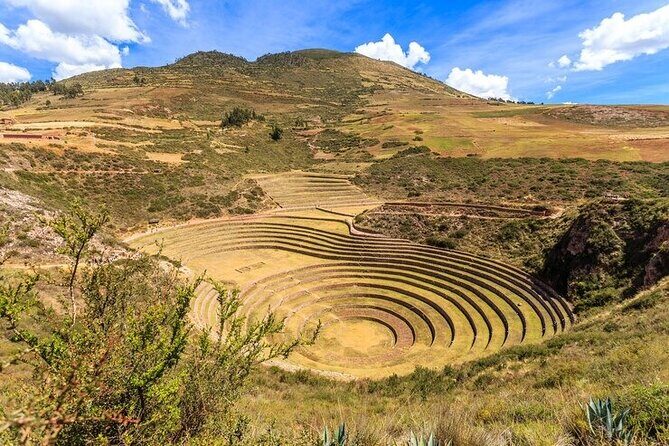
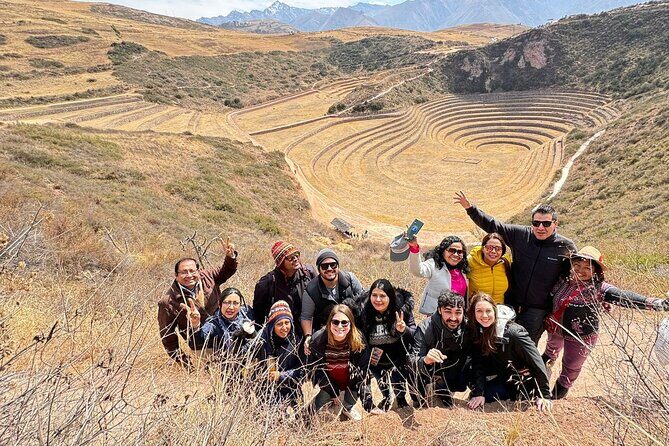
Next up is Moray, reached after about half an hour of travel. This is where the day turns from village life into pure engineering.
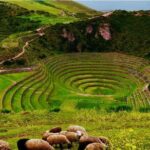
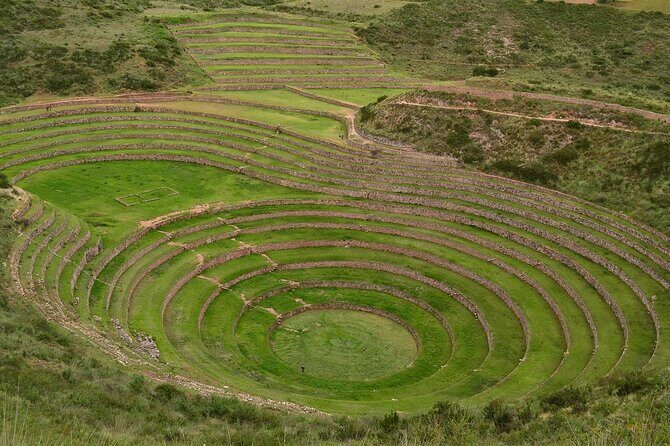
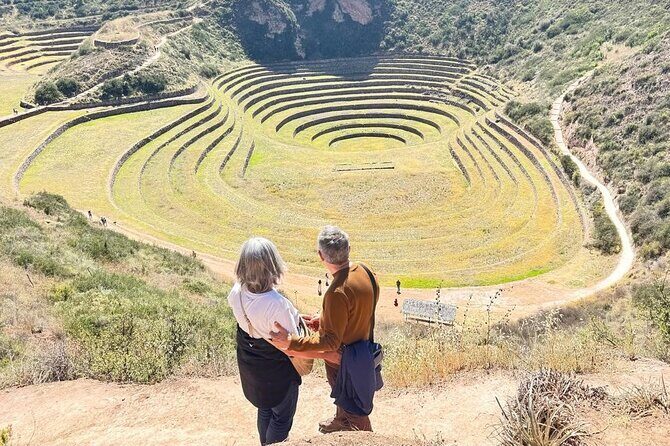
Moray’s star attraction is its system of circular agricultural terraces, built like an irrigation-connected set of retaining walls. These terraces create microclimates, basically letting the Incas grow different products by changing temperature and growing conditions. If you’ve ever wondered how people farm in such varied Andean conditions, Moray is a visual answer.
The numbers here are impressive: the terraces can be up to 330 feet deep, and the site sits far enough from Cusco that it feels like its own world. You’ll spend about 1 hour 30 minutes, which is enough time to see the pattern, look for irrigation channels, and take your photos without feeling like you sprinted the whole place.
The only real drawback is also the most common one on a packed day: you don’t get unlimited time to read every detail. If you love history explanations more than photo stops, go in ready to ask questions.
Maras salt mines and the Tiobamba adobe sanctuary
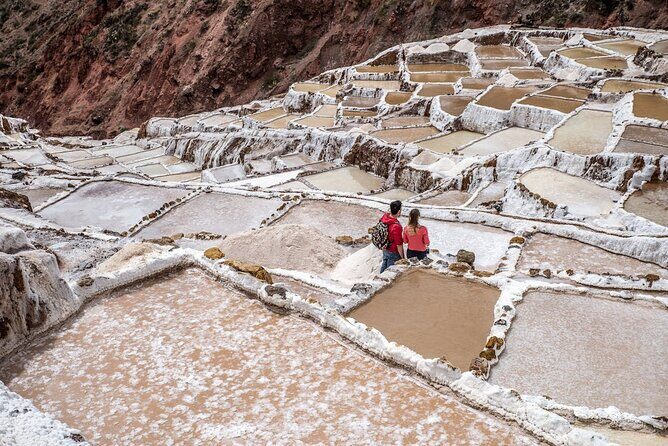
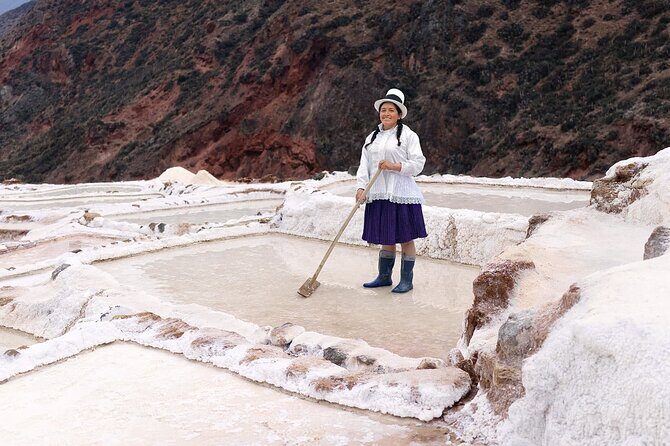
After Moray, you drive about half an hour to the salt mines area in the rural community of Pichingoto. This is the famous salt pools of Maras, and yes—the views are why photographers line up.
The salt pans spread out across a dramatic setting, and the site is known for being good for more than just standing still. You’ll often see people looking for angles for pictures, and the area is described as friendly for hikers and even mountain bikers. There’s also a trail connection idea here: a route that links the salt mines with Tarabamba and Pichingoto. Even if you don’t do a long walk, it helps to know the area isn’t just a single flat viewpoint.
Plan for photos first. The light tends to look great when you can move a little and find a higher or wider vantage point.
You’ll also have a chance to visit the Tiobamba Sanctuary, a colonial adobe church that contains paintings attributed to Cusco, including The Last Supper. For this stop, the sanctuary itself is listed as free on the tour schedule, while the salt mines entry (S/.20) is extra.




Urubamba lunch: buffet break with music and mountain views
About 45 minutes after Maras, you reach Urubamba for rest and lunch, and the schedule gives you about 2 hours. This is a key part of why the day works: you’re not just “eating something.” You get a buffet lunch with both national dishes and typical local dishes, and it’s described with soft Andean music.
One practical perk I’d count on: the lunch is at a larger restaurant setting where people talk about the food being a standout. Some departures include live flute music, which turns lunch into a real pause instead of another rushed stop.
This is also a smart time to reset your body. By this point you’ve already climbed emotionally and physically through multiple environments. A normal, filling meal helps you keep going for the last two archaeology stops.
Ollantaytambo: fortress thinking, water worship, and stepped terraces
Ollantaytambo is reached after about 1 hour of driving from Urubamba. This town is famous for preserving Inca-built designs at an altitude of 9,160 feet (about 2,800 meters).
The architecture here is why people stay in love with the Sacred Valley. You get a ceremonial temple connected with worship of water, plus a fortress built between two mountains to guard the valley and repel invasion. It’s defensive design that still feels elegant when you’re standing in it.
You’ll also see a cluster of additional sites during your roughly 2-hour visit:
- the Temple of the Inti (sun god), Incamisana
- the baths of the Ñustas (princesses)
- Cachiccata funerary towers
- very steep, stepped terraces on a hillside
A practical point: Ollantaytambo involves stairs and uneven steps. If your knees dislike steep slopes, take your time, use the guide’s pacing, and treat the climb like a slow walk, not a workout.
The payoff is real. Ollantaytambo feels like a place built for movement, with views that constantly pull your attention back outward.
Pisac: precision stonework and the Intihuatana ceremony site
Pisac comes next after about 45 minutes of travel. This part of the Sacred Valley is famous for stonework that still looks engineered, not just decorative.
You’ll notice the stone block walls and their balanced proportions. The joints are described as perfect, creating an architectural complex that captivates as you move through it. Pisac isn’t one single “attraction”; it’s a connected set of terraces, a ceremonial room, palaces, walls, and towers arranged so everything feels part of the same plan.
There’s also cultural meaning in the name. Pisac comes from Quechua and is said to mean partridge, a bird found in the area.
One specific site to look for is Intihuatana, described as the most important ceremonial and religious site in Pisac. The buildings there are made of sedimentary rocks, and the way it’s positioned makes it feel like it was meant for ritual presence, not just casual viewing.
You’ll get about 2 hours here. Again, it’s not enough time to truly absorb everything if you’re a history sponge, but it is enough to understand why Pisac is so often paired with other Sacred Valley highlights.
Admission is tied into the same Partial Ticket III as Chinchero and Moray.
How the bilingual guide (and driver) shape your day
Here’s the part people don’t always put on postcards: the guide and driver can make the difference between a day that feels smooth and one that feels like a blur.
This tour includes a bilingual guide (English and Spanish), and the best days lean on the guide’s ability to read the crowd. The more capable the guide, the easier it is to find calmer moments at each site. On this kind of route, that matters. Big sites get busy fast, and you don’t want to spend your precious minutes staring at other people’s heads.
I’ve also seen names tied to strong guiding on this tour—Rudy, William, Samuel, and Virgil—and the pattern in the feedback is consistent: explanations that are entertaining and clear, plus a plan that keeps you moving without completely abandoning context. If your guide is on-form, you’ll leave feeling like you understood what you saw, not just that you checked boxes.
The tour also includes downtime in small bursts—free time often described as around 15 to 30 minutes at certain stops. Use that time wisely: buy a few extra photos, find a less crowded angle, and reset your energy.
Best for who: efficient highlights for a budget, not a slow history seminar
This is a smart pick if you want:
- a full Sacred Valley overview in one day
- value for money (transport + bilingual guide + lunch + guided stops)
- the big visual hits: Chinchero village feel, Moray terraces, Maras salt pools, Ollantaytambo fortress design, and Pisac stonework
It’s also good for you if you like having a guide to point out details you might miss on your own, like the specific feel of the circular terraces at Moray or how Pisac’s buildings link together.
I wouldn’t call this ideal if:
- you want deep historical lectures at every site
- you hate long walking or steep steps
- you’re hoping the visit times will be long enough for a thorough, slow read of everything
The day is active and time-sliced. You’ll get a high-quality snapshot, not a single-stop deep dive.
Should you book this Sacred Valley loop?
If you’re weighing this against pricier options, I’d book it if your goal is to see the essentials of the Sacred Valley in one long day without paying a premium for the same route. The mix of guided visits, a solid Urubamba lunch, and the standout sites of Moray, Maras, Ollantaytambo, and Pisac makes the base price feel very fair.
Book this with clear expectations: you’ll have enough time to understand and enjoy each location, but not enough time to slow-walk your way through every stone inscription. Add the entrance fees into your planning, show up rested for the 6:30 am start, and you’ll have one of the best-value ways to experience Cusco’s Inca world.
FAQ
What time does this tour start?
The tour meeting time is 6:30 am.
How long is the Sacred Valley tour?
It runs about 11 to 12 hours.
What’s included in the $29 price?
The price includes Cusco hotel transfer, a bilingual guide (English and Spanish), lunch buffet in Urubamba, and guided visit.
What entrance fees should I budget for?
You’ll need to pay Partial Ticket III (S/.70) for entrances to Ollantaytambo, Pisac, Chinchero, and Moray, and S/.20 for Maras salt mines entry.
Is lunch included?
Yes. There’s a buffet lunch in Urubamba with a mix of national and local dishes.
How large is the group?
The tour has a maximum group size of 19 travelers.