REVIEW · CUSCO
Half Day – Cusco City Essentials (Afternoon Group Tour)
Book on Viator →Operated by Valencia Travel Agency S.a.c. · Bookable on Viator
Cusco can feel like a time machine, fast. This half-day city loop is a smart way to connect Inca stone and Spanish churches without getting lost in the details.
I like two things most: the local guide explanations make the stops click, and the pace is built for first-timers who want the highlights in about four hours.
One thing to watch: you’ll pay separate entrance fees at multiple stops, so you should budget for those and decide if the Cusco Tourist Ticket is worth it for you.
In This Review
- Key highlights worth your attention
- A Smart 4-Hour Route Through Inca and Spanish Cusco
- Price and Value: What You Pay, What You Buy On Your Own
- Meeting Point, Pickup, and the Pace You’ll Actually Feel
- Qorikancha: The Inca Temple Beneath the Walls
- Cusco Cathedral: Spanish Art Over a Cusco Foundation
- Saqsayhuamán: The Stonework That Still Feels Like Authority
- Q’enco and the Idea of Earth Worship
- Puka Pukara: A Military Control Center
- Tambomachay: Water Worship and Sacred Flow
- Your Guide Matters More Than You Think
- Is This Half-Day Tour Worth It for Your Plans?
- Should You Book It?
- FAQ
- What’s included in the Cusco City Essentials tour?
- Are entrance tickets included for the sites?
- How much is the Cusco Tourist Ticket?
- Where does the tour start and end?
- How long is the tour?
- What happens if the weather is poor?
Key highlights worth your attention
- Hotel pickup and drop-off makes it easier when you’re still learning Cusco’s streets
- A local guide who actually explains the why, not just the what
- Major Cusco landmarks in one afternoon, so you can plan the rest of your trip
- Multiple Inca sites with different purposes, from earth worship to water rituals
- Small groups (up to 20) keep it comfortable for questions and timing
- Language support in English helps you move through the story faster
A Smart 4-Hour Route Through Inca and Spanish Cusco
If you’re visiting Cusco for the first time, you’re probably dealing with two realities at once. One: the city feels layered, with Inca foundations under Spanish-era buildings. Two: you have limited time, and you want it to mean something.
That’s exactly why I like this tour’s format. In one afternoon, you get a guided sweep across the big-name sites around Cusco, with enough time at each stop to understand what you’re seeing. It’s not trying to turn you into an expert by the time you ride back to your hotel. It’s aiming to help you get your bearings and start recognizing the themes: power, religion, and the engineering choices behind both Inca and colonial Cusco.
You’ll also get the practical benefit of being in a group. Cusco’s streets can look simple on a map and still be confusing in real life. Having a plan—and a guide—reduces the guesswork.
You can also read our reviews of more city tours in Cusco
Price and Value: What You Pay, What You Buy On Your Own
The tour price is $64.39 per person for about four hours with a guide, hotel pickup/drop-off, and an air-conditioned vehicle. For Cusco, that’s a fair deal if you value convenience and want someone to connect the dots between sites.
But here’s the part you shouldn’t ignore: entrance tickets are not included for key stops.
- Qorikancha (Koricancha) admission: 15 soles per person (about $5 USD)
- Cusco Cathedral entrance: 25 soles per person (about $8 USD), or included if you purchase the Cusco Tourist ticket
- For the archaeological sites (the four Inca complexes in the city circuit), you’ll generally need a Cusco Tourist Ticket at 130 soles (about $45 USD). Students with an ISIC card get a 50% discount.
So is it good value? Often, yes. Here’s the rule of thumb I use: if you’re visiting more than one paid site, guided logistics plus a vehicle usually beats DIY chaos. But if you hate ticket math or you’re only interested in one or two stops, you might prefer booking a smaller custom day.
Also note the ticket strategy. The Cusco Tourist Ticket can be used for the Sacred Valley tour too. If Sacred Valley is on your calendar, buying the full ticket now can save you from paying again later. If you’re not going to the Sacred Valley, you can ask about a partial one-day ticket that covers just the four archaeological sites included in the city tour.
Meeting Point, Pickup, and the Pace You’ll Actually Feel
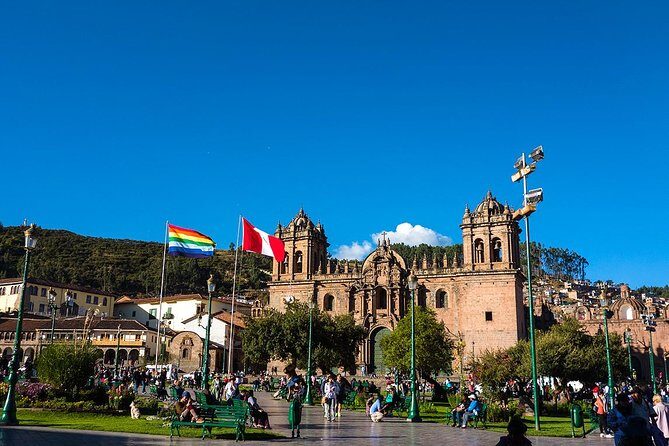
This tour starts and ends at Plaza Regocijo (near the main square). You’ll typically be dropped off back at the same area, which is handy if you want to walk to dinner afterward.
Hotel pickup is offered, and you’ll provide your hotel details to arrange it. The group size is capped at 20 travelers, which usually keeps the stops from feeling like a cattle line. You’re also traveling by an air-conditioned vehicle, which matters in Cusco when the sun is out and you’re climbing in and out of cars.
The schedule is tight in a good way. You’ll spend roughly:
- 20 minutes at Qorikancha
- 30 minutes at Cusco Cathedral
- 40 minutes at Saqsayhuamán
- 30 minutes at Q’enco
- 20 minutes at Puka Pukara
- 20 minutes at Tambomachay
That means you won’t linger forever, and you won’t have time to wander without listening. If you want to photograph every corner slowly, plan extra time on another day. If you prefer a guided storyline with stops that don’t drag, this pace tends to fit.
One more note from real-world experience: the hand-off between pickup, the operator, and the guide can be smoother—or less smooth—depending on how the day runs. If your meeting point is outside your hotel lobby, build in a little patience and double-check your confirmation before the afternoon starts.
Qorikancha: The Inca Temple Beneath the Walls
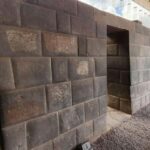
Qorikancha, sometimes spelled Koricancha, is a place where you can almost feel the layers of Cusco’s history in one glance. You’re not just looking at ruins. You’re looking at how power and belief changed hands.
This stop lasts about 20 minutes, which is short, but enough when you have a guide pointing out key architectural details. The big idea is that Qorikancha was an important Inca religious space, and later Spanish building campaigns absorbed or altered the site. That’s why it’s such a strong opener for a first-time visit: it sets you up to understand how Cusco evolved.
A practical drawback: the entrance fee isn’t included, so you’ll want cash and/or a simple payment plan ready. Also, Qorikancha is popular. Expect some crowds, especially if you’re near the center of the day.
If you’re the kind of person who likes to know what you’re looking for, this is the stop where your guide’s explanations really matter. Even a few minutes of good context can turn the stones and walls from just scenic to meaningful.
Cusco Cathedral: Spanish Art Over a Cusco Foundation
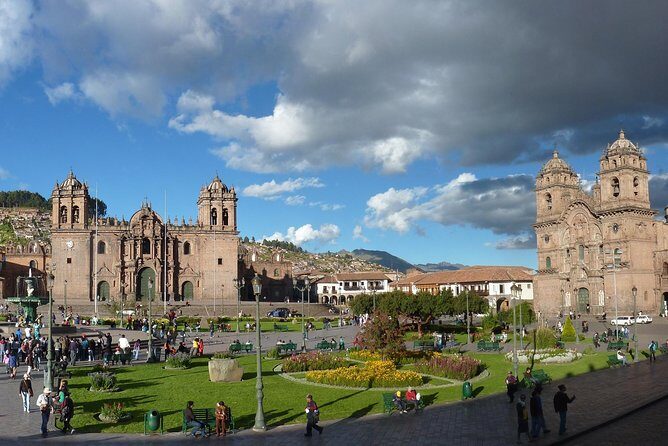
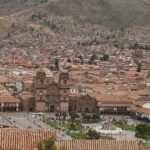
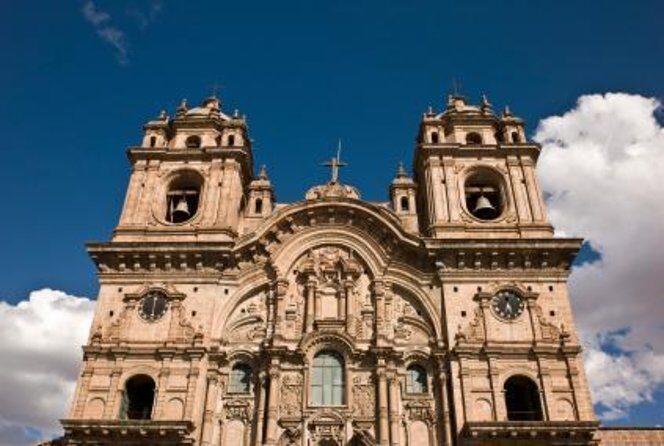
From Inca temple space you shift to the Cusco Cathedral, and the contrast is the point. The construction began in 1560, and the building became a focal point for colonial religious art.
You’ll have about 30 minutes here. That’s enough time to see the main highlights and take in the vibe without feeling rushed. One detail I find especially useful: the cathedral is known for housing around 300 paintings from the Cusqueña School. If you look at a church like this as a visual story, those artworks become a map of local religious culture under Spanish rule.
Entrance is not included unless you’ve already bought a ticket that covers it (the Cusco Tourist Ticket can include the cathedral entry). That makes the ticket decision feel less abstract. If you plan to visit multiple paid sites in one day, it often makes sense to align your tickets with the places you’ll actually enter.
Also, remember you’re in a working religious space. Dress respectfully and keep your phone volume low. You’re not there for a museum selfie marathon. You’re there to understand why people come here.






Saqsayhuamán: The Stonework That Still Feels Like Authority
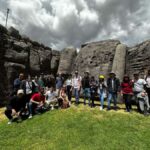
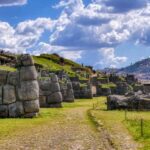
Saqsayhuamán is one of those Cusco sites that makes you stop talking for a moment. The place is built from heavy stone blocks and arranged with impressive planning—so impressive that it’s easy to get lost in the mechanics of it.
You’ll spend about 40 minutes, which is a good chunk compared to the smaller stops. Here, the value is in being able to look at the site while someone explains what the layout and construction suggests about purpose. Even if you don’t memorize technical facts, you’ll start to see why this location mattered.
The tour description highlights that some stones can weigh up to 120 tons. That’s the kind of fact you can remember later when you’re comparing different Inca sites. The point is not the number itself. The point is the scale of what it took to build.
Again: entrance isn’t included, so plan around paid entry. If you’re already investing in a Cusco Tourist Ticket, this stop helps you justify it.
Q’enco and the Idea of Earth Worship
Q’enco is quieter than Saqsayhuamán, and that makes it easier to focus. You’ll have around 30 minutes here, and it’s a chance to slow down and think about a different kind of sacred space.
The site is described as a religious center dedicated to the adoration of the Earth. That phrase matters. It shifts your thinking away from stone as decoration and toward stone as part of a worldview—where land, water, and cycles were part of the spiritual system.
In a group tour, it can be tempting to only chase the big famous ruins. I like having at least one slower stop like Q’enco because it adds variety and teaches you that Inca religion wasn’t only temples in the center of town. It was also in the spaces around the city.
If you’re craving deeper explanations, this is where a great guide earns their fee. In past departures, guides such as Eloi have been praised for being both well-informed and good at keeping the story moving. That sort of guiding makes shorter stops more satisfying.
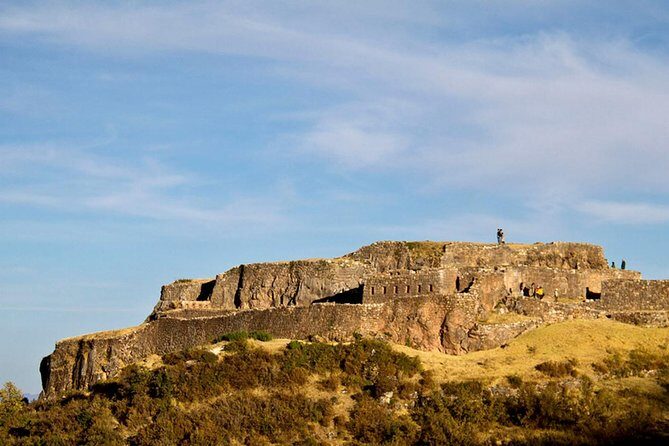
Puka Pukara: A Military Control Center
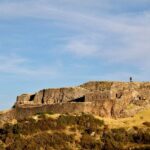
Puka Pukara is the kind of site that rewards people who like function as much as form. You’ll have about 20 minutes, and the site is described as a military control center.
So instead of asking, what does it look like?, you’ll be nudged to ask, what was it used for? That’s a helpful mental shift. It turns ruins into strategy.
This is also a stop where the time limit is real. With only 20 minutes, you won’t get lost in details, and you shouldn’t try to. If you want to absorb everything, take a photo or two, then focus on the guide’s explanation. You’ll learn more that way than by trying to read every carved surface yourself.
As always, entrance fees apply and you’ll likely want the Cusco Tourist Ticket to cover the archaeological stops.
Tambomachay: Water Worship and Sacred Flow
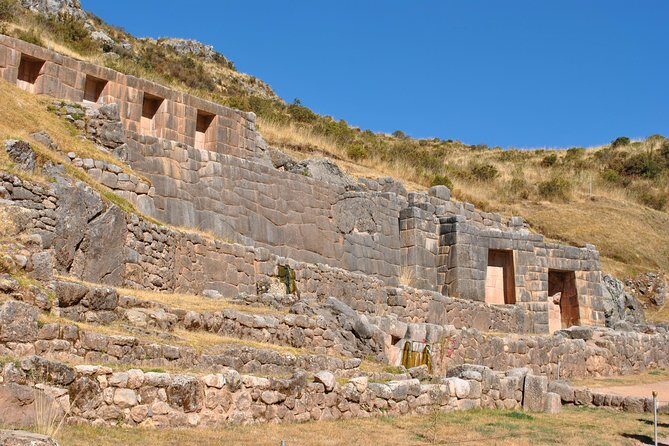
Tambomachay is another stop that changes the theme. If Puka Pukara points toward control, Tambomachay points toward ritual.
You’ll spend about 20 minutes, and it’s described as a center of adoration and worship of water. Cusco’s relationship with water is a big deal. The idea of water as sacred makes sense in a place where weather and altitude can shape daily life.
This stop is often a good reset after the bigger stone complexes. It gives you a different sensory experience and a different kind of architecture to notice. Even if you don’t know the details, you can still read the site as a place designed for water and movement.
If you come with the right expectation, this becomes one of your more memorable moments of the afternoon—because you’re not only seeing where rulers watched. You’re seeing where people honored natural forces.
Your Guide Matters More Than You Think
With a tour like this, the guide can be the difference between seeing sites and understanding them.
In the best cases, you’ll get clear explanations that connect the stops into one story. In past groups, guides like Adrian have been described as very knowledgeable, and others like Eloi have been praised for being entertaining and flexible with the route and schedule. When that happens, the short time at each stop feels fair, not rushed.
Look for how your guide talks about both Inca and Spanish layers. The goal isn’t to argue which culture was better. It’s to help you see how Cusco became Cusco: a place where different systems of power and belief overlapped, sometimes painfully, sometimes with adaptation.
Also, if you ask questions, you’ll get more out of the experience. The tour moves fast, so your best questions are the ones that help you interpret what you’re seeing right now.
Is This Half-Day Tour Worth It for Your Plans?
This is a strong fit if:
- You’re visiting Cusco for the first time and want a guided orientation
- You like short days with clear structure and minimal transportation hassle
- You want to understand the relationship between Inca sites and Spanish-era landmarks
- You prefer traveling with a small group and having time to ask a question or two
It may be less ideal if:
- You hate paying multiple entrances and prefer only free viewpoints
- You want lots of slow wandering and unstructured time
- You’re booking at a time of day when crowds make you feel stressed (Cusco can be busy)
If you plan to do the Sacred Valley soon, your ticket planning becomes easier. If you’re not going to the Sacred Valley, you’ll want to consider whether a partial ticket for the city archaeological sites makes sense for your budget.
Should You Book It?
Yes, I’d book it if you want the best shot at learning Cusco quickly without turning your afternoon into a logistics puzzle. For $64.39, you’re buying more than transport. You’re buying interpretation—someone to explain why each place matters and how the pieces connect.
Just be smart about entrances. Decide ahead of time whether you’re using the Cusco Tourist Ticket so you’re not scrambling on the spot. If you do that, this tour becomes excellent value: short, guided, and built for first-time orientation.
FAQ
What’s included in the Cusco City Essentials tour?
The tour includes a professional guide, hotel pickup and drop-off, and an air-conditioned vehicle.
Are entrance tickets included for the sites?
No. Entrance to Qorikancha, the Cusco Cathedral, and the archaeological sites require separate payment. A Cusco Tourist Ticket can cover the archaeological-site entries, and it may also include the cathedral depending on what you buy.
How much is the Cusco Tourist Ticket?
The Cusco Tourist Ticket costs 130 soles (about $45 USD). Students with an ISIC card can get a 50% discount.
Where does the tour start and end?
The tour starts and ends at Plaza Regocijo. Pickup is arranged from your hotel, and you’ll be dropped off back at the plaza (next to the main square).
How long is the tour?
It’s scheduled for about 4 hours.
What happens if the weather is poor?
The experience requires good weather. If it’s canceled due to poor weather, you’ll be offered a different date or a full refund.