REVIEW · CUSCO
Full-Day Tour of Moray Salinas de Maras and The Sacred Valley from Cusco
Book on Viator →Operated by Inti Sun Trek · Bookable on Viator
Moray and the Maras salt pans feel like real-life science class from Inca times. This full-day Sacred Valley tour is built to cover the big hitters in one private day, with hotel pickup, a guide, and smooth door-to-door logistics. I especially love the way the stops are paced with guided time at each site, and I love that you’re not stuck waiting around with strangers. One drawback: it’s a long day (around 12 hours), and you should budget for extra entrances like the Salt Mine fee and the ticket for Moray.
You start early from Cusco, head into the valley, and end with Pisac’s market and ruins before returning late evening. Along the way, the guide ties together how the Incas lived, worked the land, and managed water, from terrace farming at Moray to salt extraction at Maras. If you get a guide like Jorge, Carlos, Elizabeth, or Noemi, the explanations can make the sites click fast, and even the shorter stops feel intentional.
For most people, the route is a sweet deal: you get more ground than the typical half-day add-ons, and it’s private enough to keep the day from feeling like cattle transport. If you’re the type who hates early mornings or wants a slow, unstructured day, this may feel like too much in one go.
In This Review
- Key things to know before you go
- Starting at 7:00 am: pacing a 12-hour Sacred Valley day
- Chinchero: village streets, adobe homes, and alpaca wool traditions
- Moray terraces: Inca agricultural experiments and the drainage idea
- Salinas de Maras salt mines: steep terraces and spring-fed salt pans
- Ollantaytambo and Urubamba: Incan city streets, water worship, and lunch time
- Pisac: artisan market energy and ruins for your final photos
- What you’re paying for: value of a private $180 day
- Guide quality can make or break it (and you have options)
- Who should book this private all-in-one tour
- Should you book the full-day Moray, Maras, and Sacred Valley route?
- FAQ
- What time does the tour start and how long is it?
- Is hotel pickup and round-trip transportation included?
- Do I need the Boleto Turistico del Cusco for this tour?
- How much does it cost to enter Salinas de Maras?
- Is lunch included?
- Is this a private tour?
- Can I cancel and get a refund?
Key things to know before you go
- Seven-ish am start, late return: Plan on a full working day, not a quick outing.
- Private vehicle means fewer delays: You’re picked up and dropped off at your Cusco place.
- Moray and Maras have extra costs: Your tour price does not include the Moray ticket, and Salinas de Maras has a separate 20 soles entrance fee.
- Guided time at each site: Each main stop is built around about 40 minutes of guided explanation plus extra time to look around.
- Mix of towns and archaeology: Chinchero and Pisac bring culture and crafts, not only ruins.
- Urubamba buffet lunch stop: Lunch happens in the Urubamba area, but it’s not included.
Starting at 7:00 am: pacing a 12-hour Sacred Valley day
This tour kicks off at 7:00 am with pickup from your Cusco accommodation. Then it’s a steady rhythm: drive, quick orientation, guided stop (about 40 minutes), a bit of your own time, then the next site. The total duration is about 12 hours, and you typically come back to Cusco around 6:30–7:00 pm.
That timing matters because the Sacred Valley sites are spread out, and crowds can build as the day goes on. A private vehicle helps you keep momentum, and you avoid the slow “wait for everyone” energy that kills small-group days. You also get the benefit of cooler morning light for Chinchero and Moray, which makes photos easier and walking more comfortable.
Now, the consideration: it’s long. You’ll want comfortable clothes, solid walking shoes, and a snack mindset. The tour says drinks aren’t included, so if you tend to get thirsty on long drives, bring what you need or plan to buy along the way. If you’re traveling with kids, note that children under 5 can join for free, but the walking and sitting still will be part of the day.
You can also read our reviews of more tours and experiences in Cusco
Chinchero: village streets, adobe homes, and alpaca wool traditions
Chinchero is the calm opening act. After pickup, you ride about an hour by private van to the village in the Sacred Valley, where you’ll find adobe homes, narrow cobbled streets, and local people wearing traditional clothing. This stop is about 40 minutes, and it’s listed as free for the visit.
What makes Chinchero worth your time is that it’s not only about views. It’s about how traditions survive. The tour notes that villagers continue practicing Inca traditions and crafts, and if you’re interested, you may see a wool-washing and dyeing demonstration using native plants and minerals. That’s the kind of detail that makes later stops more meaningful, because you start connecting the dots between land, animals, and human work.
The drawback here is simple: your time is limited. Chinchero gives you a taste, not a deep slow wander. If you love markets and want lots of browsing, you might enjoy it more at Pisac later in the day.
Moray terraces: Inca agricultural experiments and the drainage idea
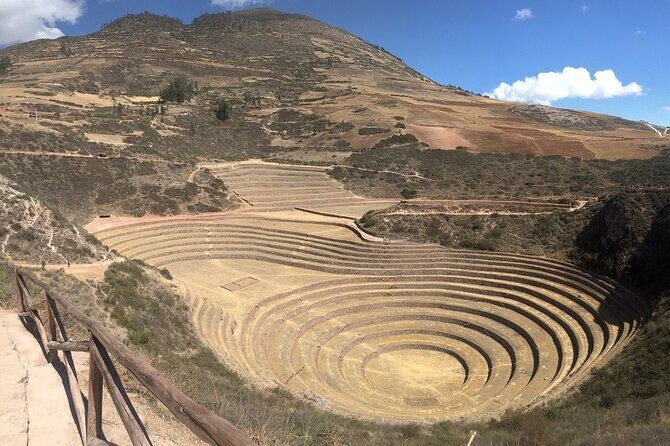
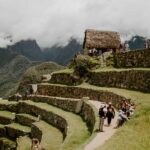
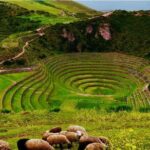
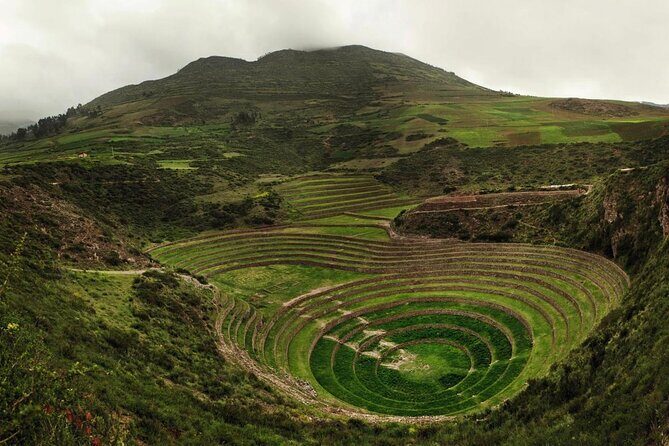
Moray is one of those places where the design makes you pause. You’ll head there next and spend about 40 minutes on-site with guided context. Moray is presented as a set of agricultural terraces used by the Incas for experiments—especially around cultivating seeds.
Here’s the part I’d highlight: the guide focuses on why the place works. The tour explains that the bottom of the terraces includes a clever drainage system designed to prevent flooding during the rainy season. In plain terms, Moray isn’t just pretty stepped earth. It’s a working system, built to manage water so crops could be tested under different conditions.
It also helps that this stop is not rushed. You’ll get time for explanation first, then a little room to walk around and absorb the scale. Still, the Moray ticket isn’t included in the tour price. Practically, that means you should plan on buying the Boleto Turistico del Cusco (the partial ticket option works for the sites listed on this route). If you want zero surprises, confirm what you’ll need before you go and keep an eye on the exact requirements for Moray.
Salinas de Maras salt mines: steep terraces and spring-fed salt pans
From Moray, you take a short ride (about 20 minutes) to Salinas de Maras. Then you get another 40-minute guided visit focused on what you’re seeing: pans carved into steep terraces, fed by saline spring water, with channels that guide the flow.
The mechanics are the magic. The salt pans are arranged so the water is sent through a network of channels where it gradually evaporates, leaving salt behind. The tour also notes that salt collection in Maras has been happening since pre-Incan times, and that salt miners have maintained the terraces and channels for hundreds of years.
This is a site where you’ll likely feel the “working landscape” vibe more than at many ruins. If you like watching real processes (even on a small scale), this stop can be extra satisfying because you may see people working among the pans.
Cost-wise, Salinas de Maras has a separate fee. The tour data says you’ll need to pay 20 soles per person for the Salt Mine entrance. It’s not included, even if you buy the boleto turístico for Cusco. Budget that in ahead of time so the day stays smooth.
Ollantaytambo and Urubamba: Incan city streets, water worship, and lunch time
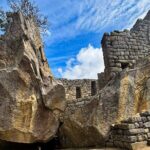
After Maras, the route continues to Ollantaytambo, with about 40 minutes to explore. Ollantaytambo is described as a classic Incan city that keeps the traditional Incan urban layout: narrow streets next to flowing water. As you walk through the stone streets, the sound of water is part of the experience, and it helps you imagine daily life when this was a living city, not just a ruin.
In the upper part of town, you’ll visit a ceremonial center tied to water worship, plus a fortress area that protected access points within the valley. This stop is one of the best “connect the system” moments, because it ties water management to power and ritual. You’re not just looking at architecture—you’re learning how a society used terrain and water to organize life.
Then it’s off to Urubamba for a buffet lunch stop. Lunch isn’t included in the tour price, so you’ll pay for your meal separately. One practical tip: choose foods that won’t wreck your stomach if you’re still adjusting to altitude. Keep it simple, hydrate, and you’ll enjoy the final leg more.
If you want less walking here, you can still do most of it at a steady pace and use your guided time wisely. The area is visually busy, so don’t be afraid to take a few calm minutes and just watch the flow of the streets.


Pisac: artisan market energy and ruins for your final photos
Next up is Pisac, which comes after lunch. You’ll have time in the town for an artisan market and also time to interact with locals and shop for handcrafts and souvenirs. The market portion is part of why Pisac feels lively, even on a packed schedule.
Then you’ll also explore the Pisac ruins. Like the earlier sites, you get guided attention—another chance to place architecture in context—plus some time to look around on your own. Pisaq/Pisac is one of those stops where you’ll probably take more photos simply because the views and stonework make you stop often.
This last stop is also where you can “feel” the day’s pace. Since you’re close to the end of the route, your legs may already be tired. Wear comfortable shoes and plan to take frequent micro-breaks. A quick sit on a wall or curb can do more for your enjoyment than pushing to see everything faster.
The tour return to Cusco is late, typically around 6:30–7:00 pm, so don’t schedule anything important right after.
What you’re paying for: value of a private $180 day
The price is $180 per person, and it includes some very tangible things: private transport, hotel pickup and drop-off, a professional guide, and round-trip transportation. For a route like this, the cost is largely about time and convenience. You’re not just buying entry tickets—you’re buying someone to manage the driving schedule and interpret the sites while you’re moving.
Still, the tour price does not include key costs:
- Partial boleto turístico: 70 soles per person (covers the places listed on this tour and lasts 2 days)
- Salinas de Maras entrance fee: 20 soles per person
- Lunch in Urubamba (not included)
- Drinks (not included)
So what’s the real value? It’s how many major stops you fit into one private day without you handling logistics. If you tried to stitch this together yourself, you’d spend more time coordinating transport and tickets, and you’d lose the guided “why this matters” explanations.
Is it worth it for solo travelers? If you can afford it, the private format helps keep the day efficient and comfortable, especially with an early start and a late return. If you’re on a tighter budget, the extra entrances and lunch can add up. But for a first trip to Cusco where you want the Sacred Valley highlights quickly, this is a practical way to get it all done.
One more note on ticket options: the tour data explains two Boleto Turistico del Cusco choices. The partial ticket costs 70 soles and lasts 2 days for the places in this tour. The full ticket costs 130 soles and lasts 10 days for 16 places. If you’re doing more than one Cusco-area day, the full ticket can become a smarter buy.
Guide quality can make or break it (and you have options)
The tour runs with a professional guide, and it may be multilingual depending on the day. In the best cases, the guide does more than explain facts. They connect the sites into a story: water control, farming experiments, and how built environments supported daily life.
From names seen with this operator (like Jorge, Carlos, Elizabeth, Noemi, and Alfredo), the common thread is that explanations tend to be clear and site-relevant. Add in courteous drivers (for example Reve and Alfredo’s day paired with good driving in that feedback), and the day feels calm instead of chaotic.
Your best move: ask your guide what you should focus on at each stop. When you know what to look for—drainage design at Moray, evaporation channels at Maras, water worship cues at Ollantaytambo—you’ll enjoy the time much more, even when each stop is only about 40 minutes.
Who should book this private all-in-one tour
This tour is a strong fit if you:
- Want a one-day Sacred Valley overview with minimal logistics
- Appreciate guided context, not just wandering
- Like a mix of towns and major sites (Chinchero, Ollantaytambo, Pisac)
- Are short on time after arriving in Cusco
You might think twice if you:
- Want a slow, low-pressure day with long hangs at viewpoints
- Hate early starts and late returns
- Have mobility limits that make multiple walking sections hard
It’s also private, meaning it’s only your group. That’s a big quality-of-life boost when the day is long.
Should you book the full-day Moray, Maras, and Sacred Valley route?
If you’re visiting Cusco with limited time and you want the headline Sacred Valley sites—Moray, Salinas de Maras, Ollantaytambo, and Pisac—this is an efficient pick. The included private transport and guided stops are the core value, and the itinerary is designed to keep you moving without feeling rushed at each site.
I’d book it if you can handle a 12-hour day and you’re ready for extra costs like the partial boleto turístico and the 20 soles Salt Mine fee. If that sounds fine, you’ll get a lot of meaning out of the day because the guide work is built around how the Incas used water and land.
If you want more flexibility, you can also ask for small preferences, since the tour notes times can be adjusted to suit you.
FAQ
What time does the tour start and how long is it?
The tour starts at 7:00 am. Duration is about 12 hours, and you return to Cusco around 6:30–7:00 pm.
Is hotel pickup and round-trip transportation included?
Yes. Pickup and drop-off from your Cusco accommodation and round-trip transportation are included, and you travel by private vehicle.
Do I need the Boleto Turistico del Cusco for this tour?
Yes, you need the boleto turístico for the attractions covered by this route. A partial ticket option is 70 soles per person and lasts 2 days (valid for the places listed in this tour). The full ticket is 130 soles for 10 days and includes more sites.
How much does it cost to enter Salinas de Maras?
There is an additional 20 soles per person entrance fee for the Salt Mine of Maras, which is not included in the tour price.
Is lunch included?
No. Lunch in the Urubamba area is not included. The tour includes time for a buffet lunch stop, but you pay for your meal separately.
Is this a private tour?
Yes. This is a private tour/activity, meaning only your group participates.
Can I cancel and get a refund?
Yes. You can cancel for a full refund if you cancel up to 24 hours before the experience’s start time. If you cancel less than 24 hours before, the amount paid is not refunded.