REVIEW · CUSCO
Cusco: Walking Tour with an Experienced Local Guides
Book on GetYourGuide →Operated by Free Tour Cusco EIRL · Bookable on GetYourGuide
Cusco’s streets teach you fast. This short walk-style intro connects key Inca sites with the colonial city that grew around them, and it does it at a pace you can actually handle at altitude. I especially liked the stop-by-stop stories that help you spot what you’re looking at, plus the helpful guidance from local hosts like Joshua, Joel, and Isaias, who keep things upbeat and question-friendly. One thing to consider: the route includes some uphill walking near the end, so wear shoes you trust on Cusco’s uneven cobblestones.
If it’s your first day in Cusco, this tour is a smart way to stop wandering and start orienting. You’ll get photo stops, small stretches of free time, and a clear finish in the San Blas area—meaning you can keep exploring right after instead of trying to guess where everything is. You’ll also be walking through the city’s layers: Inca foundations, Spanish-era churches, and today’s artisan streets, all in one compact loop.
In This Review
- Quick Key Points
- Finding Your Guide Under the Purple Umbrella in Cusco
- Plaza de Armas: Cusco’s Main Square and Its Inca-to-Colonial Layers
- The 12-Angle Stone: Understanding Cusco’s Neighborhood Pattern
- Spotting Inca Motifs on the Way to the Central Temples
- Qorikancha (Coricancha): The Sun Temple Area in Plain Terms
- Kusicancha Palace and the Inca Grid: Government Space, Not Just Stone
- Calle Loreto (Intiquiqllu/Loreto Street): The Last Inca Street Feel
- San Blas: Artisan Streets, the Olave Family House Workshop, and the View
- Guides Who Turn a Short Tour into a Real Orientation
- Value for Money: Why $10 for Two Hours Can Be a Wise First Move
- What to Bring and How to Prepare for Walking at Altitude
- Who Should Book This Tour (and Who Might Skip It)
- Should You Book Cusco Walking Tour with an Experienced Local Guides?
- FAQ
- How long is the Cusco walking tour?
- What languages are the guides?
- Where do we meet the guide?
- How much does it cost?
- Is the tour available for private groups?
- What should I bring with me?
- Is feeding included during the tour?
- Are pets allowed?
- Is the tour wheelchair accessible?
- Is alcohol allowed during the tour?
- Is there cancellation protection?
Quick Key Points
- You get a tight 2-hour route through Cusco’s most recognizable anchors without a “bus tour” feel
- Main Square to Qorikancha to San Blas gives you a practical map of the city center
- Inca street details matter as you learn what to look for on places like Loreto Street
- 12-Angle Stone teaches the city’s layout in a way that clicks fast
- Guides run lively, interactive tours (games, plenty of Q&A, and local tips)
- San Blas viewpoint closes strong with panoramic views over the city
Finding Your Guide Under the Purple Umbrella in Cusco
Cusco can feel like it’s trying to test your sense of direction. The good news: this tour’s meeting point is easy to identify. You’ll look for a team using a purple umbrella and a purple polo shirt that says Free Tour Cusco Peru. If you like being extra prepared, the listed coordinates are -13.5174197, -71.9786609, which you can plug into your maps app.
Once you’re matched up with your guide, the tour moves in a way that keeps you from getting lost in a sea of plazas, steep lanes, and church facades. You’re not just touring landmarks—you’re learning how Cusco’s design makes sense, so later, when you return on your own, the streets feel less random.
You can also read our reviews of more walking tours in Cusco

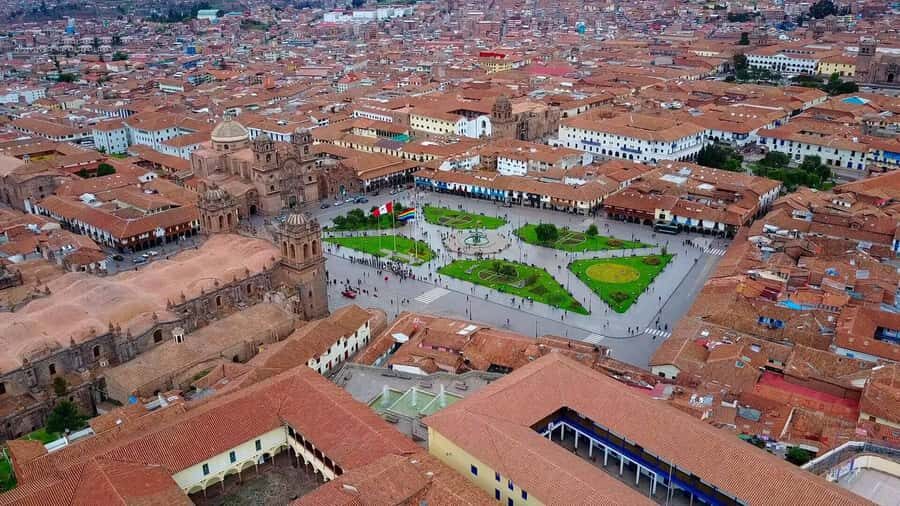
Plaza de Armas: Cusco’s Main Square and Its Inca-to-Colonial Layers
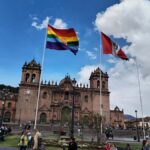
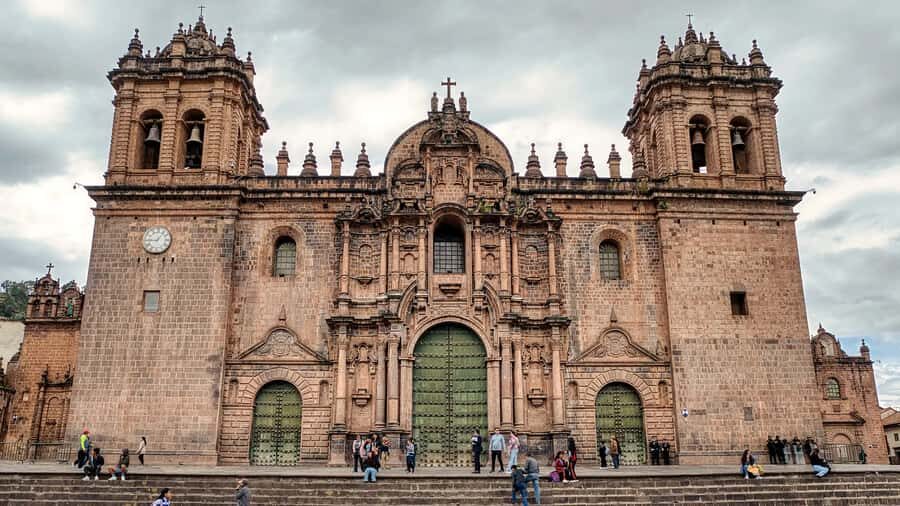
The tour’s first big stop is Cusco’s Main Square. This isn’t just a pretty courtyard. It’s been considered sacred since the Inca era, and today it’s framed by two striking 16th-century churches.
What I like about this start is that it sets the right context early. Cusco isn’t a museum you walk through; it’s a working city with buildings that changed over time. On a short tour, you need those “anchor points,” and the Main Square is exactly that—big enough to understand immediately, historic enough to give you something to hold onto.
You’ll likely have a chunk of time here for photos and a bit of breathing room. That matters because Cusco’s altitude can make everything feel sharper than usual. A calm pause in the middle of the tour is a small comfort that helps you keep going without rushing.
The 12-Angle Stone: Understanding Cusco’s Neighborhood Pattern
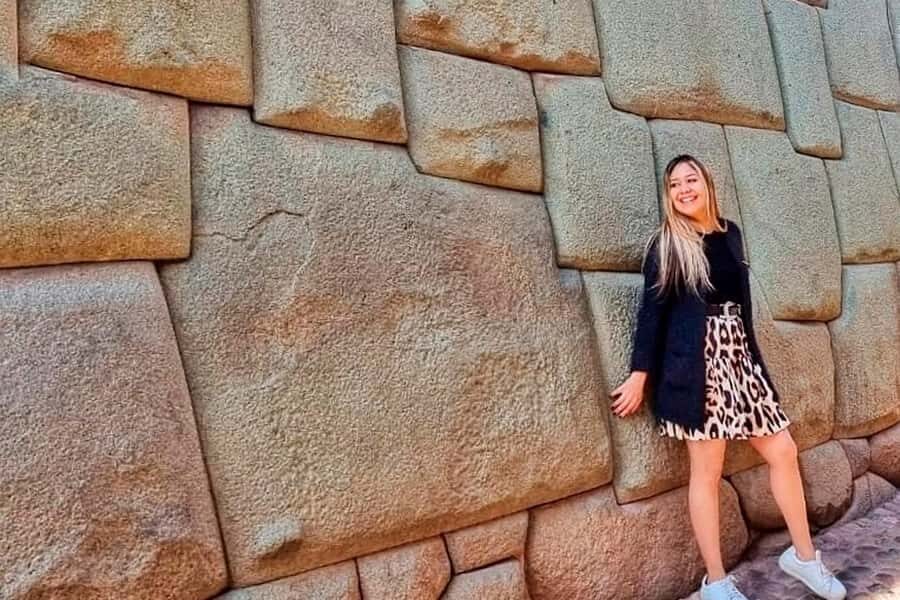
Next comes one of Cusco’s best “wait, what is that?” stops: the 12-Angle Stone. Even if you’ve never heard of it before, this landmark gives you a clear visual lesson in how the city’s Inca organization worked.
You’ll get time for pictures and a guided explanation, and the takeaway is simple: this stone symbol represents Cusco’s 12 Inca neighborhoods. After this, the city starts to feel more structured. Instead of thinking of Cusco as a jumble of streets, you start seeing a plan—something that helps if you plan to visit other Inca sites later.
Practical tip: when your guide points things out, look for the way streets and blocks align. Cusco rewards “slow noticing,” and the 12-Angle Stone is a shortcut to training your eyes.
Spotting Inca Motifs on the Way to the Central Temples
Between the 12-Angle Stone and the Qorikancha area, you’ll pass through streets where Inca design details show up in the odd corners of the city.
One of the key ideas you’ll hear: Inca architecture includes symbolism you can recognize once you know what you’re looking for. The tour specifically highlights streets with animal figures—like the serpent and puma motifs on Inca Roca Street—which is exactly the kind of detail that’s easy to miss if you’re just sightseeing without guidance.
This stretch also works as a warm-up. You’ll be walking on and off photo stops, with short guided moments so you don’t burn your energy too early. It’s a good setup for the most important temple stop later.
Qorikancha (Coricancha): The Sun Temple Area in Plain Terms
Then you reach Qorikancha, often described as the Sun Temple and one of the most significant buildings of the Inca Empire.
Here’s why this stop is valuable: Qorikancha is famous, yes, but it can also be confusing if you only know it by postcard photos. In a short 2-hour format, you need a guide to translate what you’re seeing into “why it mattered.” The tour’s approach helps you connect the temple’s status to Cusco’s broader role as an Inca capital.
You’ll have photo time and guided explanation, plus a bit of extra stop time around the area. If you’re the type who likes architecture, this part is where the tour stops feeling like a checklist and starts feeling like city literacy.
If you’re traveling with someone who wants a quick win, Qorikancha is the win. It’s the kind of place where you can point and say, That’s the Sun Temple, and also explain a bit more than that.






Kusicancha Palace and the Inca Grid: Government Space, Not Just Stone
After Qorikancha, you’ll move into the realm of Kusicancha Palace, described as an ancient government residence with a recognizable Inca grid layout and central courtyards.
This is one of those stops that rewards attention. The idea isn’t only that the stones are old—it’s that the layout reflects how power and organization were expressed in space. When your guide mentions the classic grid and courtyards, it helps you see the difference between random ruins and a planned complex.
A short tour can’t make you a specialist, but it can give you the right mental model. That’s what Kusicancha does: it teaches you to look for order, not just age.
Calle Loreto (Intiquiqllu/Loreto Street): The Last Inca Street Feel
One of the most memorable sections is Calle Loreto, also referred to on the tour as Intiquiqllu Street. This is described as the last Inca street, and the guide focuses on historic buildings like Amrucancha and Aqllawasi.
This part is great for two reasons. First, it shows you that Cusco’s Inca past isn’t only in famous ruins—you can still feel it in the street pattern and in the way buildings sit. Second, it gives your afternoon self something to do: when you walk these lanes later, you’ll know what to look for instead of treating everything as scenery.
You’ll have guided time here along with photo stops. That’s helpful, because Loreto Street is the kind of place where a few seconds of the right explanation can turn into minutes of better understanding on your own.
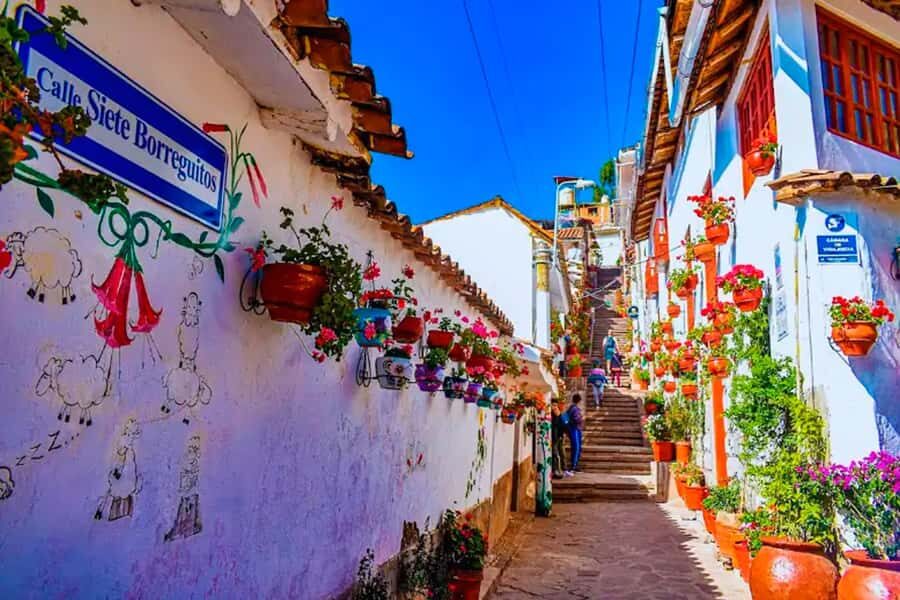
San Blas: Artisan Streets, the Olave Family House Workshop, and the View
The tour finishes in the San Blas area, ending at Plazoleta de San Blas. San Blas is the artisan district, known for its charming 16th- and 17th-century streets. That matters because it changes the feel of your walk: from temple and government spaces to workshops, balconies, and people living around the architecture.
The tour also highlights the Olave Family House, described as a workshop linked to a famous Cusqueño artisan. You’ll learn about intricate balcony carvings and imagery tied to Cusqueña themes. Even if you don’t buy anything, you’ll come away with a better eye for why San Blas looks the way it does.
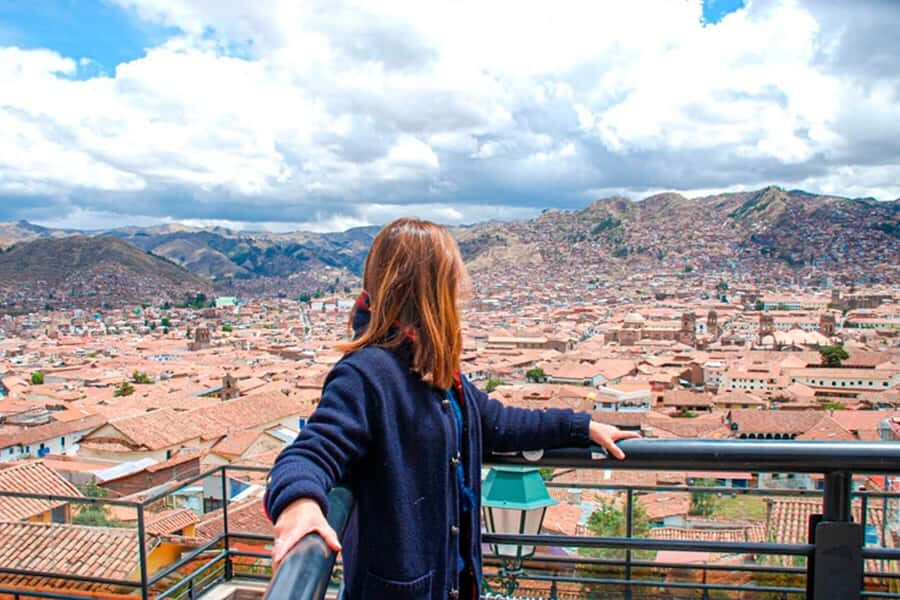
And then there’s the San Blas viewpoint, where panoramic views of Cusco help tie the whole tour together. You can finally look down and make sense of the city’s layers—the plazas, the steep streets, and the hills around it.
One extra note from the way the tour is described and how guides manage the route: you may feel a steep walk at points near the end. I’d treat the final viewpoint as the “payoff,” but don’t underestimate the effort if you’re still adjusting to altitude.
Guides Who Turn a Short Tour into a Real Orientation
A big part of why this tour earns such strong scores is guide style. In different groups, you’ll see names like Joshua, Joel, Isa, Isaías/Isaias, Luis, Enrique, and Neilo associated with energetic, friendly tours that balance facts with interaction.
What shows up again and again in the guide approach:
- They keep explanations easy to follow for a first visit
- They answer questions off-script
- They manage altitude with a pace that doesn’t feel like a forced march
- They offer practical tips for what to do next, plus restaurant and bar suggestions
Even when you only have two hours, this matters. A good guide doesn’t just point at stones. They teach you how to read the city. That’s why people often say they found places they wouldn’t have found on their own.
Value for Money: Why $10 for Two Hours Can Be a Wise First Move
At $10 per person for a 2-hour walking tour, the value is less about the price tag and more about what you cover in that time.
You’re getting:
- A guided route through multiple Inca and colonial anchors
- A structure that helps you plan the rest of your stay
- Photo stops and time to absorb what you’re seeing
- Bilingual guidance (English and Spanish)
- A practical finish in San Blas, so your next steps are obvious
If your Cusco time is limited—and most people have limited time—this type of tour is a fast orientation. It reduces the wasted time spent figuring out where things are and what matters.
Also, a pattern you’ll notice with many visitors: this is often treated as a pay-what-you-think-it-was-worth style experience. Your official listed price is $10, but the spirit of the tour can feel tip-based. Either way, the best “value purchase” here is information plus confidence.
What to Bring and How to Prepare for Walking at Altitude
Cusco rewards good basics. Here’s what you should bring based on the tour’s guidance:
- Comfortable shoes for uneven ground
- Water, plus sunscreen and a sun hat
- Sunglasses
- A camera for the many photo stops
- Passport or ID card
- Cash and a daypack
If you’re sensitive to altitude, bring a slower mindset than usual. The tour is short, but the walking adds up. Guides often help keep the group feeling okay, but you still want your body to cooperate.
If you’re thinking about footwear, choose something you can trust on slight slopes. The final stretch toward viewpoints can feel noticeably uphill.
Who Should Book This Tour (and Who Might Skip It)
This tour is ideal if:
- You’re visiting Cusco for the first time
- You want a quick, guided orientation without committing to a full-day outing
- You enjoy architecture and street-level history more than long museum stops
- You like having a guide help you figure out what’s worth returning to
You might skip it if:
- You have mobility limitations that make walking difficult. The tour is not suitable for wheelchair users.
- You want a deep, slow pace where every stop gets long explanations. This is more of a tight intro than a full seminar.
If you’re unsure where to start in Cusco, this is a solid first-day choice. It sets you up to explore the rest of the Sacred Valley region with a stronger sense of context.
Should You Book Cusco Walking Tour with an Experienced Local Guides?
If you want a practical Cusco first step, I’d book it. Two hours is enough time to learn what you’re looking at—Main Square, Qorikancha, Cusco’s Inca street clues, and the San Blas finish—without draining your energy.
Do it on Day 1 if you can. Then you can return to your favorites with better questions and a better eye. Just show up ready to walk and climb a bit, bring water, and wear shoes you don’t regret.
FAQ
How long is the Cusco walking tour?
It lasts 2 hours.
What languages are the guides?
The tour is offered in English and Spanish.
Where do we meet the guide?
You meet at Free Tour Cusco Peru, identified by a purple umbrella and a purple polo shirt that says Free Tour Cusco.
How much does it cost?
The price is listed as $10 per person.
Is the tour available for private groups?
Yes, a private group option is available.
What should I bring with me?
Bring a passport or ID card, comfortable shoes, sunglasses, a sun hat, a camera, sunscreen, water, comfortable clothes, cash, and a daypack.
Is feeding included during the tour?
Feeding is not included.
Are pets allowed?
No, pets are not allowed.
Is the tour wheelchair accessible?
No, it is not suitable for wheelchair users.
Is alcohol allowed during the tour?
Alcohol and drugs are listed as not allowed.
Is there cancellation protection?
Free cancellation is available up to 24 hours in advance for a full refund.