REVIEW · CUSCO
Cusco: Open-Top Bus City Tour
Book on GetYourGuide →Operated by Inka Altitude · Bookable on GetYourGuide
Cusco looks best from a higher seat. This open-top bus tour gives you guided context while you glide past key Inca and colonial landmarks, with the best reward coming at the Christ statue lookout. I like that it’s built for seeing a lot in one go, and I also like that you get a professional guide’s explanations without having to line up for separate sites.
The main thing to plan for is weather. The tour runs rain or shine, and if it’s wet you’ll likely spend more time on the covered section of the bus rather than up top.
In This Review
- Key Points to Know Before You Go
- Open-Top Bus Tour Basics: Why This Works in Cusco
- Your Route Starts With San Cristobal Temple and Colcampata
- Sacsayhuaman, Q’enqo, and Puca Pucara: Great Views, No Site Entry
- The Christ Statue Stop: The Panoramic Payoff
- Passing Cusco’s Main Squares: How the Views Teach the City Layout
- Rain, Comfort, and Timing: What to Expect Day-Of
- Price and Value: Is $12 a Smart Deal?
- Guide and Language Reality: English and Spanish in Practice
- Stops You Might See Beyond the Big Viewpoints
- Where to Meet and How to Find the Group Fast
- Who This Cusco Bus Tour Fits Best
- Should You Book This Tour?
- FAQ
- How long is the Cusco open-top bus city tour?
- What’s the price per person?
- What languages are the live guides?
- What’s included in the ticket price?
- Is food or drinks included?
- Will the bus stop at Sacsayhuaman, Q’enqo, and Puca Pucara?
- Is the tour still happening in rain?
- What should I bring?
- Where is the meeting point?
- Are drones allowed?
Key Points to Know Before You Go
- Open-top views with a Christ statue stop: one big panoramic moment over Cusco.
- You won’t enter key archaeology sites: Sacsayhuaman, Q’enqo, and Puca Pucara are viewed from the bus.
- Good snapshot of Plaza De Armas: panoramic views come from the Colcampata Inca wall area.
- Rain or shine: bring rain gear and expect the bus to protect you more than the sky.
- Languages listed as English and Spanish: your guide will explain as the tour runs.
Open-Top Bus Tour Basics: Why This Works in Cusco
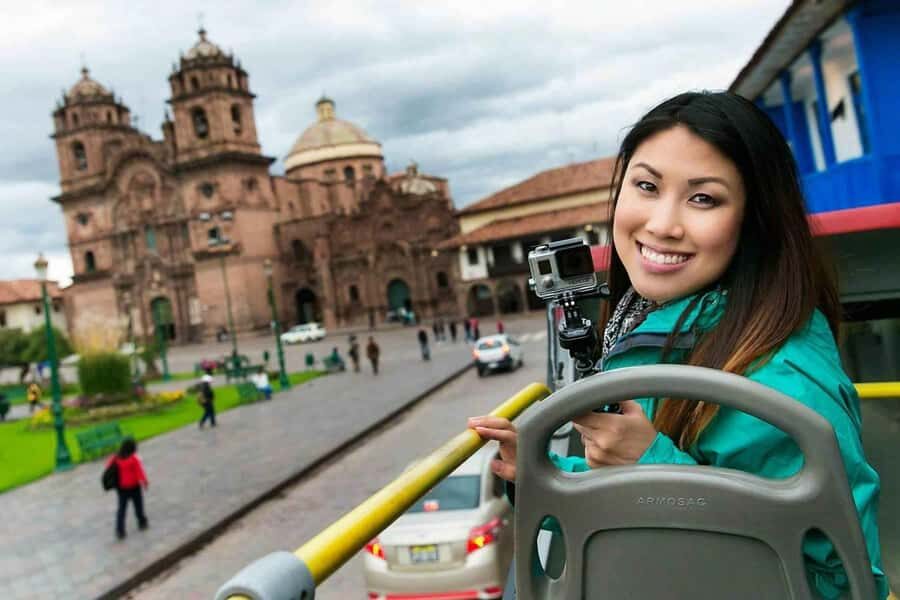
An open-top bus is a simple idea, but in Cusco it makes sense fast. You get moving views without the fatigue of constant walking, and you still have a guide to help you understand what you’re seeing.
This is also a “see-and-sort” kind of tour. If you’re still figuring out which neighborhoods and ruins matter most, this route helps you get your bearings quickly. You’ll come away with a mental map of where major sights sit relative to the city center, especially around Plaza De Armas and the hillside lookouts.
The duration is set for about 150 minutes, so it’s not a full day commitment. Still, give yourself buffer time the way you would for any Cusco plan—streets can slow things down, and the route includes several scheduled moments.
You can also read our reviews of more city tours in Cusco
Your Route Starts With San Cristobal Temple and Colcampata
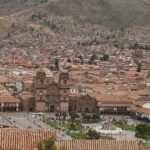
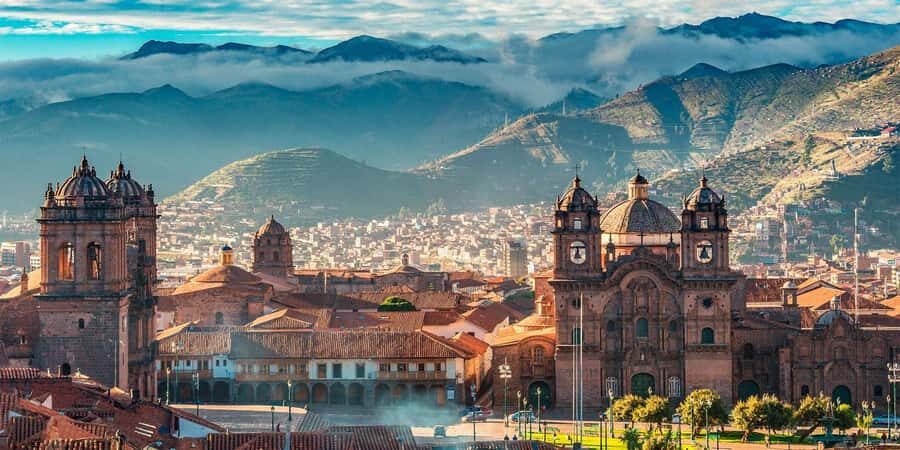
After you board, the tour begins with passing stops and viewpoints that set the stage. You’ll go by the San Cristobal Temple and the Colcampata Inca wall, where you can admire panoramic views that connect the old city layout to the modern streets below.
This early part is useful because it trains your eye. From the wall area, you’re positioned to see how the city’s main square area relates to the hills and Inca-adjacent landmarks. Even if you’ve only seen Cusco from streets and viewpoints so far, this angle makes everything feel more connected.
You’ll also get a sense of what the rest of the tour is trying to do: show you major Inca sites from the most readable vantage points you can reach quickly. In other words, it’s less about strict site immersion and more about orientation with real scenery.
Sacsayhuaman, Q’enqo, and Puca Pucara: Great Views, No Site Entry
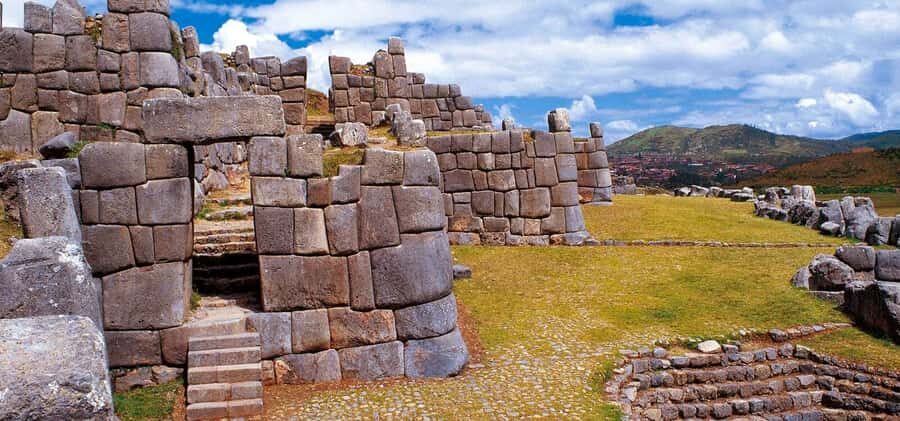
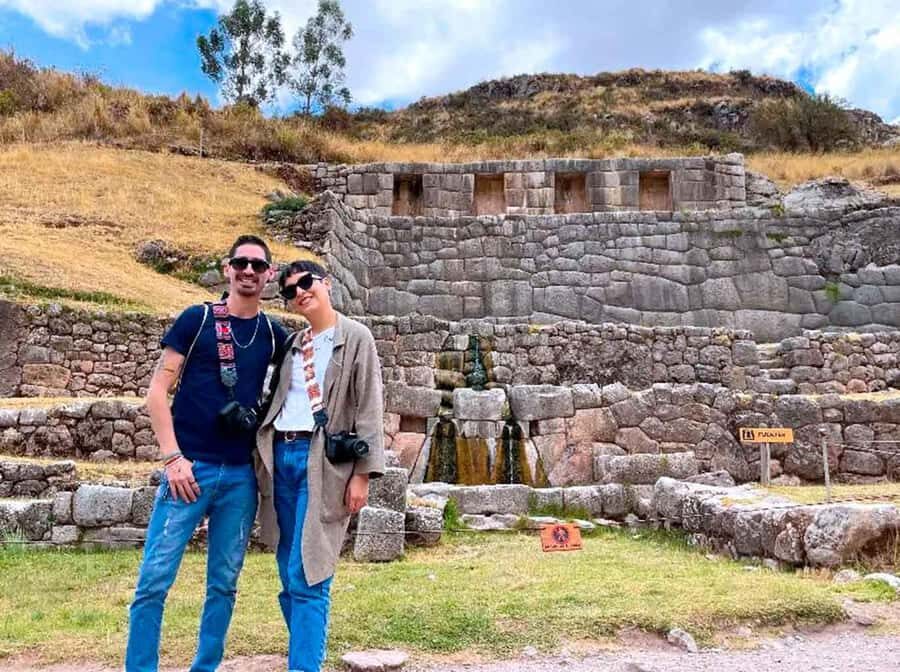
One of the biggest “know before you go” items is this: the bus will not stop at or enter Sacsayhuaman, Q’enqo, and Puca Pucara. You’ll enjoy a panoramic overview of these areas, but you’re not going to disembark and explore the sites on foot during the tour.
That trade-off matters for your expectations. If what you want is time inside the archaeological complexes—walking ramps, photographing stonework close-up, lingering in quiet corners—this format may feel a bit limited. If what you want is a high-level view of where these sites are and what kind of terrain you’re looking at, it’s a solid way to get that context fast.
I like this approach for a very practical reason: you still get the big visual payoff without adding extra lines or transport steps. You also stay aligned with the tour’s schedule, which is helpful when you’re deciding what you’ll do later with more time and less rushing.
The Christ Statue Stop: The Panoramic Payoff
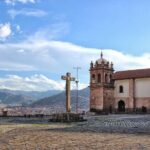
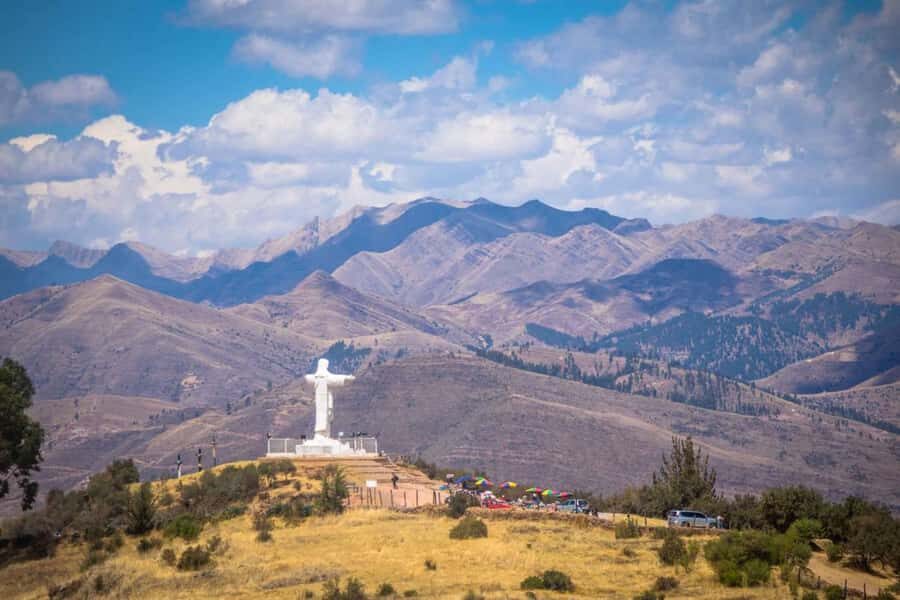
Later, the tour stops at the white Statue of Christ overlooking Cusco. This is the moment that usually makes open-top city routes feel worth it. Up here, you can take in Cusco’s spread and the surrounding terrain in one wide view.
Plan for photos, but also plan for looking. Cusco’s streets can be easy to take for granted while you’re down in them. At the statue, the city stops being a maze and starts looking like a geography problem you can actually solve—where the center sits, how the hills rise, and how the viewpoints relate.
If the weather turns rainy, you can still enjoy the tour. The tour information notes you can see from the ground floor if needed, which means you’re not completely blocked out. It’s not the same as full open-air sightseeing, but it keeps the tour moving and lets you still catch the viewpoint stop.
Passing Cusco’s Main Squares: How the Views Teach the City Layout
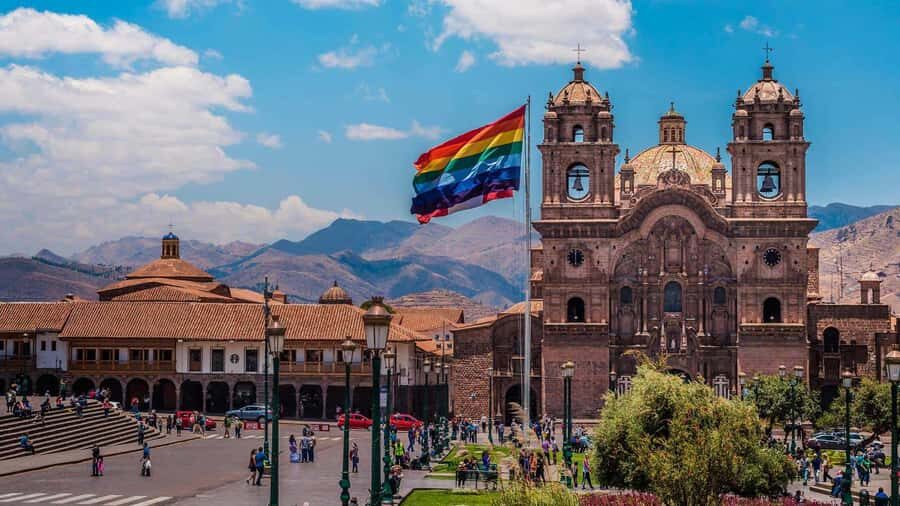
A lot of Cusco tours focus on one dramatic site. This one keeps nudging you back toward the city’s structure: the main square area, the in-between walls, and the hillside lookouts.
The Colcampata Inca wall section is the key to this. When you can look toward Plaza De Armas from a higher angle, you start to understand how Cusco’s layout works. You begin noticing landmarks and sight-lines you’ll see again later when you explore independently.
Even if you’re not a history nerd, this kind of orientation pays off. The next day (or next afternoon), you’ll recognize directions and routes without constantly checking your map. That saves energy and helps you pick better walking routes for the parts you actually want to linger on.

Rain, Comfort, and Timing: What to Expect Day-Of
The tour takes place rain or shine, and the guidance is straightforward: bring rain gear and wear comfortable clothes. Cusco weather can change quickly, and on a bus tour your comfort depends on how prepared you are for wet wind and sudden drizzle.
Also, keep in mind the bus setup. If it’s rainy, you might spend much of the trip under the bus rather than up top. You’re not doing anything wrong—you’re just adapting to conditions. This is one reason I recommend rain protection that’s easy to move around in and quick to put on.
About timing: the stated duration is 150 minutes, but departures can run long depending on conditions and the flow of stops. I’d plan your day so you’re not counting on immediately sprinting to a timed reservation right after the tour ends.
If you’re booking with tight logistics, give yourself a buffer for meals, rest, and any follow-up sightseeing.
Price and Value: Is $12 a Smart Deal?
At $12 per person, this tour is priced for value over exclusivity. You’re buying transportation plus a tour guide, which is the core cost you’d otherwise pay via a private guide or multiple transit/entry arrangements.
What’s not included is food and drinks. That’s normal for a 2.5-hour city loop, but it matters if you’re planning your day. I’d treat this as a sightseeing block, then eat before or after with a proper sit-down or a nearby snack plan.
The other “value” question is how you define value. If you want close-up time at major ruins, this may not feel like the best use of your money because the bus won’t enter those sites. If you want a guided overview, quick context, and a panoramic payoff with minimal effort, the price-to-time ratio is strong.
Guide and Language Reality: English and Spanish in Practice
The tour lists a live guide in English and Spanish. That’s the official promise, and it’s a big plus if you speak one of those languages.
In practice, it can still vary how much English you hear versus Spanish depending on the group and the guide’s style. Since the tour is described as bilingual, you can usually follow the core points even if you catch more Spanish than you expected. If you’re relying heavily on English, it’s smart to be ready to ask simple questions and watch for visual cues.
The guide’s job here isn’t to narrate every stone in detail. It’s to help you understand the key landmarks along the route and what they mean in relation to Cusco. That’s exactly what this format needs.
Stops You Might See Beyond the Big Viewpoints
Besides the main Inca-viewing flow and the Christ statue, some departures appear to include extra stop moments. Based on reported experience, you may encounter short, structured photo moments and an additional stop that connects to local spiritual practice, followed by a retail stop.
Two cautions come with that. First, retail stops can shift the tone of a tour from sightseeing to sales. Second, you’ll want to decide in advance whether you’re the kind of traveler who wants those optional extras or would rather keep the schedule purely sight-focused.
None of this changes the main payoff: the route’s strength is the guided overview and the standout viewpoint. Just know that some schedules include more than pure viewpoints.
Where to Meet and How to Find the Group Fast
Meet up at the Inka Altitude office door. The coordinates are -13.5178338, -71.9808803.
If you’re arriving early, stand near the office entrance so you can quickly confirm you’re at the right place when the guide arrives. Cusco can be busy, and it’s easy to waste minutes walking a few blocks in the wrong direction when you’re hoping to catch an on-time boarding.
If you want a smooth start, plan to arrive a little ahead of your check-in time.
Who This Cusco Bus Tour Fits Best
This tour fits best if you:
- want a guided overview of Cusco without spending hours walking
- like panoramic viewpoints and photo stops
- prefer seeing several key areas in one sitting
- want an easy way to decide what you’ll explore more deeply later
It’s not suitable for people with mobility impairments. That’s an important constraint, since you’ll be on and off a bus and dealing with the realities of open-air or partially covered seating.
If you’re the kind of traveler who wants to hike ruins and spend time inside archaeological sites, you’ll likely feel shortchanged by the no-entry approach. But if you’re building your mental map and collecting viewpoint angles, it’s a practical way to use a half-day.
Should You Book This Tour?
Book this tour if you want a low-stress way to see Cusco’s main sights with a guide and a clear panoramic reward at the Statue of Christ. With transportation included and the $12 price, it’s a good fit for travelers who value time and orientation over deep site exploration.
Skip it (or pair it with additional sightseeing) if close-up ruin time is your top priority. Since the bus won’t stop at or enter Sacsayhuaman, Q’enqo, or Puca Pucara, you’ll want separate plans for those if they’re at the top of your list.
FAQ
How long is the Cusco open-top bus city tour?
The tour duration is listed as 150 minutes.
What’s the price per person?
The price is $12 per person.
What languages are the live guides?
The live tour guide is available in English and Spanish.
What’s included in the ticket price?
The ticket includes transportation and a tour guide.
Is food or drinks included?
No. Food and drinks are not included.
Will the bus stop at Sacsayhuaman, Q’enqo, and Puca Pucara?
No. The bus will not stop at or enter those sites. You’ll enjoy panoramic views of them instead.
Is the tour still happening in rain?
Yes. The tour takes place rain or shine, and you can enjoy it from the ground floor of the bus if it’s raining.
What should I bring?
Bring rain gear and wear comfortable clothes.
Where is the meeting point?
Look for the Inka Altitude office door at the coordinates -13.5178338, -71.9808803.
Are drones allowed?
No. Drones are not allowed.