REVIEW · CUSCO
Cusco: 5-Day Salkantay Ultimate Trek to Machu Picchu
Book on GetYourGuide →Operated by Inkayni Peru Tours · Bookable on GetYourGuide
Five days, one big mountain journey through Peru’s Andes. This Cusco trek ties together the big altitude drama of the Salkantay Pass with a guided day at Machu Picchu, plus Humantay Lake and a Lucmabamba family stop.
I love the way the hike keeps changing: you start with snowy peaks, then you work down into misty cloud-forest country. I also really like the expert-led Machu Picchu visit, because you don’t just wander—you learn what you’re looking at, including the temples, ceremonial areas, terraces, and storage buildings.
One thing to think about: this is high-altitude hiking with tough days, and the tour is not suitable for people with altitude sickness or back problems.
In This Review
- Quick hits before you go
- The Salkantay-to-Machu Picchu route, with real support
- Day 1: Soraypampa climb, Peruvian lunch, and Humantay Lake at 4,200 m
- Day 2: The Salkantay Pass (4,630 m) and the shift into high jungle
- Day 3: Cloud forest descent to Playa Sahuayaco, then Lucmabamba and coffee
- Day 4: Llactapata terraces—the first Machu Picchu view—then down to Aguas Calientes
- Day 5: Morning bus to Machu Picchu, plus Huayna Picchu or Machu Picchu Mountain
- Food, sleep setup, and what the support team actually does
- Price and value: what $669 buys in 5 days of mountain-to-ruins travel
- Who should book this Salkantay Ultimate Trek (and who should skip it)
- Should you book this Salkantay trek to Machu Picchu?
- FAQ
- Does the tour include pickup from Cusco hotels?
- What’s included for Machu Picchu on Day 5?
- Is Huayna Picchu included?
- What meals are included, and what should I plan to pay for?
- Do I need to bring a sleeping bag and trekking poles?
- How much can I carry personally on the trek?
- Are water and hot drinks provided?
- How big is the group?
- Is the trek suitable for altitude sickness or back problems?
Quick hits before you go
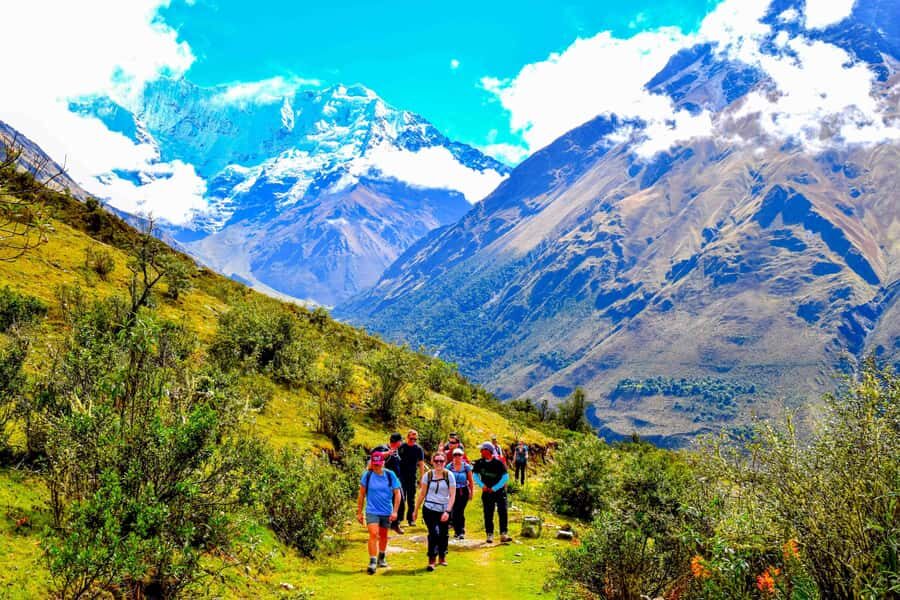
- Salkantay Pass crossing gives you the highest, most challenging moment, with panoramic rewards.
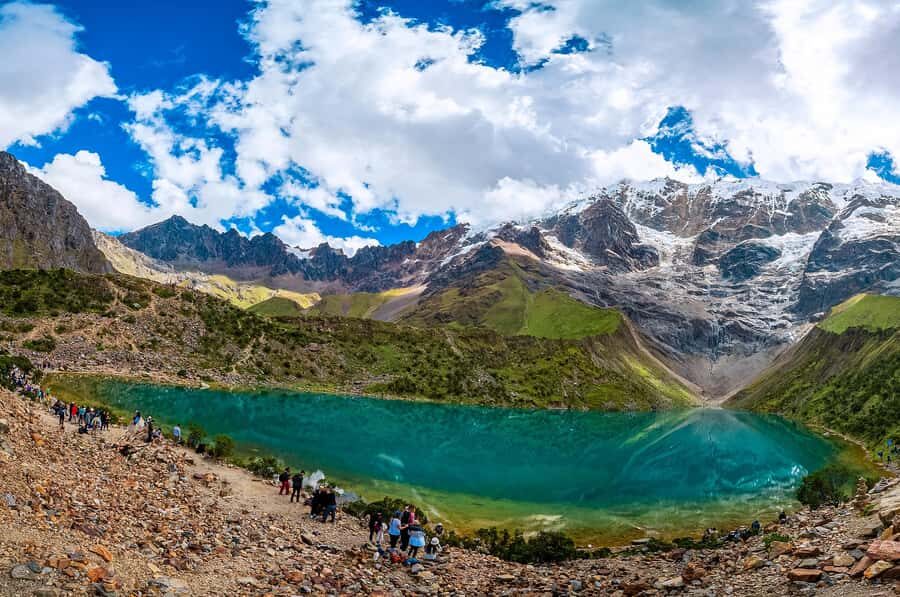
- Humantay Lake on Day 1 pairs turquoise glacial water with dramatic Andean peaks overhead.
- Lucmabamba family stay includes learning about a local coffee farm.
- Llactapata first view of Machu Picchu comes from quieter terraces, not the main viewpoint.
- Support is real: professional cook, horses for gear, wake-up tea, and an oxygen bottle in the mix.
- Small group size: private groups up to 10 people keeps it manageable on the trail.
The Salkantay-to-Machu Picchu route, with real support
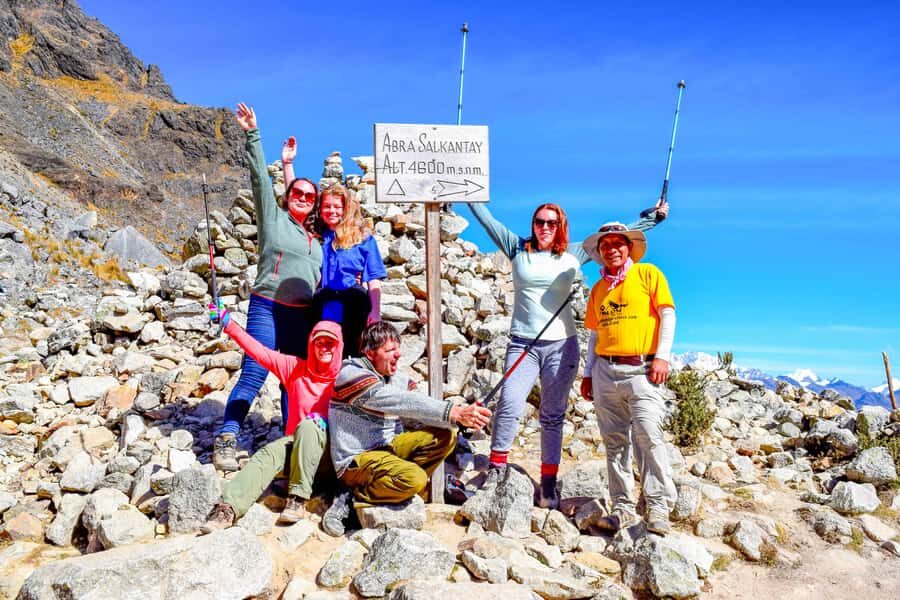
This trek is built for one goal: walking from the Cusco region’s highest scenery to Machu Picchu, without you having to micromanage every part of the trip. You’ll hike for five days, sleeping in tents for most of the route and then staying in a hotel in Aguas Calientes. The group stays small (maximum 10 people), and you’ll have a professional English-speaking guide throughout. For groups of 9+ there’s also an assistant tour guide, which matters on tight timing days like the Machu Picchu transfer.
I like the way the itinerary is paced by terrain, not by marketing buzz. You go from Soraypampa (3,800 m) to Humantay Lake (4,200 m), then up to the Salkantay Pass (4,630 m), and then down into lower elevations that feel completely different—cloud forest, mist, and waterfalls on Day 3 and Day 4. By the time you reach Machu Picchu, you’re not just arriving; you’ve earned it step by step.
Two practical notes before you picture yourself floating: first, this is physically and mentally demanding hiking, and second, you’re not meant to carry everything. The horses handle equipment, and you’re limited to 7 kg of personal items—so pack smart and keep the rest light. Also, water is provided, but you need to bring your own during the first 4 hours of the trek each day.
You can also read our reviews of more hiking tours in Cusco



Day 1: Soraypampa climb, Peruvian lunch, and Humantay Lake at 4,200 m
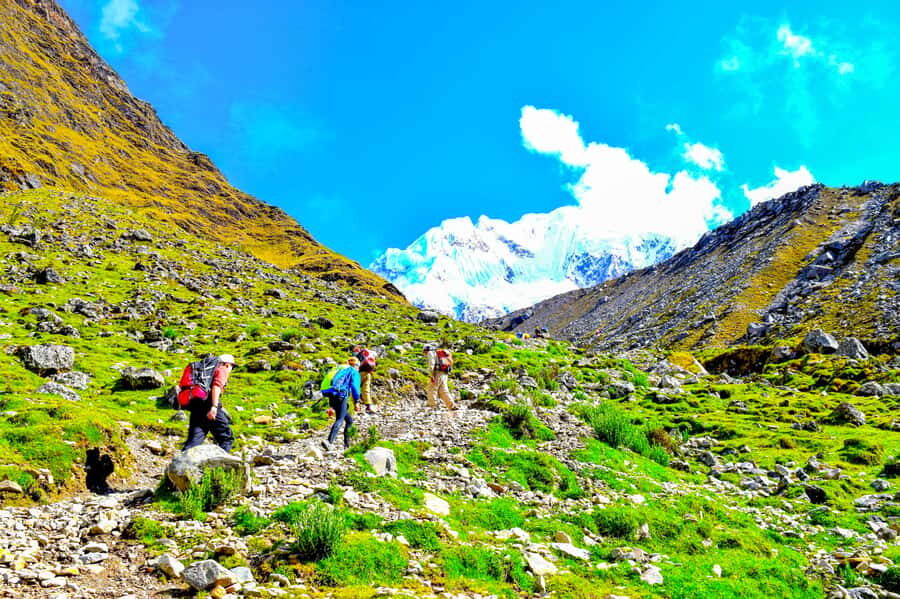
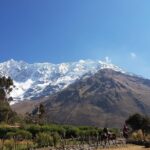
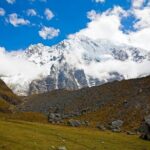
Day 1 starts with a hike toward Soraypampa (3,800 m). As you ascend, the Salkantay (6,271 m) and Humantay mountains dominate the skyline. Expect crisp air, strong sun, and that feeling that your legs are working harder than your brain wants them to.
Midday is a good reset. You’ll stop for a classic Peruvian lunch made with fresh local ingredients. This is one of those unglamorous details that actually helps: proper food at altitude keeps your energy steadier and makes the later part of the day feel doable.
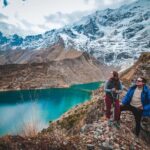
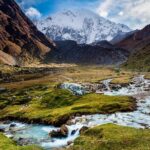
After lunch, you continue up to Humantay Lake (4,200 m), a glacial lagoon known for its surreal turquoise tones. Take your time here. You’re at altitude, but the view is the point. Looking up at the towering peaks reflected in the water gives you the “why this trek exists” moment.
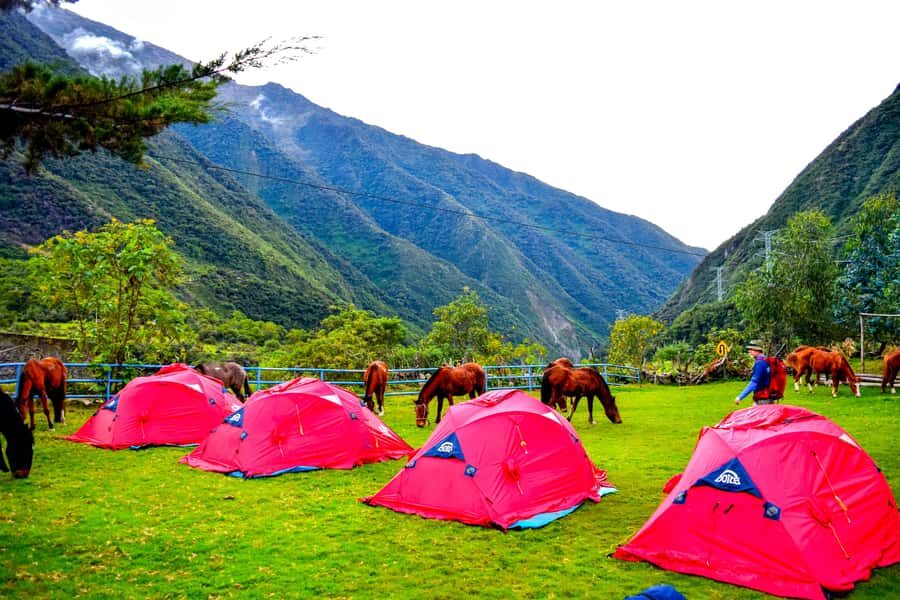
Then it’s back to camp for dinner and a starry night in the Andes. You’ll be sleeping in a 4-man tent (for every 2 trekkers), which means you’ll share space with your group partners but still have a base to warm up and recover.
Day 2: The Salkantay Pass (4,630 m) and the shift into high jungle
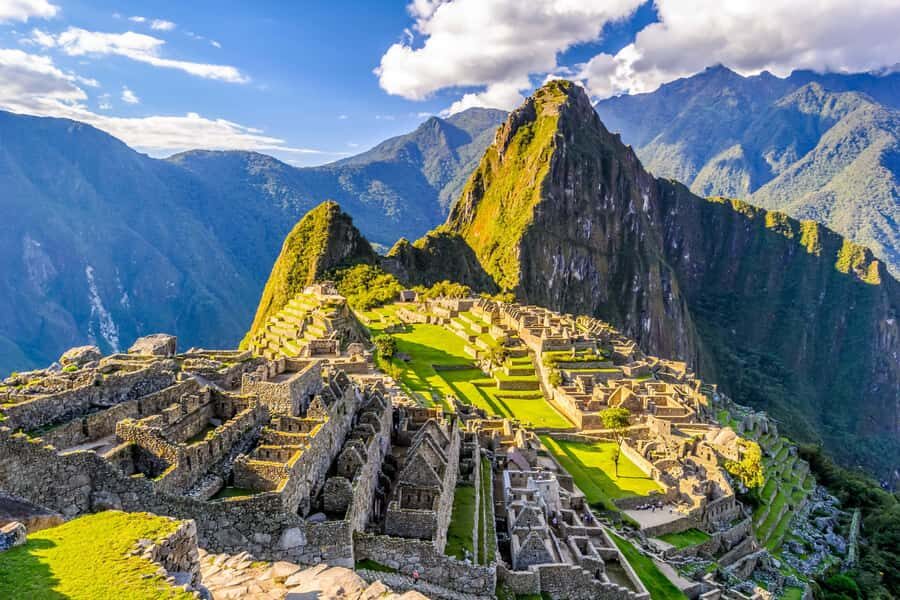
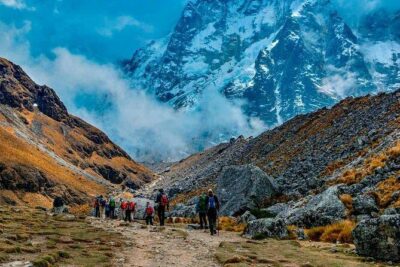
Day 2 begins with breakfast and then a push toward the Salkantay Pass (4,630 m). This is the highest point of the trek and the most challenging part. You’ll feel the air thin as you climb, and you’ll want to go steady—short efforts, steady pace, and lots of pauses for photos and breathing.
When you reach the pass, the views reward the hard part: snow-capped peaks, jagged ridges, and deep valleys stretching out as far as the weather allows. The tour also frames this pass as sacred in the Andean sense, so it’s worth slowing down for a minute. You’re not just hitting a high point; you’re passing through a place that people have regarded as meaningful for a very long time.
After the pass, you descend into a lush, high-altitude jungle environment. The contrast is striking: the icy summit world above, then greener vegetation and a different kind of air. At the end of the day you’ll settle into camp, surrounded by the sounds of nature instead of the open, exposed feeling you get on the higher climbs.
Feedback that matches this day: Abbie, who rated the trek 5 out of 5, flagged that it’s physically and mentally difficult but worth it. Day 2 is the kind of day that explains why she said that.
Day 3: Cloud forest descent to Playa Sahuayaco, then Lucmabamba and coffee
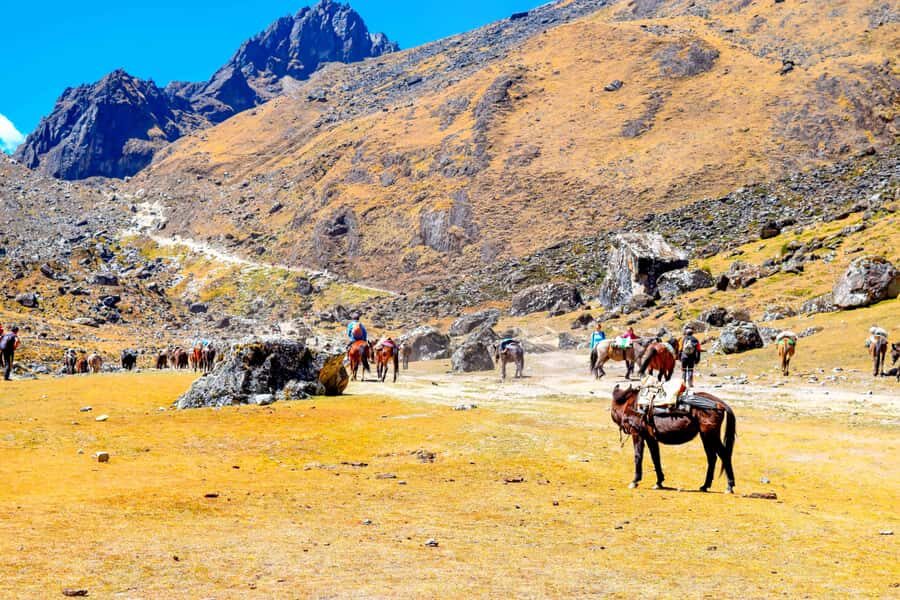
Day 3 starts with the jungle waking up. From there, you begin a descent into cloud-forest country. The trail winds through mist and past features that feel straight out of a nature documentary: cascading waterfalls, fruit-laden trees, and exotic flora and fauna (you don’t need to be a botanist to appreciate how different it looks from Day 1).
After about five hours, you reach Playa Sahuayaco (2,200 m). It’s a drop in elevation that helps your body, but it doesn’t mean the trail gets easy. You still need good boots and a careful pace as the ground changes.
From Playa Sahuayaco, the itinerary points you into the “eyebrow of the Amazon,” a region described as full of life. In the afternoon, you arrive at Lucmabamba (2,000 m), where this becomes your final campsite and the starting point of an ancient Inca Trail leading to Llactapata ruins.
Here’s the human part I really like. Lucmabamba isn’t just a stop for sleeping. You stay with a family and learn about their local coffee farm. Even if you’re not a coffee fanatic, you’ll come away understanding how the area’s agriculture works and why people here care about their land. It’s a nice counterweight to the mountain exertion.
Day 4: Llactapata terraces—the first Machu Picchu view—then down to Aguas Calientes
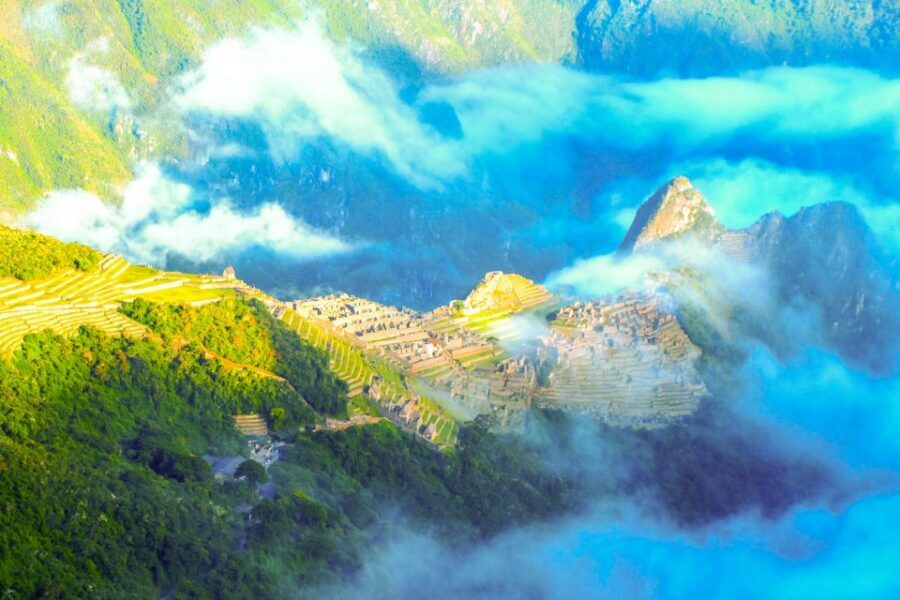
Day 4 has one of the most satisfying “wait for it” transitions. After breakfast, you hike uphill for about two hours along an original Inca trail to Llactapata (2,840 m). Llactapata is smaller and less crowded than Machu Picchu, and the big payoff is the view: you get a first look at Machu Picchu from a terrace angle that most people don’t see.
After exploring Llactapata, you descend through cloud forest to the Hydroelectric Station (1,890 m). That’s about a 1.5-hour trek. Then you travel on to Aguas Calientes (2,040 m) for the night.
This is also where the “trek mode” changes into “rest mode.” Your accommodation becomes a hotel in Aguas Calientes, so you trade tents and camp routines for a more comfortable setup. If you’re anything like me, you’ll feel human again by the time you get there. You’ll also want to keep your energy for Day 5, since Machu Picchu comes early.
You can also read our reviews of more tours and experiences in Cusco
Day 5: Morning bus to Machu Picchu, plus Huayna Picchu or Machu Picchu Mountain
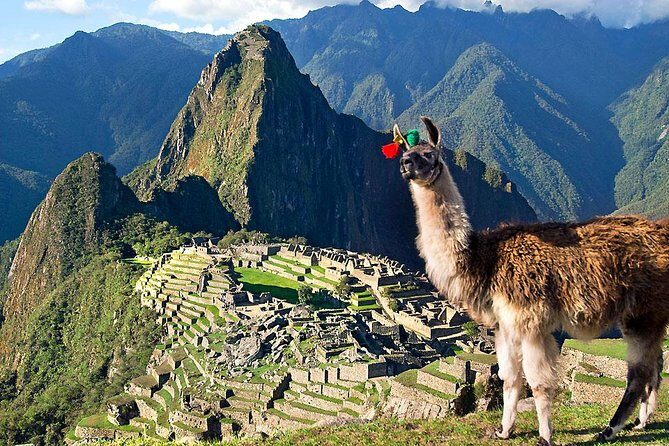
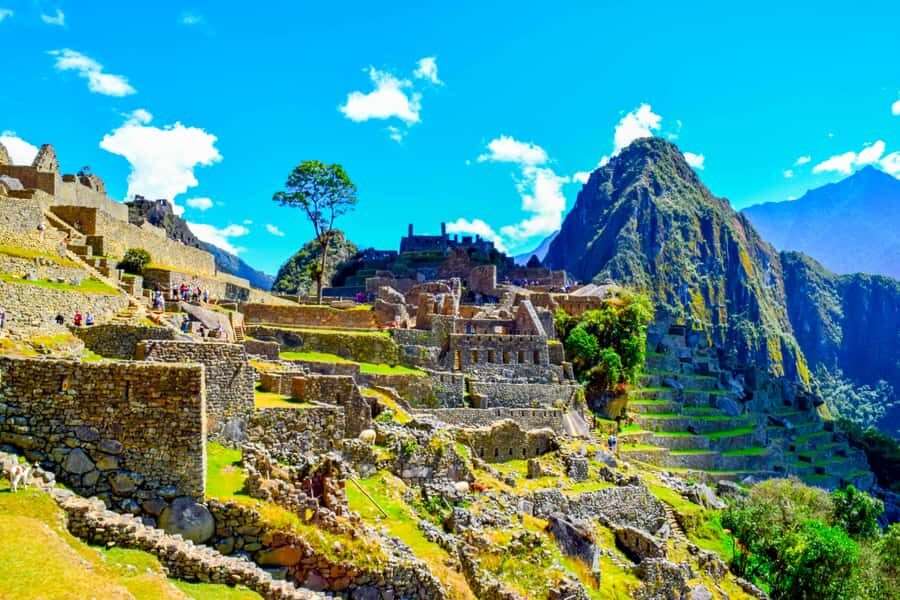
Day 5 begins early with breakfast, then you take a morning bus to Machu Picchu (2,430 m). This is one of those days where having an experienced guide makes a huge difference. Your guide leads a detailed tour and explains what you’re seeing—key structures like temples, ceremonial spaces, terraces, and storage buildings.
After your guided visit of the citadel, you get options for views. You can choose to hike Huayna Picchu (2,720 m) or Machu Picchu Mountain (3,082 m). Huayna Picchu entrance costs US$85, so factor that into your budget if that’s your target view.
When you finish, you go back to Aguas Calientes for short rest and lunch. In the afternoon you board a train to Ollantaytambo, then a van returns you to Cusco. It’s a clean finish to the story arc: from pass-crossing exhaustion to the moment the ruins finally make sense because you’ve learned how the site is laid out.
Murray, from the UK, rated the trek 5 out of 5 and specifically praised the excellent guide and the fact that the support team had them looked after. That kind of guidance really matters on the big day, when you’d otherwise just be herding yourself around the site.
Food, sleep setup, and what the support team actually does
This trek is not “rough it” in the DIY sense. It’s camping, yes, but it’s camping with structure. A professional cook runs the food, and you get a steady rhythm of meals: 4 breakfasts, 4 lunches, 4 afternoon snacks, and 4 dinners. Day 1 includes lunch and dinner, but breakfast on Day 1 isn’t included, and Day 5 lunch and dinner aren’t included. Plan to eat before the trek gets going on Day 1, and be ready for Day 5’s meal pattern once you’re back in Aguas Calientes.
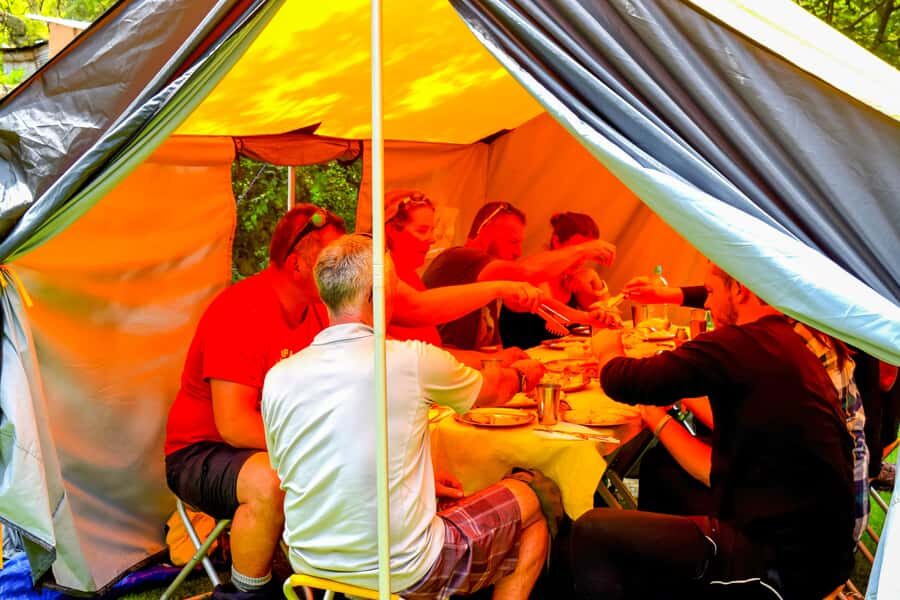
Sleeping is another practical highlight. You’ll have a double-thickness foam mattress and 4-man tents (shared two per tent setup), plus a dining tent with tables and chairs. Every morning, staff bring wake-up tea to your tent. It sounds small, but it’s the kind of comfort that helps when mornings feel cold and your body is still arguing with yesterday’s effort.
Gear handling is handled for you in a smart way. You’ll get duffle bags during the pre-departure briefing, and those bags travel with horses. Horses also carry all trek equipment and your 7 kg personal item limit, so your daypack can stay focused on what you need—layers, sun protection, and snacks. And there’s safety gear in the mix: an oxygen bottle and a first aid kit are included.
You’ll still want to bring the basics listed for the trek: passport or ID card, a sun hat, sunscreen, rain gear, and comfortable clothing. You can also hire sleeping bag and trekking poles if you don’t have them.
Price and value: what $669 buys in 5 days of mountain-to-ruins travel
At $669 per person for five days, you’re not paying just for views. You’re paying for a whole package of services that would be expensive and time-consuming to assemble yourself: an English-speaking professional guide, a cook, horse support for gear, and door-to-door-style movement including pickup in Cusco and transfers through the route.
The value really shows up in what’s included:
- Machu Picchu entrance plus the bus to the site
- A hotel night in Aguas Calientes
- Most of your meals and snacks
- The camp setup (tents and mattresses)
- Safety items like an oxygen bottle and first aid kit
- Train to Ollantaytambo and the van back to Cusco
What’s not included matters, too. You’ll likely need to budget for a sleeping bag hire and/or trekking poles hire if you don’t already have them, and Huayna Picchu costs US$85 if you choose that viewpoint. Travel insurance is also recommended for your full trip, and it’s not included.
If you want a guided route with real logistics handled—so you can focus on the hiking and the ruins—this price can feel fair. If you’re the type who loves planning every detail and already owns the right gear, the cost may feel less “bargain” and more “you’re paying for someone else to do the work.” Either way, the structure is there.
Who should book this Salkantay Ultimate Trek (and who should skip it)
This trek is best for you if you:
- Want the classic Salkantay Pass crossing and don’t mind that it’s the toughest part
- Like guided interpretation, especially at Machu Picchu where structure and meaning matter
- Prefer a small group (max 10) and a supported trek with meals and horse carrying
- Are interested in the Lucmabamba human side, including learning about a local coffee farm
It’s not for you if you have:
- Altitude sickness issues
- Back problems
- Age-related concerns, since people over 70 aren’t suitable for this tour
One more practical thing: Day 1 requires you to bring water for the first four hours, and the first day breakfast isn’t included. If you show up tired or underpacked, the trek will feel harder than it needs to be.
Should you book this Salkantay trek to Machu Picchu?
Book it if you want the full story: high pass panoramas, Humantay Lake, cloud forest trails with waterfalls, Llactapata’s first view of Machu Picchu, and a guided ruins tour where you actually understand what you’re seeing. Murray’s feedback on the excellent guide and well-run support team fits the experience you’ll get here. Abbie’s note about the physical and mental difficulty also matches what the route profile suggests—this isn’t a stroll.
Skip it if altitude or physical limitations are a concern. The tour itself says it’s not suitable for altitude sickness or back problems, and that’s not something you should gamble with.
If you’re healthy, properly packed, and ready for a real trek that ends at one of the world’s most famous archaeological sites, this one is a strong choice.
FAQ
Does the tour include pickup from Cusco hotels?
Yes. The tour includes pick-up and transportation from your hotel in Cusco city center.
What’s included for Machu Picchu on Day 5?
Entrance to Machu Picchu and the bus to the site are included. You also get a guided tour once you arrive.
Is Huayna Picchu included?
No. Huayna Picchu entrance costs US$85 and is not included.
What meals are included, and what should I plan to pay for?
The tour includes 4 breakfasts, 4 lunches, 4 afternoon snacks, and 4 dinners. Breakfast on Day 1 is not included, and lunch and dinner on Day 5 are not included.
Do I need to bring a sleeping bag and trekking poles?
You do not have to own them. A sleeping bag and trekking poles can be hired if you need them.
How much can I carry personally on the trek?
Horses carry all equipment and 7 kg of your personal items. You’ll also have duffle bags that travel with the horses.
Are water and hot drinks provided?
Water is provided, but not during the first 4 hours of the trek, when you need to bring your own. Wake up tea is also provided every morning to your tent.
How big is the group?
It’s a private group with a maximum of 10 people per group. There’s also an assistant tour guide for groups of 9+.
Is the trek suitable for altitude sickness or back problems?
No. The tour states it is not suitable for people with altitude sickness or back problems. It also notes people over 70 aren’t suitable.