REVIEW · CUSCO
Peru Off-the-Beaten-Track: Maras, Moray, and Salineras from Cusco
Book on Viator →Operated by Apu Andino Travel Peru · Bookable on Viator
Salt, circles, and mountains in one morning. This Cusco outing strings together Salineras de Maras and Moray, plus a Sacred Valley picnic, for a history-and-culture route that feels more personal than the big buses. Two things I really like: you see how salt production still works through inherited knowledge, and you get to understand Moray’s unusual agricultural design rather than just walking past ruins. One thing to plan for: even if it’s sold as half-day, the drive-and-site timing can stretch closer to about 6 hours, and the altitude calls for a steady pace.
What makes the morning easier is the structure. Hotel pickup in central Cusco, a local guide, included admission for Salineras and Moray, and a picnic stop mean you’re not doing logistics while your brain is still waking up at 8:30. In guides, I’ve seen names like Antonio come up with a knack for timing picture stops and keeping the day fun without rushing.
In This Review
- Key Points You’ll Care About
- A Small-Group Morning From Plaza de Armas
- Getting Up Close to Salineras de Maras Salt Ponds
- Practical note for Salineras
- Moray’s Concentric Ruins and the Microclimates Idea
- What can feel like a drawback at Moray
- Sacred Valley Picnic Break With Big Views
- Food and drink reality check
- Price and Logistics: Is $138 Good Value?
- Who This Tour Suits Best (And Who Might Want Something Else)
- What to Pack for a High-Altitude, Half-Day Plan
- Should You Book This Maras, Moray, and Salineras Tour?
- FAQ
- How long is the tour?
- What are the pickup details?
- Is the tour in English?
- Are admission tickets included?
- Is lunch included?
- How much walking is involved?
- Do I need a passport?
Key Points You’ll Care About
- Salineras de Maras is still a family salt operation with production methods passed down for generations
- Moray isn’t just scenic ruins; it’s explained as an Inca agricultural experiment using height and temperature
- You’ll get Sacred Valley views with a picnic break that’s included in the price
- Central Cusco hotel pickup helps you start on time with less hassle
- Small group size (max 10) keeps it calmer and easier to ask questions
- Guides like Antonio often focus on the best photo points
A Small-Group Morning From Plaza de Armas
The day starts at 8:30 am, with pick-up arranged for hotels in central Cusco. If you’re not staying in downtown, there can be a $6 USD fee for pickup outside the core area, so it’s worth confirming what your provider can do for your exact address.
This tour runs about 5 hours on the schedule, but it’s smart to treat it as 5 to 6 hours in real life. Between altitude, walking around sites, and the inevitable waiting for access, a little extra time helps you enjoy the stops instead of watching the clock.
Small groups also change the vibe. With a maximum of 10 travelers, you’re more likely to hear explanations clearly and get personal attention if you want clarification on how salt or Inca agriculture worked.
You can also read our reviews of more tours and experiences in Cusco.

Getting Up Close to Salineras de Maras Salt Ponds
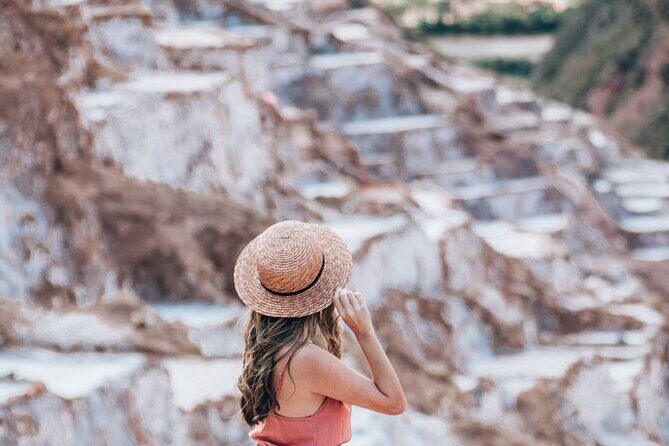
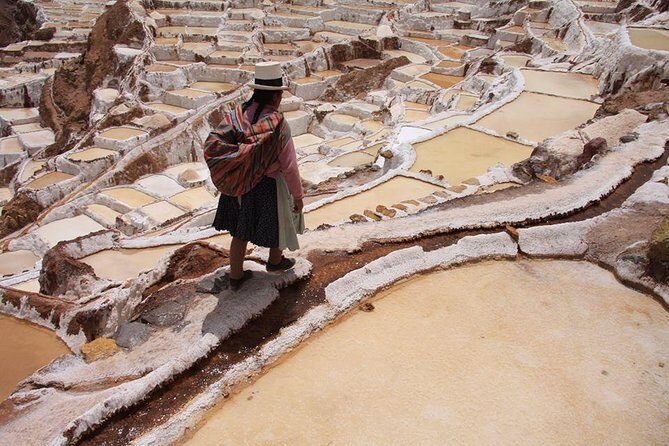
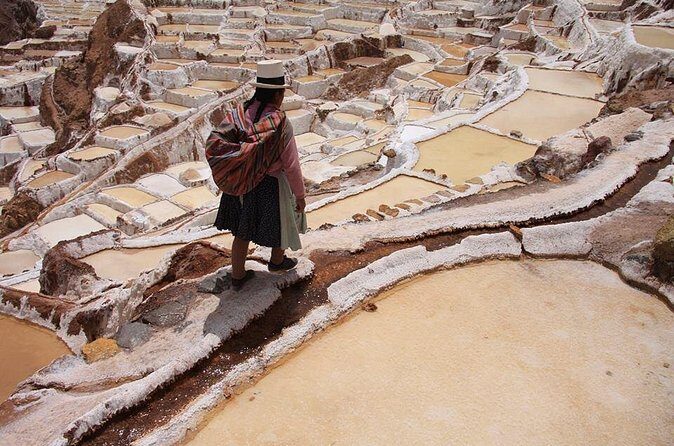
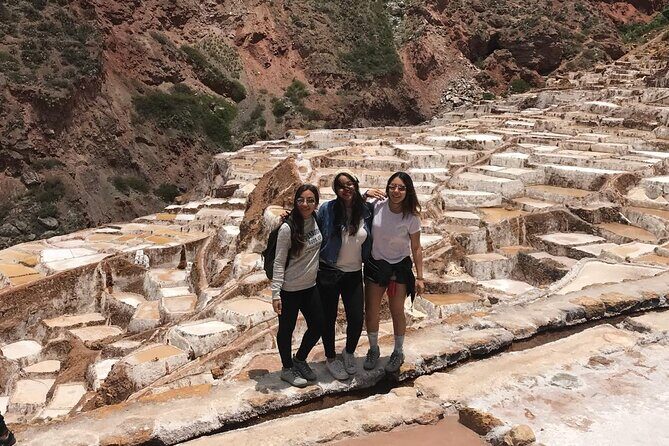
The first stop is Salineras de Maras, at roughly 3,000 meters in the Peruvian Andes. This is one of those places where the scale hits you: thousands of small salt ponds step down across the hillside, built in a pre-Columbian way and still used today.
What I find most compelling here is the human story. More than 600 families are responsible for producing salt in Maras Sal, and the techniques have been inherited from generation to generation. Your guide should help you connect the geography to the process, so it feels less like you’re looking at a quarry and more like you’re witnessing an ongoing craft.
Plan for about 45 minutes on site, and use that time wisely. The ponds are arranged in a way that rewards a slow walk: start higher for a wider view, then move down toward the finer detail. If you want photos, aim for angles that show the stepped pattern and the mountain backdrop.
You’ll also get viewpoints in the town of Maras as part of the overall route. Even when you’re not directly at a specific viewpoint for long, those quick sight breaks are worth it because they give context: this isn’t a flat monument. It’s a working area in steep terrain.
Practical note for Salineras
You’ll be at high elevation for much of the morning. Take it easy on the first moments, keep breathing steady, and don’t rush for the best shot right away. That single adjustment makes the whole 5-6 hour day feel more relaxed.
Moray’s Concentric Ruins and the Microclimates Idea
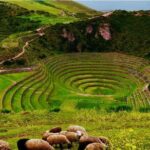
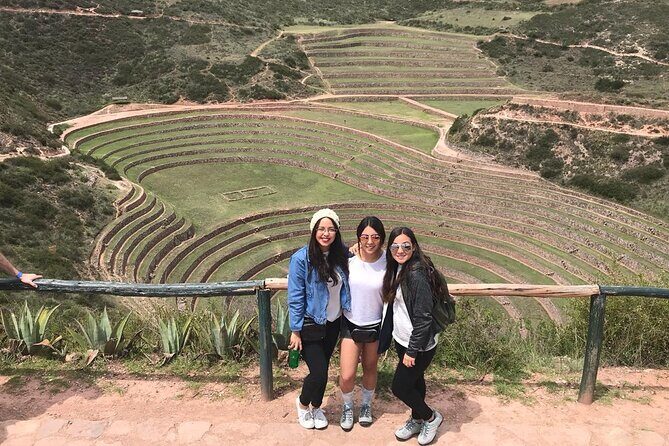
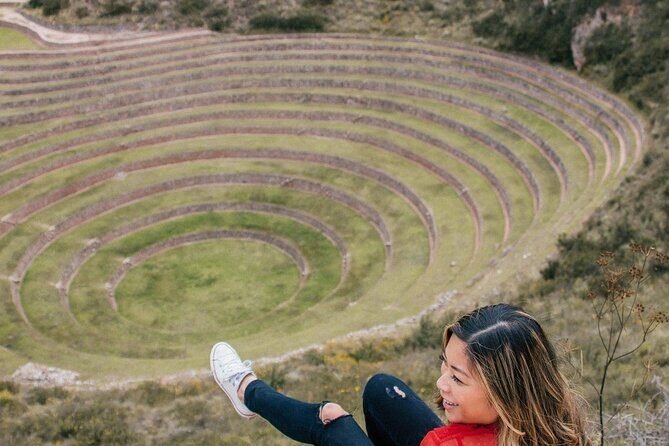
Moray is the kind of Inca site that makes you ask why it was built like that. Instead of a traditional temple or fortress, you’re faced with concentric circular terraces that descend in layers. The best part is what your guide should explain: Moray was likely an Inca agricultural research center where crops were tested at different heights to simulate different conditions.
Here’s the cool concept to look for as you walk. The layout creates a gradient of microclimates, with the center warmer and the outer areas cooler. Some explanations for Moray mention up to 20 different microclimates, which is a mind-bender until you stand on the terraces and realize how much exposure and temperature change across the site.
Your ticket is included, and you’ll usually have about 1 hour here. That’s enough time to do two things well: read the setting while you’re still fresh, and then walk the perimeter line-by-line as the terraces shift around you.
Moray is also a great place for photo stops, because the circles frame your view back toward the surrounding Andes. If your guide has a sense for timing, you’ll likely be pointed toward angles that show the terrace shapes more clearly without you having to hunt for them yourself.
What can feel like a drawback at Moray
Moray is atmospheric, but it’s also a real walking site. If your legs are sensitive after the drive or you’re still adjusting to altitude, focus on the main terrace levels and don’t feel forced to cover every edge. This is one of those times where slowing down actually helps you understand what you’re seeing.



Sacred Valley Picnic Break With Big Views
After the salt and the circles, you’ll shift into a calmer rhythm with a picnic lunch in the Sacred Valley. This stop is roughly 1 hour, and admission here is free.
The picnic element matters more than it sounds. It turns a long day into a break that feels intentional, not just a transfer between monuments. And because you’re in the Sacred Valley, you’re not eating lunch in a parking lot. You’re eating with a mountain backdrop, so the meal lands as a real moment rather than a quick stopgap.
This is also where the day’s “off-the-beaten” feel starts to show. Salineras gives you pre-Inca salt production tied to daily work. Moray gives you an Inca science idea you can visualize. Then the Sacred Valley picnic connects it all through setting—canyons, high terrain, and communities that still make a life here.
Food and drink reality check
Your picnic lunch is included, but food and drinks are not generally included beyond that. If you’re the type who likes extra water, tea, or a snack just in case, plan to bring or purchase what you need. The day is only half a day on paper, but it’s a full sensory one.
Price and Logistics: Is $138 Good Value?

At $138 per person, this is not the cheapest way to do Cusco-area sights—but it’s also not trying to be “budget tourism.” The value comes from what’s bundled and how little you have to manage yourself.
Here’s what you’re getting for that price:
- Hotel pickup and drop-off in central Cusco
- A local professional guide
- Local taxes
- A picnic lunch
- Included admission tickets for Salineras de Maras and Moray
- A small “snack” as part of the day
Then there are the cost items you’re not getting:
- Food and drinks beyond the included picnic
- Any extra pickup fee if you’re outside downtown Cusco (noted as $6 USD)
So for most people, the $138 makes sense if you want guided interpretation and admissions handled. It also makes sense if you’re not in the mood to rent a car and assemble a route across the Sacred Valley.
Another quiet value point: the tour is designed for a small group (max 10). That size tends to keep the guide’s attention focused, especially when explaining the “why” behind salt and Inca agriculture.
Who This Tour Suits Best (And Who Might Want Something Else)
This is a strong fit if you like learning how people lived, not only seeing structures. The salt ponds are about work and inherited methods, and Moray is about experimentation and adaptation to microclimates. If your ideal day includes explanations that turn places into systems, you’ll enjoy this route.
It’s also a good choice if you want to cover three sites without a full-day commitment. With about 5 hours on the schedule (and sometimes closer to 6), it’s the right length when you’re balancing Cusco acclimation, other Sacred Valley plans, or a shorter time window.
You should think twice if you:
- Prefer more time at fewer sites (this route is packed into a half-day-style pace)
- Want a totally “relaxed” outing with lots of downtime (there are three distinct stops)
- Struggle with moderate physical activity due to altitude and walking around ruins/ponds
What to Pack for a High-Altitude, Half-Day Plan
Because this tour operates at altitude, pack for comfort and steady movement rather than fashion. Your feet and lungs will do the heavy lifting.
Bring:
- Comfortable walking shoes (you’ll be moving at multiple sites)
- Layers (Andes weather can shift during the morning)
- Sun protection (high elevation means strong light)
- A refillable water bottle, even if you get a snack and picnic
Also, set your expectations for pace. If you start slow and hydrate, you’ll find you can enjoy each site’s details instead of just trying to get through the itinerary.
Should You Book This Maras, Moray, and Salineras Tour?

Book it if you want Salineras de Maras and Moray explained in a way that makes sense—salt as a living tradition and Moray as an Inca agriculture experiment. The included admissions, guide, picnic, and central pickup are exactly the kind of bundling that turns a stressful day into a smooth one.
Skip or compare if you’re looking for:
- Extra-long time in the Sacred Valley (this is short by design)
- A more leisurely pace
- A food-focused experience where lots of extra meals and drinks are included
My call: this tour is a solid “Cusco off-the-beaten-track” day because it balances pre-Inca and Inca themes without feeling like a rushed checklist. If you like the idea of seeing how people still work with the land, not just visit ruins, you’ll likely leave satisfied.
FAQ
How long is the tour?
It’s listed as about 5 hours. In practice, it may run closer to around 6 hours due to timing at the sites and on the road.
What are the pickup details?
Pickup is offered in central Cusco. You’ll be contacted to organize your pickup time. The meeting point is Plaza de Armas de Cusco (Del Medio 123, Cusco 08000), and the tour ends back at the meeting point.
Is the tour in English?
The tour is offered in English, and it may be operated by a multi-lingual guide (English and Spanish).
Are admission tickets included?
Yes. Admission tickets are included for Salineras de Maras and Moray.
Is lunch included?
Yes. A picnic lunch is included at the Sacred Valley stop.
How much walking is involved?
You’ll be visiting salt ponds and Inca ruins and should have a moderate physical fitness level. The sites do involve walking on uneven terrain.
Do I need a passport?
A current valid passport is required on the day of travel.