REVIEW · CUSCO
The Best Private Sacred Valley Tour in Cusco
Book on Viator →Operated by Exclusive Inka Tour · Bookable on Viator
Sacred Valley clicks when it’s private. This Cusco tour strings together Maras, Moray, Ollantaytambo, and Pisac with a professional guide and a schedule you can shape to your interests, not a rigid bus plan. You also get the practical luxury of round-trip, air-conditioned transportation so you can focus on the places, not logistics.
Two big wins: a guide who explains what you’re actually seeing (not just dates and names), and the comfort of private, round-trip transport that keeps the day moving smoothly. Guides such as Oscar, Miguel, Raul, Cesar, and Gorki are repeatedly praised for turning stone, terraces, and salt pools into clear stories you can picture.
One consideration: you’ll need to plan for extra costs. The tourist ticket and your lunch/snacks aren’t included, so your final day budget will be higher than the $120 headline price.
In This Review
- Key points that make this tour a smart pick
- Why This Private Sacred Valley Route Feels Like the Best Use of Your Day
- The Day at a Glance: From Maras Salt Pools to Pisac Ceremonial Water
- Salinas de Maras: Active Salt Mines with Inca-Era Continuity
- Moray’s Trial Terraces: When Inca Farming Was a Science Project
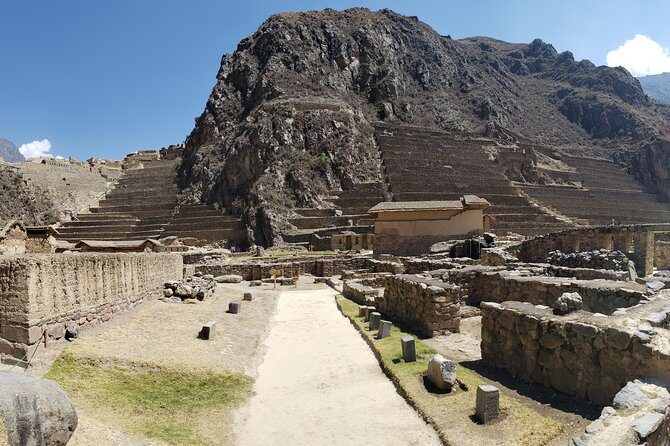
- Ollantaytambo Archaeological Park: The 200 Steps to the Temple of the Sun
- Pisac: Terraces, Ceremonial Water, and the Inca Cemetery
- Guides, Guides’ Drivers, and Why Customization Matters
- Price Check: What $120 Covers and What You’ll Budget On Top
- Who Should Book This, and Who Might Prefer Something Different
- Should You Book This Private Sacred Valley Tour?
- FAQ
- How long is the private Sacred Valley tour?
- What time does the tour start from Cusco?
- Is this tour private?
- Which stops are included?
- Are admission tickets included in the price?
- What is included in the tour price?
- What’s not included?
- Can the itinerary be customized?
- What is the cancellation policy?
Key points that make this tour a smart pick
- Private pacing you can control so you can linger at viewpoints or keep things moving
- Salt mines + agriculture science in the same day (Maras and Moray)
- A “history you can see” route from Inca engineering to temple architecture and terraces
- English or Spanish guide with the flexibility to answer questions
- Crowd-smart routing with some guides rearranging the order to keep stops calmer
Why This Private Sacred Valley Route Feels Like the Best Use of Your Day
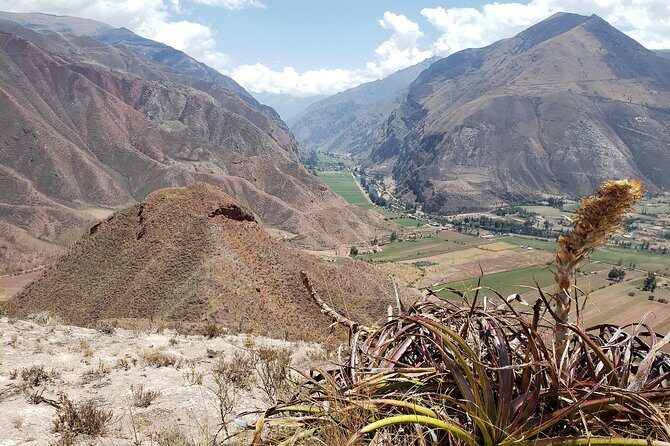
A Sacred Valley day can be either a blur of stops or a real learning day. I like that this one is built around four distinct sites with enough time at each to actually look—then ask questions—while you’re still energized.
Because it’s private, the guide can slow down when you’re curious and speed up when you’re not. That matters at places like Ollantaytambo, where the story is tied directly to what you can see: the stepped approach, the temple setting, and the way the site is laid out for people moving through it.
The ride is also part of the value. You’re in an air-conditioned vehicle with round-trip transport, which is a big deal when you’re bouncing between zones of the Sacred Valley and trying to keep your day comfortable.
And if you’re the kind of person who wants great photos without feeling rushed, this tour often works well for that too. Multiple guides in this program are noted for helping adjust timing and order so you can enjoy calmer moments at key viewpoints.
You can also read our reviews of more private tours in Cusco


The Day at a Glance: From Maras Salt Pools to Pisac Ceremonial Water
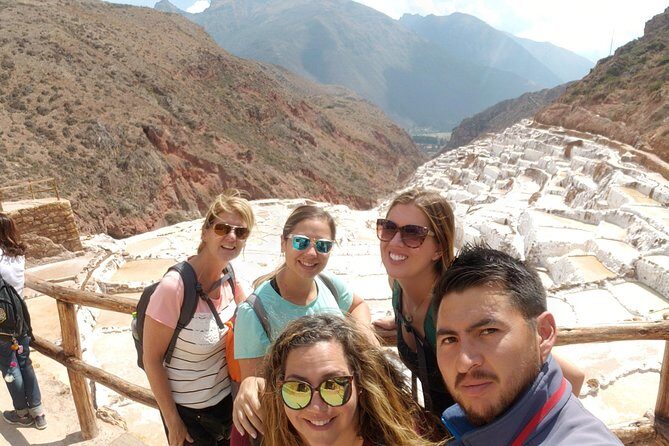
Plan for an 8 to 10 hour day. The tour runs with a morning departure window from 6:00 AM to 9:00 AM (Monday through Sunday), and you’ll visit the four stops in a structured order.
Here’s how the time is typically spent at each location:
- Salinas de Maras: about 45 minutes
- Moray: about 45 minutes
- Ollantaytambo Archaeological Park: about 1 hour 30 minutes (including climbing about 200 steps to the Temple of the Sun)
- Pisac: about 1 hour
Even though the stop times are specific, you’ll still want a little buffer in your head for the road, parking, and settling in. One reason people love private tours is that the guide can manage those small gaps so the day feels organized instead of frantic.
A practical perk: your guide may also tailor the order and drop-off location to your plans. If you’re continuing onward—like toward the Machu Picchu area—that flexibility can save you from juggling extra transport on a tight schedule.
Salinas de Maras: Active Salt Mines with Inca-Era Continuity
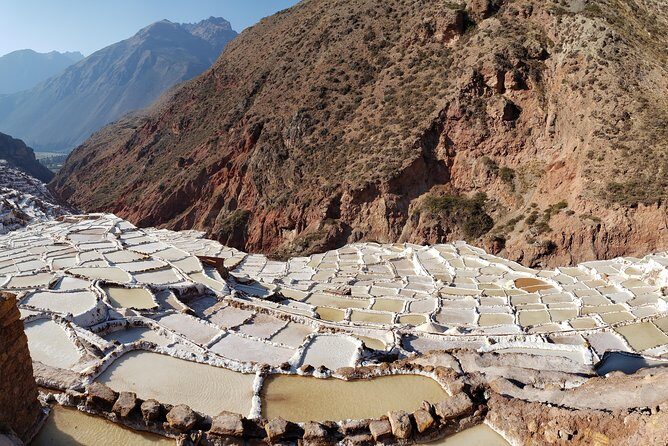
Salinas de Maras is one of those places where you immediately understand why people kept returning. You’re looking at an old, active salt-mining system in the Andes, and the tour frames it as something exploited since Inca times—over 600 years—so you’re not just seeing a scenic stop.
What makes the visit work is the explanation process. Your guide walks you through how the salt is produced from the pools, and you get the chance to connect the visual pattern of the terraces of salt pans to the practical method of working the site. In some guides’ narratives, you’ll also hear about how different pools can produce different salt colors—such as white, pink, and brown—and how that’s connected to uses like skincare.
This is also a stop where time matters. You get around 45 minutes, which is usually enough for:
- taking in the full salt-pan view,
- moving along the best accessible angles, and
- listening to the story without feeling like you’re stuck in one spot.
One drawback to know: this is an active working area, so it can feel more “industrial” than “ruins.” If you came for pure Inca stone architecture, keep your expectations aligned—Maras is about salt, water, and labor.
Moray’s Trial Terraces: When Inca Farming Was a Science Project
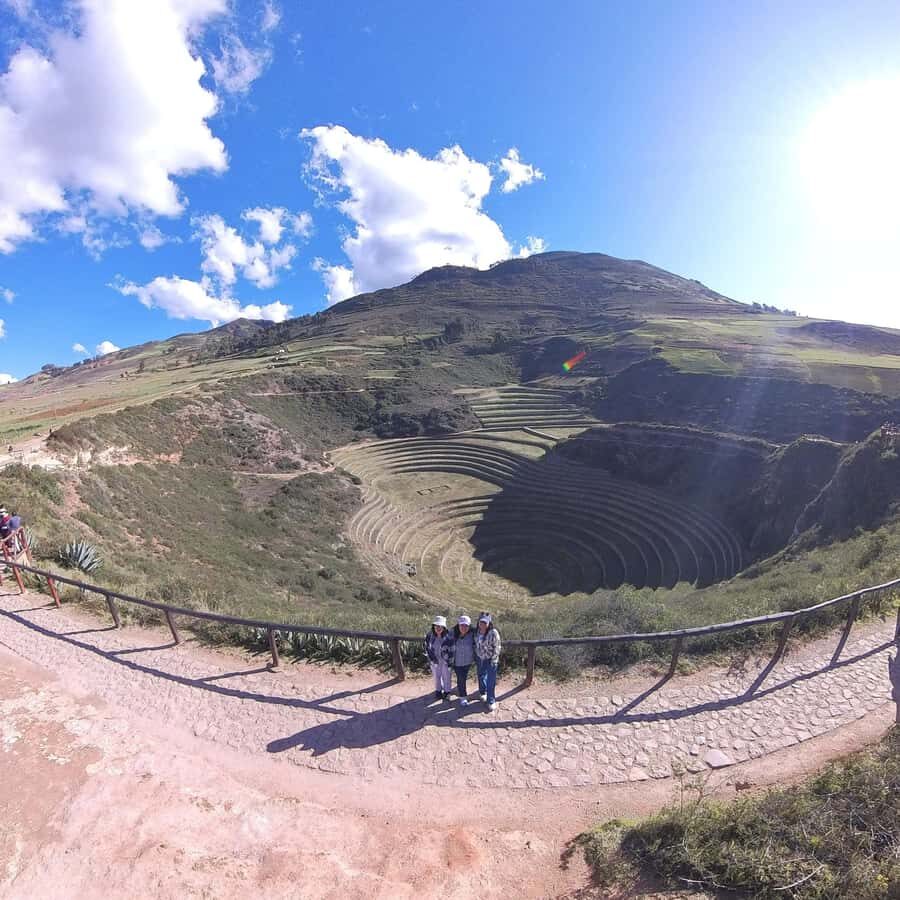
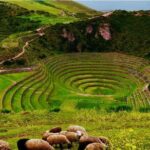
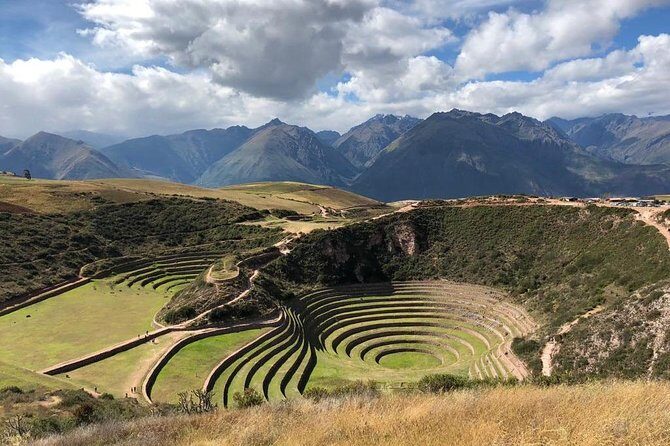
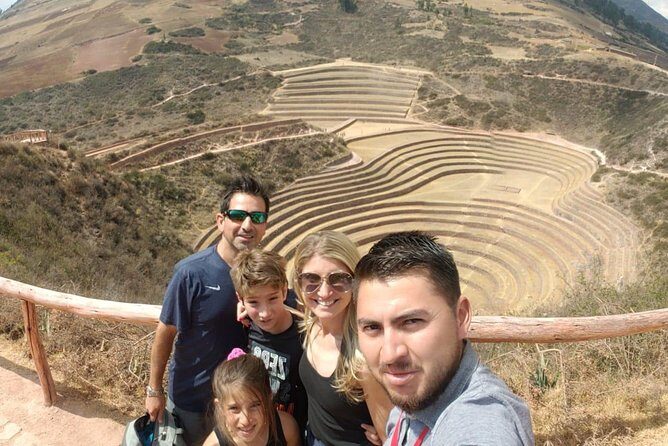
Moray is where the Sacred Valley tour shifts from craft to experimentation. You visit an area that’s especially interesting from a scientific point of view: a former experimental laboratory where the Inca people tested plants that wouldn’t grow well at high altitude.
The key idea you’ll hear is the altitude challenge. Moray sits over 3500 meters above sea level, and the terraces helped create different conditions so crops could be acclimatized. That turns a set of circular-looking agricultural remains into a story about problem-solving, not just “pretty ruins.”
In practice, your time here is about 45 minutes. That’s enough to:
- understand what the site was designed to do,
- see the terrace layout clearly,
- and ask questions about how agriculture can be engineered through microclimates.
A tip for getting value: Moray works best when you slow down for the explanation. If you’re sprinting for photos only, you miss what makes it special. This stop is one of the easiest places to feel the benefit of a private guide, because you can ask follow-ups in real time instead of waiting for a group to catch up.
Ollantaytambo Archaeological Park: The 200 Steps to the Temple of the Sun
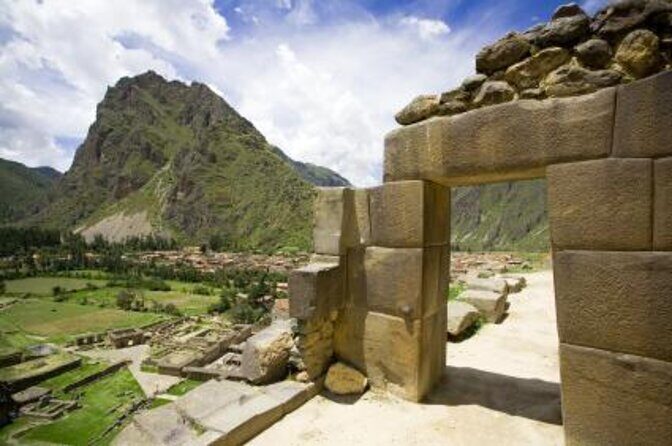
Ollantaytambo is the tour stop that most people remember. The reason is simple: it’s dramatic. You enter the archaeological park, and you climb around 200 steps to reach the Temple of the Sun.
That climb matters because it changes how you read the architecture. Instead of looking at ruins from a distance, you move into the structure’s setting. Once you’re at the top, the stories land differently.
Guides often focus on how engineering and design supported daily life and belief. Expect explanations that connect architecture to the Inca worldview and also to how the built environment was made to last. In accounts of this tour, you can even hear how some guides point out details like stones that fit together with precision and how unfinished stones can look fascinating once you know what you’re looking at.
The site can also feel like it has two layers:
- the steep physical layout you experience while climbing, and
- the historical meaning the guide gives you once you’re there.
Time is about 1 hour 30 minutes, which is generous compared to many fast Sacred Valley routes. If you like asking questions, this is the best place in the day to do it. The pacing also leaves room to take photos without skipping the learning piece.
One consideration: the steps are real. If your fitness is limited, tell your guide early. This is a setting where you can’t “pretend” you’re not walking, so plan your comfort level.



Pisac: Terraces, Ceremonial Water, and the Inca Cemetery
Pisac rounds out the day with a different feel. Instead of a salt production story or a terrace-science story, you see Pisac as an Inca administrative and production center.
You’ll walk on large terraces and learn about the technology the Inca developed for agriculture. The tour also includes:
- a huge Inca cemetery, and
- a water fountain used for ceremonies and to irrigate terraces.
That combination helps you see how water, worship, and farming were tied together. When you hear the explanation, the site shifts from “a scenic walk” into something more connected: irrigation isn’t separate from ritual; it’s part of how life was organized.
Pisac is about 1 hour on this route. That time is right-sized for a terrace walk plus the key sights. It’s also a good closing stop because it gives you variety: by the time you arrive, you’ve already seen salt and scientific agriculture, so the administrative/ceremonial mix doesn’t feel repetitive.
One small planning thought: since lunch isn’t included, think about whether you want to eat before or after Pisac depending on where the guide suggests. In accounts of this tour, guides often recommend a restaurant with a view and opportunities to interact with alpacas or llamas, but you should treat that as a choice you’ll make with your guide rather than something guaranteed in the base price.
Guides, Guides’ Drivers, and Why Customization Matters
This tour is priced as private, but the real quality jump is in how the guide works the day. You’re not just getting facts; you’re getting translation into meaning and practical storytelling.
People often mention a few specific guide strengths:
- answering lots of questions without rushing you,
- adjusting pacing so you can move at your speed,
- and reorganizing the route order to reduce crowds at the major stops.
Some guides are also noted for practical help beyond sightseeing. In one story from the salt mines area, a guide helped rescue a hat that blew away in the Maras wind—small moment, but it shows the “hands-on” style you want from a private operator.
You’ll also ride with a driver who handles the safe transport and keeps the journey organized. Some accounts mention soft folk music during the drive, which may not be on your wish list, but it’s a nice sign that the ride feels cared for rather than rushed.
Language options matter too. You can have a professional guide in English or Spanish, and many people appreciate that the guide’s explanations are clear enough to follow even when you’re asking detailed questions.
Price Check: What $120 Covers and What You’ll Budget On Top
At $120 per person, this is not the cheapest way to do the Sacred Valley. But it’s also not trying to be. The value comes from four things bundled together:
- private transportation with round-trip pickup and drop-off,
- an air-conditioned vehicle,
- all fees and taxes included, and
- a professional guide in English or Spanish.
What’s not included is where you should look next. The tourist ticket is not included, and that ticket covers admission to the sites on this route. In addition, lunch, snacks, and propinas (tips) are not included.
So the real comparison is: group tours might be cheaper on paper, but you often trade away comfort, time flexibility, and the ability to ask questions at the exact moment you see something interesting.
If you’re going in a pair or family group, private transport can also start to feel more reasonable because you’re not paying extra for multiple entry tickets or a second transport day just to keep your schedule workable.
Also, you can cancel for free up to 24 hours in advance for a full refund. If weather or timing changes, you have some breathing room.
Who Should Book This, and Who Might Prefer Something Different
This tour fits you best if:
- you want a private guide instead of a group script,
- you care about learning the Inca logic behind the sites (not just walking past them),
- you prefer comfortable transport on a long day,
- and you like the idea of customizing timing and stop order.
It can be a bit less ideal if you’re trying to keep costs ultra-low or you don’t want to plan for the tourist ticket and lunch. Also, if you dislike walking up to about 200 steps, confirm your comfort level before committing.
On the other hand, if you’re the kind of person who enjoys asking why things were built and how they worked—salt pools, plant trials, temple placement, terrace irrigation—this route is built for you.
Should You Book This Private Sacred Valley Tour?
If you want the Sacred Valley to feel like a real story instead of a checklist, I’d lean yes. The biggest strength is the combination of private pacing and a route that covers very different Inca systems in one day: salt production at Maras, farming experiments at Moray, temple-focused architecture at Ollantaytambo, and terrace-and-water life in Pisac.
Before you book, do two quick checks:
1) Have a plan for the tourist ticket plus lunch and snacks.
2) Decide how much walking you’re comfortable with at Ollantaytambo’s steps.
If those are workable for you, this is the kind of day that usually makes people feel like they used their Cusco time well.
FAQ
How long is the private Sacred Valley tour?
The tour runs about 8 to 10 hours.
What time does the tour start from Cusco?
Departures fall within 6:00 AM to 9:00 AM, Monday through Sunday.
Is this tour private?
Yes. It’s a private tour/activity, and only your group participates.
Which stops are included?
You’ll visit Salinas de Maras, Moray, the Archaeological Park at Ollantaytambo (including climbing around 200 steps to the Temple of the Sun), and Pisac.
Are admission tickets included in the price?
No. The tourist ticket is not included. The tourist ticket covers admission for the places on this route.
What is included in the tour price?
Included are private transportation, an air-conditioned vehicle, all fees and taxes, and a professional guide in English or Spanish.
What’s not included?
Lunch, snacks, propinas (tips), and the tourist ticket are not included.
Can the itinerary be customized?
Yes. The tour is private, and you can customize it to suit your interests.
What is the cancellation policy?
You can cancel for a full refund up to 24 hours before the experience start time. If you cancel less than 24 hours before, the amount paid is not refunded.