REVIEW · CUSCO
Salkantay Trek to Machu Picchu in 4 days
Book on Viator →Operated by Incredible Peru Tours · Bookable on Viator
The altitude hits early, but the views pay. This 4-day Salkantay Trek to Machu Picchu blends Humantay Lagoon and the Salkantay Pass with guided time in Machu Picchu. I love how organized the trekking side is, including muleteers to carry camp gear and a cook running all the meals.
Two things I really like: the slow build from Cusco into mountain walking, and the late-arrival logistics that get you into Machu Picchu the morning you need. One possible drawback is that health-and-safety handling has mixed feedback, so it’s smart to ask what’s actually on hand for altitude issues before you go.
If you want the classic alternative to the Inca Trail, Salkantay is one of the best ways to do it. The group size is capped at 10 travelers, and pickups start at 5:00 am, so you’ll feel the early schedule from day one. Keep your expectations clear: this is demanding trekking, not a casual hike with frequent stops.
In This Review
- Key things that make this Salkantay trek work
- Why this 4-day Salkantay route still feels like a real trek
- Day 1: Cusco to Challacancha, then Humantay Lagoon magic
- The morning walk: 10 km and a steady uphill feel
- Humantay Lagoon: a short hike with high rewards
- Soraypampa evening: tea time, sunset, stars
- Day 2: Salkantay Pass day is the hardest part
- At the pass: mountain views and a weather reality check
- Descent into cloud forest and lodge transfer
- Day 3: plantations and the Hydroelectric walk into Aguas Calientes
- Central Hidroelectrica to Aguas Calientes: the long walk day
- Overnight in Aguas Calientes: dinner and prep talk
- Day 4: the 5:30 am bus to Machu Picchu, then time to explore
- Guided tour: about two hours with a professional guide
- Head down, train back, and back to Cusco
- Value and price: what $590 buys you in real terms
- Guides and the experience quality: what to expect
- Safety and altitude reality: what I’d check before you go
- Who this tour fits best
- Should you book this Salkantay Trek to Machu Picchu in 4 days?
- FAQ
- What time does pickup start in Cusco?
- What’s the highest point on the trek?
- Do you have to carry your own luggage?
- Is Machu Picchu included, and is it guided?
- Is Huayna Picchu included?
- What kind of fitness level do you need?
Key things that make this Salkantay trek work
- Humantay Lagoon at 4,200 m: a short hike that earns big photo time.
- Salkantay Pass at 4,630 m: the high point where weather and pace really matter.
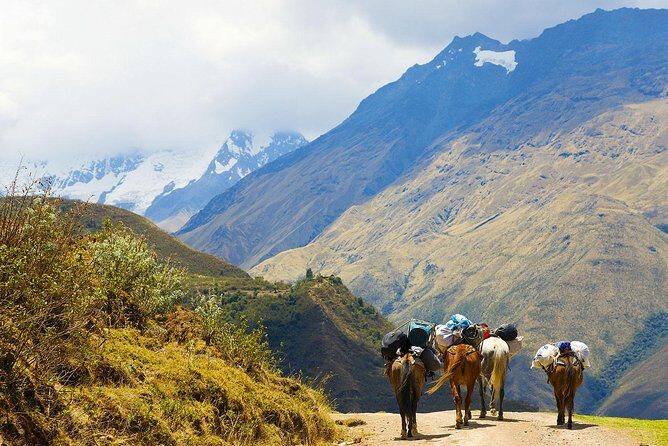
- Muleteers + luggage support: you only carry a small pack; up to 7 kg is handled for you.
- Two lodge nights with stargazing: Eco Domes at Sahuayaco plus a night in Aguas Calientes.
- Guided Machu Picchu, plus optional Huayna Picchu: you get the history walk and a climb option if available.
- Small group max 10: easier flow on narrow paths and in crowded moments.
Why this 4-day Salkantay route still feels like a real trek
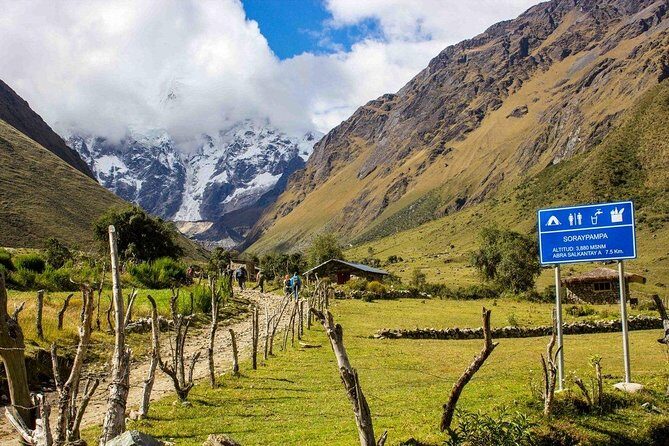
The Salkantay Trek is one of those journeys where you’re not just moving from point A to point B. You’re changing environments fast: bright Andean valleys, colder high passes, cloud-forest descents, then down toward the Urubamba River system. In four days, you get a compressed version of what can take much longer on your own.
At the center is a simple rhythm: walk hard, eat well, sleep at a mountain lodge, then wake up early again. You’ll start with a private transport from Cusco at 5:00 am. That early start is a big deal. It helps you avoid losing daylight to logistics, and it puts you on trail while the air is still fresh.
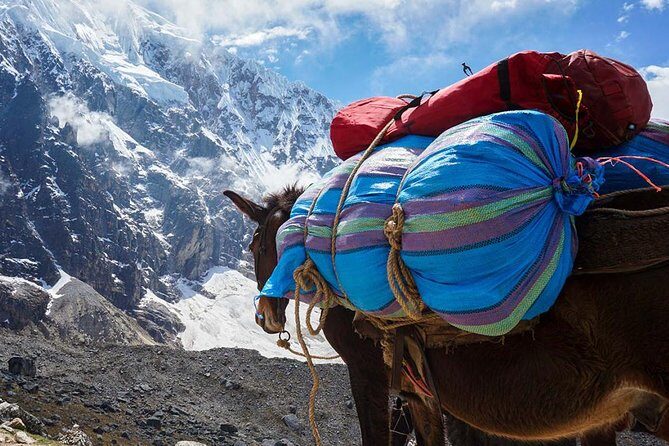
You also get built-in support that makes the trek more doable for most people with moderate fitness. There’s a cook and kitchen assistant for all meals, plus muleteers and horses to carry the kitchen and food. The tour says they carry up to 7 kg of your luggage, which means you can keep your hands free for what you actually need: water, layers, and a rain cover.
You can also read our reviews of more hiking tours in Cusco



Day 1: Cusco to Challacancha, then Humantay Lagoon magic
You’ll be picked up from your Cusco hotel at 5:00 am in private transport with your guide and cook. Before leaving, you’ll want your original passport ready. You’ll need it at control points along the route.
Then comes the first “get your bearings” phase. The ride from Cusco to Mollepata takes about two hours. Along the way you’ll pass snowy peaks and colorful valleys. In Mollepata, you stop about an hour and eat your first proper breakfast at a local restaurant.
From there, you transfer to Challacancha (about 3,600 m) where the walk begins. You’ll meet the muleteer and horses waiting with the gear. This is when you’ll see how the trek is designed: your personal packing gets simplified, and the camp setup is handled behind the scenes.
The morning walk: 10 km and a steady uphill feel
Starting at 9:30 am, you walk roughly 10 km over stone-ballast paths. You’ll often be walking near an old water channel supplying clean, cold water to local inhabitants. That matters because hydration becomes easier when you’re not constantly guessing about conditions.
You head toward Soraypampa, a stop that’s also where lunch is served. You’re on the trail for about three hours in this section.
Humantay Lagoon: a short hike with high rewards
After rest at base camp around Soraypampa, you’ll head up toward Laguna Humantay at about 4,200 m. The hike is roughly 1.5 hours round-trip time-wise (the route description has walking time around 1 hour 30 minutes to the lagoon). Once you arrive, you get enough time for photos, and the elevation means the colors can be intense when skies cooperate.
This is a place where the pace changes. Instead of pushing distance, you’re looking and breathing and taking in the scale.
Soraypampa evening: tea time, sunset, stars
Back at Soraypampa around 5:30 pm, you’ll have tea time with hot coffee or tea plus popcorn and cookies. Then there’s dinner cooked for you, and you have the option to enjoy the stars at night. For me, this is the value of Salkantay in a nutshell: the day is structured enough to feel comfortable, but you still get that big “mountain night” atmosphere.
You can also read our reviews of more tours and experiences in Cusco

Day 2: Salkantay Pass day is the hardest part
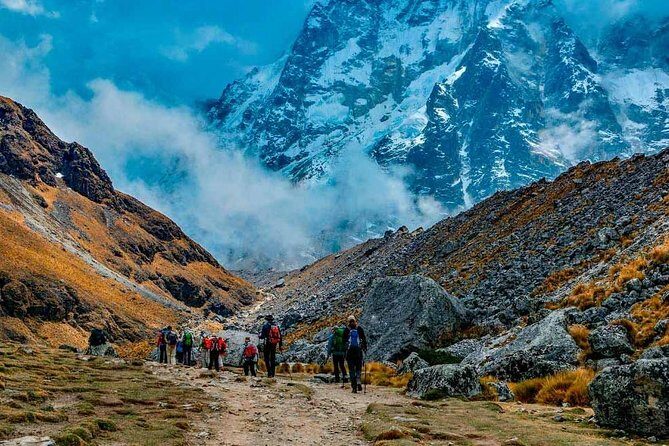
Day 2 starts early—around 5:00 am with coca tea—then breakfast, then the big climb. This is described as the hardest day of the trek, and the timing backs that up.
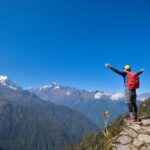
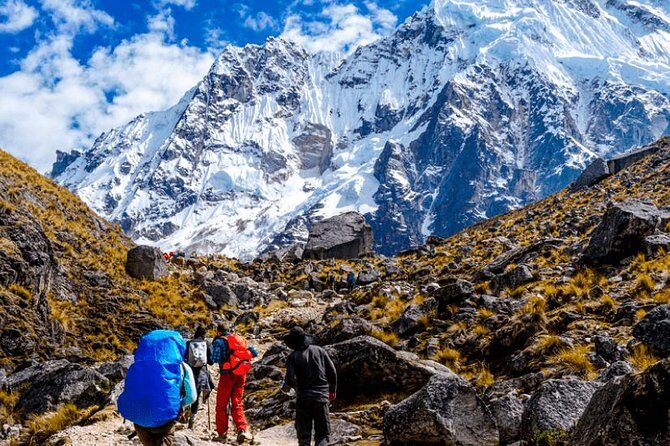
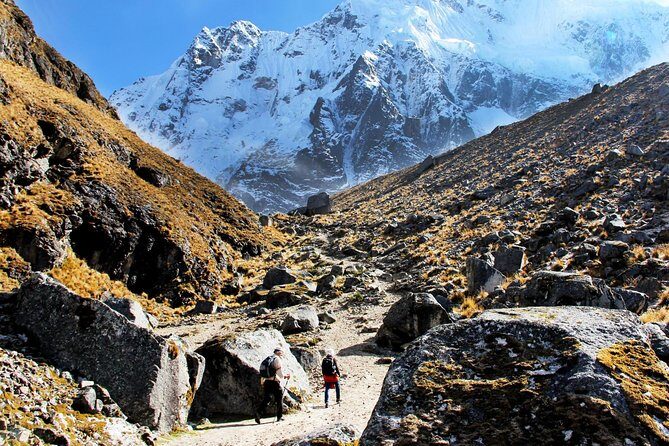
You start walking with a gradual uphill slope for about one hour through the Salkantay Valley. Then you continue climbing toward Pampa Salkantay at around 4,200 m for a short break with panoramic views. After that break, you keep climbing through a rocky valley for about two more hours to the highest point: Salkantay Pass at about 4,630 m (15,190 feet).
This section is why people feel Salkantay in their legs. It’s not only altitude. It’s also sustained effort. The descriptions mention about three hours total for reaching the pass segment, but the way the day is paced means you should avoid rushing. If you want the day to feel manageable, move slower than your ego wants to.
At the pass: mountain views and a weather reality check
When you reach the Salkantay Pass, you get time to rest. You can look toward snowy peaks like Salkantay Mountain (6,271 m) and Humantay Mountain (5,400 m). The route also describes a cloud-forest layer lower down.
One practical thing: weather can decide how much you see. If the clouds roll in, the views might be muted. That’s normal at this altitude and not a failure of the trip.
Descent into cloud forest and lodge transfer
After the pass, the route drops into Huayracmachai (around 1:30 pm). Lunch is served there. Then you enter the high forest and cloud-forest zone, with warmer, temperate conditions described. You continue down to Colpapampa around 4:30 pm, then take vehicle transport about an hour to the lodge area at Sahuayaco.
That lodge night is at Eco Domes Majestic Sky Domes. You’ll settle in, then enjoy tea time—hot chocolate, coffee, cookies, popcorn—followed by dinner. This is also a good night for sleep. You’ll be glad you recover before walking again.
Day 3: plantations and the Hydroelectric walk into Aguas Calientes
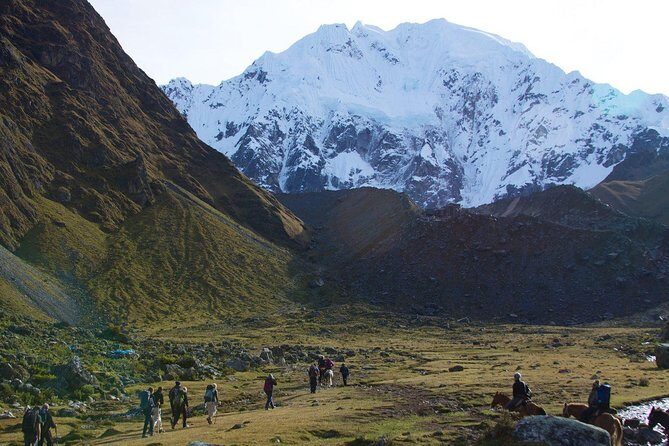
This day has a two-part feel: morning calm on the plantations, then an afternoon walking section that leads into Aguas Calientes.
At 7:00 am you wake up, then breakfast around 8:00 am. You do a walk around the Sahuayaco area and visit local plantations: bananas, avocados, oranges, and medicinal plants. The tour says these plantations are the livelihood for local people, with coffee as a major export industry here.
You also have a chance to visit a coffee farm. The experience includes freshly prepared coffee with that aroma you only notice after roasting and grinding.
After returning to the lodge around 11:00 am, you get time to relax.
Central Hidroelectrica to Aguas Calientes: the long walk day
Around 2:30 pm you reach the Central Hidroelectrica Machu Picchu area to start the walk toward Aguas Calientes. The walk begins with a slight climb of about 15 minutes, then you follow flat sections along train tracks near the Urubamba River. You’ll also see the archaeological site Intihuatana—described as an ancient sundial carved into a natural rock.
From there, the route notes you can see sacred mountains like Huayna Picchu and Machu Picchu. After that, you keep walking through cloud forest with lush vegetation and lots of orchids. After about three hours of walking, you reach Aguas Calientes around 5:30 pm.
Overnight in Aguas Calientes: dinner and prep talk
You stay in Aguas Calientes (around 2,000 m) in a comfortable hotel with a private bathroom mentioned for this lodging night type. Dinner is served in a tourist restaurant and is included.
Your guide gives important information about the next day’s Machu Picchu visit so you’re prepared for an early departure. And yes—you’ll want a reasonable bedtime. Machu Picchu day is early by design.
Day 4: the 5:30 am bus to Machu Picchu, then time to explore
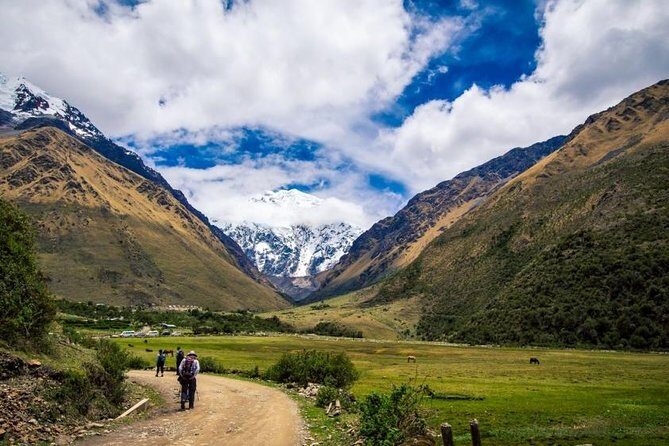
After breakfast, you leave your hotel at about 5:30 am. You walk to the bus station, then ride up by tourist bus for around 30 minutes along zig-zag roads to Machu Picchu.
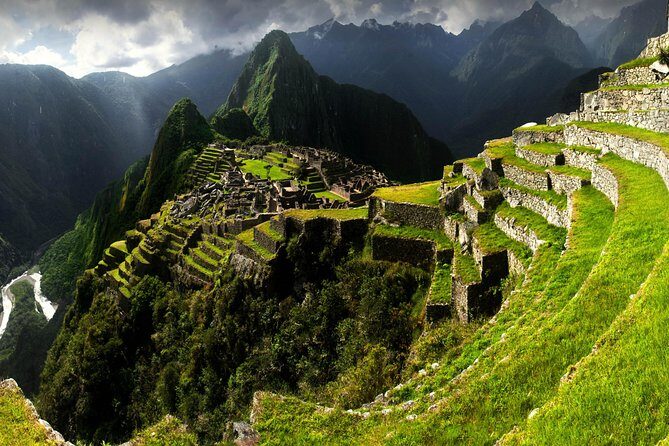
You arrive around 6:30 am at the Inca Sanctuary (about 2,400 m). This timing is one of the big reasons these tours run the way they do: you get on site early enough to enjoy it with less chaos than later.
Guided tour: about two hours with a professional guide
You get a guided tour lasting roughly two hours. Your guide covers history and helps you focus on the structures, temples, terraces, canals, and water sources that made Machu Picchu one of the New 7 Wonders. Then you have free time for photos and exploring.
The option to climb Huayna Picchu is included if availability allows. If it’s available, this is where you’ll really feel the effort pay off—steep steps, big views, and a more “Inca-experience” perspective.
Head down, train back, and back to Cusco
After Machu Picchu, you take the tourist bus down. Then you catch the train to Ollantaytambo, arriving around 7:40 pm. Staff meet you and take you back to Cusco by bus, arriving around 10:00 pm. You can also be dropped at a hotel in the Sacred Valley if you want.
This is a long final day, but it’s efficient. You’re not wandering around trying to solve transport at night.
Value and price: what $590 buys you in real terms
At $590 per person, you’re paying for more than “guided walking.” You’re paying for the full machine: transfers, permits, lodging, meals, and the Machu Picchu logistics that can easily become a headache if you DIY it.
Here’s what’s included in the practical sense:
- 3 nights accommodation: Soraypampa cabin, a Sky Dome lodge at Sahuayaco, and a hotel night in Aguas Calientes.
- Meals all day: 4 breakfasts, 4 lunches, 3 dinners.
- Professional English-speaking guide during the trek, plus the Machu Picchu guided tour.
- Entry tickets: Salkantay route and Humantay Lagoon, plus Machu Picchu.
- Transport pieces that matter: private transport from Cusco to Challacancha, vehicle rides between Sahuayaco and the Hydroelectric area, and hop-on hop-off bus tickets between Aguas Calientes and Machu Picchu.
- Train back: Expedition tourist train to Ollantaytambo, and then transport back to your Cusco hotel.
So when you evaluate the price, don’t only compare it to a cheaper trekking company. Compare it to the cost and effort of assembling your own combination of permits, lodging, day-by-day logistics, and train timing.
Guides and the experience quality: what to expect
The human part of a trek is everything, and this itinerary leans on your guide and cook. In past experiences tied to this kind of route, people praised guides for making the trek feel doable and interesting.
I’ve seen accounts where Gilber was praised for knowledge and for sharing historic and little-known facts. Others highlighted guide Rene for keeping the activity engaging and manageable for different participants. And even in critiques of the company, guide Herbert’s attitude came through positively in at least one situation.
That said, you should treat the safety side as something you verify, not something you assume.
Safety and altitude reality: what I’d check before you go
A Salkantay trek is high altitude and physically demanding. That’s not a scare tactic; it’s just math. The route includes the pass at about 4,630 m, plus another high point at Humantay Lagoon around 4,200 m.
Some accounts include serious complaints about health and safety execution—specifically around first aid and oxygen support that was listed as included. In one case, the situation reportedly required out-of-pocket taxi transport to lower elevation.
So here’s your practical move: before you commit, ask the operator (in plain terms) what’s available for medical needs on the trail and how the oxygen balloon and first aid kit are carried and used. Then plan your own safety basics too: bring altitude meds if you use them, pack blister care, and carry any personal medication.
If you have health conditions or concerns about altitude, talk to a travel doctor before the trip. With this itinerary, “moderate fitness” still means you’ll be climbing at altitude on day two.
Who this tour fits best
This works best for you if:
- You want the Salkantay route specifically as an alternative to the Inca Trail.
- You’re comfortable with early mornings and sustained uphill climbing.
- You like a structured trek with meals and lodging handled for you.
- You want guided Machu Picchu time, not just a bus-and-ticket situation.
It may be a tougher match if you’re looking for a light hike, or if you have tight limits on altitude exposure. Also, if safety procedures are a top concern for you, do extra pre-trip checking.
Should you book this Salkantay Trek to Machu Picchu in 4 days?
I’d book this if you want a well-run, end-to-end Salkantay experience that includes the key Machu Picchu logistics and keeps the trek side supported with meals, horses, and a guide. The combination of Humantay Lagoon, the Salkantay Pass day, and the guided Machu Picchu arrival schedule is hard to replicate cheaply without real effort.
I’d hesitate or at least ask more questions if safety support on the trail is non-negotiable for you. The mixed feedback around health handling means you should verify what’s carried, how it’s used, and how medical decisions are made if someone gets sick.
If you do book, keep your plan smart: slow pace on day two, layers for rapid weather changes, and focus on recovery between walking days.
FAQ
What time does pickup start in Cusco?
Pickup starts at 5:00 am from your Cusco hotel in private transport.
What’s the highest point on the trek?
The highest point is Salkantay Pass at about 4,630 m (15,190 feet).
Do you have to carry your own luggage?
You’ll carry a small backpack and water, while the tour carries up to 7 kg of your luggage (about 15 pounds) for you.
Is Machu Picchu included, and is it guided?
Yes. You’ll visit Machu Picchu and get a guided tour of the Inca Citadel of Machu Picchu.
Is Huayna Picchu included?
An entrance ticket to Huayna Picchu is included if it’s available.
What kind of fitness level do you need?
The tour is described as suitable for travelers with moderate physical fitness, but day two is noted as the hardest day due to the steep ascent.