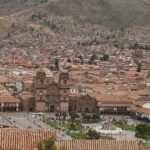
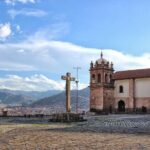
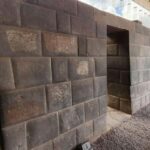
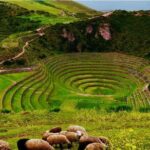
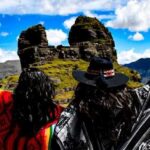
One afternoon, five major landmarks. This Cusco city tour strings together the big-name cathedral square view and the Inca-era sites around Cusco, so you see how the city’s story layers Spanish religion over Inca power.
I love the small-group feel (max 10) and the fact that pickup is offered from hotels or the Plaza de Armas. I also like that the tour runs in English, with guides who slow down long enough to explain what you’re looking at, not just where to stand for a photo.
One possible drawback: entrance tickets are not included, so your final cost will depend on whether you buy the Cusco Tourist Ticket option (listed at S/70 / PEN70) or pay site by site for places like the Cathedral and Qorikancha.
In This Review
- Key points to plan your Cusco afternoon
- The 1:00 pm schedule that works for most Cusco stays
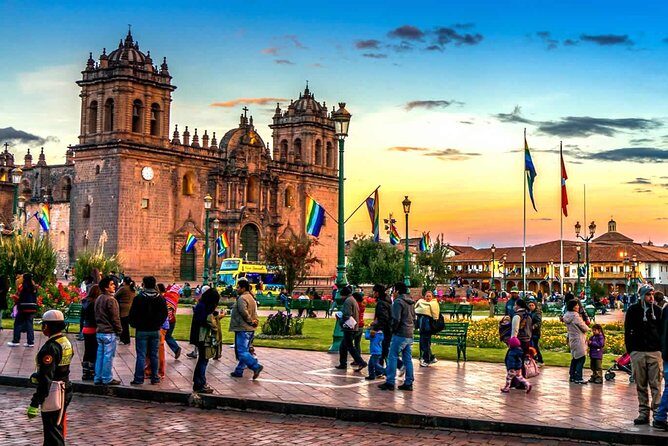
- Stop 1: Cusco Cathedral first, because it sets the tone
- Qorikancha (Santo Domingo): the Inca Temple of the Sun underneath
- Sacsayhuaman’s zigzag terraces: engineering with a purpose
- Q’enqo: niches, offerings, and a monolith at the center
- Tambomachay: Inca baths and the cult of water
- Price and tickets: what your $27.25 actually covers
- Group size and pickup: why it changes your experience
- Weather and pacing: small planning moves that pay off
- Who should book this Cusco city tour
- Should you book this Cusco city tour?
- FAQ
- What’s included in the tour price?
- What time does the tour start, and how long is it?
- Where do I meet the tour, and where does it end?
- Is pickup offered?
- Is the tour offered in English?
- Do I need to buy tickets for the Cathedral and Qorikancha?
- How large is the group?
- What happens if the weather is poor?
- Is free cancellation available?
Key points to plan your Cusco afternoon
- Hotel or Plaza de Armas pickup saves you from figuring out local transport right away.
- English-speaking guide helps you get the meaning behind the ruins and the colonial sights.
- Real site time: you get roughly 1–2 hours at each stop, with Q’enqo getting the most time.
- Tickets are separate: budget extra for the Cusco Cathedral and Qorikancha (or the Cusco Tourist Ticket option).
- Good weather matters since the tour requires it to run.
The 1:00 pm schedule that works for most Cusco stays
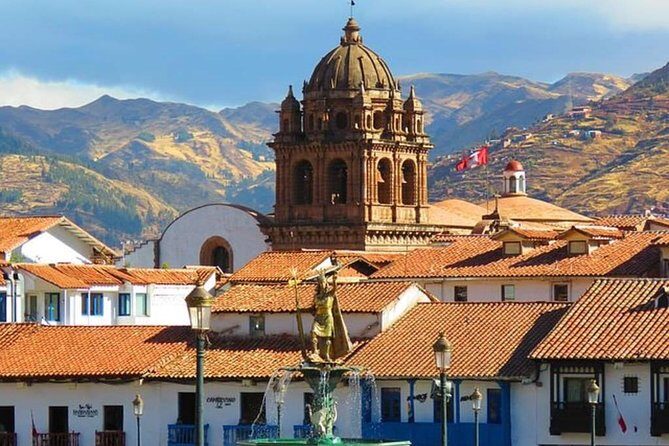
This tour starts at 1:00 pm and runs about 6 hours back to the meeting point at the Plaza de Armas. If you’re in Cusco for the first time, an afternoon start is a smart way to balance sightseeing with acclimation. You’re also less likely to feel rushed if your morning is taken up by trains, arrival logistics, or just settling into altitude.
You’ll be picked up either from your hotel or directly from the Plaza de Armas (meeting point: Plaza de Armas de Cusco, Del Medio 123). From there, you ride in a shared service vehicle, which usually means you aren’t paying for a private car just to get between sites.
With a maximum of 10 travelers, you avoid the worst part of group tours: long waits while everyone herds together at each stop. It’s not the kind of tour where you feel like a numbered passenger; it’s more like a guided walk across the most important Cusco highlights.
You can also read our reviews of more city tours in Cusco
Stop 1: Cusco Cathedral first, because it sets the tone
Your first stop is the Cusco Cathedral, with about 1 hour on-site. The tour doesn’t include the Cathedral admission ticket, which is listed at S/40 (PEN40) per person.
Why start here? Because Cusco’s center is where the Spanish colonial layer becomes obvious. Even before you reach the Inca ruins, you’re already in the place where the city expresses its Catholic identity. Starting with the Cathedral gives you a reference point: later, when you see Inca stonework and ritual spaces, you’ll recognize the contrast more clearly.
Practical tip: bring or have ready what you need for ticket checks. When entrances aren’t included, you don’t want to burn time at the door. Also, plan for the fact that cathedral interiors can be visually busy—slow down, pick a couple of details, and let your guide connect them to what you’ll see next.
Qorikancha (Santo Domingo): the Inca Temple of the Sun underneath
Next up is Qorikancha, also known as the Temple of the Sun, and it’s connected to the Santo Domingo presence. You get about 1 hour here, and admission is not included, listed at S/20 (PEN20) per person.
The key idea at Qorikancha is the architecture. This site is famous because it shows Inca stone construction at its most serious level—built to last, built to matter. It was described as the most important temple in the Inca empire, and the stonework reflects that status.
What I like about this stop is the “you’re standing on history” feeling without needing museum explanations. Even if you’re not an architecture expert, you can see the difference between the modern overlay and the older stone base. Your guide’s job here is crucial: they help you notice why the stonework matters, not only that it exists.
If you want the most out of your hour, don’t try to speed through. Look for where the walls and foundations meet. Ask yourself what survives from the Inca era and what came later. That question turns Qorikancha from a quick stop into a real lesson.
Sacsayhuaman’s zigzag terraces: engineering with a purpose
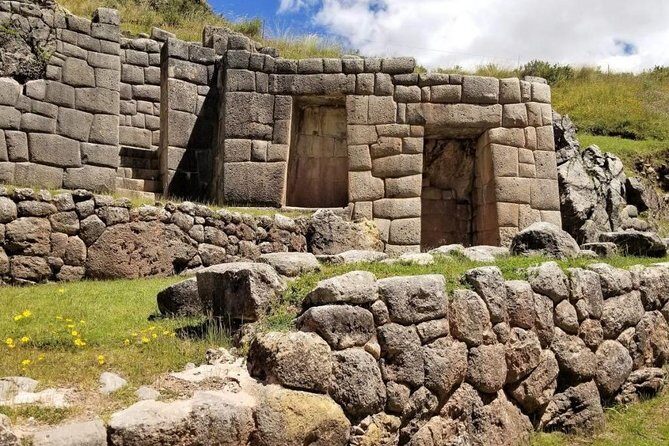
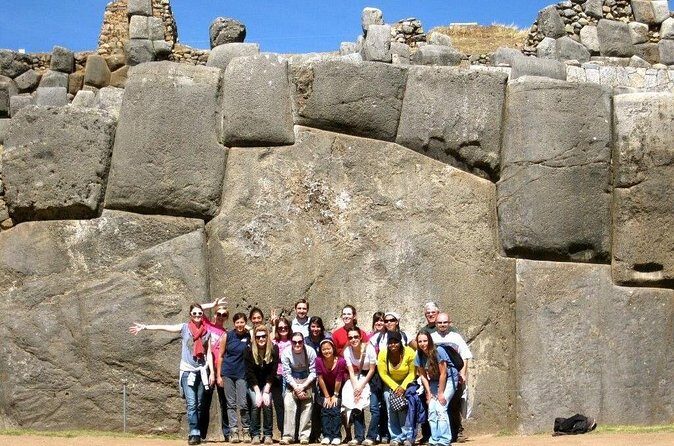
Your third stop is Sacsayhuaman, about 3 km from Cusco, in the higher area above town. You’ll have about 1 hour here, and this stop also doesn’t include an entrance ticket.
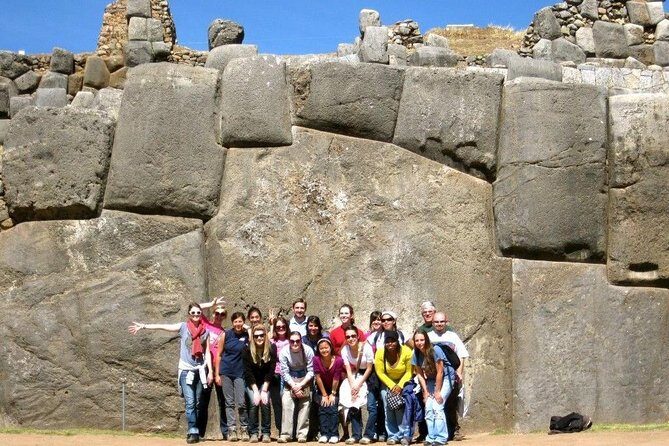
Sacsayhuaman is attributed to the Incas of the last dynasties. According to chroniclers, it’s associated with a solar shrine. But the standout feature is how it’s built: large limestone blocks, arranged with serious defensive intent. The explanation you’ll hear is that these structures were meant to protect the city from attacks by invaders from the east—sometimes referenced as the Antis.
The layout also helps you “read” the site. It’s made up of three large overlapping terraces in a zigzag shape, bordered by huge rock walls. This isn’t random stone piling. It’s a planned form that changes how you view the space as you move around it.
What to keep in mind: terraces can be visually dramatic, but it’s easy to get stuck staring upward without understanding the pattern. Let your guide point out the terraces and the overall logic. If you do that, Sacsayhuaman stops being just impressive and starts making sense.
Q’enqo: niches, offerings, and a monolith at the center
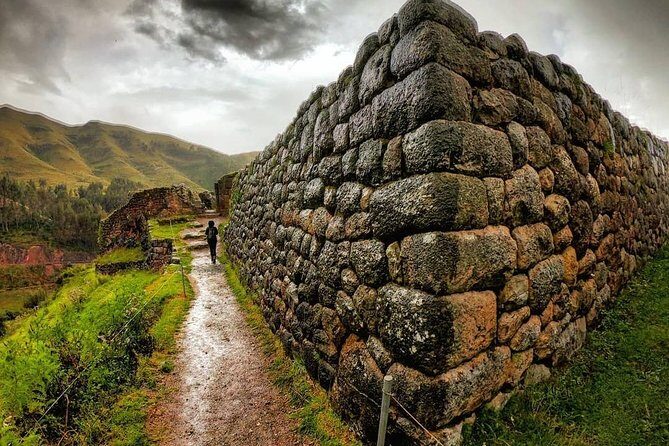
Then comes Q’enqo, located about 1 km from Sacsayhuaman. This is one of the most interesting stops because it gets about 2 hours, longer than most others on this itinerary.
Q’enqo is described as a ceremonial center. The site includes a giant monolith in the central area, possibly of an animal, treated as a main deity. Around it are niches where offerings were placed.
In the lower part of the site, there are additional niches and an altar. The interpretation given here includes two possibilities: the area may have been used to embalm bodies, or it may have been used for sacrifices dedicated to the gods. Since the past is always partly reconstructed from limited sources, your guide’s tone will matter—listen for what’s certain and what’s “might have been.”
Why Q’enqo gets extra time: the details matter. You can’t absorb it all with a five-minute glance. The niches and carved shapes reward slow looking, and it’s the kind of place where your brain starts building a map of what functions might have existed in each corner.
Practical advice: wear shoes that are comfortable for walking and standing. Even without huge distances, ruins like Q’enqo can involve uneven surfaces and built-in steps. If you feel steady, you’ll enjoy it more.




Tambomachay: Inca baths and the cult of water
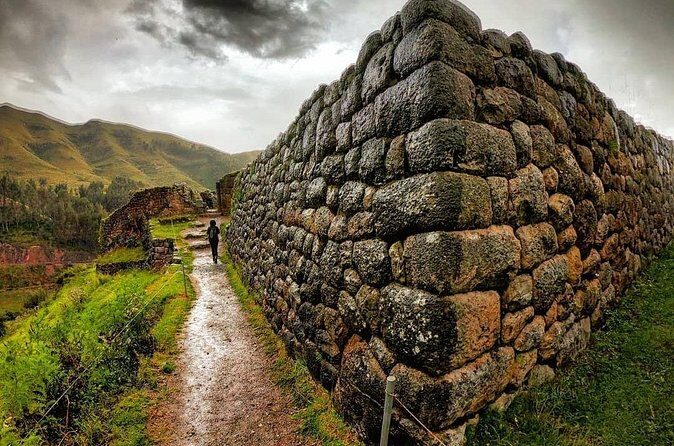
Your final stop is Tambomachay, located about 9 km from Cusco. You’ll have around 1 hour here.
Tambomachay is known as the Inca baths, mainly because of the shape of its water sources. The information shared during the tour also points to a deeper meaning: it could have been connected to a temple dedicated to the cult of water and purification for the Inca. In other words, water here isn’t just practical. It’s tied to ritual ideas about cleansing.
The site is organized with three platforms, each with niches where offerings were placed. That repeated pattern—platforms plus niches—helps you connect Tambomachay back to Q’enqo and the wider theme of ritual space you’ve been seeing all day.
What I like about closing the tour here is the shift in feel. After stone terraces and carved niches, Tambomachay brings in a different dimension: water channels and the idea of purification. It’s a good final “theme note” before you return to the city.
Price and tickets: what your $27.25 actually covers
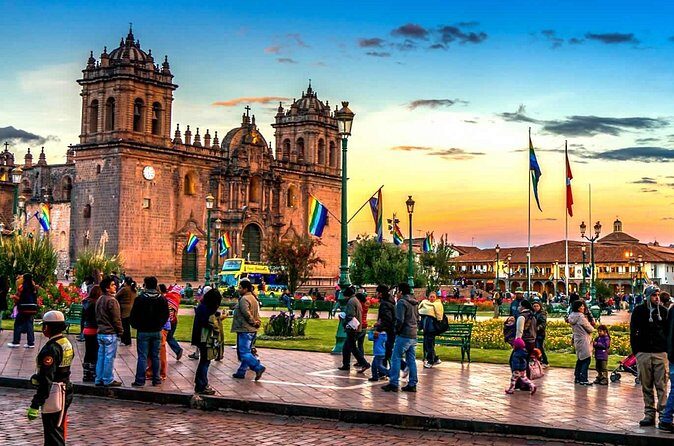
The tour price is listed at $27.25 per person. What that covers is shared transportation. The important part: entrance fees are separate.
Not included:
- Cusco Tourist Ticket (BTG) or Partial Cusco Tourist Ticket listed at S/70 (PEN70) per person
- Cusco Cathedral admission at S/40 (PEN40)
- Qorikancha / Temple of the Sun at S/20 (PEN20)
That means your final day cost depends on how you handle tickets. The best practical way to think about it: you’re paying the tour for transport and guided time, and you’re paying the sites separately for entry.
Value check: even with tickets added, this still tends to be good value if you want to hit multiple high-priority Cusco landmarks in one afternoon without doing route planning. You also avoid the headache of trying to coordinate entrances, timing, and local transport between scattered locations.
Budget reality: if you show up assuming only the tour price covers everything, you’ll feel it later. The fix is easy—add the ticket costs to your mental math before you leave your hotel.
Group size and pickup: why it changes your experience
A tour capped at 10 travelers sounds like a small detail, but it impacts your whole afternoon. It usually means:
- Less time waiting for everyone to regroup
- More chances to ask your guide a question
- Faster movement from stop to stop
Pickup options are also useful. If you’re staying in town, being collected from your hotel or from Plaza de Armas means you’re not trekking across Cusco on your first big sightseeing loop. Ending back at the meeting point is another convenience. You’re close to restaurants and you can keep your evening flexible instead of planning a complicated return.
English is included, which matters a lot for ruins. Inca-era and ceremonial sites can feel confusing if you only get general directions. When the explanation is in English, you can follow the reasoning behind each location—why it’s there, what the carvings suggest, and how the sites connect.
Weather and pacing: small planning moves that pay off
This tour requires good weather. That’s normal in the Andes, but it’s worth respecting. If conditions are poor, you might get offered a different date or a full refund, depending on how operations handle it.
Pacing is also built into the itinerary. You’re not rushing through every stop in 15 minutes. The schedule gives more time where details matter most—especially Q’enqo with 2 hours.
For a smoother day, you’ll enjoy it more if you’re ready to move between locations without long breaks for wandering. This is a structured circuit of five major sites. If you treat it like that—show up on time, have tickets sorted—you’ll feel like you get your money’s worth.
Who should book this Cusco city tour
This tour is a great fit if you want:
- A guided introduction to Inca-era sites around Cusco plus the Cathedral in town
- A one-day loop that’s structured, not free-for-all
- An English explanation focused on how the sites relate to Inca life and ritual
It’s also a good choice if you’re staying near the Plaza de Armas area. Even with hotel pickup available, being close often makes your morning and evening easier to manage.
You might consider something else if you’re the type who hates ticketing add-ons or you prefer ultra-long stops at a single museum-style location. This tour is about breadth—five stops in about six hours—so it’s best for people who like an overview with strong guide interpretation.
Should you book this Cusco city tour?
Yes, I’d book it if you want a well-timed afternoon circuit of Cusco’s headline ruins and want a guide to connect the dots between stonework, ritual spaces, and the colonial center. The small group size and English format are real advantages, and the schedule gives enough time—especially at Q’enqo—to learn something instead of just collecting stamps.
Just go in with the right expectation: the tour price covers transport, while major entrance tickets are extra. If you budget for the Cusco Tourist Ticket option (listed at S/70 / PEN70) or the separate Cathedral and Qorikancha admissions, the day feels straightforward and worth it. If weather is rough where you are, be flexible since the tour depends on good conditions.
FAQ
What’s included in the tour price?
The tour includes transportation (shared service). Entrance tickets for the sites listed on the itinerary are not included.
What time does the tour start, and how long is it?
It starts at 1:00 pm and lasts about 6 hours.
Where do I meet the tour, and where does it end?
You meet at the Plaza de Armas de Cusco (Del Medio 123). The tour ends back at the same meeting point.
Is pickup offered?
Yes. Pickup is offered from hotels and from the Plaza de Armas.
Is the tour offered in English?
Yes, it’s offered in English.
Do I need to buy tickets for the Cathedral and Qorikancha?
Yes. The Cusco Cathedral ticket is listed at S/40 (PEN40), and Qorikancha / Temple of the Sun is listed at S/20 (PEN20). A Cusco Tourist Ticket (BTG) or Partial Cusco Tourist Ticket option is also listed at S/70 (PEN70) per person.
How large is the group?
This tour has a maximum of 10 travelers.
What happens if the weather is poor?
The tour requires good weather. If it’s canceled due to poor weather, you’ll be offered a different date or a full refund.
Is free cancellation available?
Yes. You can cancel for a full refund up to 24 hours in advance of the experience’s start time.