REVIEW · CUSCO
Cusco Half Day Tour: Cathedral, Qorikancha & 4 Inca Ruins
Book on Viator →Operated by Encuentros Peru Adventure · Bookable on Viator
One afternoon in Cusco, and you get layers.
I like how this route starts at the Plaza de Armas churches and then moves to Qorikancha, where Inca stonework sits under colonial buildings, so the city’s story is right in front of you. I also like that the tour stays tight and practical: it hits four major Inca ruins without asking you to hike all day. The main drawback to plan for is that entrances are not included, and depending on the language mix in your group, you may get more Spanish detail than English.
You’ll likely get a friendly, history-focused guide like Beto, and that matters here because the sites can feel like big stone shapes unless someone connects the dots. This is the kind of tour where the stops make more sense once you understand why the Spanish built on Inca foundations and why the Incas cared so much about water, the sun, and ritual spaces.
In This Review
- Quick Key Points Before You Go
- A Half Day Tour That Threads Inca and Spanish Cusco Together
- Meeting at 1:00 pm: Pickup, Group Size, and What That Means for You
- Stop 1: Cusco Cathedral and the Plaza de Armas Built on Sacred Foundations
- Stop 2: Qorikancha (Koricancha) Where Inca Stonework Meets Santo Domingo
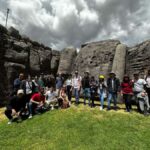
- Sacsayhuamán: Cyclopean Walls and the Name That Sounds Like a Myth
- Q’enqo Temple: The Monolith Labyrinth and the Ritual Theories
- Tambomachay: Aqueducts, Cascades, and a Place Called Rest
- Puka Pukara: A Tambo and Fortress-Looking Halls
- Price and Tickets: What Your $27 Includes and What Costs Extra
- The Pace and Altitude Reality Check (Cusco Always Wins)
- Language Fit: English Offered, But Group Mix Can Change the Feel
- Who This Tour Suits Best
- Should You Book This Half Day Tour?
- FAQ
- How long is the Cusco Half Day Tour?
- What time does the tour start?
- Is hotel pickup included?
- Is a guide included, and is it in English?
- Do I need to buy entrance tickets?
- Does the tour use a mobile ticket?
- What is the group size limit?
Quick Key Points Before You Go
- Plaza de Armas start: Cusco Cathedral and its nearby church setting gives you instant context for the city.
- Qorikancha’s fusion: Inca Sun Temple foundations under the Santo Domingo complex show how conquest rewrote sacred space.
- Sacsayhuamán’s megaliths: Cyclopean walls made without mortar and packed-stone craftsmanship you can actually see up close.
- Q’enqo’s mystery canal: A temple carved from rock with niches and a crooked channel linked to ritual theories.
- Water engineering at Tambomachay: Aqueducts and small cascades tied to Andean veneration of water.
- Fortress-style Puka Pukara: A lesser-seen tambo/rest stop with watchtower-and-hall energy.
A Half Day Tour That Threads Inca and Spanish Cusco Together
This half-day loop is built around one simple idea: Cusco’s biggest sites aren’t separate worlds. They overlap. You see it in how Spanish religious buildings were placed on top of Inca sacred foundations, and you feel it in the way each Inca ruin reflects a different focus—fortress power, ritual judging, water, and rest.
I like tours that don’t drown you in bus rides and sketchy timing. This one is compact: about 5 hours, with a start time of 1:00 pm. That makes it a good fit when you want structure but you still want energy left for dinner, markets, or a slow walk through Cusco’s streets at altitude.
You can also read our reviews of more tours and experiences in Cusco.



Meeting at 1:00 pm: Pickup, Group Size, and What That Means for You
Pickup is offered from your hotel within the historic centre of Cusco. The catch is also clear: the service doesn’t include pick up in private residencies like Airbnb, or hotels outside the historic centre. So if you’re staying farther out, you’ll want to confirm the closest real pickup point.
The tour runs with a small group, max 15 people, and that helps. Smaller groups typically mean less waiting at each stop and better chances to ask questions. You’ll also get a mobile ticket, which is convenient once you arrive—no paper shuffle.
One practical thing from the field: on this kind of run, pickup and drop can effectively center around the Central plaza area rather than a door-to-door hotel swap for every location. If you’re planning meetings afterward, give yourself a buffer around the plaza.
Stop 1: Cusco Cathedral and the Plaza de Armas Built on Sacred Foundations
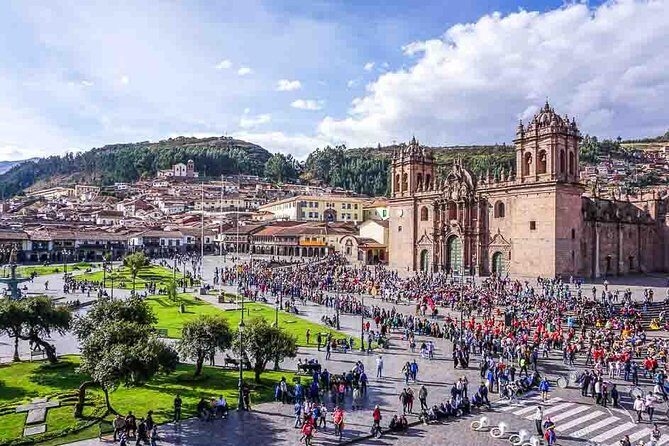
You start at the main stage of Cusco: the Plaza de Armas, still the city’s beating heart. In the Inca era, this plaza was associated with major public life, and today it’s anchored by three major churches. Your first stop is the Cusco Cathedral Basilica of the Assumption of the Virgin, the biggest of the three.
Here’s what makes this more than a quick church photo stop:
- The Cathedral was built starting in 1559, then completed much later in 1654, after decades of work. That long timeline is part of the story: early colonial power was still sorting out how to replace what came before.
- It was built on top of Inca sacred foundations, specifically kiswarkancha, described as the Inca palace of Viracocha’s ruler lineage long before the Spanish arrived.
- Because many local workers were Quechua Inca at the time, Spanish builders relied on Inca labor to put the cathedral in place.
You’ll also get a stronger sense of how the Spaniards used architecture as a tool. The Cathedral’s Latin cross layout and the placement on an Inca sacred base weren’t random choices. It was a deliberate attempt to replace religious meaning with Spanish Catholic Christianity.
How to get value out of the stop: look for the contrast between what’s Inca-rooted beneath and what’s Christian built above. Even if you don’t speak every detail, you’ll be able to spot how the site layers time.
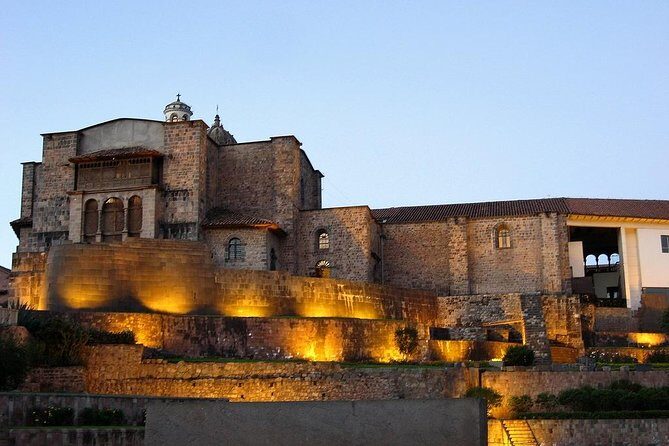
Stop 2: Qorikancha (Koricancha) Where Inca Stonework Meets Santo Domingo
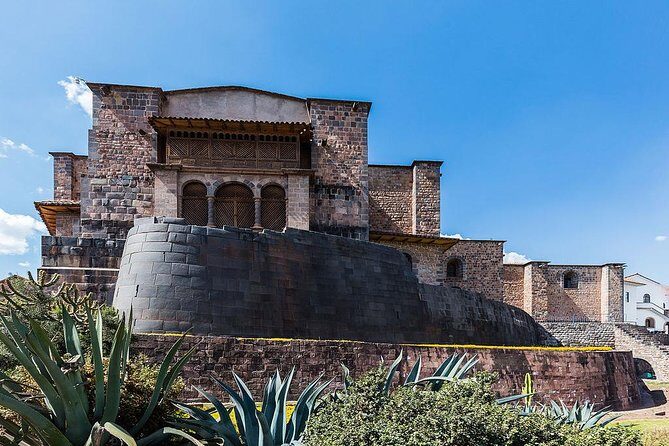
Next comes one of Cusco’s most striking “overlay” sites: Qorikancha. The Sun Temple remains are the base story here, but what you see today includes Spanish structures—especially the Santo Domingo church and convent built using Inca foundations.
This is where the Inca-Spanish fusion becomes physical, not theoretical:
- Inca builders used finely carved stones, including blocks with many angles—some described as having 30+ angles, and even a block with 24 angles and 6 sides.
- The interior chambers are associated with gold and silver leaf coverage, tied to the temple’s identity.
- A dominant turret and ceremonial niche elements relate to the winter solstice.
And then there are the “everyday sacred” details. At the lower part of the complex, there are fountains and gardens tied to offerings by communities from across the empire. The inner sanctum was for the highest authorities, which means this wasn’t a casual stop. It was an important center for state-level worship.
One important note: admission to Qorikancha is not included (more on tickets later). Plan a little extra mental energy for this stop because it’s visually dense. Give yourself time to look slowly at the stone angles and how the European buildings sit on top.
Sacsayhuamán: Cyclopean Walls and the Name That Sounds Like a Myth
From Qorikancha, you head to Sacsayhuamán, the ceremonial fortress that people often treat like a viewpoint stop. It’s more than that.
First, the name is tied to meaning in Quechua: Sacsay (satiate) + wamán (hawk). The phrase points to birds as divine protectors and references a military-battalion connection. Even if you don’t remember the language, the meaning helps you see the site as power and protection, not just an archaeological backdrop.
Key things to understand before you walk the walls:
- It sits about 1.25 miles from the main square, at 12,140 feet above sea level. That altitude difference matters for pacing.
- The site includes multiple archaeological sections in a wider zone—names like Kolcampata, Qenqo Grande, Qenqo Chico, Laqo, and others are part of the larger complex.
- Around 20,000 men are believed to have worked cutting and transporting stones to build it.
- The megalithic walls are described as mortarless stonework, with stones weighing 99 to 138 tons, and each stone shaped with many angles.
What I’d do at the site: walk to get angles on the walls, then stop and look at the joints. Mortarless construction is one thing to hear about; it’s another thing to see. If you’re short on time, don’t rush this stop. Spend a few minutes doing the slow “how did they fit that?” scan.
Also, the surrounding mountains—like Ausangate, Pachatusán, and Sencca—help explain why Cusco’s fortifications and sacred sites weren’t just symbolic. They were built in a dramatic physical world.



Q’enqo Temple: The Monolith Labyrinth and the Ritual Theories
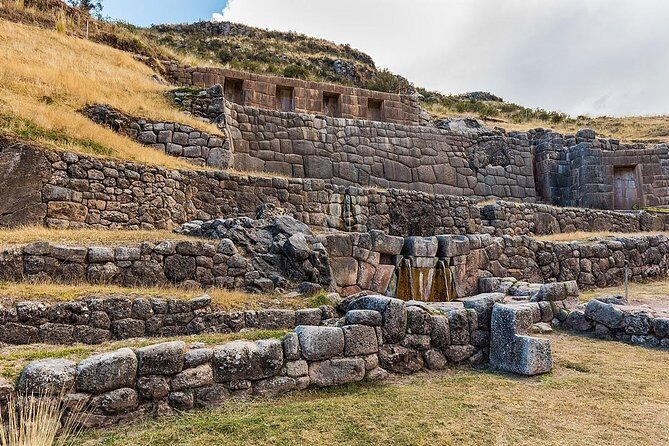
Then it’s on to Q’enqo (often spelled Qenqo). The word Q’enqo means labyrinth or zig-zag, and the key feature is a crooked canal cut into rock.
This stop is a lesson in what archaeology can do—and what it can’t.
There’s no single confirmed answer for what the canal carried or why. Theories connect it to holy water, chicha (corn beer), or even blood. The related idea is that Q’enqo was part of death-related rituals—possibly for judging the dead, embalming, or testing moral life by observing how liquid moved.
You’ll also see something rare: the temple is carved out of a gigantic monolith. It mixes natural chambers with made-made tunnels, and there’s an amphitheater-like area with 19 small niches. The exact purpose of that amphitheater has been lost, but it’s tied to sacrifice ideas involving sun, moon, and star worship.
What makes Q’enqo worth your time: it turns mystery into a physical experience. Even with uncertain explanations, you can feel the careful planning—channels, niches, and the way the site flows across the hillside.
If you’re the type who hates vague answers, this might feel frustrating. But if you enjoy standing in a real ritual space and watching your brain fill in the blanks, this is a great stop.
Tambomachay: Aqueducts, Cascades, and a Place Called Rest
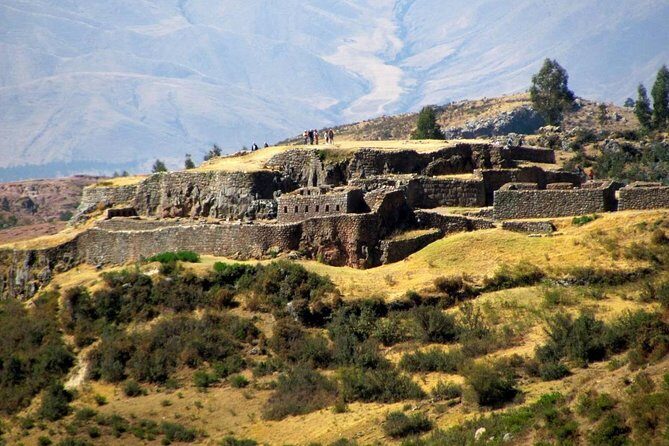
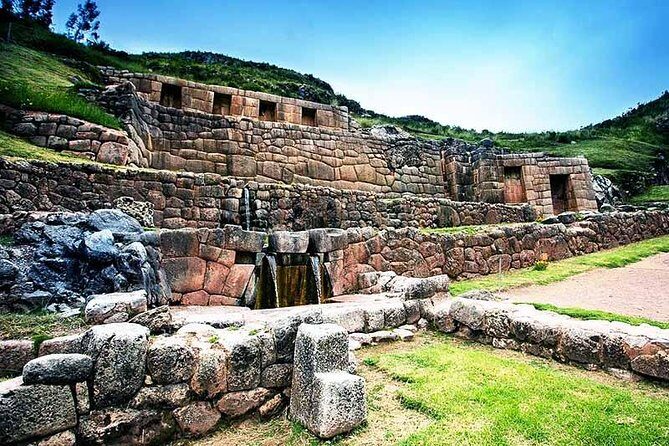
Tambomachay is about 4.5 miles northeast of Cusco, at 12,350 feet. The highlight is the water system: precisely cut stones and channels that bring water through aqueducts and small cascades.
Here’s what makes Tambomachay click quickly:
- It’s linked to the veneration of water, a major element in Andean world view.
- The site has two aqueducts with rock engravings described as transporting and supplying a steady flow of clean water year-round.
- Its name means place of rest, which gives the site a calmer purpose compared to fortress-heavy locations.
This is one of the better spots for a lighter, steadier pace. Even though it’s high altitude, the focus is on the structures and the sound/visual of water movement rather than climbing hard.
A quick tip: if you’re trying to acclimatize, Tambomachay is a good “learn and breathe” stop. Just keep the pace slow and expect you’ll feel the altitude.
Puka Pukara: A Tambo and Fortress-Looking Halls
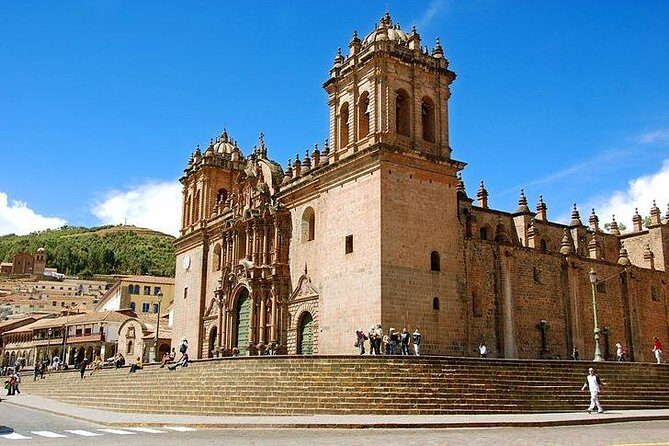
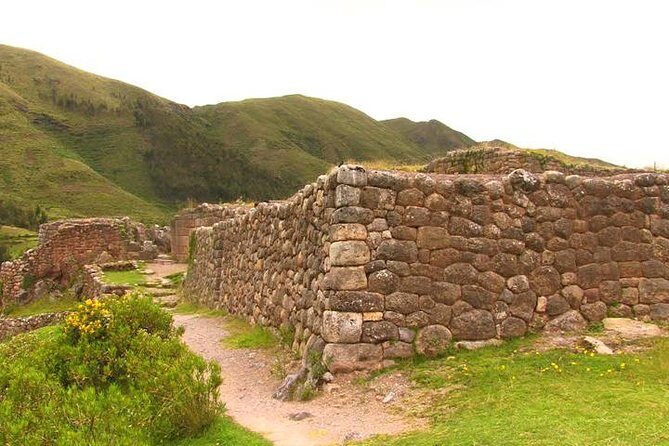
Your final Inca ruin stop is Puka Pukara. The site includes halls, inner plazas, aqueducts, watchtowers, and paths. That mix tells you it wasn’t just a temple or a single-purpose ritual structure.
The role is described as a tambo, meaning a place for rest and lodging. It’s also tied to legend: when the Inca visited Tambomachay, he was accompanied by a large retinue, and that group stayed in Puka Pukara.
The fortified look is what gives it its name and feel. If Sacsayhuamán makes you think of defense and control, Puka Pukara adds a different vibe. It feels practical: a place to organize people, keep watch, and keep travel life running.
It’s also one of the shortest stops—about 30 minutes—so it works well as a finish. You’ll leave with a sense of how Cusco’s Inca world connected sacred sites with the daily logistics of empire.
Price and Tickets: What Your $27 Includes and What Costs Extra
The headline price is $27.00 per person, and that’s for a tour that includes transport plus a bi-lingual guide (English & Spanish), with a mobile ticket.
Here’s what’s not included:
- Entrance to Qorikancha: 20 soles (about $5.60 per person, based on the info provided)
- Entrance to sites with the Tourist Ticket: 70 soles for 2 days or 130 soles for 10 days
- Food and beverages
This is where value gets real. Paying extra for entrances can feel annoying, but the math usually depends on how many sites you plan to see after this. If you’re doing multiple major Inca sites within a short window, the 2-day or 10-day ticket is the lever.
One practical lesson: if you’re new to Cusco ticketing, buy your plan at the right office rather than assuming every site price is the same as the bundled deal. The info you have here says the bundled tourist ticket exists, and it can be more economical when you’re stacking stops.
My advice: before you start your day, confirm which sites you’re using the ticket for. Qorikancha has a separate price listed, while other site entrances are tied to the tourist ticket.
Also, build in buffer time for ticket lines and security checks. A half-day tour can feel rushed if you get held up at the wrong moment.
The Pace and Altitude Reality Check (Cusco Always Wins)
Even though this tour is short, it’s not “easy mode.” You’ll hit altitudes like 12,140 feet at Sacsayhuamán and 12,350 feet at Tambomachay. That doesn’t mean you can’t do it. It means you should respect it.
The good news is the stops are spread so you’re not doing continuous long climbs. The day is built around short visits: many stops are about 1 hour, then the last two are around 30 minutes each. That’s ideal when you’re trying to get acclimated or just keep your energy for later plans.
One more pacing consideration: this route can run longer than the advertised schedule depending on traffic and how your group moves. If you have dinner reservations at a strict time, keep them flexible on this day.
Language Fit: English Offered, But Group Mix Can Change the Feel
English is listed as an offered language, and the guide is English & Spanish. Still, how it plays out on the ground depends on your group.
If your Spanish is limited, you’ll want to ask the guide to keep explanations clear in English when possible. On at least one run, the experience leaned heavily into Spanish when the group was mostly Spanish speakers, and that reduces the value of all the fascinating site context.
What you can do: if language matters to you, bring a basic curiosity approach. Even partial understanding helps, and your guide can usually point out the key features to focus on.
Who This Tour Suits Best
This is a strong match if:
- You want a first-day Cusco plan that covers major sites without a full-day grind.
- You like architecture and how cultures layered over each other, not just scenery.
- You want structure: transport plus a guide who can explain why sacred spaces were built where they were.
It might be less ideal if:
- You’re trying to avoid any extra budgeting for entrances.
- You only feel comfortable at high altitude with a slower pace, because Sacsayhuamán and Tambomachay sit high.
- You need heavy English narration the entire time and can’t risk it shifting with the group mix.
Should You Book This Half Day Tour?
Yes, if you want a dense, well-paced Cusco orientation that connects Plaza de Armas sites, Qorikancha’s Inca-Spanish fusion, and the four Inca ruins in one afternoon. The small group size and included transport help keep it practical, and the stops are varied enough that it doesn’t feel like copy-paste archaeology.
I’d book it with two conditions:
- Confirm your ticket plan before you go, so you know whether you’ll use the Tourist Ticket for multiple sites or pay separate entrances like Qorikancha’s 20 soles.
- If English is a must, message or ask right at the start how the guide will handle language for mixed groups.
If those fit your style, this is a smart way to get your bearings fast and understand why Cusco’s stones still matter.
FAQ
How long is the Cusco Half Day Tour?
It runs about 5 hours (approx.).
What time does the tour start?
The start time is 1:00 pm.
Is hotel pickup included?
Yes, pickup is offered from hotels within the historic centre of Cusco. It does not include pickup from private residencies like Airbnb or from hotels outside the historic centre.
Is a guide included, and is it in English?
Yes. The tour includes a bi-lingual guide (English & Spanish).
Do I need to buy entrance tickets?
Yes. Entrance to Qorikancha is 20 soles and entrances to sites use the Tourist Ticket pricing (70 soles for 2 days or 130 soles for 10 days). Entrance tickets are not included in the tour price.
Does the tour use a mobile ticket?
Yes. The tour includes a mobile ticket.
What is the group size limit?
The tour has a maximum of 15 travelers.