REVIEW · CUSCO
Horseback Riding Plus Tour to Sacsayhuaman, Quenqo, Puka Pucara and Tambomachay
Book on Viator →Operated by Horseback Riding Cusco · Bookable on Viator
In Cusco, ruins feel more alive on horseback. Horseback riding pairs well with Inca history and that mix is exactly what makes this half-day feel special. I like the confident, friendly guiding from people like Benni and Hogler, and I like how the horses are matched to riders for a safer, smoother experience. The main drawback to plan for: you won’t ride into the archaeological sites, and entrance tickets are not included.
You’ll start with round-trip transport from your hotel area and get proper gear: saddle and safety helmets, plus a muleteer who looks after the horses while your guide runs the show. Group size is capped at 15, so you’re not one of 40 faces in a van. That said, the ride is only about an hour to 1.5 hours, so if you’re expecting most of your time in the saddle, adjust your expectations.
In This Review
- Key things I’d circle before you go
- Why horseback + Inca sites is such a smart combo in Cusco
- Stop 1: Sacsayhuaman and the shock of scale
- Stop 2: Puka Pucara for a different kind of Inca presence
- Stop 3: Tambomachay and the focus on water
- The Vieja Estancia Ranch horseback ride: the part that people remember
- How long you’ll ride
- Safety and comfort
- What kind of trail feel to expect
- Stop 4: Q’enqo and the stonework you’ll start noticing
- How much is this, and is it good value?
- Snacks: included, but don’t bank on perfection
- Logistics that actually matter on a 4-hour day
- Who should book this tour?
- The bottom line: should you book horseback + Sacsayhuaman–Qenqo–Puka Pucara–Tambomachay?
- FAQ
- Do I need horseback riding experience?
- How long is the horseback riding part?
- Are the Cusco Touristic Ticket and archaeological entrances included?
- What safety gear and horse support are provided?
- What are the weight and age limits?
- What should I wear or bring?
- Is there a group size limit?
- What happens if the weather is bad?
Key things I’d circle before you go
- Clear Inca storytelling from guides such as Benni, Jenny, and Hogler, with answers to even slightly messy questions
- Comfort-focused riding with horses matched to experience, plus a guide who sets a pace for the least experienced rider
- Four major Cusco-area sites in one outing: Sacsayhuaman, Qenqo, Puka Pucara, and Tambomachay
- Ranch time with big views from the countryside outside town, not cramped ruins-footing
- Site access limits: horses can’t go into the ruins, and the entrance fees are paid separately
- All the basics included: guide, transport, saddle, helmet, and water (and snacks are listed, but you should be flexible)
Why horseback + Inca sites is such a smart combo in Cusco
Cusco can be a lot in one day. Altitude, crowds, fast-moving buses, and ruins that blur together. This tour fixes that with a simple formula: swap a chunk of driving for time in the saddle, then pair that with short, guided stops at the key Inca sites nearby.
I like the feel of it: you get out of town, ride through open areas with serious mountain scenery, and then you still end up at places that matter. The history part isn’t just facts thrown at you. Guides like Benni (and also Jenny or Hogler, depending on your group) tend to explain how these spaces fit into Inca religion and everyday life—so you’re not just taking photos of stones.
One practical consideration: because this is a government-protected archaeology route, the ride stays at the ranch and in nearby areas. You’ll see ruins, but you won’t be trekking your horse right up to every sacred wall.
You can also read our reviews of more tours and experiences in Cusco
Stop 1: Sacsayhuaman and the shock of scale
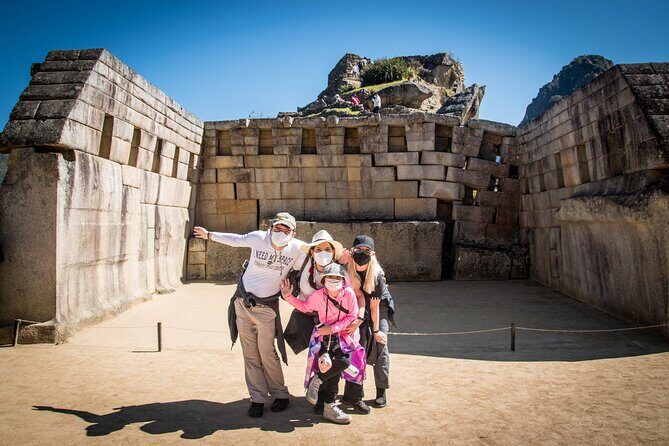
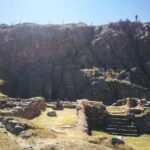
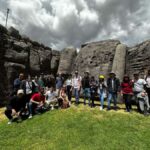
Sacsayhuaman is the kind of site that makes your brain go quiet for a second. You’re looking at Inca stonework on a massive scale—walls and structures that were meant to be seen and meant to last.
On this tour, Sacsayhuaman is one of your first stops, which is handy. You arrive fresh from hotel pickup and transport, not late in the day when you’re already tired. The time spent here is designed to feel satisfying without turning the outing into an all-day slog.
Two things to keep in mind. First, you’ll be walking the site, not riding through it. Second, the Cusco-area entrances are not bundled into the tour price. The Peruvian government manages those fees, and you pay them separately on the spot.
Stop 2: Puka Pucara for a different kind of Inca presence
Puka Pucara has a different vibe than Sacsayhuaman. Instead of the huge fortification feeling, it reads more like a rugged, functional place shaped by the terrain—still tied to Inca use and meaning.
This stop matters because it keeps the tour from turning into one long rinse-and-repeat of “another set of walls.” If you’re the type who likes variety, Puka Pucara gives you that change of texture: more rocks, more uneven ground, and a strong sense of being in the Cusco highlands.
The tradeoff is basic but real: you’re going to be on your feet for a while in altitude. Closed shoes with good grip matter here.
Stop 3: Tambomachay and the focus on water
Tambomachay is known for its water-related features, and that shapes how you experience it. You’re not just looking at stone; you’re paying attention to how water is guided and used in the space.
The upside of having a guide is that this is the kind of site where a quick explanation changes everything. You’ll usually understand what you’re seeing and why it was important to the Inca worldview—especially when your guide ties it to ritual or practical use.
Like the other stops, remember the horses stay out of the archaeological zones. That’s not a deal-breaker; it actually helps preserve the site. It also keeps the riding portion and the walking portion feeling distinct, so you’re not exhausted before your main ride.
The Vieja Estancia Ranch horseback ride: the part that people remember
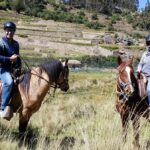
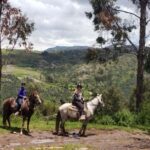
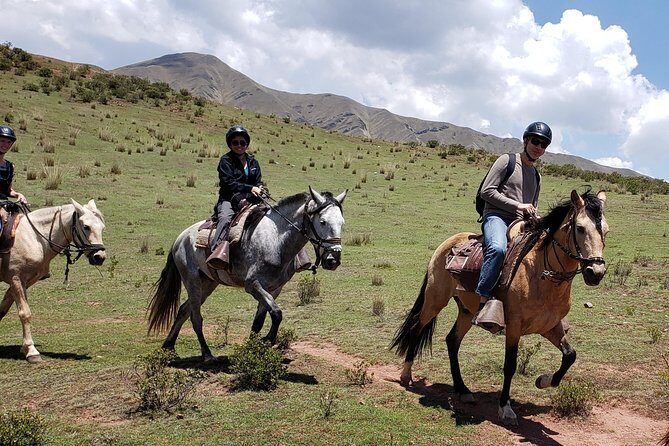
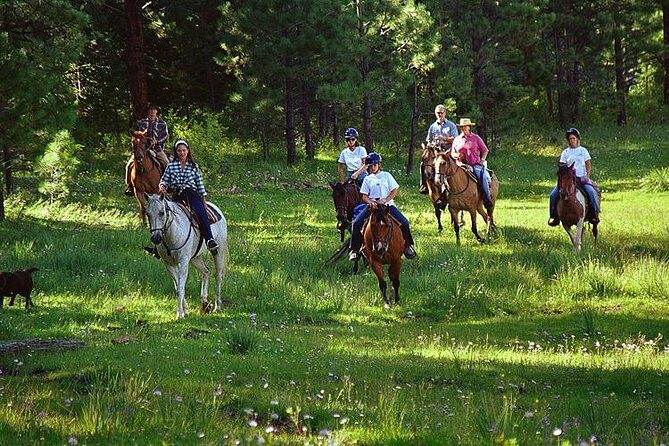
This is the “movie scene” portion of the tour for a reason. You’ll head to the Vieja Estancia Ranch area and ride with staff support from the ranch team, including a muleteer who tends to the horses.

How long you’ll ride
Plan on about an hour, sometimes closer to 1.5 hours depending on group pacing. The rest of your 4-hour day is travel time between sites and brief stops. One of the common strengths here is that the guide sets a pace for riders with less experience, but experienced riders can still enjoy a bit more movement.
Safety and comfort
Helmets and saddles are provided. The tour also matches horses to your confidence level, which is a big deal if this is your first time on horseback. People consistently mention that Peruvian horses have a comfortable gait, and that the staff does a careful job pairing riders with the right animal.
What kind of trail feel to expect
You’re not just riding in circles. You’ll pass through rural areas and get views that only happen when you’re above the roads. One of the most useful things you can do before you go: wear long pants (jeans are great) and closed shoes with rubber soles or walking shoes. A lot of “first ride” discomfort comes from poor foot grip or bare legs.
Also: avoid jewelry or valuables during the ride. The tour is designed for function and safety, not delicate accessories.
Stop 4: Q’enqo and the stonework you’ll start noticing
Q’enqo is where your brain may start working differently. Instead of only asking, “What am I looking at?” you start noticing details: carved channels, rock patterns, and the sense that these features weren’t random.
When a guide explains how the site ties into Inca religious customs, Q’enqo often becomes one of those “ohhh, that’s why it looks like that” moments. This is also a good stop if you like architecture and stone craftsmanship—because once you know where to look, the place gives you more than one interesting photo angle.
Again, no horseback riding inside the archaeological area. You’ll view and walk, and the guide will keep things moving at a sensible rhythm so you don’t feel rushed, but you also don’t lose the best part of the day: the riding.
How much is this, and is it good value?
The price is $95.00 per person for roughly 4 hours, including professional guiding, transport by private car, saddle and helmets, and water. On paper, that’s a fair chunk of money. In practice, the value comes from two expensive ingredients: reliable horseback operations (well-cared horses and staff) plus guided access to multiple sites in one outing.
Here’s the part to watch: site entrances and the Cusco Touristic Ticket are not included. The archaeological areas are run by the Peruvian government, and you pay those fees directly to preserve the sites. The exact amount can vary by ticket type and current prices, but the operator notes they’re generally managed as government-run entrance fees (around 20 USD), and one participant referenced budgeting 70 soles for entrance costs.
So if you’re comparing this to a standard van tour, you’ll likely see a cheaper-looking price tag elsewhere. But horseback logistics cost money too. If horseback riding is what you want, this tour is priced like a package built around that real-world cost.
Snacks: included, but don’t bank on perfection
Snacks are listed in the tour description, but one group said snacks didn’t appear as expected. I’d treat snacks as a nice bonus, not your meal plan. If you have a sensitive stomach or strong hunger cues, bring a small backup snack of your own.
Logistics that actually matter on a 4-hour day
This is a compact tour, and those details can make or break your experience.
- Pickup and transport: You get round-trip transfer from your hotel area by private car. That matters in Cusco because travel time can eat your day.
- Group size: Max 15 travelers. That’s small enough that the guide can explain without shouting, but large enough to keep things organized.
- Time allocation: The walking stops aren’t long marathons. The guiding gets you the story without turning each site into a separate tour.
- Weather dependence: The tour is described as requiring good weather. If conditions are rough, plans may change.
Who should book this tour?
This is a strong fit if you want a half-day that mixes movement and meaning.
Book it if:
- You’re in Cusco for a short time and want multiple major sites without a full-day commitment.
- You want horseback riding with safety support and guidance that slows down for less confident riders.
- You like your history explained in plain language, with room for questions.
Skip it or consider a different option if:
- You only care about riding for long stretches. You’re in the saddle about an hour to 1.5 hours.
- You hate paying extra on top of the tour price. Archaeology entrance fees are separate.
- You want horseback access into the ruins themselves. Horses won’t go into the archaeological sites to protect the ground.
The bottom line: should you book horseback + Sacsayhuaman–Qenqo–Puka Pucara–Tambomachay?
Yes—if you can handle two realities: separate entrance tickets, and horseback riding that stays outside the protected ruin areas.
The reason I’d recommend it is simple: this tour gives you the best “Cusco mix.” You get guided Inca context at multiple key sites, and you also get time riding where you can actually feel the highland air and open space. Add in helmets, a muleteer for horse care, and guides praised for clear explanations like Benni, Jenny, and Hogler, and it’s a tour that tends to make sense for first-timers as long as you follow the clothing and safety basics.
If you want the most stress-free day, do this: wear proper closed shoes, pack a rain layer in case the forecast nudges you, and budget for the site entrance fees when you arrive.
FAQ
Do I need horseback riding experience?
No. The tour is suitable for people with little or no experience, and the horses are matched to the rider’s comfort level. Helmets and a professional guide are part of the setup.
How long is the horseback riding part?
You should plan on about an hour of riding, with some groups closer to 1.5 hours. The full tour is about 4 hours, and the rest of the time is travel between sites.
Are the Cusco Touristic Ticket and archaeological entrances included?
No. The Cusco Touristic Ticket is not included, and archaeological site entrance fees are managed separately by the Peruvian government and paid directly on site.
What safety gear and horse support are provided?
You get a saddle and safety helmet. A muleteer is also included to take care of the horses, while your guide handles the tour and history.
What are the weight and age limits?
The maximum weight is 200 pounds (90 kilos), and the minimum age is 6 years.
What should I wear or bring?
Wear long pants (jeans are recommended) and closed shoes with rubber soles or walking shoes. Bring a rain jacket if rain is possible, and skip jewelry or valuables during the ride.
Is there a group size limit?
Yes. The tour has a maximum of 15 travelers.
What happens if the weather is bad?
The tour requires good weather. If it’s canceled due to poor weather, you’ll be offered a different date or a full refund.