REVIEW · CUSCO
Cusco City Tour Half Day – Visit Sacsayhuaman & Kenko
Book on Viator →Operated by Happy Gringo Tours · Bookable on Viator
Inca stonework is everywhere in Cusco. This half-day tour strings together five major landmarks with a bilingual guide and a route that focuses on how the Incas built, worshiped, and controlled the land around them. You also get the practical comfort of hotel pickup and included transport, so you’re not wrestling buses on arrival day.
I especially like the small-group size (up to 10), because you spend less time waiting around and more time actually listening. I also like that the guide interpretation ties the sites together, from Qorikancha’s gold legend to Sacsayhuamán’s giant zigzag wall.
One thing to consider: entrance tickets aren’t included, and the tour depends on good weather. If it rains hard or a location is closed, you may spend less time than you hope at a stop.
In This Review
- Key points you can count on
- How this Cusco half-day tour really runs
- Qorikancha: the House of the Sun beneath Santo Domingo
- Sacsayhuamán: zigzag giants and the view over sacred peaks
- Q’enqo: a carved monolith and a canal with no confirmed purpose
- Puka Pucara: red fort enclosures, uneven stones, and water routes
- Tambomachay: the Bath of the Inca and Inca waterworks
- Price and entrance fees: where the real cost shows up
- Rain, closures, and how to protect your day
- Who should book this tour, and who should skip
- Should you book Cusco City Tour Half Day: Visit Sacsayhuaman & Kenko?
- FAQ
- What does the tour include in the price?
- What entrance fees are not included?
- How many people are on the tour?
- Where does pickup happen?
- Which stops are included on the tour?
- How long is the tour?
- Is Q’enqo close to Cusco?
- Where is Tambomachay located?
- What happens if the weather is poor?
- Can I cancel for free?
Key points you can count on
- Small-group tour (max 10) for a more personal pace
- Hotel pickup + transport included, so logistics are simple
- Guided stops at five Inca-linked sites around Cusco
- Clear focus on engineering details like ashlar masonry and Inca waterworks
- Entrance fees are extra, including a separate Qorikancha ticket
- Weather matters, and rain can affect comfort and time outside
How this Cusco half-day tour really runs
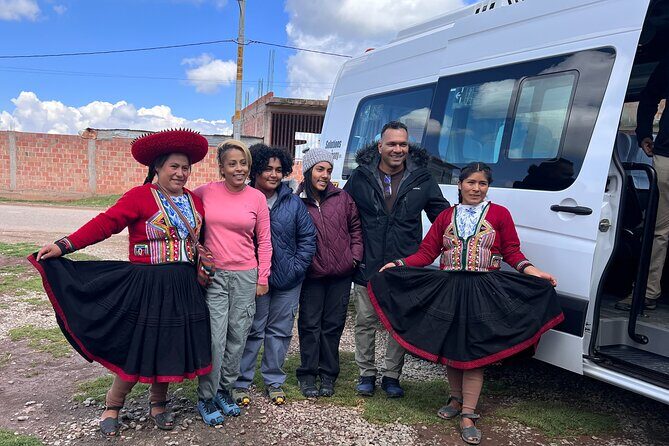
This is a classic Cusco “greatest hits” route, but it’s not rushed. Your time at stops is built around shorter visits you can handle at high altitude: about 45 minutes at Qorikancha, then roughly 1 hour at Sacsayhuamán, Q’enqo, and Puka Pucara, and about 45 minutes at Tambomachay. Add the drive time between the hills and ruins, and plan for an actual half-day outing in the 4–5 hour range.
Group size is capped at 10, which matters in Cusco. Larger groups can turn ruin visits into crowd control. Here, you’re more likely to keep a steady flow—especially if you’re trying to take photos, catch the guide’s explanation, and still move at a tolerable pace.
You’ll also get hassle-free pickup from central Cusco hotels, plus transport. That’s a real value in Cusco, where getting from neighborhood to neighborhood can take longer than you expect.
One small practical note: Q’enqo is described as only 15 minutes from Cusco, and Tambomachay is about 4 miles north. So you’re not just going “across town” once—you’ll do a mix of close-in and short-hill drives.
You can also read our reviews of more city tours in Cusco
Qorikancha: the House of the Sun beneath Santo Domingo
Qorikancha is where this tour starts, and it’s the kind of site that makes Cusco feel layered: Inca meaning on top of Spanish history. The place was originally known as Intikancha (also referred to as Intiwasi), dedicated to Inti, the Sun. In the 16th century, after conflict with Spanish conquistadors, much of the original temple was destroyed—but the story doesn’t end with rubble.
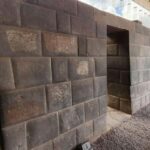
A big reason Qorikancha matters is how the Incas built. The stones were set using ashlar masonry, with similarly sized cuboid blocks. It wasn’t just strong; it was labor-intensive and deliberately exacting. The point wasn’t only engineering. The effort itself showed power: the state could mobilize people and sustain precision on a massive scale.
When the Spanish arrived, they constructed the Church of Santo Domingo on the site. Much of the Inca stonework didn’t disappear—it became the foundation for colonial construction. Over time, earthquakes badly damaged the church, but the tightly interlocking Inca walls are still standing.
There’s also an underground archaeological museum nearby with mummies, textiles, and sacred idols tied to the site. If you like when a ruin has both monument-scale meaning and human-scale artifacts, this is a strong opener.
Budget heads-up: Qorikancha entrance is not included. The tour lists it as $4 USD or 15 soles.
Sacsayhuamán: zigzag giants and the view over sacred peaks
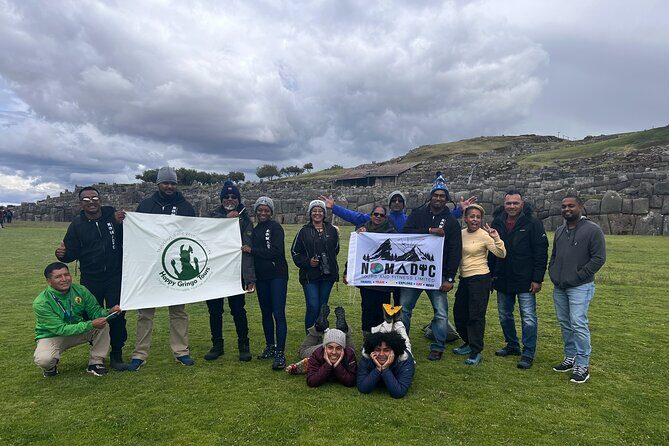
Sacsayhuamán (often written Sacsayhuamán or Saqsaywaman) is your next big jump in visual impact. Even the name carries meaning: in Quechua, it’s described as place where the hawk is satiated. That’s more than trivia—it hints at how people read the landscape.
You’ll also hear the site described in two roles: possibly a fortress, and possibly ceremonial as well. When the Spaniards arrived in the 16th century, they reportedly called it a fortress. It also played a role during an Inca rebellion in Vilcabamba after Spanish attack was repulsed.
Architecturally, Sacsayhuamán is a whole system: sacred buildings, residential areas, towers, shrines, warehouses, roads, and aqueducts. The tour frames it as part of the larger “Inca sacred geography” idea—how harmony between built structures and the surrounding peaks creates a unified spiritual landscape.
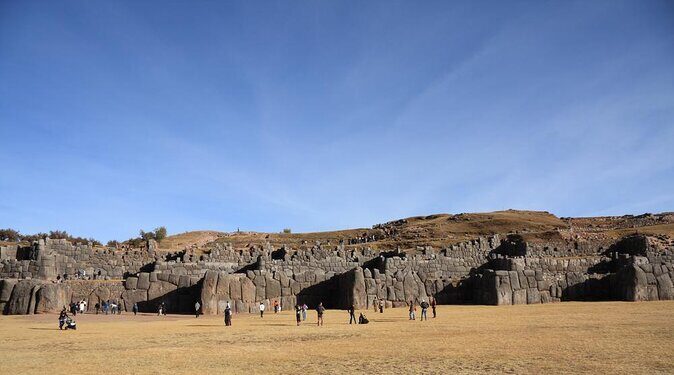
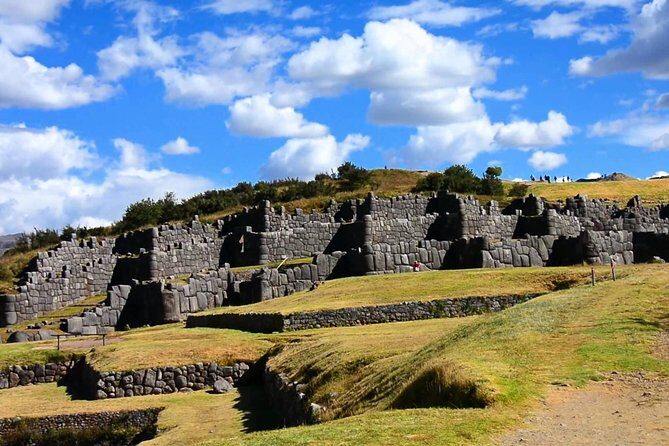
The main wall is the standout. It’s zigzag-built with giant stones up to 5 meters high and 2.5 meters wide, each weighing an estimated 90 to 125 tons. That’s not a polite fact. It’s a reminder that this was a serious machine of state power, long before “heritage site” was a thing.
Then you get the payoff view. From Sacsayhuamán you can see mountain summits including Ausangate, Pachatusán, and Cinca, which were sacred to the Incas. If you’re visiting Cusco for the first time, this is often the easiest way to make sense of why the Incas built where they did.
Entrance fee for this stop is also listed as not included.
Q’enqo: a carved monolith and a canal with no confirmed purpose
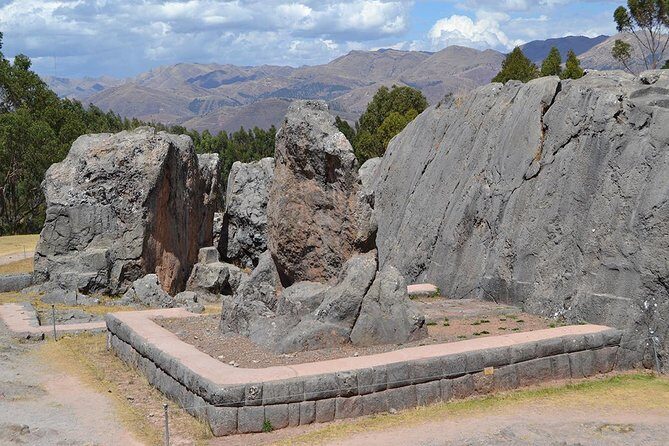
Q’enqo feels different from Sacsayhuamán. Where the big wall screams “power,” Q’enqo whispers “mystery.” The name is given as Qenqo, meaning labyrinth or zig-zag. That points you to the crooked canal cut into the rock, plus the sense of motion through carved passages and chambers.
Researchers can’t confirm what the canal carried, and that uncertainty is part of the drama. Theories include holy water, chicha (corn beer), or blood. Each theory connects to potential ritual use, including death rituals—like embalmment—or ways to interpret whether a person lived a good life based on how the liquid flowed.
Structurally, Q’enqo is also a flex. It’s described as having been carved entirely out of a gigantic monolith. You’ll find man-made tunnels meeting natural chambers across a hillside, which gives it a weird, real-world logic: rock shaped to guide people through a ritual space.
Inside, there’s mention of 19 small niches and a chamber set up like an amphitheater. The specific purpose has been lost, but there’s strong agreement the space was used for sacrifices to sun, moon, and star deities associated with the worship there.
One reason I like this stop in a short half-day format: it’s quick to understand once the guide frames the “why is this canal here?” puzzle. And it’s near Cusco—described as 15 minutes from town—so you don’t burn your day on long drives.
Entrance is not included.
Puka Pucara: red fort enclosures, uneven stones, and water routes
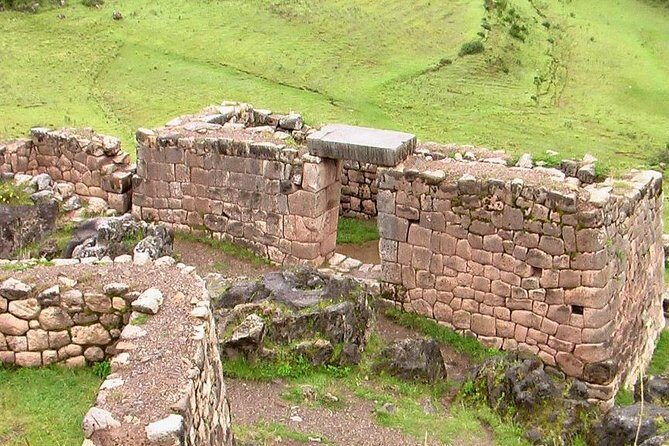
Puka Pucara is where the tour shifts toward layout and utility. The name means red fort, linked to both the color of the earth and the site’s semi-circular enclosures. It’s also noted that the name was used from the 20th century, which is a useful reminder that not all labels come directly from the Inca period.
Unlike smoother, more “classic” looking sites, Puka Pucara is defined by uneven rock surfaces. Buildings and enclosures use rocks of different sizes, from small to medium, giving the place a rougher texture than you might expect.
The site includes enclosures and features like inner squares, canals, aqueducts, baths, and a road that’s said to belong to the Inca road network known as Qhapaq Ñan. In other words: it’s not only about looking at ruins. It’s also about how people moved and how water and daily life might have worked.
Construction-wise, the tour describes three walls arranged in a way that establishes levels. The first wall has a sinuous path that avoids cutting through protruding rocks. The back end of the outer wall includes six rooms of different sizes, arranged irregularly—described as a way to avoid touching the stones that make up the wall.
There’s also mention of a trapezoidal high place entered from an outside staircase. And in the layout below, rooms arranged around a central square don’t appear to have been fortified in the same way other areas might be.
You’ll hear rumors too, including a proposed chincana (tunnel) that might have communicated with Tambomachay. It’s not confirmed in the provided details, but it’s the kind of local theory that makes sense given how the sites align.
Entrance is not included.



Tambomachay: the Bath of the Inca and Inca waterworks
Tambomachay is the calmer close to the route, and it makes sense that it’s sometimes called El Baño del Inca (the Bath of the Inca). Your guide’s framing here matters because the site’s exact function isn’t pinned down.
The tour describes it as located just outside Cusco, about 4 miles north, at roughly 12,150 feet (3,700 meters). That altitude detail is not just trivia—it explains why Tambomachay’s stonework and terraces are so visually crisp. High places make the lines stand out, and the air tends to feel thinner.
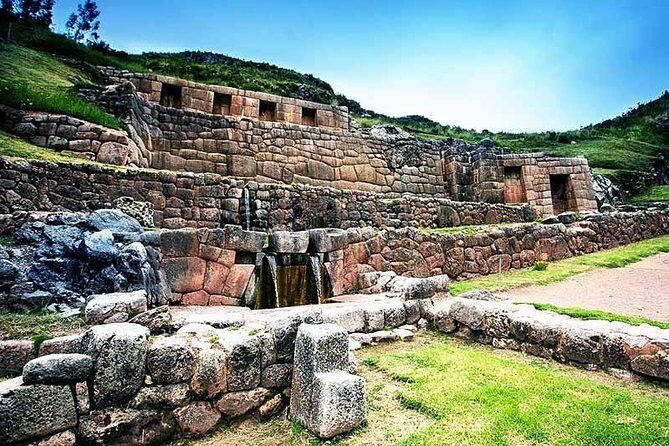
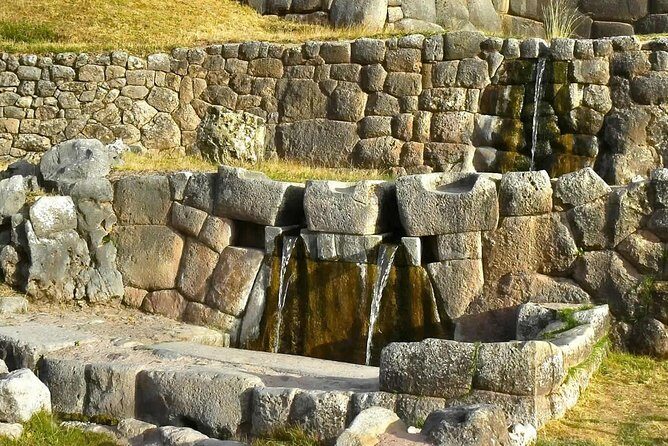
The structure is built over or into a natural spring, feeding aqueducts, canals, and waterfalls that run through the terraces. The construction uses three stepped terraces of precise Inca stonework, with trapezoidal niches built into retaining walls. Even if you don’t buy the bath theory, you can’t deny the site is a serious water system.
So what was it for? The details offered say it might have been ceremonial, a spa for Inca rulers (and possibly nobility), a military outpost—or a mix. The “spa” idea is tied to the constant flowing water, which would have suited bath-like use at altitude.
If you’re traveling with anyone who gets tired of battle stories and wants a peaceful Inca site with water and light, this stop earns its place. It’s also a nice way to end: after walls, canals, and ritual puzzles, you finish with a place that feels functional and soothing.
Entrance is not included.
Price and entrance fees: where the real cost shows up
The base tour price is $35.50 per person. For that, you get transport and a bilingual guide. That’s a fair structure for a Cusco half-day: you’re paying for someone to manage timing, explain what you’re seeing, and get you between multiple outlying sites without spending your energy on transit.
But the budget catch is entrance fees. The tour lists:
- Qorikancha entrance: $4 USD or 15 soles
- Entrance to sites: 70 soles for 2 Days or 130 soles for 10 Days
In practice, this means your total will depend on whether you’re buying a multi-day ticket that covers multiple sites or paying per site. If you already planned to do several ruins over your stay, a 2-day or 10-day pass can quickly make sense.
If you’re only doing Cusco monuments on one day, the entrance add-ons can feel like a surprise. So I recommend you price this out before you book, especially if you’re traveling with a group and trying to keep costs predictable.
Rain, closures, and how to protect your day
Cusco can change fast. The tour notes it requires good weather, and that matters because so much of the experience is time outdoors at uneven terrain and stair-like ruins.
When rain hits, you’ll feel it immediately: slick stones, slower walking, and shorter attention spans. One real-world risk is that a stop can get affected by outside events. For example, a location closure can happen when a film set occupies an area, like when a Transformers-related setup shut a ruin location. You won’t control that—but it’s a reason to pack flexibility mentally.
What you can control:
- Bring rain protection you’ll actually wear (not just a spare poncho in your bag)
- Wear shoes with traction
- Keep your expectations realistic: a “half-day” tour still has outdoor time, and weather can influence how much you see
If conditions get too rough and the tour cancels for poor weather, the policy offered is either another date or a full refund.
Who should book this tour, and who should skip
This tour is a strong fit if you:
- Want a short route that hits multiple major Cusco landmarks
- Appreciate guided explanations of how Inca engineering worked, not just what the ruins look like
- Like the idea of a small-group format (max 10) rather than joining a crowd
It’s less ideal if you:
- Need very flexible timing, since a fixed route with set stop durations works best when everyone stays together
- Don’t want to pay entrance fees on top of the tour price
- Are sensitive to possible language gaps, since the guide is described as bilingual but your specific language comfort can still vary by day and group mix
If you’re in Cusco for only a day or two, this route can help you get your bearings fast—especially with Sacsayhuamán’s mountain views and Qorikancha’s layers of history.
Should you book Cusco City Tour Half Day: Visit Sacsayhuaman & Kenko?
I think this is worth booking if your goal is a guided, small-group introduction to Cusco’s most important Inca-linked sites in one efficient outing. The value is strongest when you want context—how ashlar masonry, water management, and ritual spaces fit into the bigger Cusco story.
Before you go, do two quick things:
- Budget for entrances (especially Qorikancha plus the multi-day ticket options)
- Prepare for weather, since rain can slow you down and affect how much time you spend outdoors
If you’re ready for an organized half-day with real guided interpretation and you pack smart for altitude and weather, this tour is a solid pick.
FAQ
What does the tour include in the price?
The price includes transport and a bilingual guide.
What entrance fees are not included?
Entrance to Qorikancha is not included (4 USD or 15 soles). Entrance tickets for the sites are also not included (70 soles for 2 days or 130 soles for 10 days).
How many people are on the tour?
The tour has a maximum of 10 travelers.
Where does pickup happen?
Pickup is provided from central Cusco hotels.
Which stops are included on the tour?
The tour visits Qorikancha, Sacsayhuaman, Q’enqo, Puka Pucara, and Tambomachay.
How long is the tour?
Stop times listed are about 45 minutes at Qorikancha, 1 hour each at Sacsayhuaman, Q’enqo, and Puka Pucara, and 45 minutes at Tambomachay, so plan roughly 4 to 5 hours total with travel time.
Is Q’enqo close to Cusco?
Yes. Q’enqo is described as about 15 minutes from Cusco.
Where is Tambomachay located?
Tambomachay is described as just outside Cusco, about 4 miles north of town.
What happens if the weather is poor?
This experience requires good weather. If it’s canceled due to poor weather, you’ll be offered a different date or a full refund.
Can I cancel for free?
Yes. Free cancellation is available up to 24 hours in advance of the experience for a full refund.