REVIEW · CUSCO
Cooking Class: Lomo Saltado, Papa Huancaina & Pisco Sour in Cusco
Book on Viator →Operated by Peruvian Cusco Flavors · Bookable on Viator
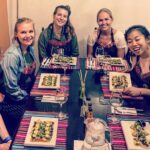
Cusco smells like food almost immediately. In a traditional 1930s house, you learn classic Peruvian dishes fast, in a format built for travelers with limited time. It is small-group cooking, so you get real attention while you prep Lomo Saltado, Papa Huancaina, and a classic Pisco Sour.
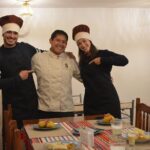
What I like most is the hands-on pace and the personal instruction from Chef Jesús. The class is compact (about 1 hour 45 minutes), but it still covers three big favorites, and you leave with detailed recipes so you can cook them at home.
One thing to consider: this is not a long, slow cooking camp. If you want hours of practice and tons of repetition, you may feel the time is tight.
In This Review
- Key highlights you will actually care about
- Cusco 1930s-house cooking class: the setting that makes it feel real
- Before you cook: small group focus and bilingual guidance
- Lomo Saltado: learning the timing behind Peruvian stir-fry
- Papa Huancaina: turning potatoes into a sauce-and-comfort dish
- Pisco Sour with local fruit: the cocktail you can repeat
- What the $49 includes: value that goes beyond ingredients
- Dietary needs: vegetarian adaptations and allergy-aware changes
- Timing and pacing: how the 1 hour 45 minutes works for real schedules
- Who should book this class (and who might skip it)
- Should you book? My practical verdict
- FAQ
- FAQ
- How long is the cooking class?
- What does the price include?
- Is the group size small?
- Will I be able to drink Pisco Sour during the class?
- Are vegetarian options available?
- Where does the class start and end?
- What dishes and drinks will I learn to make?
- What is the cancellation policy?
Key highlights you will actually care about
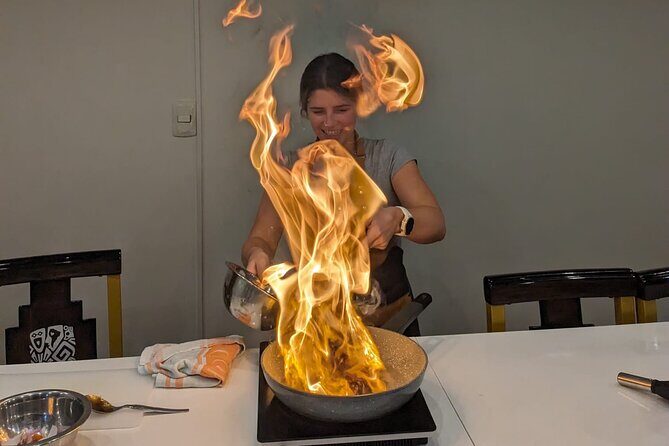
- Max 8 travelers means more hands-on help and less waiting
- Chef Jesús guides you through the dishes with clear, practical direction
- Three icons in under 2 hours: Lomo Saltado, Papa Huancaina, and Pisco Sour
- Local fruit for the Pisco Sour gives the cocktail a fresh, market-fine flavor
- Detailed recipes included so you can repeat the results later
- Vegetarian adaptations available if you ask ahead (also for allergies/food restrictions)
Cusco 1930s-house cooking class: the setting that makes it feel real
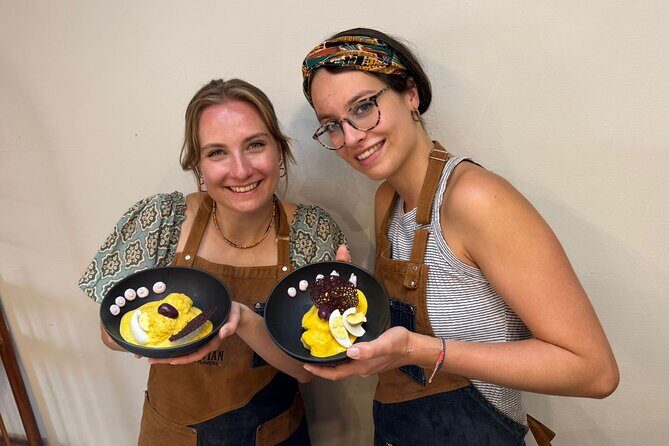
This class takes place in a traditional home in Cusco, specifically described as a 1930s house right in the heart of the city. That detail matters more than you might think. A lot of cooking tours are either staged or too generic. Here, you are cooking in a real local-feeling space, not a showroom kitchen. It helps you focus on what you are doing—chopping, mixing, and learning technique—without the whole thing feeling like a performance.
You also avoid the usual “tour treadmill.” There is no long sightseeing checklist attached to this experience. You are in Cusco, then you cook. That is a big deal when you have limited time between acclimatization, historic sites, and eating your way around town.
The class is designed to be friendly for different schedules too. It runs about 1 hour 45 minutes, and the experience ends back at the same meeting point. So you can plan the rest of your day without wondering where you will end up.
You can also read our reviews of more cooking classes in Cusco

Before you cook: small group focus and bilingual guidance
You meet at Ascensores y Servicios Perú Jr, Matara N 437, Cusco 08002, Peru and the activity ends back at that meeting point. The location is listed as near public transportation, which is useful if you are hopping around Cusco and not trying to time a taxi every hour.
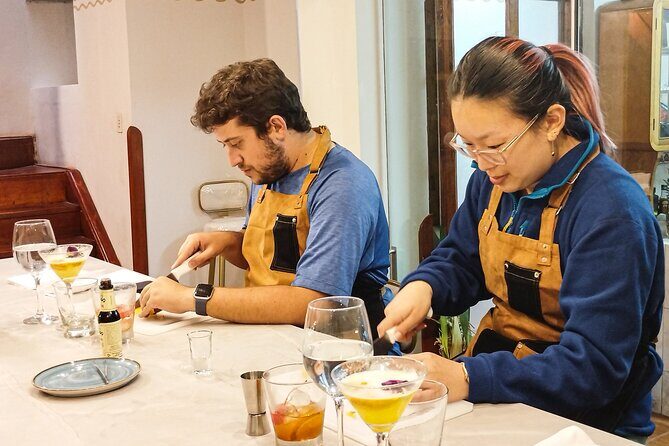
The group size is capped at 8 travelers, which changes the whole vibe. With fewer people, you get more direct help and you do not spend the session watching from the sidelines. For a hands-on cooking class, that is the difference between learning and just collecting photos.
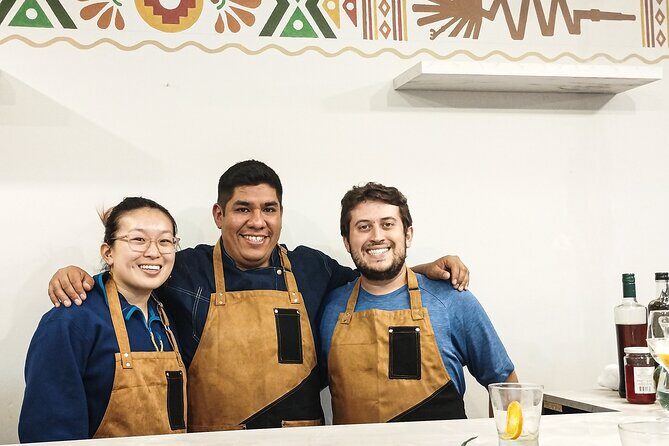
You also have support from a licensed guide who works in Spanish and English. On top of that, the cooking instruction is led by Chef Jesús. In other words, you have the language layer covered and you have the chef layer covered—so when something is unclear, you are not left guessing.
Lomo Saltado: learning the timing behind Peruvian stir-fry
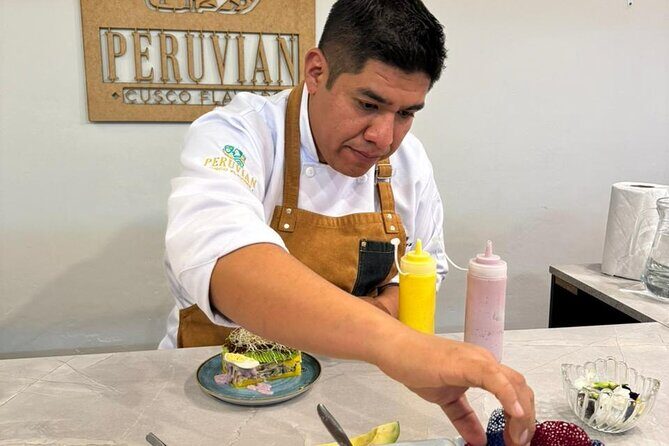
Lomo Saltado is one of those dishes that gets described as simple, but it is not. The flavor is famous, yet the real magic is in timing: browning the meat, keeping vegetables from going soggy, and balancing the sauce so it coats instead of drowning.
In this class, you do not just watch someone else cook. You learn to prepare it under professional guidance, which is where the value is. A good stir-fry teaches you how heat, cut size, and sequence work together. Even if you are not a confident cook at home, you can usually pick up the logic quickly when you are actually doing the steps.
Because the class is structured to fit about 1 hour 45 minutes total, you will focus on the parts that matter most for results you can repeat. Think of it as technique with a deadline—exactly what you need when you are traveling and want to take something home that works.
Also, this is one of the dishes that translates well to a home kitchen. You are not depending on a special tool you can only find in Peru. You are learning a method you can apply later with similar ingredients.
Papa Huancaina: turning potatoes into a sauce-and-comfort dish
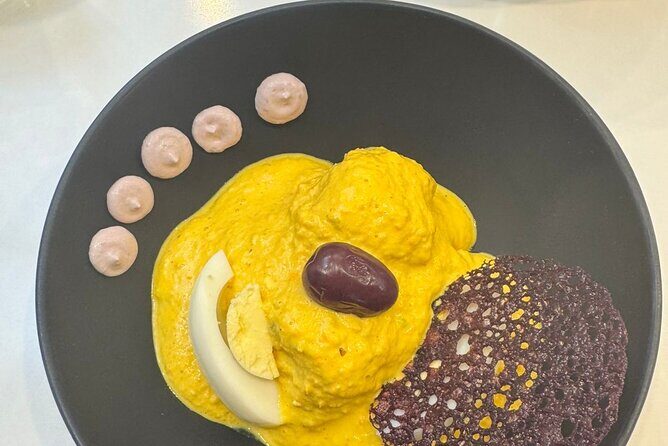
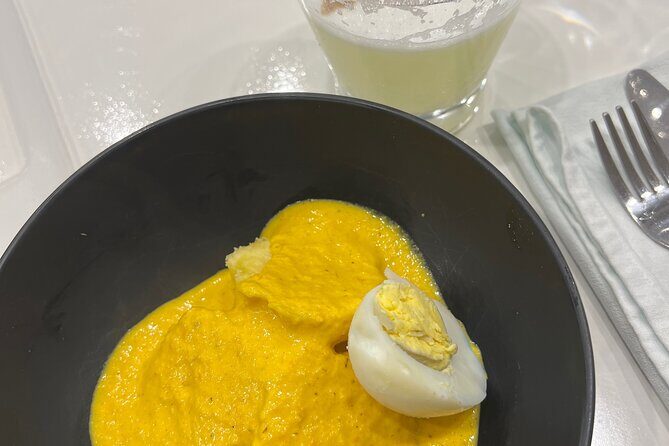
If Lomo Saltado is the quick-action plate, Papa Huancaina is the comfort side of the menu. In this session, you learn to prepare Papa a la Huancaína as one of the featured classics, with guidance from Chef Jesús.
What you take away here is not only the taste. You learn how to build a sauce that clings and stays flavorful, and how to make a potato dish feel finished rather than unfinished. Potatoes are forgiving, which is great for home cooks. But the sauce is where you can either nail it or miss it, and that is exactly what a guided class helps with.
This part of the experience tends to be a good energy reset. While stir-fry work rewards speed, a potato-and-sauce dish rewards attention. You can slow down just enough to understand what the sauce should look like and how it should behave when it meets the potatoes.
And since vegetarian adaptations are available upon request, this dish can be a strong option if your food preferences lean plant-based. (You do need to ask ahead for adjustments tied to your needs.)
Pisco Sour with local fruit: the cocktail you can repeat
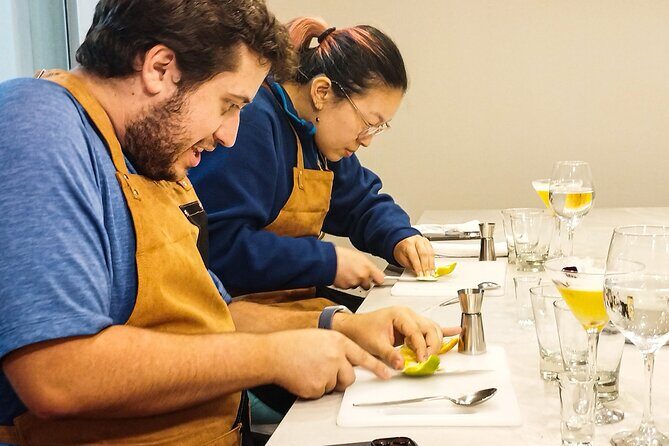
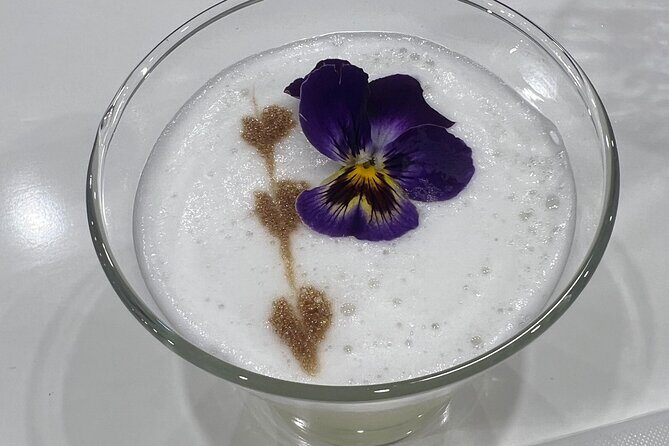
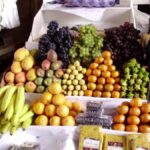
Now for the part that most people remember long after the last bite: Pisco Sour. The class teaches you how to craft the classic cocktail, using fresh local fruits sourced from a nearby market.
That detail is more than a nice story. A Pisco Sour is all about balance—tartness, sweetness, and texture. Using fresh fruit helps you avoid the flat, syrupy taste some cocktails get when the ingredients are stale or overly processed. You are learning in the context of what is available locally in Cusco, which is what makes this feel authentic.
You also get to drink what you help make, which turns the lesson into something you can actually reference later. If you have ever tried to recreate a cocktail from memory, you know how quickly it turns into guesswork. Here, the class format makes it easier to remember the sequence and what the final drink should feel like.
Even though the class includes just about two hours total time, the Pisco Sour portion gives you a compact “skills transfer.” You go home with a recipe and a clearer sense of how the cocktail should come together.
You can also read our reviews of more tours and experiences in Cusco


What the $49 includes: value that goes beyond ingredients
At $49.00 per person, this class prices itself as a quick, focused food experience rather than a half-day tour. The value is strong because it includes a lot of the stuff that usually costs extra on food activities.
Here is what is included:
- Professional Peruvian chef
- Meals and ingredients used during the session
- Alcoholic beverage: Pisco Sour
- Licensed guide (Spanish, English)
- Bottled water
And that is before you even think about what you are getting emotionally: someone gives you the steps, someone corrects you while you cook, and then you get written recipes afterward. In practice, that last part matters because it turns the experience from something you enjoyed once into something you can repeat.
Tips are not included, so if you like to tip in Peru, plan for that. But in terms of what the session gives you, $49 is not just “a snack class.” You are paying for instruction, ingredients, and actual food plus a cocktail.
Also, the session is booked about 17 days in advance on average, which suggests demand. If you are arriving in Cusco and want a slot that fits your schedule, booking early tends to give you more choice.
Dietary needs: vegetarian adaptations and allergy-aware changes
You do not have to choose between enjoying the class and managing your diet. Vegetarian options are available upon request, and the same note covers allergies and food restrictions.
That is important because cooking classes can be either flexible or complicated. Here, the tour data clearly indicates adjustments are possible. Still, do not wait until the last minute. If you want changes, tell them when you book so the chef can plan ingredients and portions.
For many people, vegetarian-friendly cooking is a big reason to book. You want to learn technique, not just be offered a substitute that misses the whole point of the dish. With Papa Huancaina and the bread-and-sauce logic behind it, vegetarian adaptation can work naturally when the chef has time to prepare.
Timing and pacing: how the 1 hour 45 minutes works for real schedules
The class runs about 1 hour 45 minutes. That tight duration is not a limitation if you understand the goal. This is a “learn enough to cook later” format. You will not end the class with cookbook-level confidence in every step, but you will leave with a practical understanding of how to produce three iconic dishes.
The small group size helps the pace make sense. With fewer people, instruction can move quickly without leaving you behind. You also avoid that awkward “watch for an hour, cook for five minutes” problem that happens in some classes.
Because it ends back at the meeting point, you can slot it between meals or before an evening plan. Cusco days can sprawl, so having a tight endpoint is a real convenience.
Who should book this class (and who might skip it)
This class is a great match if you:
- want hands-on cooking rather than a food walk
- have limited time in Cusco but still want more than a tasting
- like learning from a chef with the session capped at 8 travelers
- want recipes you can actually use later
- prefer a straightforward format with meals and a cocktail included
It might be less ideal if you want:
- a long, multi-session deep learning experience
- lots of free time to experiment beyond the planned dishes
But for most travelers, this is an efficient sweet spot: big flavor, guided technique, and a take-home payoff.
Should you book? My practical verdict
I would book this class if you want a high-impact food experience in Cusco without turning your day into a schedule puzzle. Chef Jesús instruction plus the small group setup makes it feel personal, not rushed in a careless way. And the inclusion list is solid: you get ingredients, meals, bottled water, and the Pisco Sour you learn to make.
The biggest reason to book is what you leave with. Recipes matter. They are what lets you keep cooking after your trip is done, instead of letting the memory fade into a vague craving.
If you are deciding between a quick class and a longer one, this is the kind of option that fits the “I only have so much time” reality of travel while still teaching real technique.
FAQ
FAQ
How long is the cooking class?
The class lasts about 1 hour 45 minutes.
What does the price include?
It includes a professional Peruvian chef, ingredients for the meals, the meals, the Pisco Sour, a licensed guide (Spanish and English), and bottled water. Tips are not included.
Is the group size small?
Yes. The maximum group size is 8 travelers.
Will I be able to drink Pisco Sour during the class?
Yes. Alcoholic beverages are included, and the class covers how to craft the classic Pisco Sour.
Are vegetarian options available?
Vegetarian adaptations are available upon request, and the experience also accommodates allergies and other food restrictions.
Where does the class start and end?
It starts at Ascensores y Servicios Perú Jr, Matara N 437, Cusco 08002, Peru and ends back at that same meeting point.
What dishes and drinks will I learn to make?
You will learn to prepare Lomo Saltado, Papa a la Huancaína, and craft the classic Pisco Sour.
What is the cancellation policy?
Free cancellation is available up to 24 hours in advance for a full refund.