REVIEW · CUSCO
4 Days Luxury Inca Trail Trek to Machu Picchu
Book on Viator →Operated by Inca Soul Tours · Bookable on Viator
A 4-day Inca Trail is no joke. This Luxury Inca Trail trek packs big views into a shorter format, with well-run logistics, strong guide support (names like Elistan, Paul, and Jose show up in the team history), and meals that actually make the altitude feel survivable. My favorite part is the focus on comfort and food at high elevation, plus the way the crew and horsemen handle camp setup for you. The trade-off: the trek is still high, steep, and long on the days you climb to major passes—so you need decent fitness and realistic expectations.
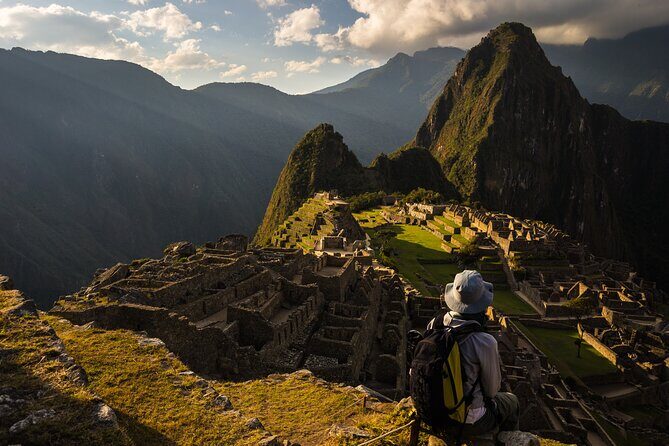
I also like that this trip keeps you connected to the Inca story, not just the checklist. You’ll walk to key places like Inti Punku (Sun Gate) and Wiñay Wayna, then end at Machu Picchu with a guided visit and time in Aguas Calientes. Call it luxury camping with purpose: private bathroom lodging for the night in town, hot showers there, and a camp setup that makes the hard days feel more human.
In This Review
- Key Highlights You’ll Care About
- Early-Morning Pickup and What Makes This Trek Feel Luxury
- Day 1: Soqma, Perolniyoq Waterfall, and the Big Climb to Kuychicasa
- Day 2: Sun Gate (Inti Punku), Quarries, and Camp Near Ollantaytambo
- Day 3: Sacred Valley Train Views, Chachabamba, Wiñay Wayna, and the Machu Picchu Approach
- Day 4: Machu Picchu Guided Tour, Temple of the Sun, and Huayna Picchu Options
- Temple of the Sun coverage
- Huayna Picchu: optional, limited, and not included
- Food, Camp Comfort, and the Team Behind the Scenes
- Price and Value: Is $996 a Good Deal Here?
- Who Should Book This Luxury Inca Trail (and Who Should Slow Down)
- Should You Book This 4-Day Luxury Inca Trail?
- FAQ
- What is the price for this 4-day Luxury Inca Trail trek?
- Where does the trek start and do you offer pickup?
- Is the tour offered in English?
- How much camping and how much hotel time is included?
- What’s included for Machu Picchu and the Inca Trail permits?
- Are meals included during the trek?
- Are train tickets included?
- Is Huayna Picchu included?
- Is free cancellation available?
Key Highlights You’ll Care About
- Luxury touches where they matter: private bathroom, free wifi, and a hot shower for your hotel night in Aguas Calientes.
- Guides who explain what you’re seeing: you’ll get the why behind places like the Sun Gate and Wiñay Wayna.
- Food that isn’t an afterthought: organic-leaning meals planned for long climbing days.
- Altitude support included: oxygen tank and a first aid kit are part of the package.
- Sun Gate + Wiñay Wayna rhythm: you get the classic Inca approach before the citadel day.
- Optional add-ons: Huayna Picchu costs extra and comes with strict daily limits.
Early-Morning Pickup and What Makes This Trek Feel Luxury
The experience starts early in Cusco, with hotel pickup planned for around 5:30–6:00 a.m. That early start matters here. You’re not just “starting the day,” you’re buying daylight and better pacing before the trekking gets serious.
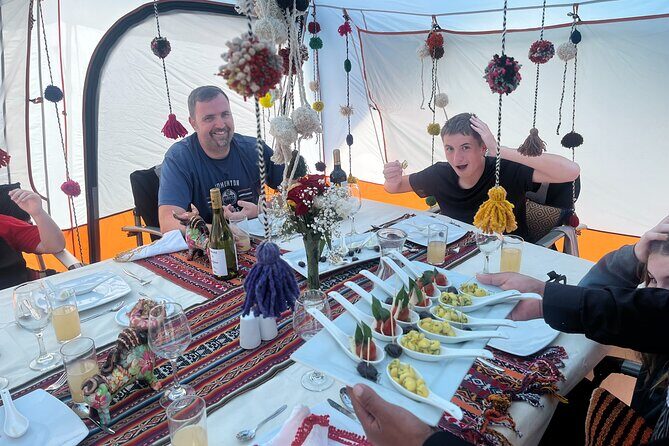
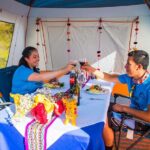
Then comes the part most people mean when they say luxury: not shiny souvenirs—sleep, meals, and moving comfort. You’re camping two nights, but you’re also traveling with tents set up for dining, cooking, and sleeping, plus chairs and camp furnishings. You won’t have to carry your main camp load because porters and a horseman/horse team move the equipment for you.
What you get at the end helps too. You spend one night in Aguas Calientes with a private bathroom, free wifi, and a hot shower. After days at high elevation, that switch—from cold mountain mornings to a real shower—feels like a cheat code.
You can also read our reviews of more tours and experiences in Cusco
Day 1: Soqma, Perolniyoq Waterfall, and the Big Climb to Kuychicasa
Day 1 is the “get your legs and lungs working” day. You leave Cusco and drive about 1 hour 45 minutes to Soqma (3,205 m / 10,512 ft). From there, the trailhead leads you to meet the horses and crew, which is exactly what you want on Day 1. It keeps the first hours from feeling chaotic.
From Soqma you head toward Socma Perolniyoc:
- You start with a hike of about 1.5 hours, beginning near the Perolniyoc cascade and viewpoint.
- You can optionally scramble down toward the waterfall base for photos and to cool off if conditions allow.
- You continue to a Pre-Inca clifftop viewpoint area (the Rayan pre-Inca site) for a valley view that’s worth the effort.
Then the day turns into real uphill work. You climb for almost an hour to Rayan (3,700 m / 12,139 ft). This is built like a rest-and-recover moment before the steep section.
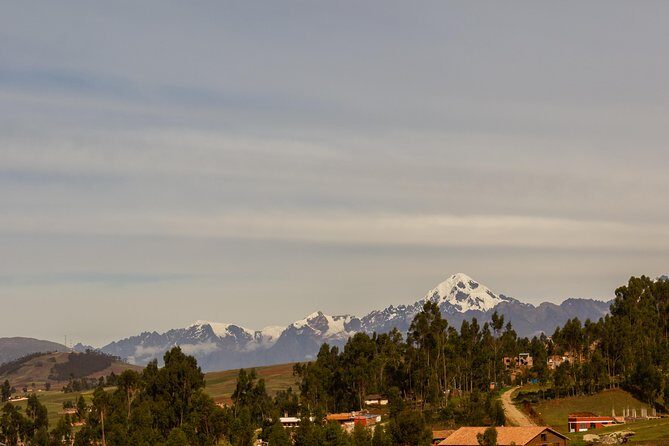
The hardest part is the afternoon: a difficult 3-hour uphill climb toward Kuychowiczasa pass (4,450 m / 14,599 ft). Every switchback gives you a different angle on snow-capped peaks and rural estates, and you’ll also start noticing how fast your body responds to altitude—slow steps, steady breath.
At the pass summit, you recover, then take in views over the Sacred Valley and Chankachuco Valley. After that, the day finishes by descending toward the area where you’ll sleep—either Chankachuko or Kuychicasa, depending on how the route plays out.
Later you’ll reach Perolniyoq Waterfall vantage, then make a downhill walk to your tent on relatively level ground (around 4,400 m / 14,435 ft). Distance is about 12 km (7.4 miles). The timing is typically 7–8 hours, so don’t plan to treat Day 1 like a warm-up.
Practical takeaway: this day is where you’ll feel the “short luxury trek” reality. The trail is still physically demanding. The luxury part is the support and camp setup, not an easier hike.
Day 2: Sun Gate (Inti Punku), Quarries, and Camp Near Ollantaytambo
Day 2 begins early with a climb toward Inti Punku (Sun Gate) in the Sacred Valley. Expect about 1.5 hours of alternating rising and declining segments. This rhythm helps more than you might expect. You’re still climbing, but you aren’t trapped in a straight, punishing grind the whole time.
From Inti Punku, you descend about 2.5 hours to a location in the Sacred Valley known as Inti Punku—named for its role as Sun Gate—and you’ll get a major view of Mount Veronica and the Sacred Valley. The Inca pyramid construction is something your guide can help you interpret from this perspective, which is a big reason to do a guided trek here instead of treating it like a self-guided hike.
Then you trek about 1 hour downhill to Choquetacarpo (3,600 m / 11,808 ft), where there’s a stone quarry connected to Ollantaytambo and other Inca building projects. This is one of those “quietly impressive” sections. You’re not staring at a postcard scene—you’re seeing how the Inca built their world from the ground up.
Lunch happens roughly 30 minutes downhill from Inti Punku, and the route includes time to look at stonework and how Spanish influence disrupted parts of the landscape. That historical layer is subtle, but it’s the kind of detail that makes the day feel more meaningful than just moving from stop to stop.
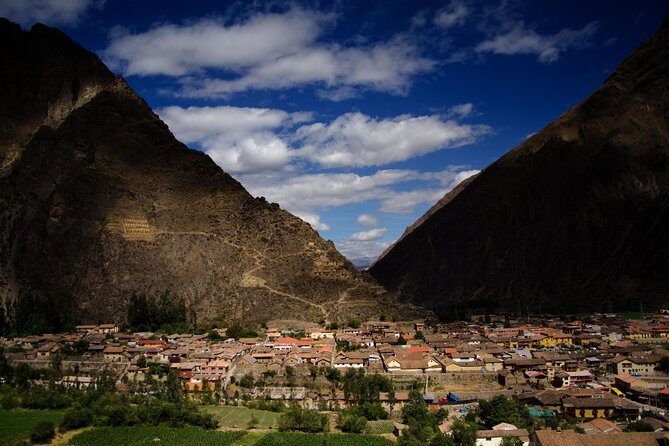
Next comes your biggest hike segment of the day: you descend from the quarry for about 2 hours to a camp near Ollantaytambo (around 2,940 m / 9,715 ft). The plan includes eating in Ollantaytambo, plus time afterward to stroll the Inca Quarry area in the Sacred Valley.
Distance and effort run about 10.56 miles (17 km), and the estimate is around 8 hours. It’s a long day, but it’s also a day with payoff. You finish with camp close to Ollantaytambo, which sets you up well for Day 3.
Day 3: Sacred Valley Train Views, Chachabamba, Wiñay Wayna, and the Machu Picchu Approach
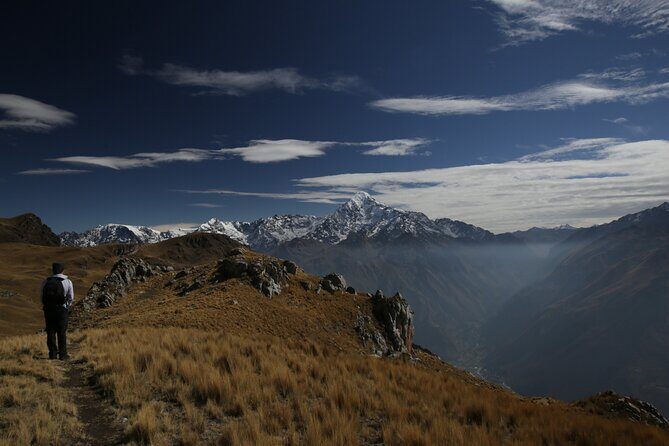
This day is a mix of trail time and transport through the Sacred Valley. After breakfast, you’ll slowly walk toward Ollantaytambo train station. On the train ride toward KM 104, you’ll pass Sacred Valley countryside and follow the old Inca road route along the Andes. If you love seeing how geography shapes travel, this section is a good change of pace.
From there, your route includes major Inca Trail stops:
Chachabamba
You visit Chachabamba, a small archaeological complex often linked to the idea of a guard post for Machu Picchu. The time here is around 3 hours. Even with fewer structures than Machu Picchu, it gives you context: this wasn’t one isolated city. It was part of a system.
Wiñay Wayna
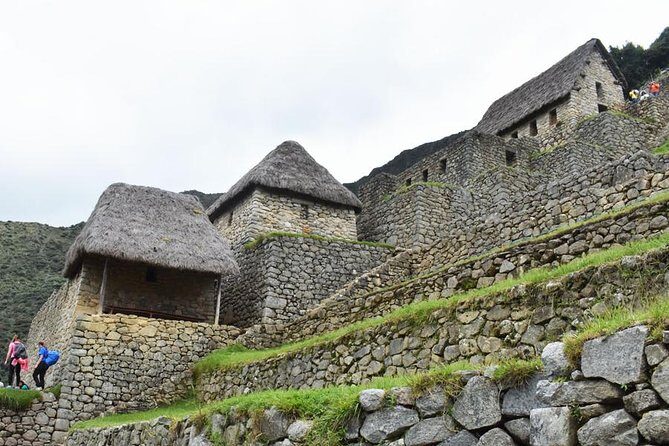
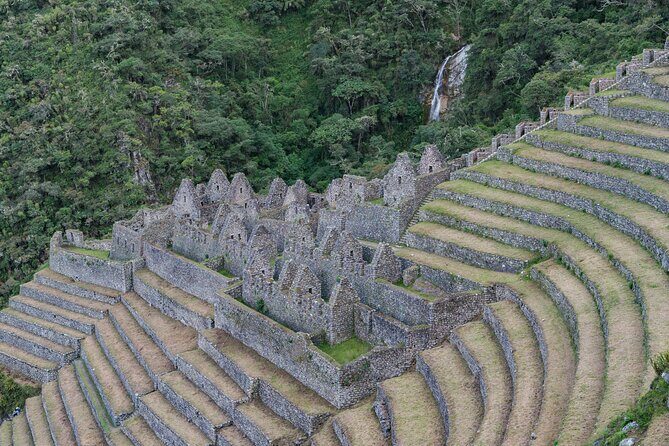
You then reach Wiñay Wayna, about 2 hours there. The name means eternal youth. It’s described as one of the most beautiful and best-preserved Inca sites on the trail, and you’ll feel why once you’re walking through it. Your guide can help you connect architecture to terrace farming and water control—things the Incas did with serious skill.
Intipuncu (Sun Gate perspective) and descent toward the citadel
After lunch and the Wiñay Wayna tour, you go to Inti Punku for an amazing perspective of Machu Picchu. The plan then includes a downhill hillside descent of about 45 minutes toward Machu Picchu’s main structures, along paved Inca paths with wide panoramic views.
The itinerary notes that you enjoy the sunset at Machu Picchu, then you bus into Aguas Calientes for dinner and an overnight at a quaint Machu Picchu-area hotel.
One more detail you should notice: Day 3 also includes a tough walking segment of about 8 miles (13 km) to Machu Picchu in the overall plan. So while you’re on a luxury-style schedule, this is still an active day. You’ll want your energy refuels ready.
Day 4: Machu Picchu Guided Tour, Temple of the Sun, and Huayna Picchu Options
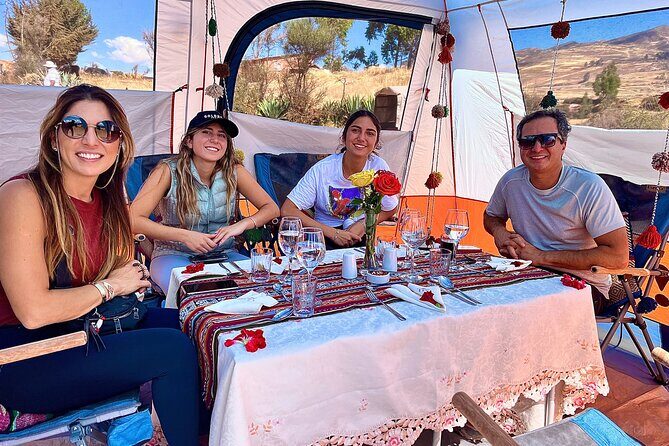
Your Machu Picchu day begins with an early plan and then flexibility. After breakfast in Aguas Calientes, you head to the bus station for about a 25-minute ride to the Sanctuary of Machu Picchu.
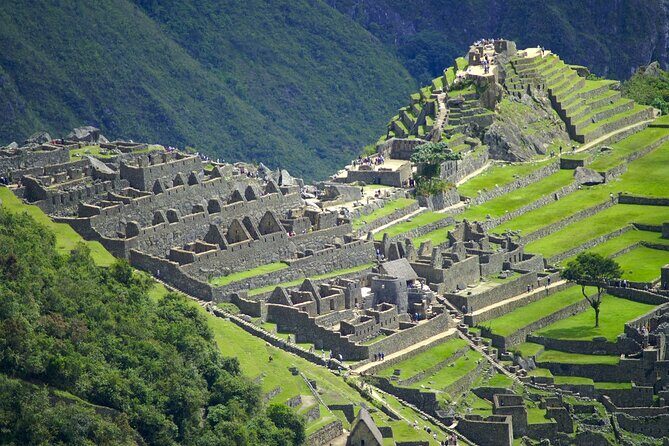
Then comes the guided citadel time. The tour covers core zones and key features, including agricultural and urban areas. You’ll also spend time with big-name structures, including the Temple of the Sun. The itinerary lists multiple temples and ceremonial sites: the Sun’s temple, Royal Tomb, ceremonial fountains, Royal Palace, Temple of the Three Windows, the Intiwatana, and more.
If you choose to see the sunrise from Machu Picchu, the plan notes an arrival for 5:00 a.m. That means early wake-ups and cold waiting time in the dark. If sunrise is your priority, plan for that cold. If guided daytime is more your style, you’ll still see the citadel with structured explanation.
You can also read our reviews of more hiking tours in Cusco




Temple of the Sun coverage
The guide’s job here is huge: Machu Picchu can look like a pile of amazing stone unless someone connects it. Your tour includes time to understand the citadel’s layout and the different zones—helpful if you’re not already familiar with how the Incas organized ceremonial and farming spaces.
Huayna Picchu: optional, limited, and not included
After your main Machu Picchu visit, you have the option to add Huayna Picchu. This is not included in the base package and costs USD 79 (per the tour notes). Access is limited—only 400 daily visits—and you must get tickets well in advance. The climb window is typically 7 to 10 a.m. if you go.
It’s a difficult climb with about 45 minutes up noted in the plan, and roughly 2 hours round-trip overall. If you love views and you’re comfortable with steep steps, it can be worth it. If your knees feel fragile, you might treat Huayna Picchu as a watch-from-below decision.
Finally, you bus back to Aguas Calientes and then rail back to Cusco, where someone meets you for a hotel transfer.
Food, Camp Comfort, and the Team Behind the Scenes
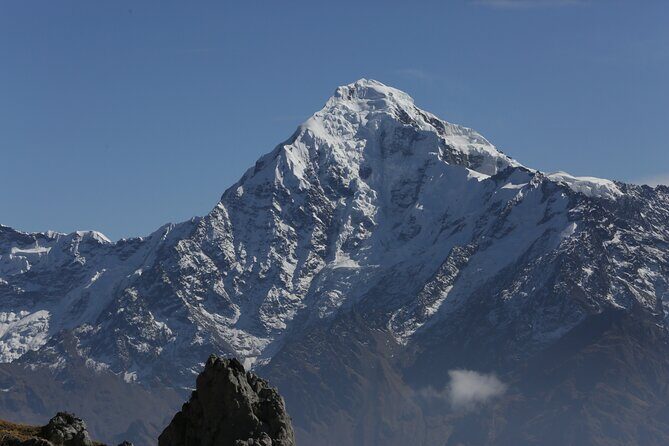
If there’s one theme that comes through in the way this trek is run, it’s that the comfort work is real work.
Meals are planned for altitude hiking. The sample menu reads simple and satisfying—vegetable soup starter, grilled chicken with pasta main, and dessert like tiramisu or fresh fruit salad. Te or premium coffee ends the day. The tour description emphasizes organic ingredients, and the execution shows up in the overall reputation: people praise the food repeatedly, and at altitude that’s not a minor detail. It’s the difference between feeling wrecked and feeling human.
Camp is also handled differently than the typical survival-camping vibe. You have tents for dining, cooking, and sleeping, plus chairs and furnishings. Horsemen and horses move the equipment so you can focus on walking.
The human side matters too. Multiple guide names appear in the team’s story—Elistan, Paul, and Jose are mentioned. Across those different guides, the common thread is explanations that help you understand what you’re seeing, not just where to stand for photos.
And if altitude starts messing with you, you have practical support built in: an oxygen tank, a first aid kit, and 24-hour assistance are included.
This is where “luxury” earns its label: not by pretending altitude is easy, but by reducing the friction that usually ruins mountain days.
Price and Value: Is $996 a Good Deal Here?
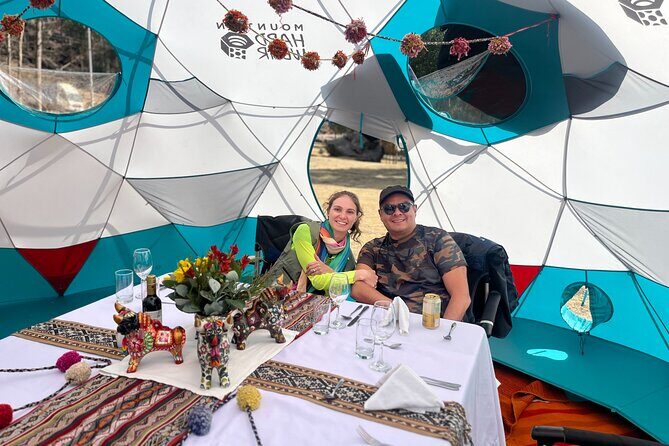
At $996 per person, this is not a budget trek. But it’s also not just a permit-and-pray situation.
Here’s what you get for the money, based on the tour inclusions:
- Guided Inca Trail permits plus Machu Picchu entrance
- Perolniyoq entrance ticket included
- Meals: 3 breakfasts, 3 lunches, 3 dinners, plus snacks and hot drinks during the trek
- Sleeping setup: 2 nights camping plus 1 night hotel with private bathroom, free wifi, hot shower
- Transport from Cusco to the head trail
- Oxygen tank, first aid kit, and 24-hour assistance
- Horseman/horse support + porters for equipment
What’s not included is also important:
- Travel insurance
- Train tickets
- Personal expenses and gratuities
So the real value question is this: does the package remove the big headaches? In this case, it does. You’re paying for permits, organization, food, and the comfort layer that keeps a tough trek from turning into a misery festival.
If you already know you want guided history, solid meals, and a camp that feels designed for humans, the price starts to make sense. If you’re comfortable handling logistics on your own and you only care about seeing Machu Picchu, you might find cheaper options. But the hard part isn’t the view—it’s coordinating the moving parts at altitude.
Who Should Book This Luxury Inca Trail (and Who Should Slow Down)
This trek fits best if you:
- Want a guided Inca Trail experience with meaningful stops like Inti Punku and Wiñay Wayna
- Prefer camp comfort and a hotel night with a hot shower in Aguas Calientes
- Want a well-supported group trek with porters/horse support and an oxygen tank
It may be a tough match if:
- You’re looking for an easy hike. The itinerary includes climbs to passes around 4,450 m, plus long walking days.
- You have major mobility limits. Even if the trip is well supported, you’re still trekking.
The trip notes say you should have moderate physical fitness. I’d interpret that as: you should be able to walk for hours on mountain days, handle steep sections, and recover between hikes.
Should You Book This 4-Day Luxury Inca Trail?
Book it if luxury for you means less chaos, better food, better sleep, and strong guidance—and you’re ready to work on steep trail segments at altitude.
Consider skipping or choosing a different format if you know you want a lighter physical challenge, or if you’re counting on Machu Picchu without wanting to manage the altitude realities. This itinerary is structured and supported, but it’s still the Inca Trail system: serious walking days, big views, and thin air.
My practical advice: pick this trip when you want the trail experience plus an “I’ll be taken care of” feeling. That combination is exactly what the luxury framing is trying to deliver.
FAQ
What is the price for this 4-day Luxury Inca Trail trek?
The price listed is $996.00 per person.
Where does the trek start and do you offer pickup?
It starts in Cusco, Peru. Hotel pickup is offered.
Is the tour offered in English?
Yes, it’s offered in English.
How much camping and how much hotel time is included?
You get two nights camping and one night in a hotel. The hotel night includes a private bathroom, free wifi, and a hot shower.
What’s included for Machu Picchu and the Inca Trail permits?
The package includes Machu Picchu entrance, Perolniyoq entrance ticket, and Inca Trail permits.
Are meals included during the trek?
Yes. Meals include 3 breakfasts, 3 lunches, and 3 dinners, plus snacks, fruit-flavored drinks, and hot beverages, along with drinkable water during the trek.
Are train tickets included?
No. Train tickets are not included. The tour notes also ask you to confirm the official Inca Train to Machu Picchu is available before reserving.
Is Huayna Picchu included?
No. Huayna Picchu is optional and not included in the base package. The cost noted is USD 79, and you must arrange it in advance due to daily limits.
Is free cancellation available?
Yes. Free cancellation is allowed if you cancel at least 24 hours before the experience’s start time for a full refund.