REVIEW · CUSCO
Private Sacred Valley & Machu Picchu with Vistadome Train
Book on Viator →Operated by Inkayni Peru Tours · Bookable on Viator
Sacred Valley to Machu Picchu, handled end-to-end. This private 2-day trip strings together Chinchero textiles, Moray terraces, and the Maras salt mines, then gets you up to Machu Picchu the next morning with a guided visit and the Vistadome train. You’ll be in good hands with a professional bilingual guide and tightly timed transport, with the kind of communication that keeps the day calm instead of chaotic. The main thing to weigh is that the plan depends on weather and you’ll need extra tickets (with fees) if you want Huayna Picchu or Machu Picchu Mountain.
I especially like that you get a private setup and round-trip Vistadome train between Ollantaytambo and Aguas Calientes, so you’re not coordinating separate tickets and schedules on your own. One possible drawback: meals aren’t included, so you’ll want to budget for food during the long travel day and downtime in Aguas Calientes.
In This Review
- Key things you’ll notice on this tour
- A 2-day private route from Cusco, via Sacred Valley and Vistadome
- Chinchero: Inca walls, a colonial church, and a real textile lesson
- Moray: the Inca terrace system explained as experimentation
- Maras salt mines: thousands of salt pools on a steep hillside
- Ollantaytambo to Aguas Calientes: riding the Vistadome views
- Machu Picchu morning: bus up early, guide-led walk once you’re inside
- Huayna Picchu or Machu Picchu Mountain: optional viewpoints with extra tickets
- Train back to Cusco: how the timing keeps the trip from feeling rushed
- Price and value: what $634.36 buys you (and why it can make sense)
- Who should book this private Sacred Valley and Machu Picchu tour
- Should you book this tour?
- FAQ
- How long is this Sacred Valley and Machu Picchu tour?
- Where do you start and end the tour?
- What train is included in the package?
- What happens on Day 2 at Machu Picchu?
- Are Huayna Picchu or Machu Picchu Mountain included?
- What’s included for the night stay?
- Are entrance fees included for Sacred Valley stops on Day 1?
Key things you’ll notice on this tour

- Chinchero textile demo with hands-on explanation from local weavers at the Textile Center
- Moray’s concentric terraces explained as an Inca-style testing ground for farming across conditions
- Maras Salt Mines with views over thousands of salt pools stepping down the mountainside
- Vistadome train for the scenic ride up to Aguas Calientes and back
- A guided Machu Picchu circuit focused on temples, ceremonial areas, terraces, and storage
A 2-day private route from Cusco, via Sacred Valley and Vistadome
This is a classic best-of-both-worlds Peru loop: you start with Sacred Valley sights that make Machu Picchu feel less random, then you arrive at Machu Picchu with a guide who helps you read the site instead of just staring at it.
On Day 1, you’ll get picked up in Cusco between 8:00 and 8:30 AM, then head into the Sacred Valley stops in a logical order: Chinchero first (culture and textiles), Moray next (agriculture in stone), and Maras last (salt pools). Late afternoon brings the transition to Ollantaytambo for the train to Aguas Calientes, so you’re not trying to force Machu Picchu on the same day. You’ll sleep one night at a 3-star hotel (Waman Hotel or similar), then wake up early for Machu Picchu on Day 2.
The overall rhythm matters because altitude and travel time can wear you down. Machu Picchu sits at about 2,430 meters, and the morning bus ride takes time, too. This itinerary keeps you out of the stress zone by separating the sites across two days, with the train and hotel doing the heavy lifting.
You can also read our reviews of more private tours in Cusco

Chinchero: Inca walls, a colonial church, and a real textile lesson
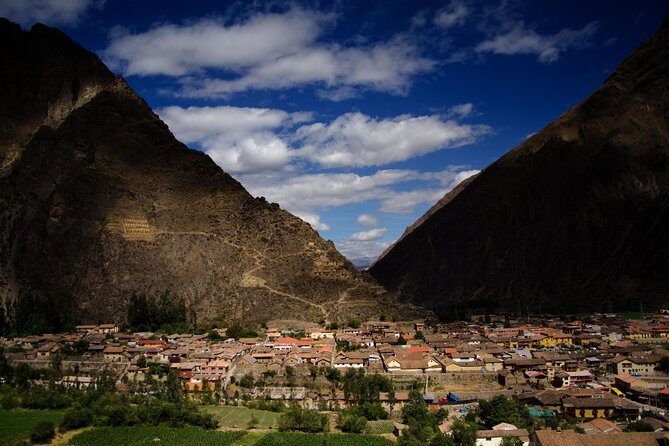
Chinchero is the first stop for a reason. It’s small enough to feel personal, but the sights are meaningful: Inca stonework you can see right in the town, plus a historic colonial church that shows the layered story of the region.
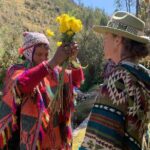
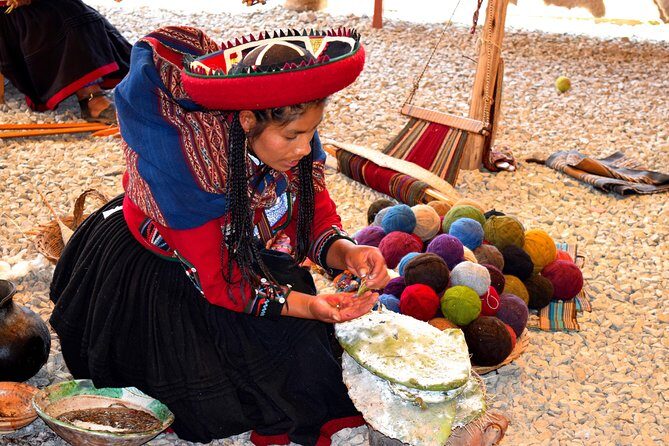
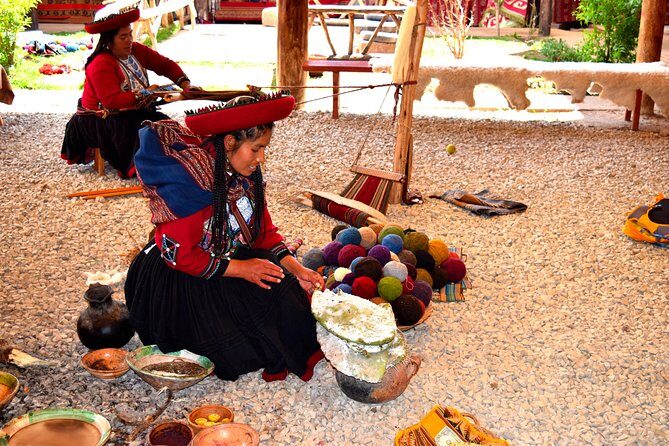
Plan on about 2 hours here. You start in the main square, where you’ll see well-preserved Inca walls and altars. Then the tour shifts from scenery to skill: you’ll visit the Textile Center for a step-by-step introduction to Andean weaving, guided by local artisans who demonstrate techniques that have been passed down for generations.
What I like about this stop is that it gives you a framework before you move on to more dramatic ruins. Machu Picchu is full of stone and symbolism, but textile traditions are one of the ways Andean people have long expressed identity and knowledge. Even if weaving isn’t your obsession, you’ll leave with a clearer sense of why patterns, materials, and dyeing practices matter.
A practical consideration: textiles demos are sometimes fast-moving, especially if the group is eager to keep the schedule. If you like questions, this is the moment to ask about how materials and methods work.
Moray: the Inca terrace system explained as experimentation

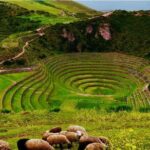
After Chinchero, you head to Moray, a set of concentric agricultural terraces that look almost like architecture from another planet. The terraces create different micro-conditions, so crops could be tested across variations in temperature and altitude-like effects.
You get about 1 hour here, with the guide explaining the purpose: it’s been proven as a test center for understanding how different agricultural conditions affect plants. You’ll also get the big takeaway that Moray isn’t just a pretty structure. It’s part of an Inca system for learning, planning, and farming.
This stop can feel abstract if you only think of agriculture as planting and harvesting. But as part of a Sacred Valley route, it clicks. You start seeing the region as a living lab, not just a backdrop for ruins.
Maras salt mines: thousands of salt pools on a steep hillside

Maras is the wow stop. The salt mines spread down the mountainside in over 3,000 salt pools, fed by water that seeps from the Earth. You’ll spend about 1 hour here, descending to lower elevation so you can get those dramatic views.
The description uses a poetic lens, and it helps you understand what you’re looking at: the pools fill daily, and the salt production has deep roots, going back to pre-Inca times. The result is a scene that looks staged by a movie crew, but it’s a real working landscape.
Two practical notes:
- This is outdoors and sloped. Wear shoes you trust on uneven ground.
- It’s easy to get so focused on photos that you forget to look farther out. Take a moment to scan the hillside patterns; that’s where the scale hits.
Also remember: Day 1 entrance fees for Maras, Moray, and Chinchero are listed as $25 not included, so plan for that on the day.
Ollantaytambo to Aguas Calientes: riding the Vistadome views
Late afternoon is when the trip shifts gears. You travel to Ollantaytambo and board the Vistadome train to Aguas Calientes, the base town for Machu Picchu.
This train leg is more than transport. It’s one of the few times in the itinerary when you can sit back and let the scenery change. The route creates the emotional build-up you want: first you’re learning about the region, then suddenly you’re on the way to the most famous site.
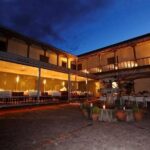
Once you arrive in Aguas Calientes, you’ll have time to rest and prepare for the morning. You’re staying at a 3-star hotel (Waman Hotel or similar) for one night. Breakfast is included, but for other meals you’ll need to plan ahead since meals aren’t listed as included in the package.
If you’re prone to motion sickness, this is the time to pack what you need. The schedule has long driving and train time, and you’ll want to feel good for Machu Picchu day.



Machu Picchu morning: bus up early, guide-led walk once you’re inside
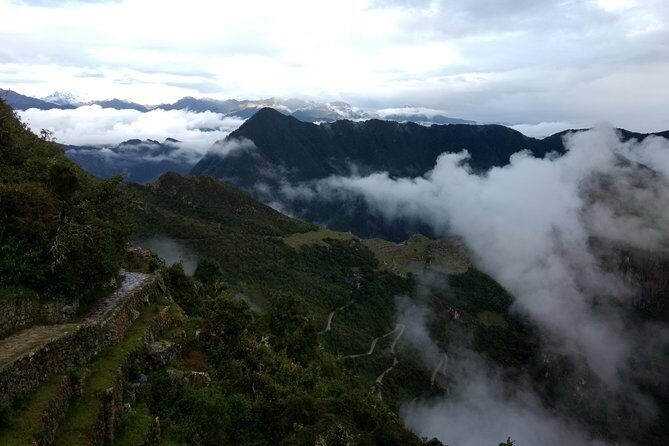
Day 2 starts with breakfast, then an early bus ride to Machu Picchu, at about 2,430 meters. That early start matters. It helps you get into the site while energy is still high and before the day feels fully squeezed.
When you enter the Inca citadel, your guide takes over for an in-depth tour. Expect explanations tied to the site’s main parts: temples, ceremonial areas, terraces, and storage structures. This is the difference between visiting and understanding. Without a guide, Machu Picchu can feel like a list of iconic spots. With one, the site starts to form a story.
After the guided tour, you return to Aguas Calientes for a brief rest and lunch. Then you board the train back to Ollantaytambo, where a private van takes you to Cusco.
A key point: this tour is guided, but it’s still timed. You’ll move through the site as a group rather than roaming at random. If you love slow, solo wandering, you may find the schedule a bit structured. On the flip side, you’re unlikely to miss important features, which is a huge win for most first-timers.
Huayna Picchu or Machu Picchu Mountain: optional viewpoints with extra tickets

Machu Picchu day has one built-in fork in the road. If you’ve already secured the right extra ticket in advance, you can add either Huayna Picchu or Machu Picchu Mountain for a higher perspective of the surrounding area.
The base guided tour is included, but these viewpoint options are not. If you want that extra height and the chance for a totally different angle, this is where you’ll need to plan early because you’re buying your own add-on ticket.
Consider who should do this:
- If you want photos and viewpoints from above, the added climb can be worth it.
- If you’re worried about stamina at altitude, you might prefer keeping the main site route and saving energy.
Either way, ask your guide how to pace yourself once you’re in the entry flow.
Train back to Cusco: how the timing keeps the trip from feeling rushed
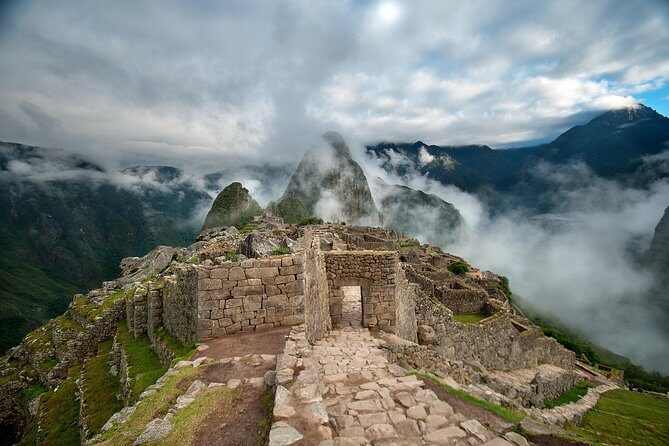
One reason I like this tour style is what it does at the back end. After Machu Picchu, it doesn’t try to cram in another big stop. You get rest time in Aguas Calientes, then you’re back on track with train service and a private van back to Cusco.
That structure helps if you’re tired or acclimating. It also makes the experience feel complete. Sacred Valley isn’t just a prelude; it becomes context for Machu Picchu, and then you finish with transport that actually gets you home.
A small practical tip: keep your essentials easy to reach on the return day. You’ll have transitions between bus, guide time, town break, train ride, and van.
Price and value: what $634.36 buys you (and why it can make sense)
At $634.36 per person for a roughly 2-day private plan, the price looks big at first glance. But it includes the parts that usually cost time, money, and stress when you do it on your own.
What you’re paying for:
- Private transportation for the Sacred Valley portions
- Hotel night in Aguas Calientes (3-star, Waman Hotel or similar)
- Vistadome train round trip
- A professional bilingual guide
- Included admissions for parts of the program, plus coverage of core Machu Picchu touring
You still need to budget for:
- $25 listed for Day 1 entrances (Maras, Moray, Chinchero)
- Huayna Picchu entrance fee if you add it
- Tips
- Meals (not listed as included)
When you price out the hotel night, train tickets, and the guide-plus-transport package, this becomes more comparable to a hassle-free upgrade than a random splurge. Also note that the itinerary is booked well in advance on average, around 85 days, which is a hint that train space and timing choices matter.
Who should book this private Sacred Valley and Machu Picchu tour
This is a great match if you want:
- A private format where your group isn’t competing for attention in a crowded bus
- A guided Machu Picchu experience that explains what you’re seeing
- The comfort of sleeping in Aguas Calientes so Machu Picchu doesn’t eat your whole day
It’s also a good choice if you hate logistics. You start and end in Cusco, you get hotel pickup and drop-off, and the plan is structured so you’re moving with the flow of the rail and entry system.
It might not be ideal if you:
- Want total freedom to roam and linger without a schedule
- Are trying to keep costs ultra-low and don’t mind doing coordination yourself
- Are very sensitive to weather impacts, since the experience requires good weather and the plan is not refundable if it can’t run as scheduled
Should you book this tour?
If you want the easiest path to Machu Picchu plus the best “story” you can get through the Sacred Valley, this is a strong pick. The Vistadome train and one-night base in Aguas Calientes cut out the hardest parts of planning. The bilingual guiding focus on temples, ceremonial areas, terraces, and storage structures makes Machu Picchu feel readable, not just famous.
My decision advice is simple:
- Book it if you want structure, clarity, and a smooth rhythm from Cusco to Sacred Valley to Machu Picchu and back.
- Consider skipping the viewpoint add-ons if you’re short on time, energy, or stamina.
- Double-check your weather expectations, because the experience is weather-dependent and changes can be limited.
Also, aim to lock it in early. Train timing and Machu Picchu add-on tickets don’t wait around.
FAQ
How long is this Sacred Valley and Machu Picchu tour?
It runs about 2 days.
Where do you start and end the tour?
The tour starts and ends in Cusco.
What train is included in the package?
The package includes a round-trip Vistadome train between Ollantaytambo and Aguas Calientes.
What happens on Day 2 at Machu Picchu?
You go by morning bus to Machu Picchu, get a guided tour of the main features, then return to Aguas Calientes for a short break and lunch before taking the train back to Ollantaytambo and transferring to Cusco.
Are Huayna Picchu or Machu Picchu Mountain included?
No. Tickets for Huayna Picchu or Machu Picchu Mountain are not included, and you need to secure them in advance if you want to add one.
What’s included for the night stay?
You get 1 night at a 3-star hotel at Waman Hotel or similar, based on double occupancy, plus breakfast.
Are entrance fees included for Sacred Valley stops on Day 1?
Day 1 entrance fees for Maras, Moray, and Chinchero are listed as $25 not included.