REVIEW · CUSCO
Salkantay Trek to Machu Picchu: 4 Day Guided Adventure Tour
Book on Viator →Operated by Salkantay Travel Peru · Bookable on Viator
Machu Picchu after a serious mountain trek. This 4-day guided route ties together Cusco, Humantay Lake, the Abra Salkantay high pass, and a guided visit to Machu Picchu. You’ll hike enough to feel the Andes, but the trip is built with food, sleeping setups, and transport so you’re not juggling the details.
I like the mix of coca tea at dawn and the way camp life is handled with real meals, tents/cabins, and support staff. I also like that your Machu Picchu time starts with a certified guide, then you get breathing room to explore. The main consideration is the early start (around 4:30–5:00 a.m.) plus fast altitude changes, so you’ll want to take the first day slow and be honest about your fitness.
In This Review
- Key things that make this trek work
- Why the Salkantay route feels different on the way to Machu Picchu
- Day 1: Cusco pick-up, Challacancha start, and Humantay Lake at Soraypampa
- Day 2: The Abra Salkantay pass, glacial lagoons, and private domes at Colcapampa
- Day 3: Cloud forest plants, then Hidroeléctrica to Aguas Calientes by foot
- Day 4: Machu Picchu with a certified guide, plus optional Huayna Picchu
- Food, guides, and camp comfort: where the support really shows
- Transportation logic: buses, buses, and trains that actually connect
- Price and value: what $586.67 actually buys you
- Who should book this Salkantay Trek, and who should think twice
- Should you book the Salkantay Trek to Machu Picchu?
- FAQ
- What time does the pickup start in Cusco?
- How many days is the trek, and what are the overnights like?
- Is the Machu Picchu entrance ticket included?
- Can I add Huayna Picchu or Machu Picchu Mountain?
- What meals are included?
- Is free cancellation available?
Key things that make this trek work
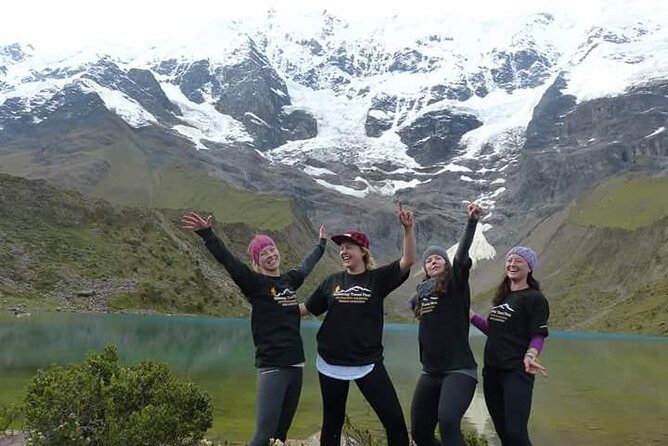
- Abra Salkantay at 4,650 m gives you big, snowcapped views and a serious climb day
- Humantay Lake and Soraypampa deliver the Andes postcard moments right out of the gate
- Cloud forest hiking on Day 3 swaps high ridges for coffee, bananas, avocados, and orchids
- Hidroeléctrica to Aguas Calientes rail-walk is calmer than it sounds and gets you into Machu Picchu mode
- Machu Picchu with a certified guide, then optional Huayna Picchu or Machu Picchu Mountain if you pre-book
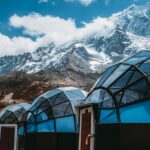
- Camp comfort is included (glass cabins in Soraypampa, private domes in Colcapampa)
Why the Salkantay route feels different on the way to Machu Picchu
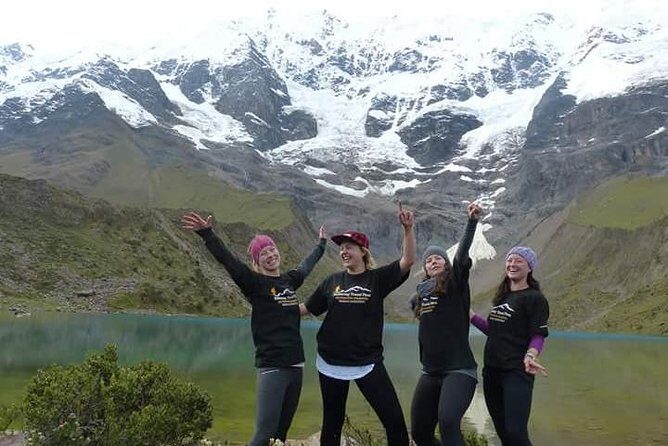
A lot of people chase Machu Picchu as a single destination. This trek makes it a journey. You’re not just moving from point A to point B. Each day changes the scenery and the pace: glacier lakes and steep switchbacks on Day 1, a high pass on Day 2, and then cloud forest plants and a lower, greener feel on Day 3.
It’s also a more controlled way to do a hard itinerary. You get guides, meals, and the staff needed for camping logistics. Horses and horsemen handle camping and kitchen equipment, which matters because your energy is better spent hiking than carrying gear uphill.
You can also read our reviews of more guided tours in Cusco
Day 1: Cusco pick-up, Challacancha start, and Humantay Lake at Soraypampa
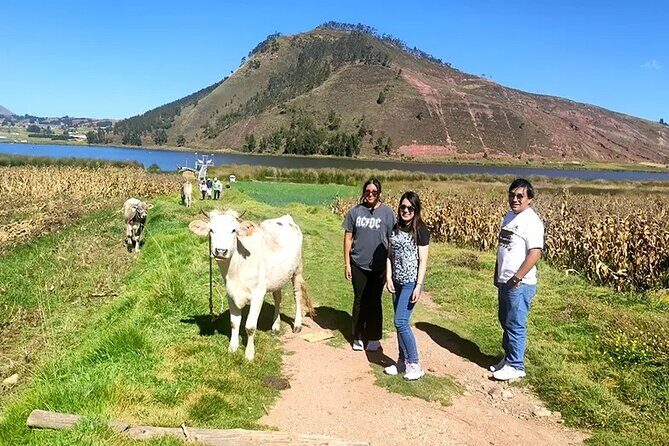
Your day starts early: pickup from your Cusco hotel between 4:30 a.m. and 5:00 a.m. After about a 2-hour scenic drive, you stop in Mollepata for a freshly prepared breakfast. Then you continue to Challacancha (3,800 m), the official start point of the trek.
From there it’s a hike to Soraypampa (3,900 m). The route goes for roughly 3 hours uphill to base camp, where lunch awaits. This is one of the trip’s best “get your rhythm” moments, because you’re climbing without sprinting. You also get a chance to settle into the thin-air feel before the day’s bigger highlight.
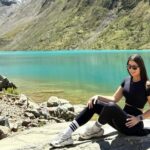
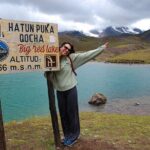
In the afternoon, you hike about 1.5 hours to Humantay Lake. The payoff is a wide, glacial-lake view framed by Andean peaks. This is the kind of stop where your photos can’t quite capture the scale, because the mountains feel close even when you’re far away.
Back at Soraypampa Hostel, your guide shares stories and cultural context. Then it’s coca tea and dinner from the trekking chef. One reason I like the “camp before town” approach is that you’re tired, fed, and settled. No hunting for dinner or figuring out transport while your legs are still full of hike.
Sleeping on Day 1: glass cabins for two people.
Day 2: The Abra Salkantay pass, glacial lagoons, and private domes at Colcapampa
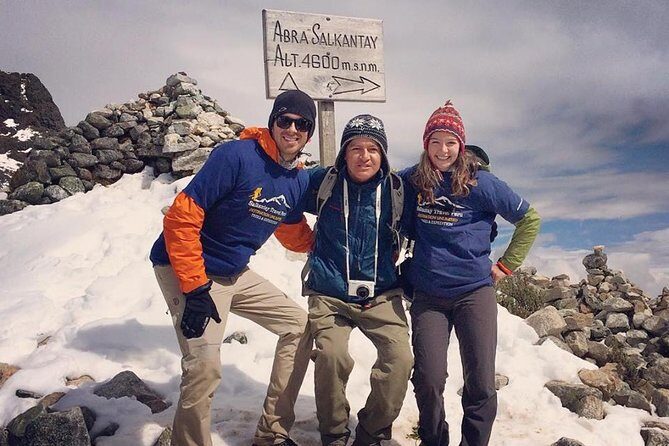
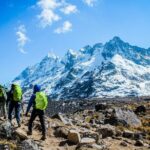
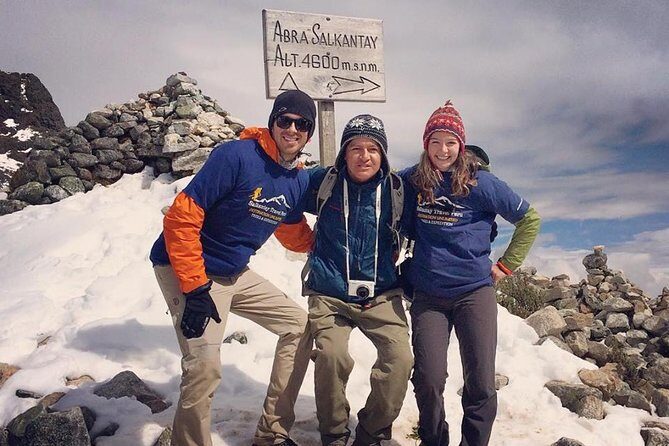
Day 2 starts with breakfast around 5:00 a.m., then the climb begins toward Abra Salkantay (4,650 m), the trek’s high point. Plan for about 3 hours of ascent. This section is where you feel the altitude most. It’s not just about effort; it’s about breathing and pacing. If you go too fast, the pass will punish you.
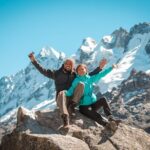
At the top, you’re rewarded with views of snow-capped Andean peaks, including Salkantay, Humantay, Tucarhuay, and Pumasillo. Then the trail switches from altitude drama to a long descent.
You’ll descend through Salkantaypampa and Soyrococha, with a small glacial lagoon along the way, then continue to Wacramachay for lunch. After lunch, the trail trends downhill again for about 3 hours as the environment begins shifting toward greener conditions and the high jungle vibe.
By evening you reach camp at Collpapampa (often spelled Colcapampa). Tea and a freshly prepared dinner are waiting, and tonight’s sleep setup is a private sleeping dome for two.
Sleeping on Day 2: private domes (premium camping comfort).
Day 3: Cloud forest plants, then Hidroeléctrica to Aguas Calientes by foot
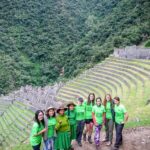
This is the day many people enjoy most because the hiking starts to feel more varied and less “pure uphill.” After breakfast, you move into the cloud forest region. Over about 5.5 hours of hiking, you pass areas with coffee, bananas, avocados, and you may spot orchids and medicinal plants native to the jungle.
Lunch happens at Hidroeléctrica, and then you shift gears. You travel by vehicle to Hidroeléctrica, then start a peaceful walk along the railway line toward Aguas Calientes, the town that acts as your gateway to Machu Picchu.
This rail walk is a relief after the pass day. It’s still on your feet, but the pace is calmer, and it’s mentally satisfying because you can finally smell the transition into civilization.
When you arrive in Aguas Calientes, you eat dinner at a local restaurant and sleep in a comfortable hotel with Wi-Fi.
Sleeping on Day 3: 2★ hotel in Aguas Calientes with Wi-Fi.
A quick note on hot springs: the package includes entry to the Aguas Calientes hot springs. One group also described a stop at Santa Teresa hot springs, which could be an added bonus depending on how your schedule gets managed.
Day 4: Machu Picchu with a certified guide, plus optional Huayna Picchu
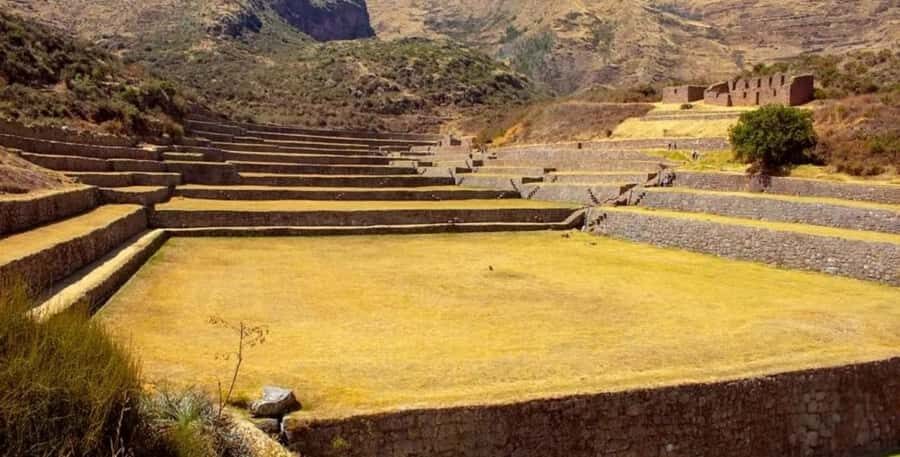
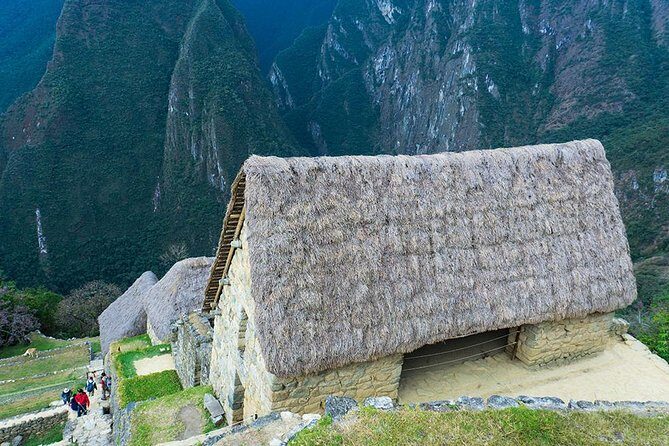
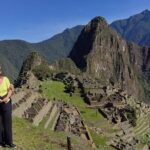
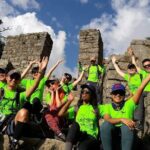
Day 4 is your Machu Picchu morning. After an early breakfast, you board a bus to the archaeological site. Your certified guide leads the tour through terraces, temples, plazas, and ceremonial areas. This matters because Machu Picchu isn’t a “wander and figure it out” place. A good guide helps you read the site so you notice what most people miss.
Then you get free time. This is where you can choose your own pace:
- Explore on your own after the guided portion
- Or, if you pre-book, hike Huayna Picchu or Machu Picchu Mountain
The optional peaks cost $65 per person and you need to request in advance to confirm availability. If you’re worried about timing or altitude, keep it simple and use your free time to walk the main circuits at a steady pace.
After the site visit, you return to Aguas Calientes for lunch (not included). Then you take the train to Ollantaytambo at 2:55 p.m.. From there, transport returns you to Cusco, landing back around San Francisco Square.
You can also read our reviews of more hiking tours in Cusco
Food, guides, and camp comfort: where the support really shows
This trek is physically demanding, so the small operational details matter. Here’s what’s built in:
- 3 meals per day as listed in the itinerary (4 breakfasts, 3 lunches, 3 dinners total)
- Morning coca tea and boiled water for tea/coffee at camps
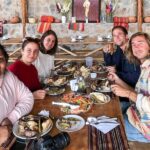
- A professional cook using fresh campsite meals
- Vegetarian/vegan/special diets available on request
- First aid kits and oxygen
- Staff experience (minimum 3 years)
- A duffel bag provided (up to 5 kg per person)
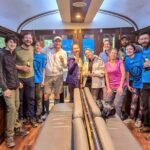
In one account, guides named Jorge led the group, with help from Jean-Paul and Manolo. Another account highlighted chef Justino and his assistant Romario, with Fredy Apaza Huarhia also stepping in to help when the hiking got tough. The practical takeaway: you’re not just getting a map and a whistle. You’re getting people who manage comfort and adjust when someone needs a workaround (horse or vehicle support was mentioned in that context).
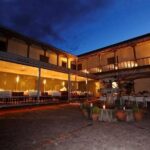
Sleeping setups are also part of the value. Day 1 uses glass cabins at Soraypampa (two people). Day 2 uses private sleeping domes at Colcapampa (two people). These aren’t luxury city rooms, but they’re better than the “spread out on the ground” kind of camping most people picture when they hear trek.
One more gear note: sleeping bags are available for $15 per person if you need them. If you’re traveling light, it’s worth planning to either pack yours or budget for this option.
Transportation logic: buses, buses, and trains that actually connect
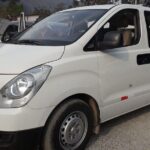
You start with private transport from Cusco to the trek start, then vehicles handle parts of the middle-day transitions. On Day 3, you get transport to Hidroeléctrica before walking the rail line to Aguas Calientes.
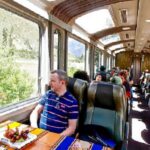
For the return from Machu Picchu area, you take the train to Ollantaytambo, then transfer back to Cusco. The tour data notes you can return by train or car depending on the option selected, but the timing described here is specifically tied to the 2:55 p.m. train after lunch in Aguas Calientes.
This matters because the Machu Picchu system runs on tight schedules. When your trek ends in Aguas Calientes, you’re still far from done. The value is that you don’t have to stitch together last-minute connections while you’re exhausted.
Price and value: what $586.67 actually buys you
At $586.67 per person, you’re paying for more than “guiding.” Your package includes:
- Entrance ticket to Machu Picchu
- Professional English/Spanish-speaking guide support
- Meals for multiple days
- Camping logistics (including horses for camping/kitchen equipment)
- Sleep setups in Soraypampa and Colcapampa
- A hotel in Aguas Calientes with Wi-Fi
- Transfers between major points (Cusco, trek start, Hidroeléctrica, Ollantaytambo, Cusco)
- Machu Picchu tour with a certified guide
- Entry to Aguas Calientes hot springs
- Staff support with first aid and oxygen
Is it cheap? No. But it’s not just a “walking tour.” If you compare the cost of a guided multi-day trek plus lodging plus food plus Machu Picchu access, this price sits in the zone that usually includes the big expenses. For many people, the best value is how much it reduces decision fatigue during a physically hard trip.
One practical heads-up from an account: even with Machu Picchu included, one group reported they had to purchase Machu Picchu tickets on the day before at Aguas Calientes. That doesn’t mean the entrance isn’t covered, but it does mean you should plan to confirm how tickets are issued for your exact departure date.
Who should book this Salkantay Trek, and who should think twice
You’ll likely love this trek if you want:
- A high-pass challenge without handling logistics yourself
- Machu Picchu with a guided explanation, not just a ticket and a map
- Variety: glacier lake views, cloud forest hiking, and then a cultural site day
You might want to think twice if:
- You hate early mornings. Pickup is around 4:30–5:00 a.m., and Day 2 starts early too.
- You’re not ready for altitude swings (3,800 m up to 4,650 m on Day 2).
- You need flexible pacing. The trek is structured with set hike times, even though the guide may help adjust when possible.
That said, the tour data says most travelers can participate, which usually means the route is designed for a broad range of hikers who can manage steady hiking and short breaks.
Should you book the Salkantay Trek to Machu Picchu?
I’d book this if you want a trip that makes Machu Picchu feel earned. The early Cusco start, the pass day, and the switch into cloud forest give you a real story arc. Add included meals, camp sleep setups, oxygen/first aid support, and a certified guide at Machu Picchu—and you get a strong value for the effort.
I’d hesitate if you’re fragile on altitude, dislike cold mornings, or expect an easy stroll. This is a trek with real climbs and long hiking days. If you’re ready for that, this is one of the more satisfying ways to connect Peru’s mountains to its most famous ruins.
FAQ
What time does the pickup start in Cusco?
Pickup is from your Cusco hotel between 4:30 a.m. and 5:00 a.m., depending on your exact hotel location.
How many days is the trek, and what are the overnights like?
The tour runs about 4 days. You sleep in Soraypampa in glass cabins, then in Colcapampa in private sleeping domes, and on the final trekking night in a 2★ hotel in Aguas Calientes with Wi-Fi.
Is the Machu Picchu entrance ticket included?
Yes. The package includes the entrance ticket to Machu Picchu. (One account noted tickets may still be handled/picked up in Aguas Calientes the day before, so it’s smart to confirm your issuance details.)
Can I add Huayna Picchu or Machu Picchu Mountain?
Yes, both are offered as optional entries. Huayna Picchu or Machu Picchu Mountain costs $65 per person and you need to request in advance to confirm availability.
What meals are included?
You get meals daily per the itinerary, including 3 meals per day. The tour data specifies 4 breakfasts, 3 lunches, and 3 dinners, plus morning coca tea and hot drinks at camps.
Is free cancellation available?
Free cancellation is available. You can cancel up to 24 hours in advance for a full refund. Canceling less than 24 hours before the start time means no refund.