REVIEW · CUSCO
Sacred Valley and Maras Moray Tour with Buffet Lunch
Book on Viator →Operated by WPeru-Travel · Bookable on Viator
Inca terraces and salt wells in one day. This Sacred Valley + Maras Moray tour is interesting because you pack major Inca-era sights and everyday Andean work into one smooth, guided route, with time to see farm terraces, textile dyeing, and the famous salt ponds. I especially like the friendly, attentive guidance and the way the day feels well-run, with punctual, comfortable transport. I also love that lunch is built in—your buffet lunch in Urubamba makes the long schedule easier to handle.
The one thing to consider is pace: many stops are about 45 minutes, so you’ll want to be ready to move, look, and move again. If you prefer slow wandering and lots of time per site, you may feel a bit rushed during the busiest stretches.
In This Review
- Key takeaways before you go
- A long Cusco day that stays organized (even with 8+ stops)
- Chinchero’s archaeological terraces and the colonial temple viewpoint
- Chinchero textile center: alpaca clothing and natural dye work
- Moray’s circular terraces: the Inca agricultural experiment
- Maras salt wells: 4,000+ hand-extracted ponds
- Urubamba buffet lunch: practical food after the morning grind
- Ollantaytambo: Inca architecture with terrace-and-temple focus
- Pisac archaeological park plus a silversmith workshop
- Pisac archaeological park
- Pisac silversmith shop
- Price and entrance fees: where the real value sits
- Who this tour suits best (and who should rethink it)
- Should you book Sacred Valley and Maras Moray with Buffet Lunch?
- FAQ
- FAQ
- What time does the tour start?
- How long is the Sacred Valley and Maras Moray tour?
- Is pickup included, and where does it start from?
- Is the buffet lunch included?
- Are drinks included with lunch?
- Do I need to pay entrance fees for the archaeological sites?
- Which stops are free during the tour?
- How big is the group?
- Can you drop me off at Ollantaytambo for the train to Aguas Calientes?
- Is free cancellation available?
Key takeaways before you go
- Start time is early: you’ll be picked up around 6:30 am, and the day runs roughly 11–12 hours.
- You get the guide and transport: pickup from your place in Cusco (Historic Center) plus a professional guide and tourist transportation are included.
- Moray and salt wells are the headline: the circular terraces at Moray and the 4,000+ salt wells at Salinas de Maras are the big wow moments.
- Lunch is practical: a buffet lunch in Urubamba helps you stay fueled for the afternoon.
- Plan extra site fees: archaeological entrances are not included, and the BTG is PEN 70 per person.
- Group size stays small-ish: max 30 travelers, which usually helps the day feel organized.
A long Cusco day that stays organized (even with 8+ stops)
This is the kind of tour that works best when you want structure. You start in Cusco with pickup from your hotel, Airbnb, or hostel in the Historic Center, then you head out with a professional tourist guide and tourist transportation. The total time is about 11–12 hours, and that’s because you’re covering a lot of ground across the Sacred Valley.
Here’s the real trade-off: the stops are mostly 45 minutes each, plus 1 hour for lunch. That’s enough time to see the key points, take photos, and learn the story, but it won’t feel like you have a whole morning or afternoon at any single site. For most first-time visitors, that’s a feature, not a bug.
Also, the tour runs with a maximum of 30 travelers. Smaller groups usually mean fewer delays and more chance to ask questions without shouting over everyone else. From the review vibe, the operation also feels tight—people noted smooth organization and punctual transport.
You can also read our reviews of more tours and experiences in Cusco

Chinchero’s archaeological terraces and the colonial temple viewpoint
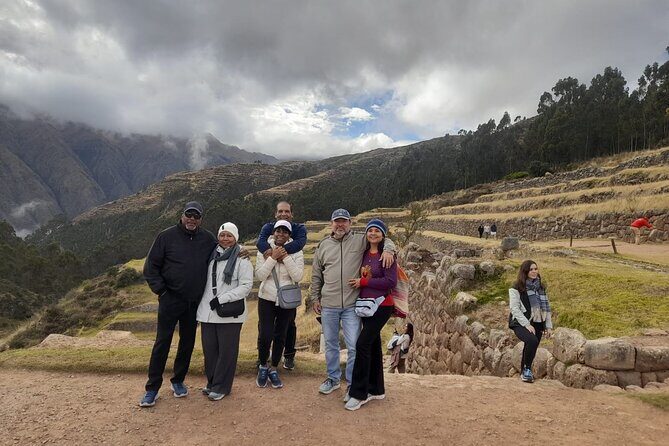
Your first cultural hit is Complejo Arqueologico Chinchero. You’ll see agricultural terraces, a plaza, and a colonial temple element—so you get a layered view of how the area changed over time. The big value here is seeing the Inca idea of farming engineering before you jump into the more famous circular patterns of Moray later.
Time is short—about 45 minutes—so come with a clear focus: terraces, plaza layout, and any major architectural features your guide points out. Entrance here is not included, so plan for the BTG (PEN 70 per person) if you want to go in smoothly.
One practical note: if you’re the type who likes to linger at photo angles, prioritize one or two spots you want most. With limited time, you’ll be happier if you pick your view instead of chasing every possible corner.
Chinchero textile center: alpaca clothing and natural dye work
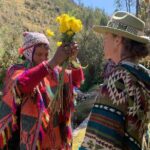
After the archaeological stop, you shift to something hands-on: the Textile Center in Chinchero, often associated with the work of Andean women making garments. This part is included and free, which matters because it means you can spend time without worrying about another ticket cost.
What makes this stop worth your time is that it’s not just a showroom. You can observe the process of making alpaca-based garments, and you’ll also see natural dyeing. That combination helps you understand why Andean textiles look the way they do—color isn’t random, and materials aren’t just for decoration.
In your head, connect it to the rest of the day:
- You’re going to Moray to see experimentation with crops.
- You’re going to Maras to see how salt extraction shapes daily life.
- Textile dyeing ties both together through local knowledge and materials.
Keep your expectations realistic: this stop is still around 45 minutes, so you’ll get an overview and some explanation, not a full production tour.
Moray’s circular terraces: the Inca agricultural experiment
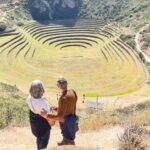
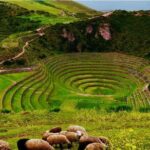
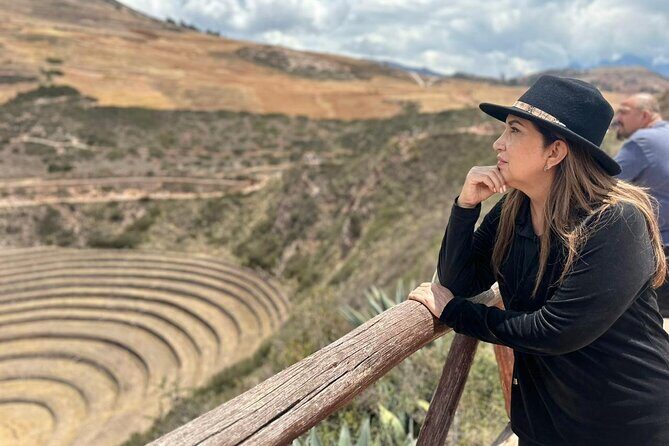
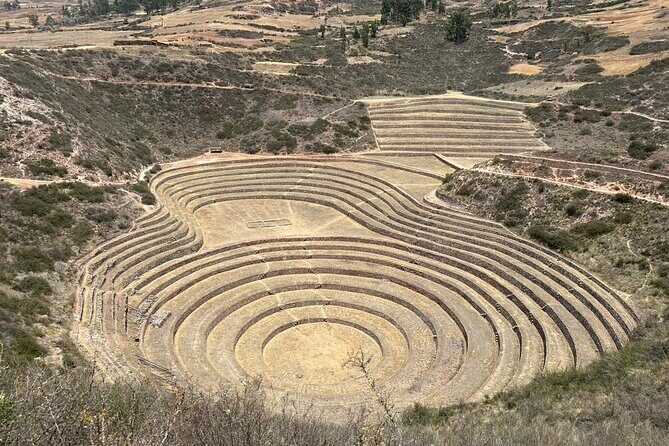
Next comes the most visually distinctive site on the route: Moray (Zona Arqueologica Moray). This is where you see an agricultural experimentation center from the Inca era, with terraces arranged in a circular and descending shape.
Why this matters for you as a visitor: Moray isn’t famous just because it looks cool. The structure is tied to how the Incas thought about growing conditions. Seeing the terraces in this pattern helps you understand that experimentation and adaptation were part of their farming system—less guesswork, more design.
Again, plan for about 45 minutes, and entrances here are not included. If you’re bringing only one takeaway from Moray, make it this: pay attention to the shape and levels, because that’s what makes the place make sense.
Maras salt wells: 4,000+ hand-extracted ponds
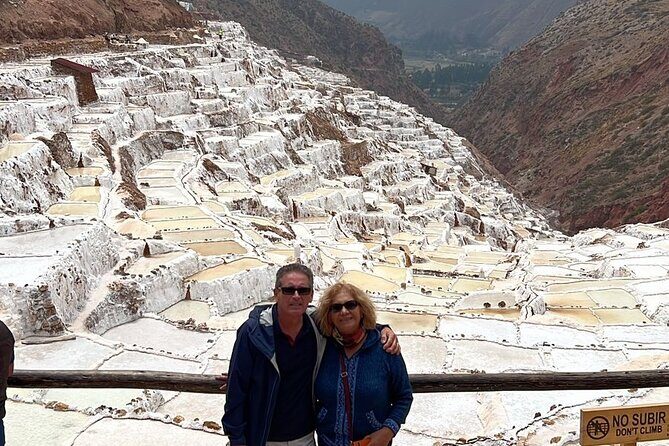
Then the tour turns to one of Peru’s most memorable working landscapes: Salinas de Maras. You’ll visit and be able to observe the 4000+ salt wells, extracted by hand by local inhabitants.
This is one of those stops where photos are easy, but good viewing takes a minute. Look for the pattern and scale first, then zoom in on the details. It helps to remember you’re not looking at an abandoned site—you’re looking at a working process that still affects local life.
Before (or around) the salt wells, you’ll also visit a souvenir stop in Maras, which includes time to taste famous chocolate with Maras salt and buy souvenirs. The tasting itself is free, and it’s a fun way to connect the salt to something you can take home. Don’t feel pressured to buy; use it as a chance to sample and then decide.
Admissions for Salinas de Maras are not included, so keep the BTG PEN 70 per person in mind for your budget.
You can also read our reviews of more tours and experiences in Cusco


Urubamba buffet lunch: practical food after the morning grind
By the time you reach Urubamba, you’ve done a lot of walking and looking. That’s why the buffer lunch is such a smart inclusion. You’ll have about 1 hour for lunch here.
The lunch is a buffet, and reviews specifically mention it as delicious, with a variety of typical Peruvian dishes. One of the clearest values of this part is that you don’t have to hunt for food during a jam-packed day. You just sit, eat, and reset your energy.
Important detail: drinks at the buffet lunch are not included. If you want something specific to drink, plan on purchasing it. Also, with a tight schedule after lunch, you’ll likely feel better if you eat efficiently and don’t aim to take a long second helping that turns into a post-lunch rest.
Ollantaytambo: Inca architecture with terrace-and-temple focus
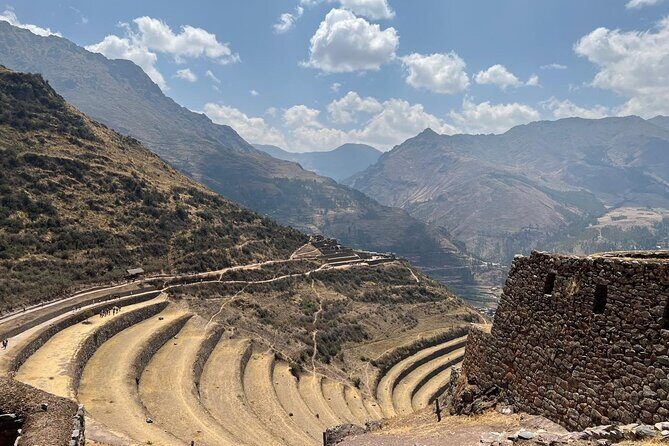
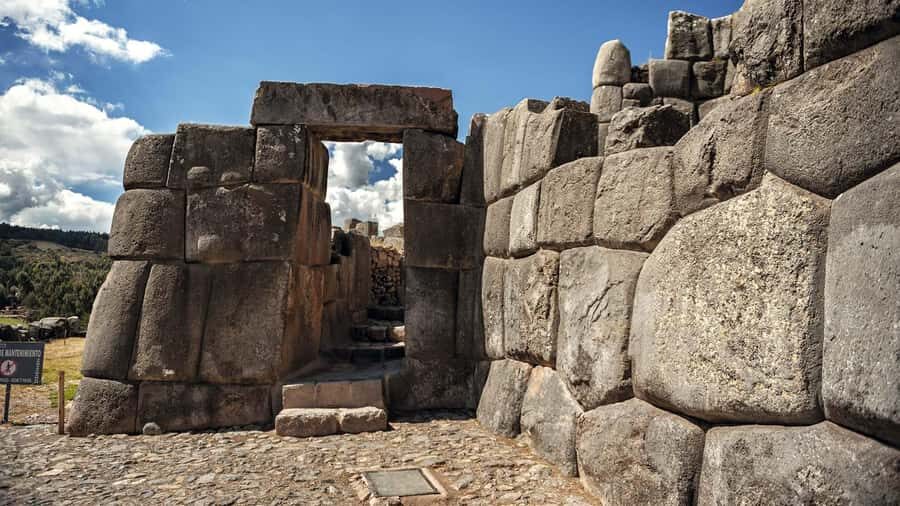
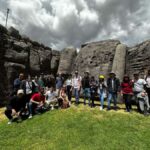
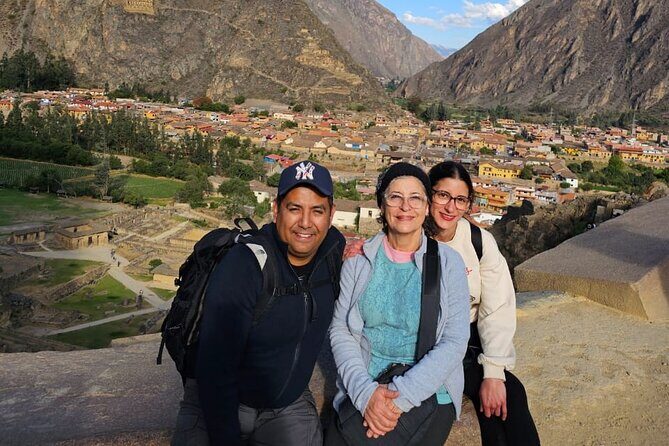
After lunch, you head to Archaeological Park Ollantaytambo. You’ll see Inca architecture, plus agricultural terraces and temples—the kind of mix that shows how buildings and farming worked together.
Time is 45 minutes, and entrances are not included. Here’s how to make the most of the short visit: pick one main structure or viewpoint your guide highlights, then look outward for how the terraces and buildings relate. If you try to memorize everything, you’ll likely miss the relationships.
This stop tends to hit well because Ollantaytambo feels both planned and dramatic. You get a clear sense that these places weren’t random layouts. Even in a short time window, the shape and purpose can come through.
Pisac archaeological park plus a silversmith workshop
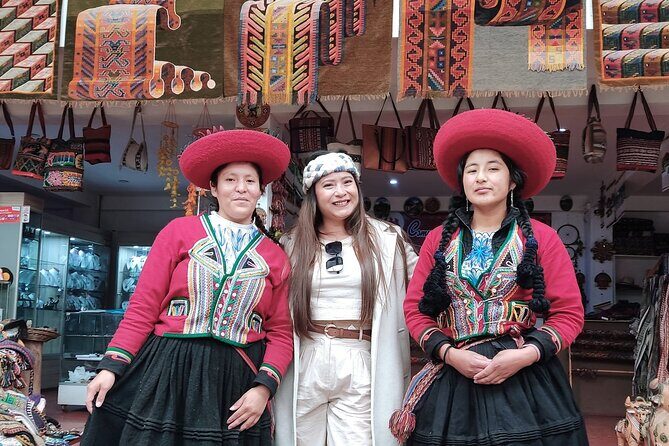
The tour finishes the sightseeing loop with Pisac in two parts: the Archaeological Park Pisac and then a silversmith’s shop.
Pisac archaeological park
At Parque Arqueologico Pisac, you’ll visit agricultural terraces and the “most important places” in the site. Entrance is not included, and you’ll have about 45 minutes.
This is another stop where terraces are the key. Try to watch how the site uses the slope and where you see the major viewpoint or focal area. The more you focus on terrace structure rather than trying to memorize names, the more satisfying the visit becomes.
Pisac silversmith shop
Then you shift to a different kind of culture: a silversmith’s shop, where local people make silver decorative objects and jewelry. This one is included/free and also about 45 minutes.
This stop is valuable because it connects historic place to present-day craft. If you like taking home something made locally, this is the kind of place where you can see real work and products rather than just generic souvenirs.
Price and entrance fees: where the real value sits
At $40 per person, this tour can feel like a bargain because you’re getting:
- Pickup from your lodging area in Cusco
- A professional guide
- Tourist transportation
- A buffet lunch in Urubamba
- Visits to textile work in Chinchero, plus included stops like the Maras tasting/souvenir stop and the silversmith shop
But you also need to budget for what isn’t included. Entrance to several archaeological sites is not included, and the BTG (General Tourist Ticket) costs PEN 70 per person. Drinks at lunch are also not included, and tips are not included.
So is it still good value? For most people, yes—because you’re buying a guided, all-day loop. You aren’t just paying for attractions; you’re paying for someone to handle timing, route flow, and interpretation across multiple stops. If you plan to visit Moray, Ollantaytambo, Pisac, and Salinas anyway, those costs often add up fast when paid separately.
Who this tour suits best (and who should rethink it)
This tour is a strong match if you:
- Want a structured day that hits the biggest Sacred Valley highlights
- Appreciate a guide who explains what you’re seeing, with a friendly, human tone
- Like practical additions like lunch included, so your day stays smooth
- Prefer a group size capped around 30 travelers
It might be less ideal if you:
- Hate early mornings and want a slower start
- Want long stays inside each archaeological site
- Plan to photograph obsessively for hours (the time windows are short)
A useful mindset: treat this as a guided “greatest hits” day. If you later go back to one area you love most—like the Salt Flats or one archaeological park—you’ll enjoy the second visit more because you’ll already understand what you’re looking at.
Should you book Sacred Valley and Maras Moray with Buffet Lunch?
If your goal is a one-day tour that feels organized, friendly, and genuinely worth your time, I’d say book it—especially at this price point. The combination of Moray + Maras salt wells plus Chinchero textiles covers both big history and real daily work. Add in lunch in Urubamba and transport handled for you, and the day becomes much easier to manage.
Before you commit, decide how you feel about pacing. If you’re okay with 45-minute stops and you want the experience to be efficient, this fits well. If you’d rather linger for hours and go deep at one or two sites, you might be happier with a more flexible option.
FAQ
FAQ
What time does the tour start?
The tour starts at 6:30 am.
How long is the Sacred Valley and Maras Moray tour?
It runs about 11 to 12 hours.
Is pickup included, and where does it start from?
Yes. Pickup is offered from your hotel, Airbnb, or hostel in the Historic Center of Cusco. The meeting point is Plaza Regocijo.
Is the buffet lunch included?
Yes. You get a buffet lunch in Urubamba.
Are drinks included with lunch?
No. Drinks at the buffet lunch are not included.
Do I need to pay entrance fees for the archaeological sites?
Yes. Entrance to several archaeological sites is not included, and you’ll need the BTG (General Tourist Ticket) for PEN 70 per person.
Which stops are free during the tour?
Some stops have free admission, including the Textile Center in Chinchero, the Maras souvenir shop stop for tasting, and the silversmith shop in Pisac.
How big is the group?
The tour has a maximum of 30 travelers.
Can you drop me off at Ollantaytambo for the train to Aguas Calientes?
Yes. There’s an option to decide if your train ticket drop-off will be at the Ollantaytambo train station in the main square, or if you want to return to Cusco.
Is free cancellation available?
Yes. You can cancel for a full refund if you cancel at least 24 hours before the start time.
If you want, tell me your travel dates and whether you’re taking the train to Aguas Calientes—then I can help you plan how this tour fits with your schedule.