REVIEW · CUSCO
Excursion to Pisac Salineras Moray and Ollantaytambo From Cusco
Book on Viator →Operated by Explora Cusco Tour · Bookable on Viator
Four stops, one great Inca circuit.
This tour feels efficient in the best way: you get private transportation so you’re not hunting buses between sites, and the route threads through the Sacred Valley’s most memorable landscapes. I also like that the timing is realistic for a day tour, with enough time at each place to see the main sights without feeling totally rushed. One watch-out: tickets for archaeological sites are not fully included, so you’ll want to budget for entry when you plan your day.
I’m a big fan of the Maras Salineras stop.
Seeing more than 3,000 salt wells spilling across the hills is one of those wow visuals that stays with you, and the details about the underground hypersaline spring (dating back 110 million years) make it more than just a pretty photo stop. I also like the way the day mixes famous names (Ollantaytambo) with science-meets-Inca thinking (Moray’s microclimates), so your brain gets a little variety between ruins and farming experiments.
The main drawback is that you should be ready to go semi-self-guided.
There’s no tour guide included, and while you can find guides for hire at some sites, your experience level will depend on whether you bring your own questions (or decide to pay for local help).
In This Review
- Key highlights I’d prioritize
- A 9:00am Sacred Valley sprint that still leaves time to look
- Pisac: aqueducts, platforms, and ruins that climb the hills
- Maras Salineras: 3,000 salt pools, one long hillside of work
- Moray: the Inca farming experiment built into microclimates
- Ollantaytambo: an Inca town layout with terrace views
- Chinchero: colonial church on an Inca foundation, plus alpaca-dye know-how
- Price and logistics: why $140 per group can make sense
- What a semi-self-guided day feels like in real life
- What to pack for altitude and uneven Andean terrain
- Should you book this Cusco Sacred Valley loop?
- FAQ
- How long is the excursion from Cusco?
- What time does the tour start?
- Is this a private tour?
- What’s included in the price?
- Are tickets to the archaeological sites included?
- Is lunch or breakfast included?
- How many people is the group limited to?
- What should I know about weather?
- Is service allowed for travelers with service animals?
Key highlights I’d prioritize
- Private door-to-ruins transport: one vehicle keeps the day smooth across long drives and altitude changes.
- Maras Salineras in full view: 3,000+ salt pools on a hillside, with an explanation that adds depth.
- Moray’s Inca agricultural lab: microclimates where temperature shifts by season and location.
- Ollantaytambo’s urban planning: cobbled lanes, terraces, and big views from the fortress/temple area.
- Chinchero’s alpaca-dye cooperative: you can watch (and learn about) dyed wool using traditional methods.
A 9:00am Sacred Valley sprint that still leaves time to look
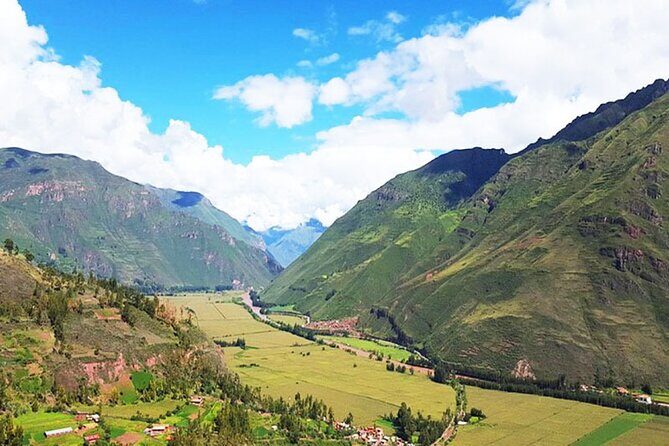
This tour starts at 9:00am in Cusco, and it usually runs around 7 to 8 hours. You’ll be hopping between five stops in the Sacred Valley area, which is a lot for a single day, but the schedule is built around short sightseeing blocks rather than marathon walks.
Private transportation is the practical advantage here.
Instead of stitching together colectivos or stressing over timetables, you keep moving with a consistent setup and can spend your energy on the ruins and viewpoints. One more plus: this is a private group experience for up to four people, so it’s easier to keep your pace and priorities.
Do note the height points in the route.
Moray sits around 3,500 meters, and Chinchero is listed at about 3,777 meters, so plan for cooler air and slower breathing than you might be used to at sea level.
You can also read our reviews of more tours and experiences in Cusco.



Pisac: aqueducts, platforms, and ruins that climb the hills
Pisac’s national archaeological park covers about 4 square kilometers, and it’s made up of multiple clusters rather than one single monument. Expect a mix of platforms, aqueduct-like infrastructure, roads tied to walls and portals, channeled watercourses, cemeteries, and bridges.
What I like about Pisac is how the site reads like an engineered system.
Even if you’re not a hardcore ruins person, it’s easier to appreciate what you’re seeing when the layout makes sense: water management, terraces, connections between areas. The ruins also feel spread out across the hills, so you’re not stuck staring at one small area.
The stop time is listed as about 30 minutes.
That’s enough to get your bearings and see the major structures, but it’s not enough for a deep, slow wandering session. If you love photography or want extra time for viewpoints, you might want to be strategic about where you focus first.
Tip for comfort: wear shoes with grip.
Some paths can be uneven, and you’ll be moving around on hilly terrain at altitude.
Maras Salineras: 3,000 salt pools, one long hillside of work
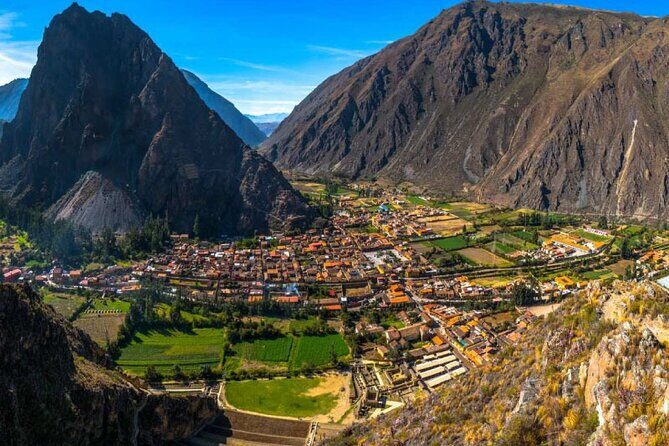
Las Salineras de Maras is the kind of sight that feels instantly memorable. You’re looking at more than 3,000 natural salt wells near the town of Maras, and each pool is about 5 square meters.
Here’s the part I’d file under practical “why this matters.”
The wells are fed by an underground hypersaline spring that originated around 110 million years ago during the formation of the Andes. That geology detail turns the place from a simple tourist attraction into a real-life story of how natural processes became part of human production.
You also get a longer time block here: about 1 hour.
That extra hour makes a difference because the best views come from angle changes—walking a bit, watching the patterns, and taking in how the pools stack across the slope. It’s also a more interactive moment because salt harvesting is still happening; locals market the salt in ways that echo older Inca methods.
Photo reality check: there’s no way to photograph everything from one spot.
I’d plan on moving around enough to catch at least one wide panorama and one closer view.
Moray: the Inca farming experiment built into microclimates
Moray is a different kind of archaeological stop.
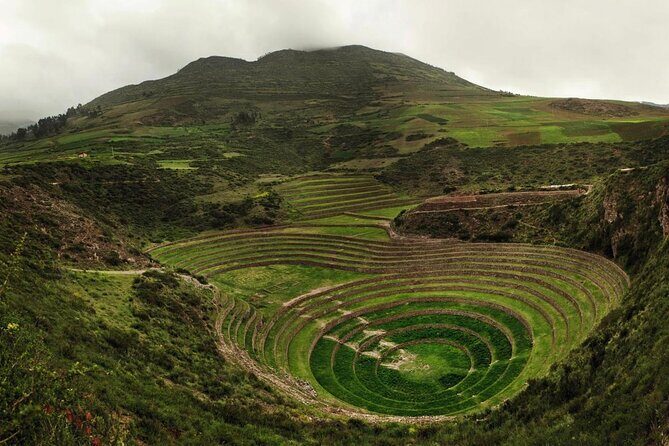
You’re on a plain around 3,500 meters above sea level, with surrounding mountains that create a climate that can feel both temperate and dry. That setting matters because Moray’s design created multiple microclimates in a single area.
The site is described as having varying conditions by season, and the architecture is what helps create those temperature differences.
Inca engineers used this place as an agricultural research area, essentially testing crops and growing conditions with the help of localized climate effects. That’s a fascinating shift from “ancient buildings” to “ancient experimentation.”
Your Moray visit is listed as 30 minutes, and that’s about right for scanning the key structures and understanding the concept.
If you’re the type who likes reading signs and connecting the dots, bring extra patience here. Moray rewards attention, not just fast sightseeing.
What to watch for: weather and sun.
Even if it’s clear in Cusco, Moray can feel different because of altitude and exposure. Layer up and keep water handy.
Ollantaytambo: an Inca town layout with terrace views
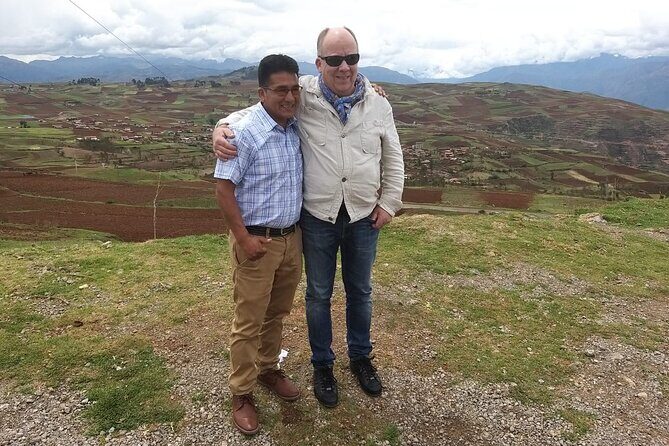
Ollantaytambo is where the day’s story clicks together into something more urban.
This place is known for Inca urban planning, and you can see it in the cobbled, winding streets that still guide how you walk through the town today.
The ruins are spread around too—so you’re not just visiting a single landmark. You’ll also notice agricultural terraces, which add a “this was lived in” feeling rather than a purely ceremonial vibe.
The route highlights a couple of musts: the old fortress and the temple, where you get views over the Sacred Valley.
That viewpoint is the payoff for all the earlier stops. You’ve seen salt production, farming experiments, and layered hill ruins, and now you’re looking out at the broader valley that made this whole system possible.
The stop time here is about 30 minutes.
That’s short enough that you’ll likely focus on the fortress/temple area and the best viewing angles, which is exactly what most people want on a day trip.




Chinchero: colonial church on an Inca foundation, plus alpaca-dye know-how
Chinchero sits higher than some other stops, listed around 3,777 meters. The site includes streets from the time and bases of Inca houses, and it also features a colonial church built on top of an ancient Inca temple.
That “overlay” is one of the most interesting ways to spot the layers of time in the Andes.
You’re looking at a place where the older footprint still matters, even after the later building period. The church is noted as being over 400 years old, which gives you a sense of how long this spot has been a focal point.
Chinchero is also where the tour adds a hands-on cultural component.
You can visit a cooperative where native women teach the process of dyeing alpaca wool using herbs and insects to create various colors, using techniques described as ancient and still preserved today.
The stop time is about 30 minutes, so treat it as a “see it, learn the basics, ask questions” moment.
If you want longer conversations or a deeper look at the dyeing process, you might need a separate stop later, but for a day tour it’s a strong add-on because it connects craft to place and tradition.
Price and logistics: why $140 per group can make sense

The price is listed as $140.00 per group, up to 4 people, and the tour includes private transportation. On paper, that sounds simple, but the value depends on how you compare it to doing multiple sites on your own.
A solo traveler may find it less economical if you had to add taxis and separate entry logistics.
A small group, though, often wins here: you split the cost, avoid extra coordination, and keep your schedule tight enough to visit multiple key stops without losing hours to transit.
Also remember the ticket situation.
Admission is listed as free for Pisac, Maras, Ollantaytambo, and Chinchero, while Moray’s admission ticket is not included. There’s also an option for archaeological site tickets listed at 33 USD per person. One rider also mentioned needing a separate entry ticket (a 2-day pass) for site access, so entry costs can vary depending on what passes you plan to use.
So here’s my practical advice:
If you’re trying to keep costs predictable, ask the operator what tickets are included for your exact dates and what is still optional on the day. If you’re comfortable managing site entries yourself, you may not need the optional ticket add-on—but don’t guess.
What a semi-self-guided day feels like in real life
This is a private tour, and your group is the only group participating. Private also means you can tailor the pace, within reason, and you don’t have to wait for strangers to finish a photo.
Your itinerary is structured with set time blocks: about 30 minutes at Pisac, 1 hour at Maras, 30 minutes at Moray, 30 minutes at Ollantaytambo, and 30 minutes at Chinchero. That setup fits travelers who want to see a lot without turning the day into a 12-hour grind.
The downside is the lack of an included guide.
In the real world, that means you’ll rely on signage, your own questions, and possibly local guides you might find on-site for a fee. If you like context—Inca water engineering, why Moray’s architecture creates microclimates—budget a little mental energy for reading or be open to paying for local explanation.
Communication is also part of the comfort equation.
One review specifically mentioned communication in Spanish with their driver named Rubén, who was friendly and flexible with extra stops based on interests. You may not have the same guide, but it’s a good reminder that you’ll get the smoothest experience when you’re ready to communicate and confirm what you want to emphasize.
What to pack for altitude and uneven Andean terrain
Even with efficient timing, you’ll be moving around at elevation.
Moray and Chinchero are both in the 3,500m+ range, and that means you’ll likely feel it even if you’re fit.
Pack like you’re doing a long outdoor morning:
- layers for cool air and wind
- water (and a small snack plan even though lunch/breakfast aren’t included)
- sun protection for the open salt flats and viewpoints
- shoes with traction for uneven stone and hillside paths
Also plan your energy.
30-minute blocks go by fast at altitude if you’re feeling breathless, so slow down early. Taking a few calm minutes to adjust makes the rest of the day better.
Should you book this Cusco Sacred Valley loop?
Book it if you want a high-coverage day with private transport and a smart mix of sites: engineered ruins at Pisac, the salt production drama at Maras, the Inca “science experiment” at Moray, and the town-and-terraces feeling of Ollantaytambo. Add Chinchero for craft culture via alpaca dyeing, and you’ve got a day that’s not only scenic—it’s varied.
Skip it or rethink it if you want a fully guided, deep interpretation tour.
With no tour guide included, your experience will depend on your comfort with self-guided exploring. The site times are also short, so if you’re hoping for long rambles at every stop, you’ll probably feel the pressure of the schedule.
If you’re traveling as a group of up to four, this is also a value-minded choice because the transportation is baked in.
Just go in with a simple plan for site entry costs, especially around Moray.
FAQ
How long is the excursion from Cusco?
The tour duration is listed as about 7 to 8 hours.
What time does the tour start?
The start time is 9:00am.
Is this a private tour?
Yes. It’s private, and only your group will participate.
What’s included in the price?
Private transportation is included.
Are tickets to the archaeological sites included?
Not fully. Tickets are listed as optional at 33 USD per person. Moray’s admission ticket is listed as not included.
Is lunch or breakfast included?
No. Breakfast and lunch are not included.
How many people is the group limited to?
The price is per group up to 4 people.
What should I know about weather?
The experience requires good weather. If it’s canceled due to poor weather, you’ll be offered a different date or a full refund.
Is service allowed for travelers with service animals?
Yes. Service animals are allowed.