REVIEW · CUSCO
Maras Moray (Day Trip)
Book on Viator →Operated by Kinty Travel Cusco · Bookable on Viator
Salt pans and crop experiments, in one morning.
This Maras Moray day trip turns a quick drive out of Cusco into a story about salt-making, Andean farming, and how the Inca built on older ideas.
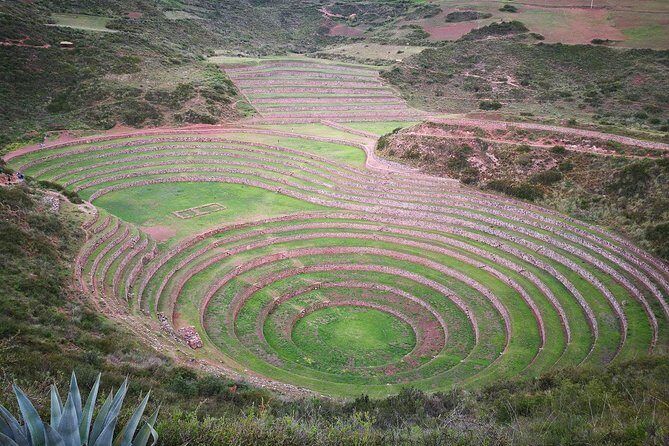
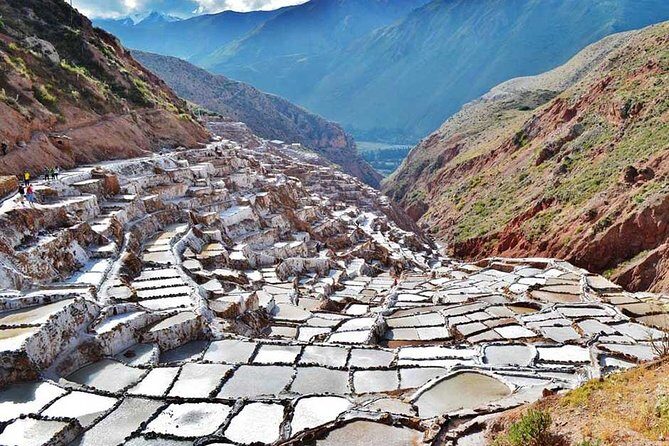
I especially like two things. First, you get to see Salinas de Maras, where thousands of shallow pools turn sea-style salt water into crystallized salt using evaporation. Second, Moray’s circular terraces make the farming experiments easy to understand, since the terraces create micro-climates for different crops.
One drawback: entrance fees are separate, and some people have run into communication or pickup issues with the operator. If you book, I’d take reconfirmation seriously.
In This Review
- Key things to know before you go
- How this Maras Moray half-day works from Cusco
- Getting set at the meeting point and what to expect
- Salinas de Maras: the 3,600+ salt wells and why it still works
- What you’ll actually see
- The practical side (and the one watch-out)
- Moray terraces: how a crop lab hides in the Andes
- A key drawback to consider
- Why the guide matters on both stops
- Price and tickets: where the real value shows
- The value logic
- Timing, comfort, and what to pack for a 6.5-hour day
- Who should book this Maras Moray tour (and who shouldn’t)
- What “private transport” changes about the experience
- Should you book this Maras Moray day trip?
- FAQ
- What time does the Maras Moray tour start?
- How long is the tour?
- Where is the meeting point?
- What is included in the tour price?
- Is the entrance ticket included?
- How much is entrance to Salinas de Maras?
- What admission tickets are offered for the sites?
- What happens if I need to cancel?
Key things to know before you go
- Small group size (max 12) keeps the day feeling calm, not chaotic.
- Private transport between stops helps you waste less time off the road.
- Salinas de Maras includes 3,600+ salt wells cut into the mountain’s face.
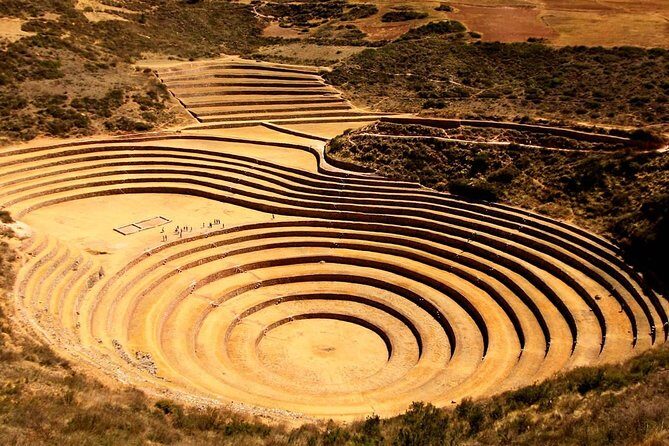
- Moray’s terraces are up to 330 feet deep and linked to an irrigation system.
- Entrance tickets aren’t included, and there are multiple ticket options depending on validity.
- Your bilingual guide does the heavy lifting on history and practical context.
How this Maras Moray half-day works from Cusco
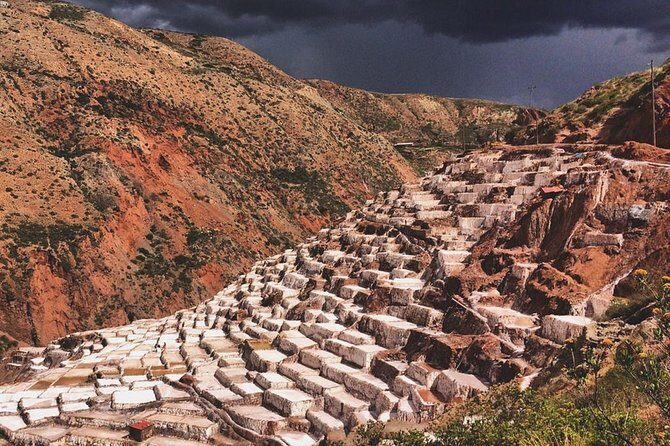
This tour is built as an efficient 6 hours 30 minutes day trip, starting at 8:30 am and ending back at the meeting point. That timing matters because it gives you enough daylight for photos and views without eating your entire day in Cusco.
The route is straightforward: you leave Cusco, visit Salinas de Maras first, then head on to Moray for the terrace site. The plan is designed so you can sit back during the transfers, rather than trekking between far-flung areas on your own.
Group size is limited to 12 travelers, so expect a small-tour feel: you’ll still have the chance to ask questions, and you won’t spend your day squeezed in a huge bus crowd.
You can also read our reviews of more tours and experiences in Cusco


Getting set at the meeting point and what to expect
You’ll meet at Kinty Travel Cusco (Portal de Confituria 285-A, Cusco 08000). The tour uses mobile tickets, and you should receive confirmation at booking time.
A bilingual guide is included, and the tour is offered in English, which is great if you want the main story clearly explained. If English is your comfort zone, this format usually makes the history land faster than with audio-only options.
One thing to watch: there are reports of missed pickups or lack of communication from the operator. I can’t predict that risk for your date, but you can reduce it. If possible, message the day before, keep your confirmation handy, and be ready to show up at the meeting spot a bit early.
Salinas de Maras: the 3,600+ salt wells and why it still works
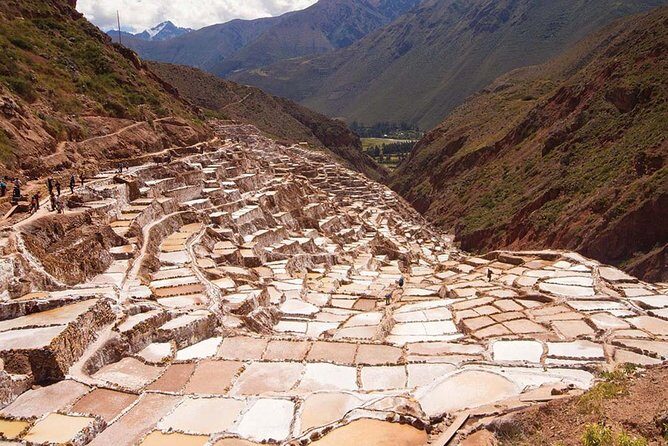
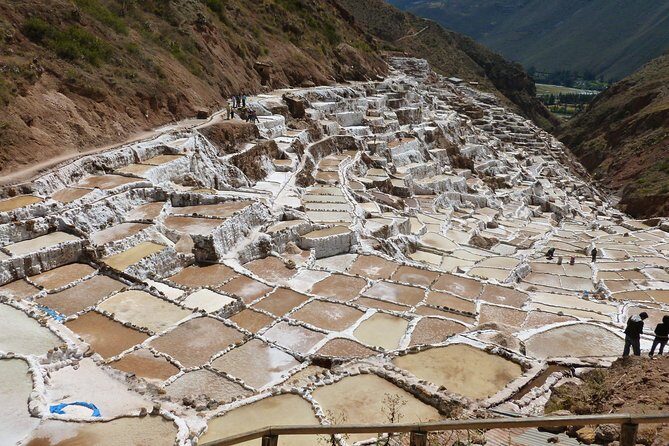
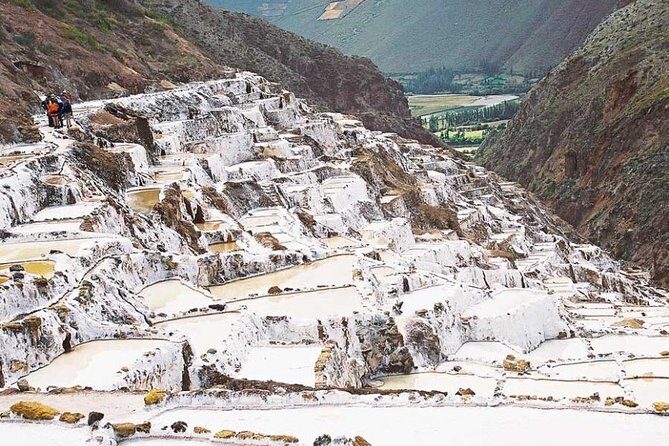
Salinas de Maras is the star for people who like real process, not just ruins. You’re stepping into a working salt landscape made from over 3,600 salt wells dug into the mountainside.
The basic idea is simple: shallow pools fill with salt water. Then the water evaporates, leaving the salt to crystallize. It’s practiced for more than 500 years, which is exactly the kind of continuity that makes this site feel alive rather than staged.
I also like that the tour frames the salt pans as a layered story. The salt pans are believed to have been constructed by the Wari civilisation, which predates the Inca. Later, the Inca recognized the economic value and expanded the salt pans further up the mountainside. That helps you see Maras not as one empire’s artwork, but as a long-running system adapted over time.
What you’ll actually see
Expect a steep, organized pattern of small pools clinging to the hillside. The visual is geometric and busy, and it’s easy to lose track of time while you look for how the pools sit relative to each other.
This is also a great spot to notice how humans shape geography. The mountain wall becomes a production site. You can stand back for wide views, then move closer to see the texture of the salt process.
The practical side (and the one watch-out)
Entrance to Salinas is 10 soles, and it’s not included in the tour price. Plan that into your budget so you don’t get surprised at the gate.
Comfort-wise, wear shoes you trust for uneven ground. Some areas can feel slick or gritty depending on recent conditions, and you’ll be doing short walking bursts for photos and viewpoints.






Moray terraces: how a crop lab hides in the Andes
After Salinas, you head to Moray, about 4.5 miles from the town of Maras and 39 miles from Cusco. The distance isn’t just trivia—it explains why the private transport portion matters. You’re not relying on local transit for a tight schedule.
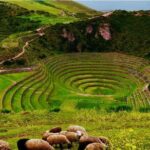
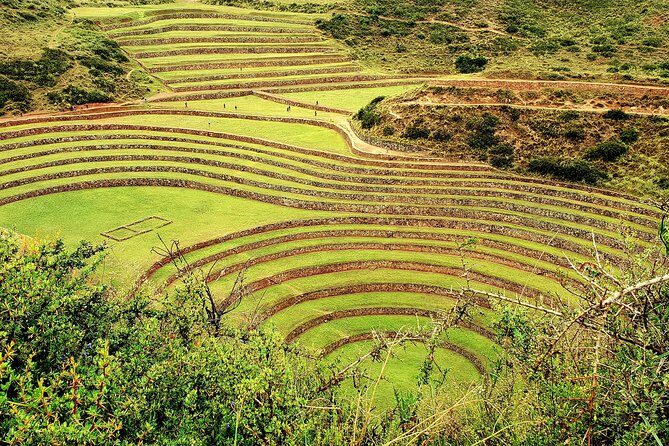
Moray’s main feature is the circular agricultural terraces, with terraces built into a bowl-like shape. The depth is reported as up to 330 feet, and they’re supported by retaining walls with an irrigation system that connects the setup.
The big payoff here is understanding why the circles matter. Moray is often described as a crop-testing site. The concept was to create micro-climates so farmers could grow different products under varying temperature and moisture conditions, depending on the terrace level.
When you’re there, the shape makes sense fast. You can look at the rings and immediately guess that conditions would change from top to bottom. That’s the kind of visual logic that makes Moray feel more like a working idea than just a stone structure.
A key drawback to consider
This stop can feel less dramatic than the salt pans, mainly because it’s not as visually intense at ground level. It’s still impressive, but you’ll enjoy it more if you lean into the explanation and pay attention to how the terraces create different growing environments.
If you love learning about ancient techniques—especially farming systems—Moray will click.
Why the guide matters on both stops
This tour includes a bilingual guide, and that’s a real value multiplier. Sites like Maras and Moray are technical by nature. Without a guide, you’ll see impressive shapes and surfaces, but the reason behind the salt wells and terrace design can be harder to connect.
Some feedback also singled out strong guidance. One review highlighted a guide named Chris, describing him as friendly and very knowledgeable, and saying he helped make the day run smoothly. That lines up with the tour design: the day is short, so the guide’s clarity is what turns two stops into a coherent story.
A good guide also helps you pace the walking. That matters because your day is tight, and you want time for questions instead of rushing to keep up.
Price and tickets: where the real value shows
At $25.65 per person, this is positioned as a budget-friendly day trip. Transport and a bilingual guide are included, and the group size stays small.
But the real cost picture includes entrance fees. Here’s what you’ll want to budget:
- Salinas entrance: 10 soles
- Admission ticket options (not included):
- Partial ticket: 70 soles (valid for 2 days)
- Complete ticket: 130 soles (valid for 10 days)
So, the tour price gets you the logistics—getting you there, moving you between sites, and explaining the story—while entrance fees are handled separately.
The value logic
This makes sense if:
- You want to fit Maras and Moray into a tight Cusco schedule.
- You don’t want to manage transport yourself.
- You value guided interpretation more than self-guided wandering.
If you’re already planning to visit other nearby sites and might use a multi-day ticket anyway, the higher “complete” option might become the better deal. If you’re only doing these two, the partial option may be enough—just make sure the ticket validity matches your other plans.
Timing, comfort, and what to pack for a 6.5-hour day
Because the tour starts at 8:30 am, you’ll want an early start routine. That’s especially helpful if you want the best lighting and fewer crowds.
You’ll be outside for stretches at both stops. Even if the itinerary is short, you’ll be standing, walking, and moving around for views. The smart move is to dress in layers. Cusco area mornings can feel cooler, and conditions can change across the day.
Also, pack the basics:
- Water (you’ll want it during the walk and viewpoints)
- Sun protection (the open terrain can be intense)
- Comfortable shoes for uneven ground
And if you’re the type who likes photos, bring a power plan. Your day will include plenty of time spent looking.
Who should book this Maras Moray tour (and who shouldn’t)
You’ll probably enjoy this tour if you:
- Want a half-day plan that still feels meaningful.
- Like practical history—how people produced salt and experimented with agriculture.
- Prefer a small group with private transport so you’re not stressed about connections.
- Learn best with explanations, not just walking around alone.
You might skip it (or think twice) if you:
- Hate paying separate entrance fees on top of a tour price.
- Want a site where the views are constant and high-drama from minute one. Salinas delivers more visual intensity than Moray.
- Are sensitive to day-of communication issues. Since there are reports of missed pickup and lack of response, I’d only book if you’re comfortable staying on top of confirmation.
What “private transport” changes about the experience
This detail matters more than it sounds. In Cusco, travel time can eat your whole plan if you rely on shared schedules. Private transport between attractions means:
- Less waiting around
- A smoother flow between the salt pans and Moray
- More predictable timing for your morning schedule
That directly affects your stress level. And on a 6.5-hour tour, you want your energy for the stops, not for logistics.
Should you book this Maras Moray day trip?
If you want a compact Cusco add-on that explains two iconic-but-different sites—salt production at Salinas de Maras and ancient farming design at Moray—this tour is a solid fit. The small group size, bilingual guide, and transport included at a reasonable price make it easy to justify.
My main caution is the mixed feedback on communication and pickup reliability. That doesn’t mean it will happen to you. Still, do your part: confirm details before the day, arrive early, and keep your booking info ready.
If you’re the kind of traveler who enjoys understanding how people lived and worked—then yes, book it and make time to listen during the explanations. This isn’t just a photo stop. It’s a lesson in how Andean landscapes were engineered for survival and profit.
FAQ
What time does the Maras Moray tour start?
The tour starts at 8:30 am.
How long is the tour?
It runs for about 6 hours 30 minutes.
Where is the meeting point?
The meeting point is Kinty Travel Cusco, Portal de Confituria 285-A, Cusco 08000, Peru.
What is included in the tour price?
Transport and a bilingual guide are included.
Is the entrance ticket included?
No. Entrance tickets are not included.
How much is entrance to Salinas de Maras?
Entrance to Salinas is 10 soles.
What admission tickets are offered for the sites?
There are two options listed: partial ticket for 70 soles (2 days validity) and complete ticket for 130 soles (10 days validity).
What happens if I need to cancel?
This experience is non-refundable and cannot be changed for any reason.