REVIEW · CUSCO
Cusco Sacred Valley VIP, Moray, Salineras, Ollantaytambo, Pisaq
Book on Viator →Operated by Mapis Explorer · Bookable on Viator
One day, six Sacred Valley stops. This Cusco Sacred Valley VIP trip is built for speed without chaos—early pickup, a bilingual guide, and a route that lets you see the key Inca-era sights in a single stretch of hours. I love how the day is organized like a plan, not a scavenger hunt, and you get the kind of constant coordination that helps at altitude.
What I like most is the way it packs in big highlights—starting at high-elevation Chinchero with its Inca roads and terraces, then moving through Moray and the famous Maras salt pans. The second win is the lunch break: you get a buffet lunch in Urubamba with both national and local dishes, so you’re fueled for the next legs.
One consideration: it’s a long day starting at 6:30 am, and a couple of sites have extra ticket costs (Sacred Valley and Salineras), so budget for add-ons if you want to see everything.
In This Review
- Key things to know before you go
- The Cusco-to–Sacred Valley route: why this day feels efficient
- Chinchero (3765 m) and why the terraces matter
- Moray: Inca terraces that feel like an experiment
- Maras Salt Mines (Salineras de Maras): working tradition, not just scenery
- Urubamba lunch: a real break in the schedule
- Ollantaytambo (2770 m): Inca urban design you can still feel
- Pisac archaeological center + optional craft shopping
- Price and value: what you actually pay for
- Guide energy and the human touch (Ronald and Diana)
- Who this tour is best for (and who should rethink it)
- Should you book Cusco Sacred Valley VIP?
- FAQ
- What time does the tour start?
- How long is the Sacred Valley VIP tour?
- Is pickup included?
- What language is the guide?
- What’s included in the price?
- Which tickets cost extra?
- How big is the group?
Key things to know before you go
- Early start with smooth pickup means you’re not wasting daylight in Cusco while you adjust to altitude.
- Bilingual guide support (English–Spanish) makes the history land, and it’s clear the team cares about timing.
- You’ll hit big hitters fast: Chinchero, Moray, Maras, Ollantaytambo, and Pisac in one day.
- Two paid extras are common: Sacred Valley ticket and Salineras de Maras entry.
- Small group size (max 19) keeps the pace more manageable than the big-bus crowd.
The Cusco-to–Sacred Valley route: why this day feels efficient
This is the kind of tour that makes sense when you’re short on time and you want a “greatest hits” view of the Sacred Valley. You start at 6:30 am with pickup from near public transportation, and the operator contacts you the day before to confirm timing and where to meet. That alone reduces the usual stress of Cusco mornings.
The day is long—about 12 hours 30 minutes—but it’s paced with multiple short drives and a lunch stop that’s built into the schedule. I like that you end near Plaza Mayor, so you’re not stuck guessing how to get back across town when you’re tired.
You also get round-trip transport plus a professional bilingual guide (English and Spanish). In the best moments, the guide doesn’t just list sites; they help you understand what you’re looking at and why it mattered—especially at places like Moray and Ollantaytambo, where the “shapes” of Inca planning jump out fast.
You can also read our reviews of more tours and experiences in Cusco

Chinchero (3765 m) and why the terraces matter
Your first major stop is Chinchero, about an hour from Cusco. This is a small Andean village at 3,765 meters, and it gives you an immediate sense of how Inca-era thinking mixed with farming life.
Chinchero was an important administrative and residential center during the Inca period, built by Túpac Inca Yupanqui. The site is known for agricultural terraces, temples, and Inca roads that connected to other major places in the Sacred Valley. In plain terms: you’re not just seeing ruins on a hill—you’re seeing how the Inca used terrain, water, and routes to make daily life and control more efficient.
There’s also a practical upside. As your first stop, it’s a good place to orient your eyes. Once you’ve seen terraces and road-like alignments here, the other stops feel more readable later in the day.
Moray: Inca terraces that feel like an experiment
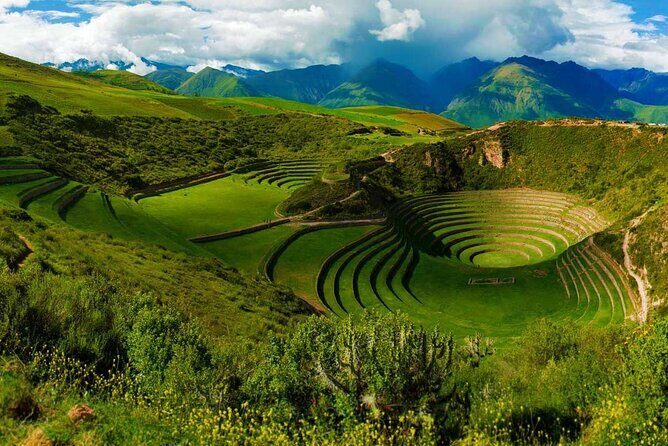
Next comes Moray, reached in roughly a 35-minute drive. Moray is often described as an experimental agricultural laboratory. The idea is that the Incas cultivated different products on separate platforms, watching how crops responded in different conditions.
Even if you don’t remember every detail, Moray is one of those sites that makes you look twice. The terraces don’t feel random—they feel designed. And because the “why” is part of the explanation, the site becomes more than photo ops.
Moray entry is not included, so plan on paying onsite if that’s part of your plan. The tour doesn’t rush past it; you get about 25 minutes here, which is short but usually enough to grasp the layout and take a few good photos.
Maras Salt Mines (Salineras de Maras): working tradition, not just scenery
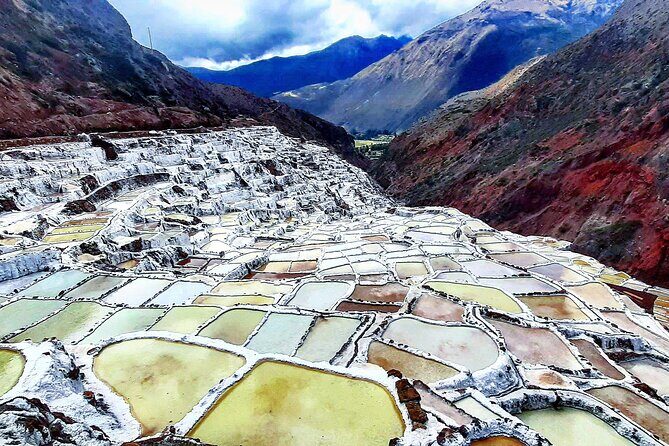
After Moray, you head to Maras, about a 30-minute journey. This is the famous Salt Mines / Salineras de Maras area, and it’s a very different kind of Sacred Valley experience: less ruins, more a living industry.
Here’s the core story you should keep in mind while you walk the views and pools. Salt comes from an ocean trapped in the mountains long ago. Water emerges through a spring, then flows into around 4,200 pools in the Salineras de Maras salt flats. Families in the community of Maras have worked and harvested these pools using an ancient technique for centuries.
That’s what makes Maras special: it’s active. You see the system, you see the scale, and it doesn’t feel like a museum display. There’s also an easy practical tip: wear shoes with grip. You’ll be moving around a bit, and the ground can be uneven.
Salineras de Maras entry is not included—there’s a ticket cost listed as PEN 20 per person—so budget for it. This is one of the add-ons that can change your total, even if the base tour price looks low on paper.
Urubamba lunch: a real break in the schedule
Then it’s on to Urubamba, a roughly 45-minute ride. The tour builds in free time to enjoy your buffet lunch.
What I think works here is that the lunch is scheduled after a heavy first half of the day. You’ll have seen high-elevation sights already, plus terraces and salt pans. Eating at a steady time matters when you’re on a packed itinerary.
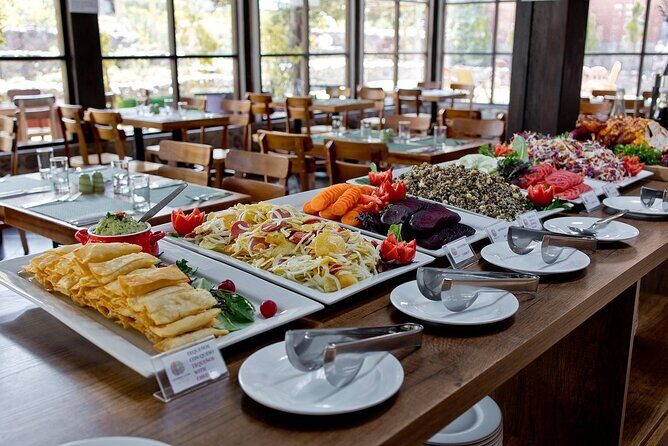
The lunch menu includes a variety of national and typical local dishes, and the experience is meant to keep you comfortable and ready for the afternoon. Also, because it’s a buffet, you can choose what fits your stomach and energy level that day.






Ollantaytambo (2770 m): Inca urban design you can still feel
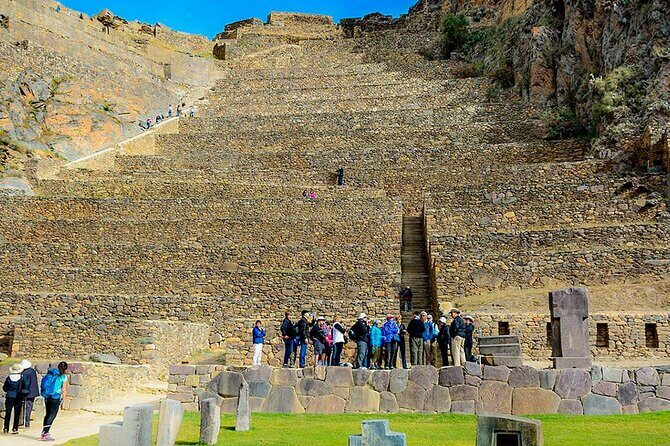
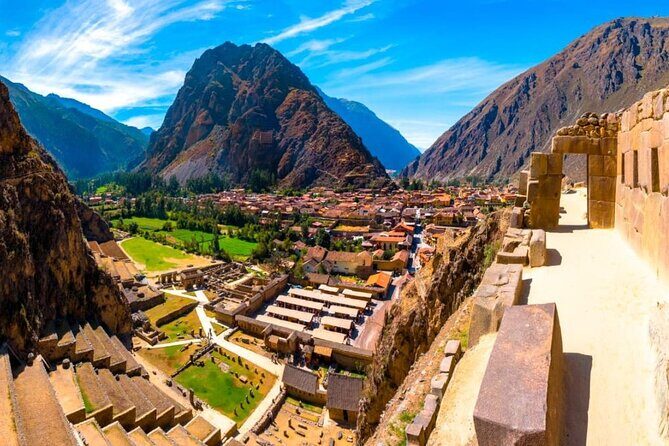
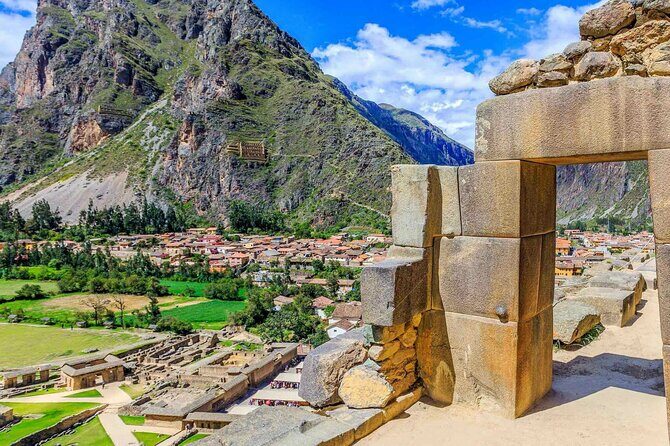
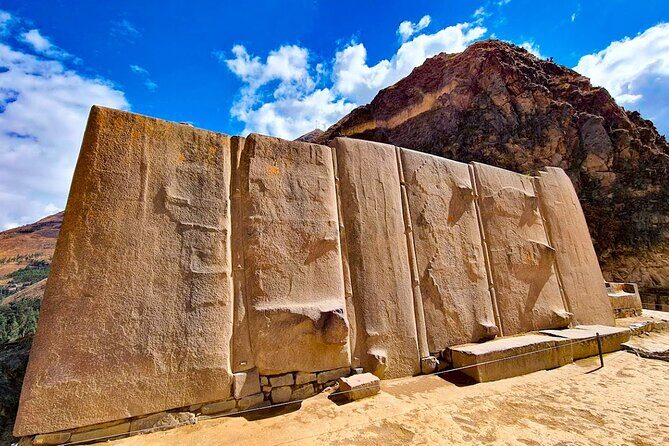
After lunch, you drive about 30 minutes to Ollantaytambo, located at 2,770 meters. Ollantaytambo isn’t just scenic—it’s strategic, both in Inca times and in the Spanish conquest period.
Built in the 15th century by Pachacútec for military and agricultural control, the town later became a point of resistance under Manco Inca during the Spanish conquest. That backstory adds weight when you look at how the area was planned.
This is also a place that retains its Inca urban design, which is why it works so well for short visits. You’re not only reading stones; you’re recognizing the layout. And it’s known as the gateway to Machu Picchu, so if this is your first big Sacred Valley stop, you get a sense of why people link these places in their minds.
Ollantaytambo entry is listed as free in the tour flow, which is always nice on a day that has other paid sites.
Pisac archaeological center + optional craft shopping
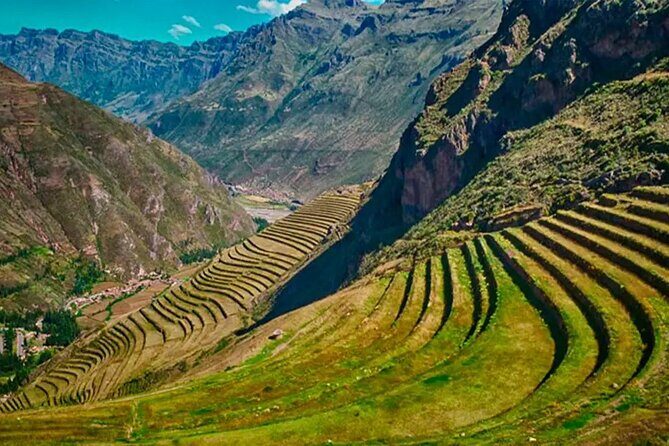
The last major stop is Pisaq, reached after a longer 1 hour 30 minutes of travel. This is a shift in pace: you’ll cover more distance, then spend time at the Parque Arqueológico Pisac.
At the archaeological center, you’ll see houses, aqueducts, roads, bridges, towers, barracks, a cemetery, ceremonial centers, and large agricultural platforms. Pisaq is also known for many towers and viewpoints at different points across the site.
This stop is where good guidance really pays off. With a single loop and limited time, it’s easy to wander and just take pictures. A guide helps you connect what you’re seeing—roads and water systems, then platform farming, then the ceremonial areas—so the site makes sense as a whole.
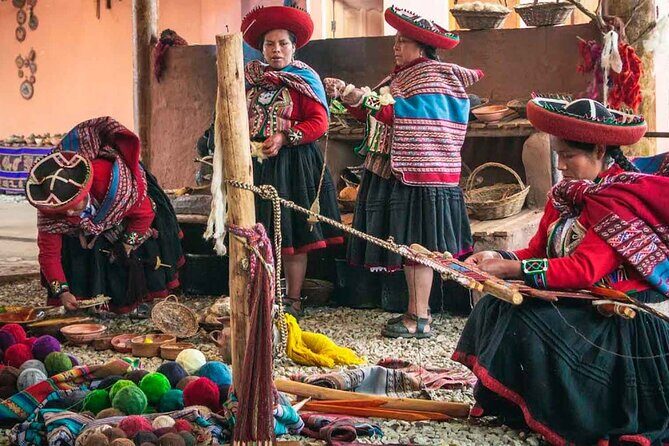
After the archaeological center, there’s a stop in the village of Pisac for craft appreciation and optional purchases. This is your chance to pick up something locally made without forcing it into every other stop.
Pisaq entry is not included, so if you want to go all-in here, account for that ticket before you assume it’s covered.
You return to Cusco around 19:00, and the tour ends near Plaza Mayor.
Price and value: what you actually pay for
The base price is listed at $30.90 per person, and you’re getting a lot for it: hotel pickup, round-trip tourist transport, a bilingual English–Spanish guide, and a buffet lunch. The group size is capped at 19, which usually means fewer delays and easier communication.
But here’s the honest math. The tour also lists extra ticket costs:
- Sacred Valley ticket: PEN 70 per booking
- Salineras de Maras ticket: PEN 20 per person
So the real value depends on whether your total includes those tickets for your specific booking. If you’re going to see Moray, Maras/Salineras, Sacred Valley sites, and Pisac, you should assume add-on tickets are part of the plan.
Still, even with tickets, this style of tour can be great value if:
- you want many key sites in one day,
- you prefer organized timing over driving yourself,
- you value a guide who can explain what you’re looking at.
Guide energy and the human touch (Ronald and Diana)
The reviews associated with this operator put a lot of weight on the team’s attention to detail. In particular, Ronald comes up as the person people communicate with and the one who stays attentive across the week’s schedule. It’s also mentioned that the staff keep you in constant communication with helpful timing and advice.
On the guiding side, Diana gets repeated praise for being passionate and for explaining clearly. That matters on a day like this—when you’re moving quickly from terrace agriculture to salt pools to Inca town planning. You’ll get far more out of the sites if the guide helps you notice patterns instead of just pointing at stones.
In short: you’re not just buying transport and stops. You’re buying interpretation and coordination.
Who this tour is best for (and who should rethink it)
This tour fits best if you:
- have only one day to cover the Sacred Valley,
- want an efficient route without needing to organize transport,
- like history but also want your feet on the ground seeing real places,
- prefer a small group (max 19) and a guided structure.
It’s also well-suited to people comfortable with a moderate physical fitness level, since the day includes time outdoors at altitude and walking in multiple sites.
You might rethink it if:
- you hate early starts or long driving days,
- you want deep, unhurried time at each ruin (this is more “see the whole arc” than “study one site for hours”),
- you’re trying to keep costs ultra-low once tickets are added.
Should you book Cusco Sacred Valley VIP?
I’d book this if you’re in Cusco with limited time and you want a high-value overview that still feels grounded in real places. The blend of pickup + transport + bilingual guidance + lunch makes it easier than self-planning, and the route hits major Sacred Valley anchors without skipping the ones people actually talk about.
If you do book it, come ready for a long day: bring comfortable shoes, plan for extra tickets (Sacred Valley and Salineras especially), and don’t schedule anything tight right after 19:00.
Also, if you’re sensitive to altitude, take the first hours gently. Start with Chinchero, drink water, and pace yourself. This trip moves fast, but it’s not random—your job is just to stay steady.
FAQ
What time does the tour start?
It starts at 6:30 am.
How long is the Sacred Valley VIP tour?
The duration is about 12 hours 30 minutes.
Is pickup included?
Yes. Hotel pickup is included, and the operator contacts you the day before to coordinate the timetable and pickup location.
What language is the guide?
The guide is bilingual English and Spanish.
What’s included in the price?
Included are hotel pickup, round-trip tourist transport, a bilingual English–Spanish professional guide, and a buffet lunch.
Which tickets cost extra?
A Sacred Valley ticket (PEN 70 per booking) and a Salineras de Maras ticket (PEN 20 per person) are not included. Tickets for Moray and Pisac are also listed as not included in the tour flow.
How big is the group?
The tour has a maximum group size of 19 travelers.