REVIEW · CUSCO
Tour Salineras de Maras and Moray in Private with Peru Vip
Book on Viator →Operated by Peru Vip - Day Tours · Bookable on Viator
Moray and Maras hit you fast. You’re looking at Inca ideas for farming and salt, set in dramatic mountain views near Cusco. I love how the day mixes real archaeology with hands-on-looking landscape work you can still picture. I also love the private setup: hotel pickup, your own transport, and a guide who keeps things clear. One thing to plan for: tickets aren’t included, so you’ll pay extra on the spot.
If you care about how the Incas tested food and water, this tour is hard to beat. Moray’s circular terraces show microclimates in a way you can understand in minutes, and Salinas de Maras turns the salt story into something you can actually see operating. I also appreciate the calm pace: about an hour at Moray and about an hour at the salt pans. The only real drawback is time: 5.5 hours is enough for the big sights, but not enough to linger deeply in every corner.
In This Review
- Key things you’ll like about Moray and Salineras de Maras
- Moray: Inca farming experiments in circular terraces
- Salinas de Maras: the 3,000+ salt pools you can actually see working
- The value of a private day: hotel pickup and your own pace
- Tickets and timing: how the costs really work
- Getting the most out of the Moray explanation
- Maras salt ponds: what to watch during your one-hour visit
- Comfort and practical tips for the Cusco route
- Organization quality: when the guide keeps things easy
- Should you book this Moray and Maras private tour?
- FAQ
- How long is the Moray and Salinas de Maras private tour?
- What are the main stops on the tour?
- Is this tour private?
- Are the entrance tickets included?
- Do I get hotel pickup?
- What’s included in the tour besides transportation and the guide?
- Do I need good weather for this experience?
- Can I cancel for free?
Key things you’ll like about Moray and Salineras de Maras

- Private transport with hotel pickup so you waste less time figuring things out
- Moray’s concentric terraces that simulate many microclimates from center to edge
- Salinas de Maras with 3,000+ salt pools and shifting shades of white and brown
- Expert guide time with clear explanations (I saw guides like Marie Antoinette and Wilbert named)
- Safety extras like a first aid kit and an oxygen balloon on board
Moray: Inca farming experiments in circular terraces

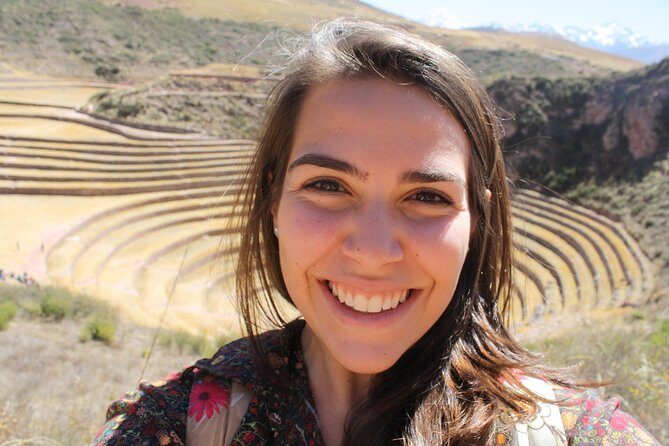
Moray is one of those places where you quickly understand why the Incas were obsessed with food. The site is built as a set of circular platforms that create a temperature gradient—from the higher, warmer center outward to cooler edges. The result is a layout that can mimic many different microclimates, up to an estimated 20 types, just by changing where you stand.
In plain terms, this means Moray was likely a research center. Instead of experimenting with one flat field, they could test what crops might do at different temperatures. That could help predict production not only for the Urubamba Valley but across the wider Inca world.
What I like about visiting Moray with a guide is that the site doesn’t feel like random circles in the dirt. Your guide can connect the terraces to real-world agriculture: why temperature matters, how small changes affect plant behavior, and why the Incas would build something engineered for repeat testing. The key is the explanation—without it, you might just see impressive construction. With it, you see a working idea.
A practical note: your time here is about one hour. That’s enough to walk the main areas, absorb the core concept, and take photos, but you won’t have time to wander forever.
You can also read our reviews of more private tours in Cusco

Salinas de Maras: the 3,000+ salt pools you can actually see working
Then you head to Salinas de Maras, and the feeling changes. Instead of terraces and agriculture, you get a slope covered with small salt ponds, carved into the hillside around the Qoripujio mountain view in the distance.
There are more than 3,000 pools, and they don’t all look the same. You’ll notice different shades of white and brown depending on the salt concentration and the way water sits in each section. It can look almost like a snowfall effect on the slope—except it’s salt, and it’s the product of a long process.
The salt story goes way back. Salt has been collected here since pre-Inca times, but the Inca Empire took over the salt operations between the 12th century and the mid-14th century. The Incas used salt to season and preserve food. They also may have used salt ore in mummification and other religious ceremonies, and the management of individual salt mines was assigned to families from Maras.
What makes this stop special is that it’s not only a monument. It’s a living tradition. You’re seeing the same basic extraction logic passed down through generations, still practiced today.
Your visit is also about one hour, and your guide can point out what to look for as ponds fill and crystallize. One detail I liked from guide-style notes shared by other visitors: someone was told you can take a small amount for personal consumption. If that’s something you’re curious about, simply ask your guide on-site so you know what’s allowed without guessing.
The value of a private day: hotel pickup and your own pace
This is a private tour, which matters more than people expect. You’re not waiting on other groups, and the guide can set a rhythm that fits your questions. With hotel pickup, the day starts smoothly instead of turning into a hunt for a meeting point.
The transport is private too, which is useful in this part of the Cusco area. Even if you’re comfortable getting around, there’s something calming about having a driver and getting to focus on the scenery and stops.
You’ll also get a professional guide in the language you need. That’s a big deal here, because these sites can sound confusing if explanations are vague. Clear language helps you connect the circles of Moray to microclimates, and the salt ponds of Maras to Inca preservation and community management.
On top of that, there’s support gear included: a first aid kit and an oxygen balloon. That’s not something you want to think about, but it is reassuring when you’re in Cusco’s high-altitude region.
Tickets and timing: how the costs really work

The tour price is listed at $123.08 per person, and the included items are practical: pickup, private transportation, and a professional guide, plus time at both sites. There’s also a visit to Salinas de Maras and Moray, with assistance and transfers during the day.
But two tickets are not included:
- Salinas de Maras: 15 soles per person
- Moray: 70 soles per person
That means you should plan for about 85 soles total in site fees on top of the tour price. It’s a small extra step, but it’s the kind of thing that can catch you off guard if you assume everything is bundled.
Timing is also worth understanding. The day runs about 5 hours 30 minutes. With around an hour at each stop, you’ll still spend real time driving between them and moving through entrances. If you’re hoping for extra time in either spot, this format is built for a strong overview, not a slow, wandering day.
Getting the most out of the Moray explanation

Moray can be one of those stops where you either get the point fast or you miss it. The whole idea is that the concentric circular platforms create different temperatures as you move from the center outward. It’s an Inca-style way to test crops without needing multiple separate locations.
When the guide explains it, you start noticing details in the shape and how the layout influences the microclimates. You also get a clearer story about how that could model agricultural production for different parts of the Inca territory.
I’ve seen guide names like Marie Antoinette highlighted for being strong at explaining these kinds of constructions. Another guide name that came up was Wilbert, praised for efficient care. When you’re booking, it’s a good idea to ask your operator what language the guide will use and how they structure explanations, especially if you want a more educational visit.
If you want to make Moray more than photos, come with one question: what crops would benefit from temperature variation? Even if you don’t know farming specifics, asking that helps you connect the terraces to real life.
You can also read our reviews of more tours and experiences in Cusco




Maras salt ponds: what to watch during your one-hour visit

At Salinas de Maras, your job is mostly observational. You’re looking for patterns—how water and salt create different stages of crystallization across ponds. With 3,000+ pools packed along a hillside, your eyes may bounce around at first, but your guide can help you pick out what’s happening and why the colors vary.
The bigger context also matters. Salt isn’t just a product here; it’s part of power, preservation, and community economy. The Inca operation assigned mine management to families from Maras, so it wasn’t only royal control from afar. That detail makes the place feel grounded instead of distant.
Also, this stop often leaves a strong impression because it looks both unusual and intensely practical. It’s not a ruined temple. It’s a system that produces something people use.
If your group includes people who want less theory, this is the stop where the site does a lot of the talking. You can still learn the story, but your eyes do the rest.
Comfort and practical tips for the Cusco route

Even though this is a short day, you should treat it like a high-altitude outing. The inclusion of an oxygen balloon is a clue that the operator is thinking about comfort and readiness.
Here’s what usually helps you feel better on days like this:
- Wear layers. Mountain air can feel cool even when the sun is strong.
- Bring water, and take small breaks. Don’t force big uphill sprints just for photos.
- Use comfortable footwear. You’ll be walking around uneven ground at both stops.
Because weather affects the plan, the experience requires good weather. If the day gets canceled due to poor conditions, you should be ready for a reschedule or a full refund option.
And since Moray and Maras are both outdoors, a cloudy or rainy day can change how comfortable the walk feels. If you’re arriving in Cusco and trying to book this fast, pick a day when you’ve got flexibility.
Organization quality: when the guide keeps things easy

The private format only works if the operation is smooth. In the feedback I saw, the big theme was organization and patient guidance. People described staff as warm, attentive, and punctual, and the guides as patient with questions.
That matters at Moray and Maras because you’re not just moving through sites. You’re trying to understand what you’re seeing. A patient guide makes the explanation fit into your brain fast, instead of turning the day into a rush.
If you want to make the most of that, ask questions early. In the first few minutes at each stop, ask how the guide wants you to view the site—what to focus on, what details matter, and what the main idea is. It’s the quickest way to turn a one-hour visit into a memorable one.
Should you book this Moray and Maras private tour?
I’d book this if you want a focused, high-value day that hits two of the most meaningful Inca-era sites near Cusco without stress. The private setup, hotel pickup, and expert guide time make it worth it, especially if language and explanation matter to you.
You should skip or adjust your expectations if you hate extra ticket costs. Since the Moray (70 soles) and Salinas de Maras (15 soles) fees are separate, you’ll pay more than the headline price. Also, if you want long stays—more than an hour per site—this schedule is built for a strong overview, not slow wandering.
If your goal is to understand how the Incas experimented with agriculture and how they turned salt into a centuries-long tradition, this is a clean match. It’s short, organized, and designed to help you leave with actual understanding, not just photos.
FAQ
How long is the Moray and Salinas de Maras private tour?
The duration is approximately 5 hours 30 minutes.
What are the main stops on the tour?
The tour visits Moray and Salinas de Maras.
Is this tour private?
Yes. It’s a private tour/activity, and only your group participates.
Are the entrance tickets included?
No. Entrance tickets are not included. Salinas de Maras is 15 soles per person, and Moray is 70 soles per person.
Do I get hotel pickup?
Yes, the tour includes pickup at your hotel and private tourist transport.
What’s included in the tour besides transportation and the guide?
It includes permanent assistance and respective transfers, a first aid kit, and an oxygen balloon, plus the tourist visit to Salineras de Maras and Moray.
Do I need good weather for this experience?
Yes. The experience requires good weather. If it’s canceled due to poor weather, you’ll be offered a different date or a full refund.
Can I cancel for free?
Yes, free cancellation is available. You can cancel up to 24 hours in advance for a full refund.