REVIEW · CUSCO
Sacred Valley of the Incas Complete with Lunch Buffet
Book on Viator →Operated by Quillari Magic · Bookable on Viator
A full-day Inca route in one smooth sweep. This Sacred Valley trip makes the long day feel efficient, with private transportation and all entrance tickets included as you move through five major sites tied to everyday Inca life. I love the way the stops connect one theme to the next: Andean farming, salt work, and Inca architecture, all explained by a real guide instead of a lecture you forget by lunch.
I also like the people-side service. The pickup tends to be punctual, the driver is friendly and focused, and the agency’s team stays on top of details in case anything changes. One consideration: this is a long day with an early start, and you’ll want to plan for some walking on uneven ground at sites.
In This Review
- Key things you’ll notice
- How This 12-Hour Sacred Valley Route Works From Cusco
- Chinchero: Textiles First, Then Inca Stonework
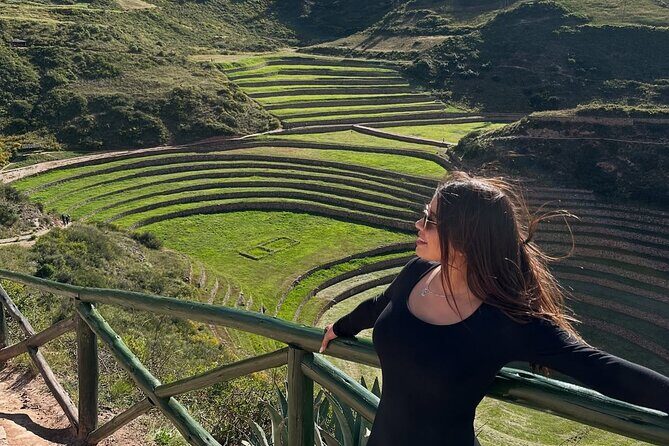
- Moray: Farming “Experiments” in Circular Terraces
- Salinas de Maras: Pink Salt Pools and a Real Craft
- Ollantaytambo: The Inca City You Can Still Walk Through
- Pisac Archaeological Park: Terraces, Irrigation, and Meaning
- Lunch Buffet: Good Value in the Middle of a Long Day
- Price and Value: What You’re Actually Paying For at $65
- Guide, Driver, and Pace: Why Service Quality Matters Here
- Who This Tour Fits Best (and Who Might Want Something Else)
- Should You Book This Sacred Valley Tour?
- FAQ
- What’s the duration of the Sacred Valley tour?
- What time is pickup in Cusco?
- Where does the tour start?
- Where does the tour end?
- Is lunch included?
- Are entrance fees included?
- What’s included in the price besides the sites?
- What language is the tour in?
- How big is the group?
- Can I cancel for a full refund?
Key things you’ll notice
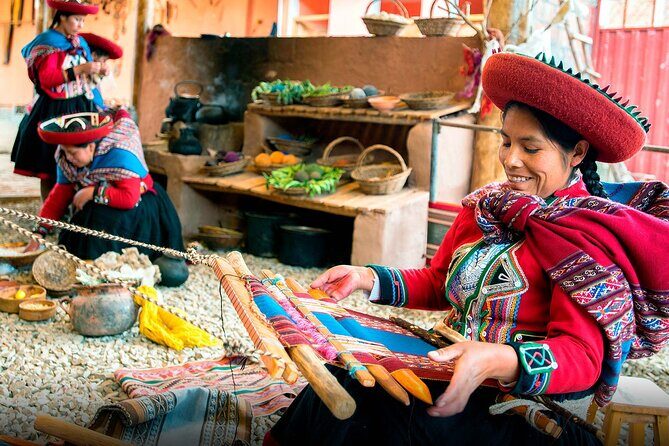
- Chinchero textiles with alpaca wool techniques explained by local women
- Moray’s circular terraces acting like climate “experiments” for crops
- Salinas de Maras pink salt pools with views you’ll actually remember
- Ollantaytambo as a living fortress, including stories tied to battles
- Pisac’s terraces and irrigation system, plus the Andean worldview behind it
- Lunch buffet included, so your budget doesn’t get squeezed midway
How This 12-Hour Sacred Valley Route Works From Cusco
This tour is built for a full day outside Cusco without the stress of organizing anything yourself. You’re picked up from hotels in Cusco’s historic center (around Plaza de Armas, Avenida El Sol, and Plaza Regocijo / Plaza San Francisco). If you’re staying just outside that area, you’ll meet at Plaza Regocijo opposite the main fountain. That single rule keeps the route smooth for everyone.
The pickup window is between 6:30 a.m. and 7:00 a.m., and the whole experience runs about 12 hours. Translation: you should treat it like a day trip with a schedule, not a casual stroll. If you’re sensitive to early mornings or you don’t like being on your feet for chunks of time, plan accordingly with comfy shoes and water.
The group size stays smallish, with a maximum of 18 travelers, which usually helps the guide keep control of timing and makes it easier to ask questions.
You can also read our reviews of more tours and experiences in Cusco

Chinchero: Textiles First, Then Inca Stonework
Chinchero is where the day starts with something human and practical: textiles. You’ll visit a textile interpretation center in the traditional village, and the focus is on how fabrics are made using alpaca wool and techniques handed down from Inca ancestors. This isn’t just a sales stop. It’s a chance to see how materials become identity in the Andes—how clothing connects to family skill, local craft, and geography.
After that textile introduction, you head into the archaeological site of Chinchero. This pairing works well because you get context before you start looking at ruins. When you see the stone structures after learning about fiber traditions, the place feels less like random sightseeing and more like a culture built on work, skill, and adaptation.
What to watch for: this part can involve slow-moving walking and time inside/outside depending on the facility. Dress for cool-to-mild conditions, since Cusco mornings can still feel crisp.
Moray: Farming “Experiments” in Circular Terraces
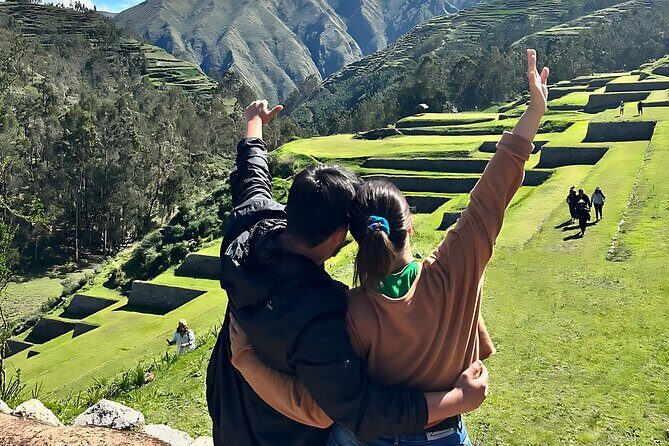
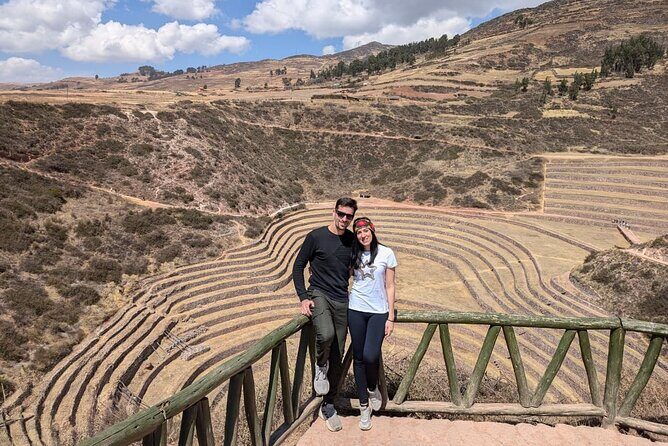
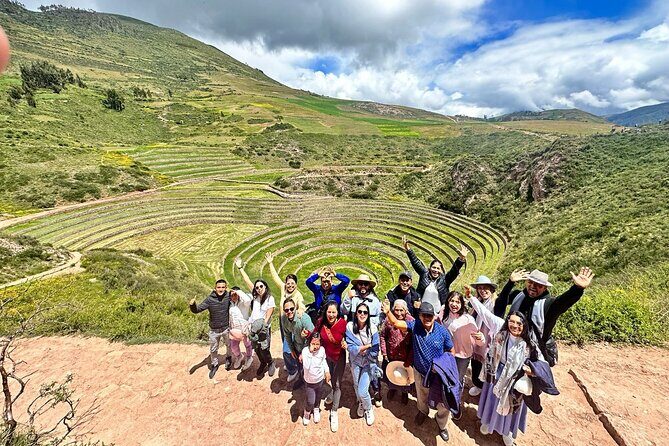
Moray is one of the most interesting stops on the route because it reframes what terraces are for. The site is famous for circular concentric terraces built into natural depressions. Each ring creates a slightly different microclimate, so you can think of Moray as a testing ground for crops.
The guide explains how the Incas used these conditions to experiment with staples like potato, corn, quinoa, and kiwicha, matching crops to altitude changes across the Tahuantinsuyo (the Inca world). This is where your Sacred Valley day stops being “pretty views” and starts becoming a story about food security and smart agriculture.
Time-wise, you’re at Moray for about 25 minutes. That’s enough to walk the viewpoints and understand the concept, but it’s not a slow wander. If you like photographing terraces and reading every sign, you might wish you had more time. Still, the payoff is that Moray gives you a clear idea of how the landscape was engineered for survival.
Salinas de Maras: Pink Salt Pools and a Real Craft
Then you move into the Salineras de Maras, a mountain area packed with more than 4,000 salt pools. This is not an abandoned site. People extract salt here using artisan methods, and that’s why it feels different from many ruins. You’re seeing a job in progress, not just a monument.
You’ll watch the extraction process and you’ll have time for photos with those signature pinkish salt pans against the hills. Even if you’re not a big photographer, it’s one of the most visually distinctive stops on the day. It also gives you a break from the heavier archaeological feel and adds something more everyday to the Incas story.
You’ll spend about 30 minutes here. That’s typically just right for soaking in the views without rushing, but if you’re hoping for a long sit-down break, bring that expectation in because this tour keeps moving.
Ollantaytambo: The Inca City You Can Still Walk Through
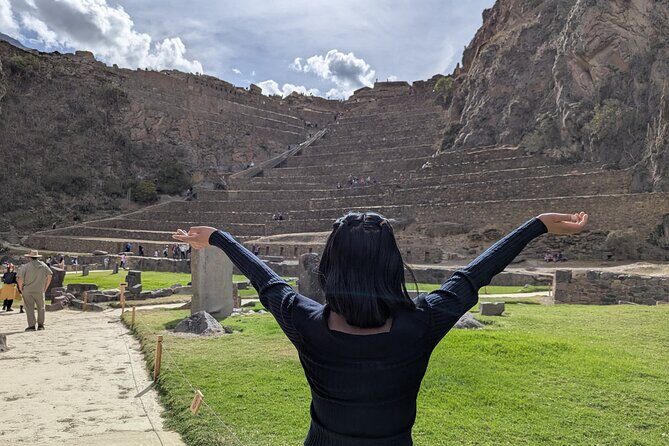
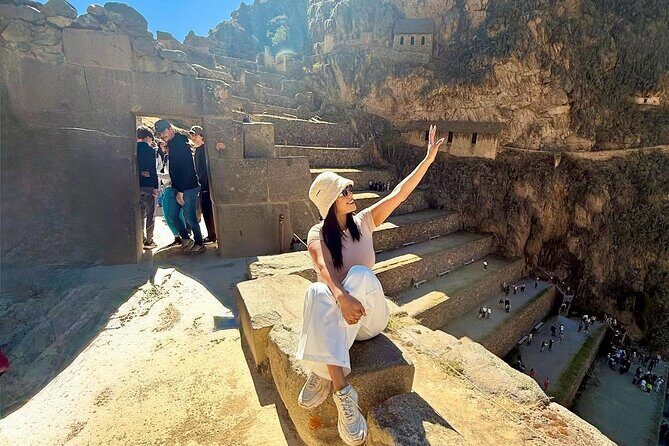
Ollantaytambo is one of the best “wow” moments, mostly because it’s not just ruins in the distance. It’s an Inca city area with monumental terraces and spaces designed for strong function.
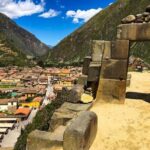
You’ll tour the monumental terraces, the Temple of the Sun, ceremonial baths, and the impressive stonework with perfectly carved walls. The guide also shares the story that this fortress played a role in historic battles against the Spanish conquistadors. That angle matters. It changes how you look at the stones: you’re not only studying design, you’re thinking about defense, control, and how people held ground.
You’re there for about 50 minutes, which is solid for seeing the major points on foot. The ground can be uneven and you’ll be walking more than in a museum-style visit, so shoes with decent grip matter. This stop is also a good time to pace yourself if altitude has started to feel like a factor that morning.
You can also read our reviews of more tours and experiences in Cusco


Pisac Archaeological Park: Terraces, Irrigation, and Meaning

Pisac rounds out the day with a different feel than Ollantaytambo. The Parque Arqueológico Pisac is known for its agricultural terraces and ceremonial structures, plus homes and an Inca irrigation system. Again, the unifying theme shows up: water control, farming, and a designed relationship with the land.
What makes Pisac especially rewarding is how the guide ties it to the Andean worldview—the spiritual importance of agriculture and the way the community understands the place. You’re not only looking at stone lines and stepped fields. You’re learning how people interpreted those patterns as part of a bigger system that included farming, ritual, and survival.
You spend about 30 minutes here. It’s a short window, so you’ll want to stay mentally engaged. If you drift into “just taking photos,” you’ll miss what makes Pisac different from a quick scenic stop.
Lunch Buffet: Good Value in the Middle of a Long Day
Lunch is included, and it’s a buffet. That sounds simple, but on a tour day like this, it matters. You’re away for about 12 hours, you’re moving between sites, and you don’t want to spend your energy hunting food or negotiating meal prices.
In the feedback you can see that the buffet lands well, described as delicious and worth the stop. The practical takeaway for you: treat lunch as a reset. Eat something filling, drink water, and avoid going too heavy on things that will sit badly with stomach-altitude changes.
What’s not included: snacks. If you’re the type who gets hungry between stops, consider carrying a small item of your own. This is especially smart if you tend to feel it more in the morning hours before lunch.
Price and Value: What You’re Actually Paying For at $65
At $65 per person, the headline value is that you’re not just buying transport. You’re also getting private transportation, lunch, and entrance fees included across the main stops.
That combination is where you win. Entrance tickets in the Sacred Valley add up, and the day is structured around specific sites that you’d have trouble mixing efficiently on your own without planning and a driver. Paying for a single package also reduces decision fatigue. You show up, and you’re handled.
The only real “cost” to budget is the time and energy you’re spending. You’re on the move most of the day, so it’s best when you want a full-route introduction to the Sacred Valley rather than a slow, independent exploration.
Guide, Driver, and Pace: Why Service Quality Matters Here
Sacred Valley days can feel chaotic if the logistics are sloppy. This is one reason the service quality stands out. The tour emphasizes punctual pickup and smooth transport with a friendly driver. The guide approach also gets praised as well-trained, and the agency team stays attentive in case anything pops up.
That matters for two reasons:
- Timing: you have a tight sequence of major sites, so delays ripple.
- Understanding: the best stops require explanation. Textiles, terraces, salt extraction, and Inca city design all need context to land.
Pace is steady. You get enough time to see the highlights, but not so much that you’re bored. If you prefer lots of free time at each place, you might find you’re doing more “guided sightseeing” than “choose-your-own-adventure.”
Who This Tour Fits Best (and Who Might Want Something Else)
This works best if you want:
- a structured introduction to Chinchero, Moray, Maras, Ollantaytambo, and Pisac
- a day where entrance fees and lunch are handled
- a small group size (maximum 18 travelers)
- English service
You should consider a different style if:
- you hate early mornings and long days
- you want extensive free time at each stop
- you’re not comfortable walking on uneven outdoor terrain
The tour lists a moderate physical fitness level, so if you’re managing mobility limits, it’s worth thinking through how much walking you can handle at archaeological parks and viewpoints.
Should You Book This Sacred Valley Tour?
I’d book it if you want a smart, efficient Sacred Valley day that covers the big ideas behind the landscape: farming experiments at Moray, salt extraction at Maras, and stone-and-spirit architecture at Ollantaytambo and Pisac. The price feels reasonable because entrances and lunch are included, and the service quality is repeatedly praised through punctual pickup, a good guide, and a smooth driver.
I’d hold off if your ideal vacation is slow and flexible. This is designed as a full circuit, not a pick-and-choose day. If you love planning, you’ll enjoy how little you have to think about.
If you can handle a long day and you’re okay with a guided pace, this is a solid value way to see the Sacred Valley without the hassle.
FAQ
What’s the duration of the Sacred Valley tour?
The tour lasts about 12 hours.
What time is pickup in Cusco?
Pickup is between 6:30 a.m. and 7:00 a.m., depending on your hotel location.
Where does the tour start?
It starts at Plaza Regocijo in Cusco. If you’re not in the permitted historic-center hotel area, the meeting point is Plaza Regocijo opposite the main fountain.
Where does the tour end?
It ends at Calle Plateros (C. Plateros 348-A), a central area near restaurants, cafes, and transport options.
Is lunch included?
Yes. A lunch buffet is included.
Are entrance fees included?
Yes. Entrance tickets are included for the stops.
What’s included in the price besides the sites?
The price includes private transportation and lunch.
What language is the tour in?
The tour is offered in English.
How big is the group?
There is a maximum of 18 travelers.
Can I cancel for a full refund?
Yes. You can cancel up to 24 hours in advance for a full refund. If you cancel less than 24 hours before the start time, the amount paid is not refunded.