Two salt worlds and one crop experiment. This Maras Moray day trip shows a side of the Sacred Valley most people skip, with Salinas de Maras salt wells and Moray’s circular terraces on the same clock. I like that it’s kept small, so the stops feel more like a guided visit than a cattle call.
One thing to plan for: the entrance fee and meals are extra. You’ll pay PEN 90 per person for entry and you’ll want budgeting for food (PEN 70 per person isn’t included).
In This Review
- Key things I’d circle before you go
- Where Maras and Moray fit into the Sacred Valley story
- Getting there with a punctual, small-group van
- Salinas de Maras: 3,600+ salt wells and the slow work of evaporation
- Moray terraces: a crop lab built from irrigation and microclimates
- Market stops and small cultural extras that make the day feel local
- Price and what value really looks like (PEN 90, PEN 70, plus your time)
- The pace, the timing, and what to expect during the 6.5 hours
- Who should book the Maras Moray day trip
- Should you book it?
- FAQ
- How much is the Maras Moray day trip?
- How long is the tour?
- What’s included in the price?
- What’s not included?
- Do I need to buy an admission ticket?
- What time does the tour start?
- Where does the tour start?
- Is this tour refundable?
Key things I’d circle before you go
- Small-group feel (max 10 travelers) for easier questions and a calmer pace
- Hotel/central pickup and drop-off so you’re not hunting a meeting point
- Salinas de Maras salt pans with thousands of shallow pools and crystallized salt after evaporation
- Moray’s irrigation-built terraces used as a crop “lab” for different microclimates
- Bilingual guiding in English and Spanish, including time for Q&A
- Market and shop stops that explain things like alpaca yarn dyeing and salt products
Where Maras and Moray fit into the Sacred Valley story
If you’ve only seen Cusco-area ruins and scenic viewpoints, this day trip gives you a different kind of wow. Here, the “wow” is practical. It’s about how people made food, made salt, and used the mountains’ quirks to their advantage.
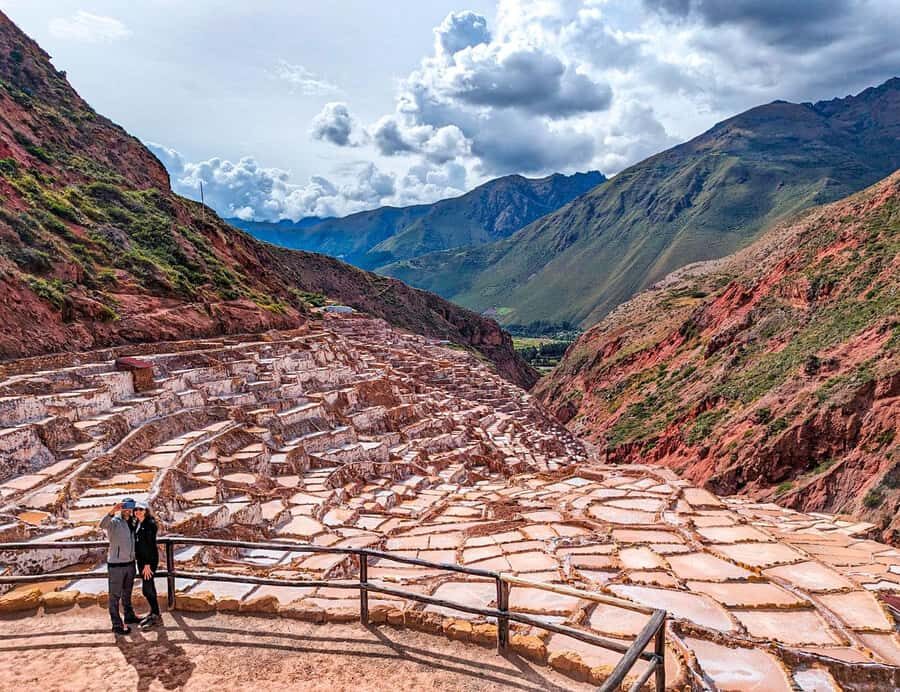
Salinas de Maras is about salt—lots of it. Maras sits high in the Andes, and the salt wells are carved into the mountainside. You get to see thousands of shallow pools fed by saltwater, then left to evaporate until salt crystallizes. The process has been practiced for more than 500 years, and the salt pans are often linked to earlier Andean work (the Wari are believed to have built the first version), while later generations—including the Inca—expanded the operation for economic gain.
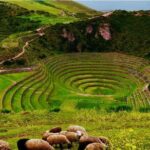
Then comes Moray, which flips the theme from mining to farming science. Moray’s circular terraces look like an Inca amphitheater, but the real story is that they’re an agricultural system. The terraces use retaining walls and an irrigation setup, and they create different microclimates at different depths. Think of it as a crop experiment station—built to grow different things by nudging temperature and conditions rather than relying only on one flat growing area.
You can also read our reviews of more tours and experiences in Cusco

Getting there with a punctual, small-group van
This is a true day trip: about 6 hours 30 minutes total, starting at 8:30 am. The operator runs from the Heidi Travel EIRL office (Plateros 324, Cusco 08000), with pickup/drop-off so you’re not forced to arrive at some mysterious corner on your own.
I really appreciate the small size here. The tour is listed with a maximum of 10 travelers, and the vehicle used is sized for a small group (one review described a comfortable van for about 15 seats). Either way, you won’t be stuck watching a guide from the back row while everyone else streams past.
Also, be ready to move on schedule. One review called out punctual pickup and a strict approach once you get your “free time” back in the van. So if you’re the type who runs on Cusco time with extra snack breaks, this is your reminder to show up when they ask.
Salinas de Maras: 3,600+ salt wells and the slow work of evaporation
Salinas de Maras is one of those places where the views are impressive, but the real interest is the system. You’ll see a large hillside covered with over 3,600 salt wells. Each one is basically a shallow pool that gets filled with saltwater, then left to evaporate. As the water disappears, salt remains and can be harvested.
What I’d focus on while you’re there:
- How the pools are arranged against the mountain slope
- How evaporation changes the color and surface texture as time passes
- How this isn’t an abandoned postcard scene—it’s tied to ongoing production and local knowledge
You also get historical context: it’s believed the salt pans were originally constructed by the Wari civilisation, which predates the Inca. Later, the Inca expanded the salt pans further up the mountainside to capture the economic value of salt. That mix of older Andean roots plus later expansion helps you see the pans as an evolving enterprise, not a single “moment” in time.
One practical tip: bring a little extra patience for walking and viewpoints. You’ll likely do short stretches to see the best angles, but this isn’t a museum-floor experience.
Moray terraces: a crop lab built from irrigation and microclimates
After Maras, you’ll head to Moray, a farming site about 4.5 miles from the town of Maras and around 39 miles from Cusco. The main feature is the set of circular terraces that descend down to around 330 feet deep, supported by retaining walls and connected by an irrigation system.
Here’s the concept that makes Moray more than pretty circles in the hills: it works like a crop lab. The terraces create different microclimates at different levels, so farmers could test or grow crops under varied conditions. You’re not just touring a ruin—you’re seeing a designed environment where temperature and growing conditions can shift by location and depth.
When I think about why this matters for you as a visitor, it’s because Moray rewards the “slow look.” If you rush, you’ll miss the logic. If you take a few minutes at each viewing angle, you start to notice how the terraces are built as an engineered system: water control, walls that shape levels, and an arrangement that produces multiple conditions in one place.
One note: admission is extra here. The entrance ticket is listed at PEN 90 per person, so budget for that before you go.
Market stops and small cultural extras that make the day feel local
Not every day trip in the Cusco area includes meaningful cultural context. This one often adds stops that help the day connect to everyday Andean life—especially around textiles and salt products.
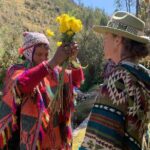
In one experience, the group paused at a local market where women demonstrated how alpaca yarn is cleaned and dyed, including natural dyes. That matters because it gives you a reason to look at the finished textiles with more respect. You can see the effort behind color and texture instead of treating it like a generic souvenir stall.
You may also stop at a shop with items from the salt mines. It’s a straightforward add-on, but it helps explain how salt harvesting turns into products—something that feels more grounded when you’ve just seen the wells in action.
These are optional-feeling extras, but they fit the theme: how raw materials become useful goods. If you like to shop, this is a much better time to browse. You’ll understand what you’re looking at.


Price and what value really looks like (PEN 90, PEN 70, plus your time)
At $59 per person, this isn’t a budget rock-bottom tour, but it also isn’t inflated for the sake of it. Here’s what you get for that price:
- Transport for the day
- A bilingual guide
- The structure of the day trip with pickup/drop-off
What you don’t get:
- Admission ticket: PEN 90 per person
- Meals: PEN 70 per person
So the real “all-in” cost depends on how you handle food. If you plan to eat lunch with the group, treat PEN 70 per person as part of your total budget. If you skip meals and buy your own food later, you can lower that portion—but that’s your call.
The value angle I like most is the small-group pace. With fewer people, you’re more likely to actually hear the explanation at each stop and have time for questions, rather than standing there while the van driver is counting down minutes.
For who this is worth it: you’ll get the best value if you’re the type who likes context—how and why things work—rather than just collecting photos.
The pace, the timing, and what to expect during the 6.5 hours
The tour runs for about 6 hours 30 minutes starting at 8:30 am. That means you’ll be back in Cusco by the afternoon. The overall flow makes sense: first salt pans, then Moray, with time for educational stops on the way.
Expect:
- Morning departure in Cusco conditions (plan for altitude and cool air)
- Walking between viewpoint areas, plus time for photos and explanations
- A day that blends scenery with practical history—salt production in Maras, then a farming system in Moray
Because the guide is bilingual (English and Spanish), you’ll likely spend less time trying to piece things together yourself. That’s a real comfort, especially in places where the details matter.
Also, confirmation is received at booking. And the tour is non-refundable and can’t be changed once booked. If your plans are fragile, this is worth considering before you commit.
Who should book the Maras Moray day trip
This is a strong match if:
- You want a break from the most common Cusco routine and see the Sacred Valley’s working side
- You like learning how people engineered solutions—like salt evaporation and irrigation-based terraces
- You’d enjoy a small-group format with real time for explanations
- You’re interested in textiles and salt products because you’ll likely get extra context at market/shop stops
It may be less ideal if:
- You only want ruins and large crowd sites, not working agriculture and production systems
- You hate paying add-on entry fees (PEN 90) and prefer fully inclusive pricing
- You need lots of flexibility once the day starts, since schedules are treated seriously
Should you book it?
I think you should, if your goal is to understand the Sacred Valley beyond the usual photo stops. The combination of Salinas de Maras (a real salt-making system) and Moray (a designed microclimate farm) is exactly the kind of day trip that feels like you learned something useful, not just something pretty.
Book it especially if you like small-group tours with a bilingual guide, and if you’re okay planning for extra costs like the admission ticket and lunch.
If you’re undecided, here’s the simple test: do you want “how it works” stories? If yes, this day trip fits your style.
FAQ
How much is the Maras Moray day trip?
It costs $59.00 per person.
How long is the tour?
The duration is about 6 hours 30 minutes.
What’s included in the price?
Transport and a bilingual guide are included.
What’s not included?
Entrance tickets (PEN 90.00 per person) and meals (PEN 70.00 per person) are not included.
Do I need to buy an admission ticket?
Yes. The entrance ticket is PEN 90.00 per person.
What time does the tour start?
The start time is 8:30 am.
Where does the tour start?
It starts at HEIDI TRAVEL EIRLC., Plateros 324, Cusco 08000, Peru.
Is this tour refundable?
No. This experience is non-refundable and cannot be changed for any reason.