REVIEW · CUSCO
Maras and Moray salt mines | Half day |
Book on Viator →Operated by Perú Destino Seguro · Bookable on Viator
Salt terraces in the Andes look unreal. This half-day route ties together three very different parts of the Sacred Valley story: a stop in Chinchero to see camelid-fiber coloring, the stepped agricultural bowl of Moray, and the mind-bending grid of salt pools at Maras. I especially liked how the day is structured for first-timers, with a guide who gives clear context, plus round-trip transfers that keep you from worrying about timing and logistics in Cusco.
I also like the built-in value of hitting two major highlights in one go. At Moray you get those famous circular terraces that feel like an ancient experiment in farming. Then at Maras you can actually stand close to more than 3,000 salt deposits and see the pools spread out like a patterned hillside.
One possible drawback: entrance tickets for the sites are not included, and the tour needs good weather. If clouds or rain roll in, expect delays or a change in plans.
In This Review
- Key things to know before you go
- Why Moray and Maras fit perfectly into a half-day
- Morning pickup in Cusco: the part you’ll want to get right
- Chinchero artisan house stop: camelid fiber color you can actually see
- Moray’s stepped terraces: why the “farm laboratory” idea matters
- Maras salt mines: the scale of 3,000 salt deposits
- Timing and logistics on a 6-hour day
- Price and value: what $26.09 really buys you
- How to get great photos without turning it into a marathon
- Who should book this tour (and who might want something else)
- A quick word on trust and tour realism
- Should you book the Maras and Moray half-day tour?
- FAQ
- What time does the tour start in Cusco?
- Where do you meet if my hotel is outside the Historic Center?
- How long is the tour?
- What’s included in the price?
- Are entrance tickets included for Moray or Maras?
- Is the guide provided in English?
- How many people are in the group?
- What’s the cancellation policy?
- Is the tour dependent on weather?
Key things to know before you go
- Moray’s terraces are the point: you’ll spend meaningful time at the stepped circular “agricultural laboratory.”
- Maras salt pools go on for a lot: the scale is what shocks you in person, not just the photos.
- Chinchero adds real texture: the camelid-fiber coloring stop helps explain why the Andes made color such a big deal.
- Pickup is from central Cusco: hotels in the Historic Center are collected directly; outside that area uses Plazoleta Regocijo.
- Small-ish group: max 16 travelers makes it easier to hear the guide and move as a unit.
- English guide, mobile ticket: you’ll get a ticket on your phone and explanations in English.
Why Moray and Maras fit perfectly into a half-day
If you only have limited time in Cusco, this is one of those rare tours that delivers two “wow” stops without dragging you through an entire day of driving. You start in the morning, head out toward the Sacred Valley, and come back to Cusco by mid-afternoon—around 3:00 p.m. by the tour’s schedule.
What makes this route especially interesting is the contrast between the stops. Chinchero is about craft and materials, Moray is about ancient experimentation with agriculture, and Maras is about salt—one of those small, practical resources that shaped local life for centuries. When you see them in sequence, the day feels less like a checklist and more like a story you can walk through.
You can also read our reviews of more tours and experiences in Cusco.



Morning pickup in Cusco: the part you’ll want to get right
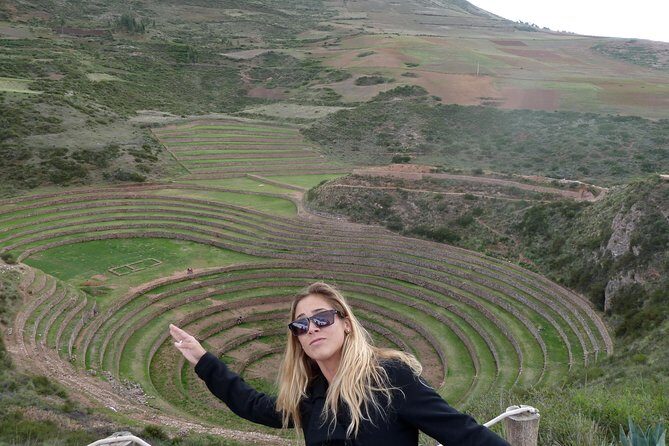
The tour begins with pickup between 8:00 and 8:30 a.m., with the formal start time listed as 8:30 a.m. You’re collected from your hotel if it’s located in Cusco’s Historic Center. If your hotel is outside the pickup range, the meeting point becomes Plazoleta Regocijo.
This matters because the tour is time-tight: Moray and Maras both require driving time plus walking and viewpoints. If you’re staying just outside the Historic Center, plan to arrive early at Plazoleta Regocijo so you don’t become the person holding up the group.
Another practical point: the tour includes round-trip tourist bus transfer and a specialized guide, so you’re not on your own for navigation or interpretation. That’s a big deal on day trips, especially when you’re juggling altitude and morning fatigue.
Chinchero artisan house stop: camelid fiber color you can actually see
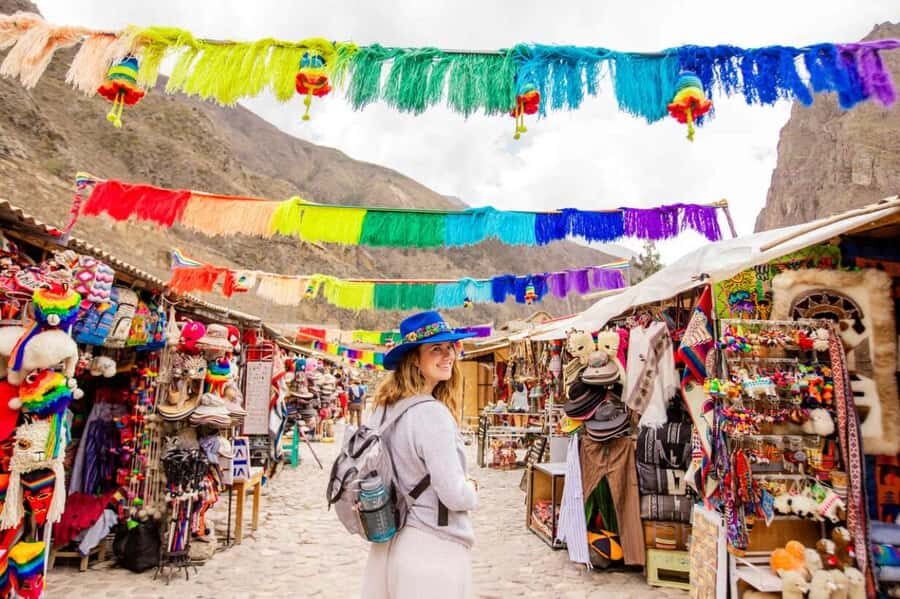
Before Moray, you’ll reach Chinchero. The schedule includes a visit to an artisan house where you can observe the pigmentation process related to camelid fiber—it’s basically about how color gets made and transferred onto textiles.
Even if you’re not shopping, this stop adds value because it explains what your eyes will see later in the region. The Andes are full of naturally dyed color, and the textile tradition is not just decoration. It’s tied to materials, work, and local knowledge.
What I like here is that it’s short enough to stay energetic, but hands-on in feel. You’re not just staring at a museum display—you’re getting a behind-the-scenes look at how fibers become dyed.
Moray’s stepped terraces: why the “farm laboratory” idea matters
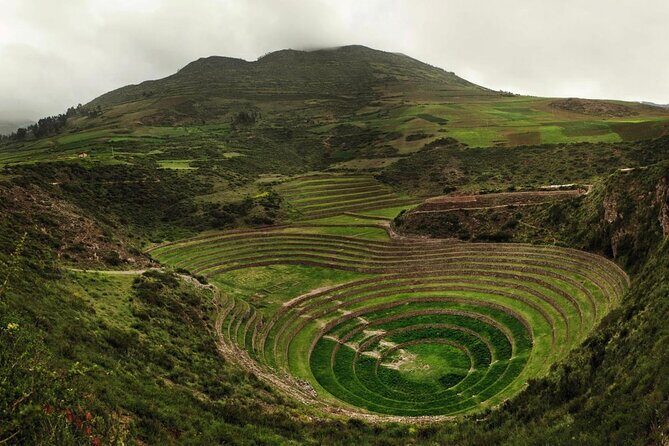
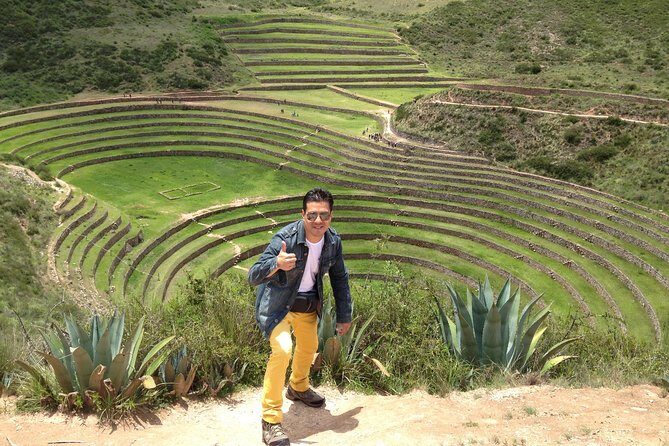
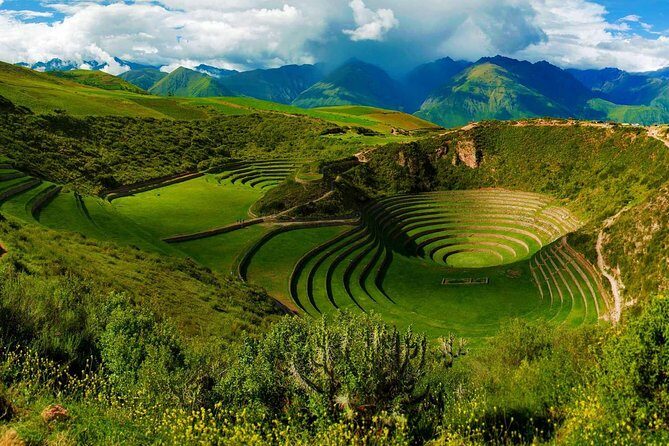
Moray is the second stop and usually the one that pulls you in immediately. The site features stepped circular terraces, and the accepted explanation is that the Incas used the layout as an experimental agricultural setting.
In real life, Moray is impressive because the terraces read visually as an engineering project. The circular design makes it feel purposeful, like someone planned for different conditions within the same enclosed space. You’ll get a feel for how the place could test variables without needing modern lab equipment.
The downside to Moray is also the reality of any archaeological site: you’ll be walking between vantage points on uneven ground, and views can be limited by weather. If it’s foggy or wet, you’ll want patience. If the weather is good, the stepped forms are much easier to understand just by looking around.
Maras salt mines: the scale of 3,000 salt deposits
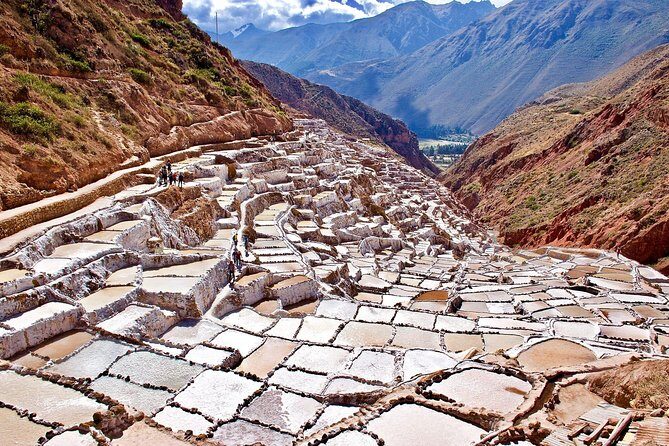
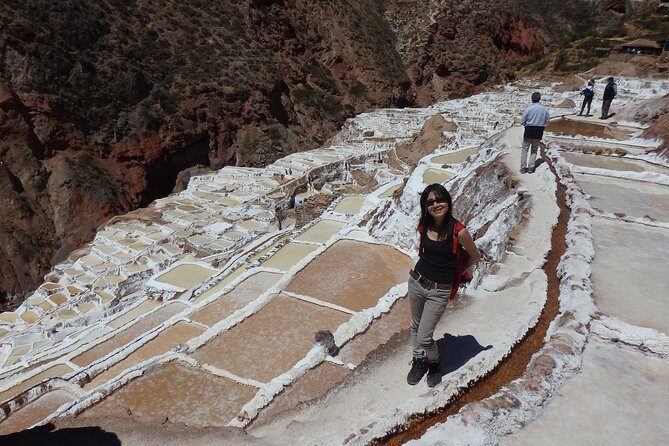
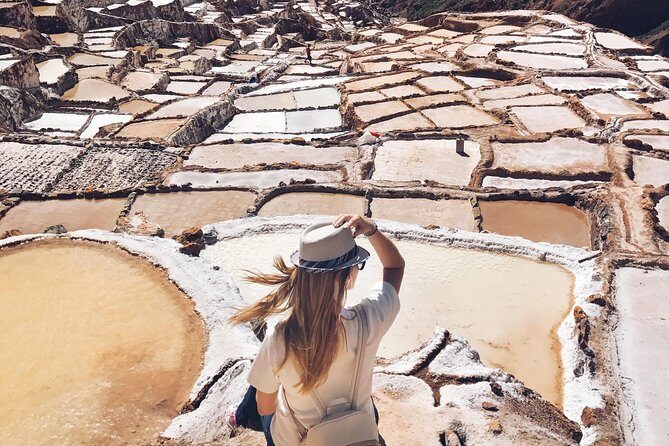
Then comes the part most people remember: Maras Salt Mines (often called Maras salt mines or Salineras de Maras). The schedule calls out more than 3,000 salt deposits, and that number starts to make sense only when you’re standing there.
What surprises me about Maras is how many different pools you can see at once. From the right angles, the hillside turns into a patchwork grid, and salt tones can vary depending on conditions. It’s not just a single view—it’s a whole series of views as you move and look across the slope.
The terraces and water channels are also visually satisfying. You can spot how the salt works as a system, not a random collection of basins. That makes the site feel more “real” than a photo could show.
Practical note: Maras is an outdoor experience, so your comfort depends heavily on the day’s conditions. Good visibility makes it far more enjoyable. If you’re sensitive to sun, cold mornings, or wind, dress in layers.






Timing and logistics on a 6-hour day
This tour runs about 6 hours (approx.), with pickup in the morning and return to Cusco around 3:00 p.m. That time window is the reason it works for a lot of visitors. You still get the rest of the afternoon, which is helpful if you want to do another activity in Cusco or just need downtime after morning altitude.
Group size is kept to a maximum of 16 travelers, which is a sweet spot for day trips. It’s large enough to feel social, but small enough that your guide can keep an eye on the group and you can hear explanations without shouting over chaos.
You’ll also have a mobile ticket, which is convenient because you’re not scrambling for paper documents. If you’re the kind of traveler who likes to keep things simple, that’s a small quality-of-life win.
Price and value: what $26.09 really buys you
At $26.09 per person, the pricing is relatively low for a day trip that includes:
- Pickup from your hotel in central Cusco
- A round-trip tourist bus transfer
- A specialized guide
- English interpretation
What’s not included is just as important: entrance ticket to the parks (and other items not detailed). That means you should budget extra on top of the tour price so you’re not caught off guard when you reach the sites.
Still, I think the value is solid if you want both Moray and Maras in one morning-and-early-afternoon chunk. If you tried to DIY both stops, the driving, timing, and interpretation effort would add up fast—especially if you’re new to the area. Here, you pay for convenience and context.
How to get great photos without turning it into a marathon
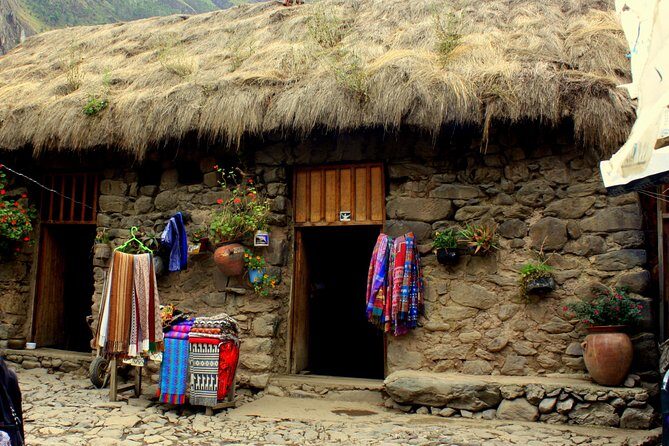
You’ll get photos at every stop, but the key is pacing. Here are the practical moves I’d make on this route:
- Chinchero: take a few close shots first, then widen your framing so you capture the setting, not just textiles.
- Moray: step to different edges for the circular terrace view. The structure is easiest to understand when you can compare angles.
- Maras: move slowly along viewpoint areas. You’ll get better variety by changing your position than by only zooming in.
Also, remember it’s a half-day, so don’t spend the entire time in one spot. When you keep moving, the sites reveal themselves in layers—especially Maras.
Who should book this tour (and who might want something else)
This is a great fit if:
- You want Moray and Maras without committing to a full-day schedule
- You appreciate guided explanations, especially for archaeological and cultural context
- You’re traveling in a small group size and want a smoother experience than larger buses
You might consider a different plan if:
- You’re planning multiple tight connections the same day and can’t absorb minor delays (outdoor timing and weather can affect how smooth the day feels)
- You don’t like adding a craft stop like Chinchero. It’s part of the value here, but it may not be your top priority.
A quick word on trust and tour realism
One thing I always suggest for Cusco-area day tours: keep expectations aligned with what the schedule is meant to do. This route is built around three main stops, and the driving time is part of the deal. If you’re stacking other excursions or trying to fit in extra stops, ask the operator ahead of time what’s realistic within the day’s timing.
Also, since park entrance tickets aren’t included, I’d handle that budget early. It keeps the day calmer when you arrive.
Should you book the Maras and Moray half-day tour?
I’d book it if you want a high-impact Sacred Valley day with minimal stress. Moray gives you that instantly recognizable “ancient experiment” feeling, and Maras delivers the scale you can’t fully grasp from photos. Add in the Chinchero artisan stop, and you get more than two scenic stops—you get a better sense of how people in the region worked with land, materials, and resources.
The main “wait, what?” item is the entrance tickets not being included. If you’re comfortable paying those site fees and you’re going on a day with decent weather, this is a strong use of half a day in Cusco.
If your schedule is tight and you want clear structure, pickup, transfers, and a guide all handled for you, this is the kind of tour that makes Cusco feel efficient without feeling rushed.
FAQ
What time does the tour start in Cusco?
Pickup begins between 8:00 and 8:30 a.m., and the start time is listed as 8:30 a.m.
Where do you meet if my hotel is outside the Historic Center?
If your hotel is outside the established pickup range, the meeting point is Plazoleta Regocijo.
How long is the tour?
It’s approximately 6 hours, and you return to Cusco around 3:00 p.m.
What’s included in the price?
Pickup from your hotel in Cusco, round-trip tourist bus transfer, and a specialized guide are included.
Are entrance tickets included for Moray or Maras?
No. Entrance tickets to the parks are not included.
Is the guide provided in English?
Yes, the tour is offered in English.
How many people are in the group?
The maximum group size is 16 travelers.
What’s the cancellation policy?
You can cancel up to 24 hours in advance for a full refund.
Is the tour dependent on weather?
Yes, it requires good weather, and if it’s canceled due to poor weather you’ll be offered a different date or a full refund.