REVIEW · CUSCO
From Cusco: Half-Day Zip Line Adventure
Book on GetYourGuide →Operated by PVTravel · Bookable on GetYourGuide
One word: altitude. This half-day Cusco zip line takes you from town to the Sacred Valley viewpoints fast, then lets you fly over the Pj’acchayoc canyon with four different cable runs. I love that the ride is paced for both confidence and thrill, starting soft and building to the deepest, best-view section. I also like the setting: Racchi and the Chinchero plateau give you wide views toward snowy Chicón and Pitusiray. The one drawback to weigh is simple: it’s not for everyone, and you should plan for the rules around heart issues, pregnancy, and mobility.
You’ll start with hotel pickup in Cusco, then transfer about 50 minutes toward Racchi. Once you’re suited up, the actual zip line time is about 1 hour 30 minutes, and you’ll be back for a drop-off near Plaza Regocijo, about two blocks from the main square area. The whole thing runs around 3 hours total, which is perfect if you want real adrenaline without losing your whole day.
In This Review
- Key Points You’ll Care About
- Cusco Zip Line From Hotel Pickup: The Part That Sets the Tone
- From Racchi to the Viewpoints: What You’re Really Flying Over
- Four Cables, Four Moods: The Real Strategy Behind the Zip Line
- What the Rules and Gear Mean for Your Comfort
- How Much It Costs (and When $85 Is Good Value)
- Who Should Book This Zip Line and Who Should Skip It
- Tips for Your Best Ride (No Guesswork Needed)
- Should You Book the Cusco Half-Day Zip Line Adventure?
- FAQ
- How long is the Cusco half-day zip line tour?
- How long are you actually on the zip line?
- Where do you get picked up in Cusco?
- Where does the tour drop you off afterward?
- What cables are included?
- Do you get an English or Spanish guide?
- What’s the group size?
- Are meals included?
- Is this tour suitable for everyone?
Key Points You’ll Care About
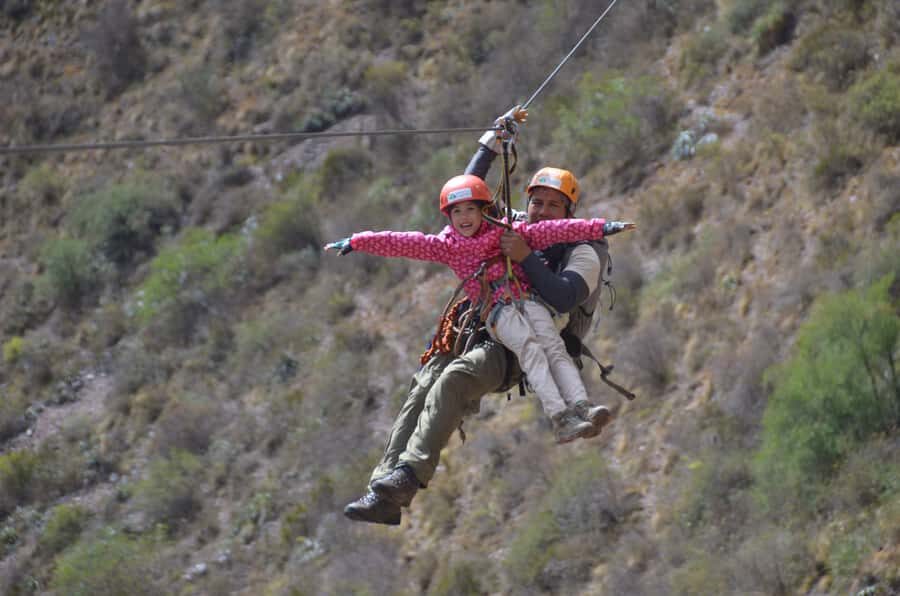
- Four cables with different speeds so you get a natural progression from easy to intense.
- Long-distance first cable gives you time to learn your body position before it gets fast.
- Deep canyon views on the final run, including the Sacred Valley and surrounding mountains.
- Small group (up to 10) keeps the experience from feeling rushed.
- Pickup and drop-off close to the center makes the logistics easier on a Cusco schedule.
- Shoes matter: sandals or flip-flops are not allowed.
Cusco Zip Line From Hotel Pickup: The Part That Sets the Tone
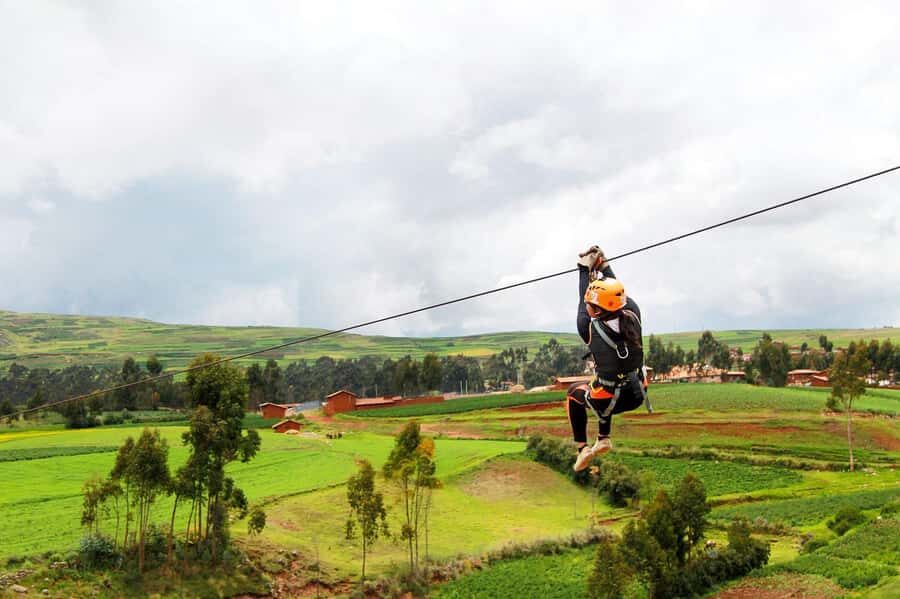
This is the kind of tour that starts before you ever clip in. You’re picked up from your accommodation in Cusco city center, then you drive around 50 minutes to the Racchi area. That transfer matters because it gets you out into the viewpoints and canyon terrain, not just into a generic activity space.
The timing also helps your nerves. Cusco is already high, and zip lines add a second dose of adrenaline. Arriving already geared up and with a clear plan means you spend less time figuring out what’s next and more time watching where you’ll land. The tour also runs about 3 hours total, with roughly 1 hour 30 minutes for the zip line action, so you get a full experience without the “half-day that turns into a full-day” feeling.
If you’re trying to fit this around other Cusco plans (like a market run or a museum visit), that 3-hour structure is a strong point. It’s also easier to commit when you know the finish includes dropping you at Plaza Regocijo, close enough that you’re not stuck at the edge of town with transport questions.
You can also read our reviews of more tours and experiences in Cusco


From Racchi to the Viewpoints: What You’re Really Flying Over
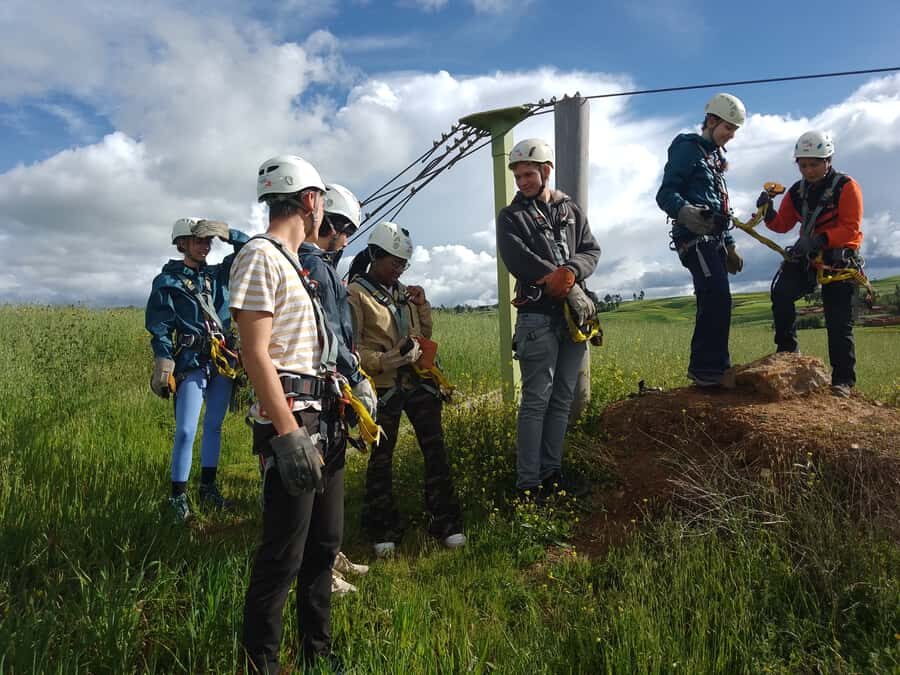
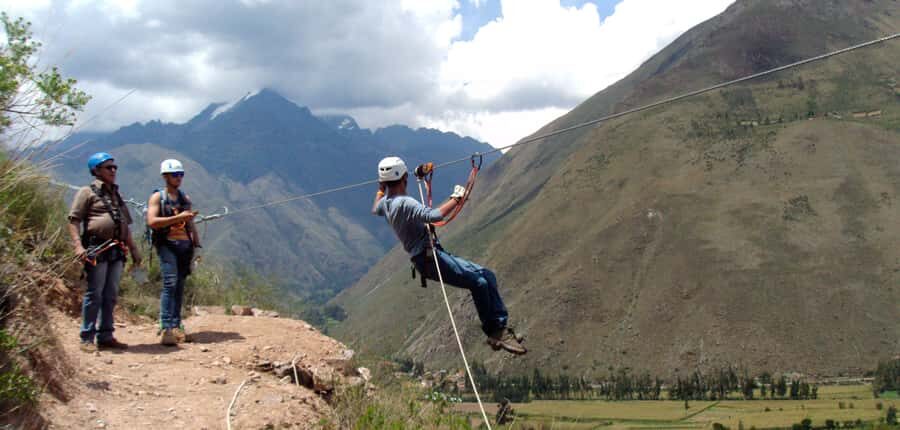
Once you reach the launch area, you’re in a part of the Cusco region where the scenery is the main event even before you fly. The route and platform points are built around views from the Chinchero plateau area and the Pj’acchayoc canyon region.
You’ll look out over a stretch that connects the Sacred Valley of the Incas with dramatic features like snowy Chicón and Pitusiray. And there’s an added layer beyond scenery: the Racchi community and its living culture are part of the experience context. You’re not just doing a thrill ride in the middle of nowhere—you’re doing it in a working landscape people call home.
Here’s the practical value: these viewpoints help you understand what you’re seeing in motion. When you go from cable to cable, you’re not guessing. You’ll be able to spot the canyon and valley layout as your launch and landing points change, which makes the whole activity feel more meaningful than a single long flight.
One more thing I’d keep in mind: canyon geography can make heights feel closer or more intense depending on where the cables cut across the terrain. So if you’re the type who gets nervous at first glance, take a moment at the platform. Look down, identify the landing area, then focus on the next cable—don’t stare at the depth too long.
Four Cables, Four Moods: The Real Strategy Behind the Zip Line
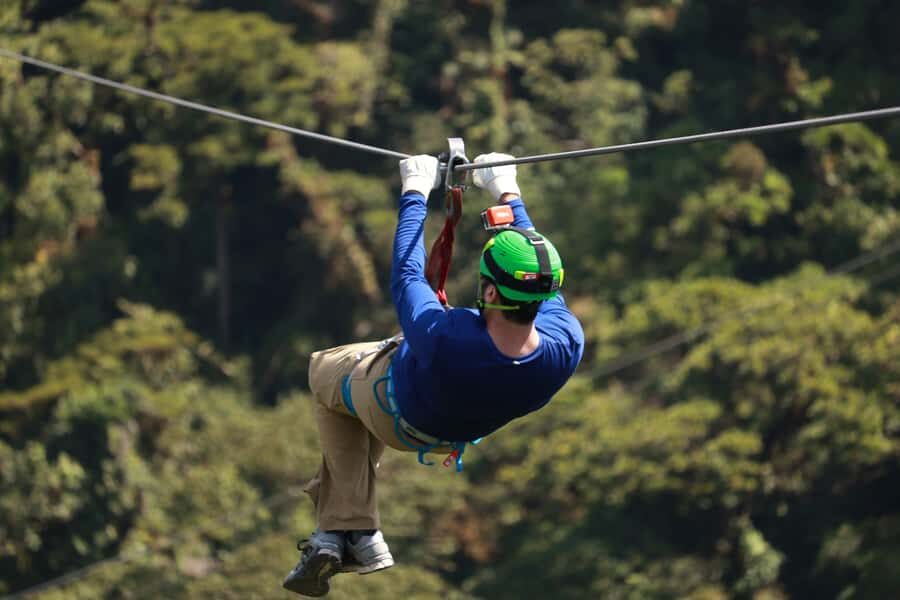
The best part of this tour isn’t just that it has four cables. It’s that they’re designed to change how the ride feels as you progress.
Cable 1: slower and more gentle. This first run is meant to help you gain confidence and get familiar with how it feels to glide and control your body. If you’re worried about freezing up, this matters. You’re not thrown into the wildest run first—you get a warm-up to build trust.
Cable 2: faster. The second wire ramps up speed so you can really imagine the sensation of flying. This is where your brain starts to shift from learning mode to thrill mode. If you want the moment where it stops feeling like a test and starts feeling like fun, this is likely where you’ll get it.
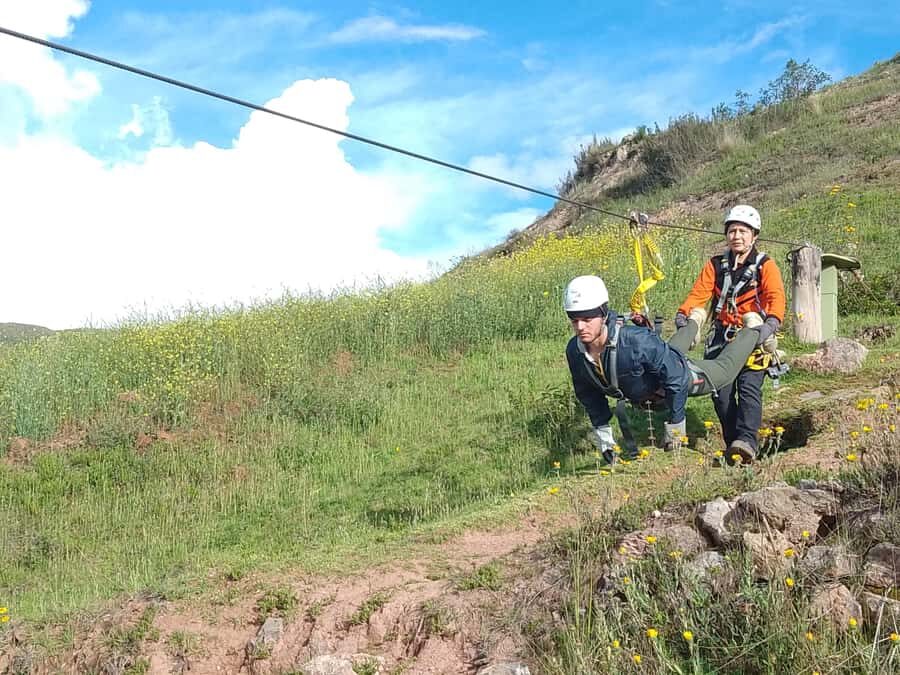
Cable 3: longer with room for movement. The third wire is longer and gives you time to perform extreme positions. That phrase might sound intense, but the practical meaning is simple: you’ll have enough airtime to try different body positions instead of feeling rushed through the run.
Cable 4: deepest with the best views. The final cable is the one built for big canyon and valley sightlines. It’s listed as the deepest section (around 2,000 meters) with the best overall panorama of the canyon, Sacred Valley, and surrounding mountains. Even if you’re not a “look at height” person, this is the run that rewards you for staying focused earlier in the day.
In terms of distances, one of the key measurements is that the longest cable is about 600 meters. Even if you don’t memorize exact numbers on the platform, having a longest cable and a deepest run tells you this isn’t just a short circuit. You’ll get real time above the valley.
What the Rules and Gear Mean for Your Comfort
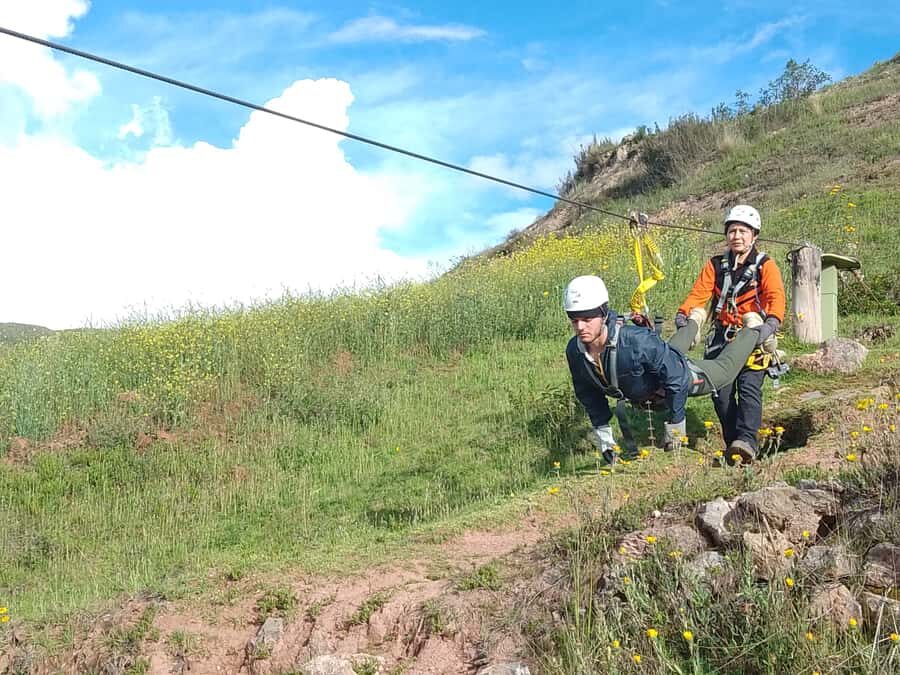
This tour includes equipment to carry out the activity and an English- or Spanish-speaking guide, plus a first aid kit. That combination matters because zip lines are mechanical and physical. You want someone overseeing the setup and pacing so you’re not guessing what’s safe or how to hold yourself during the ride.
One hard rule is footwear: sandals or flip-flops are not allowed. That’s not just about safety theater. In canyon areas, you can easily end up with dusty ground, uneven footing, and fast prep steps where you need stable shoes. Plan on closed-toe footwear with grip.
Now, the fitness/medical considerations are also not optional. The activity is not suitable for:
- pregnant women
- people with mobility impairments
- people with heart problems
If any of those apply to you, skip this. Don’t try to negotiate with “I’ll just be careful.” Zip lines include physical harnessing and movement plus an adrenaline hit, and those can be a bad mix for the conditions listed.
For most healthy adults, the tour’s small-group size (limited to 10 participants) can help a lot. Less crowding means smoother fitting, quicker direction, and less time waiting while you try to stay calm.
And yes, this is an adrenaline activity. Some people come in thinking they’ll be nervous the whole time. The way the tour builds from a softer first cable to the deepest final cable tends to turn that into confidence—if you listen, breathe, and follow instructions.
How Much It Costs (and When $85 Is Good Value)
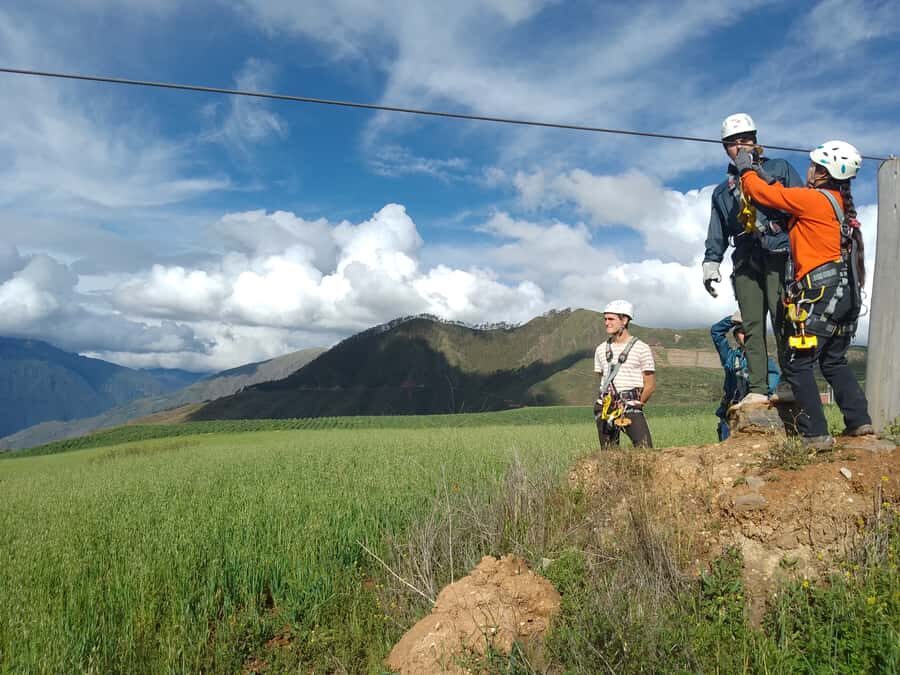
At $85 per person, this isn’t the cheapest thing in Cusco. But it’s also not priced like a luxury private adventure. What makes it feel like good value is the full package for the effort and time involved:
- Pickup and transport from central Cusco (about 50 minutes each way)
- Four zip line cables with different speeds and run styles
- Equipment provided and a guide in English or Spanish
- Small group size (up to 10), which usually means less waiting and more attention
- Drop-off at Plaza Regocijo, so you don’t need extra transport planning to end your day
You’re paying not just for the flight, but for the logistics: travel time, safety gear, staff, and the scenic location work behind multiple cables. If you compare it to doing a less structured activity, the difference is clear—you get a complete, guided, equipment-supported experience instead of piecing together transport and thrills yourself.
If you’re on a tight budget, consider it as your main “active day.” It’s short enough to still enjoy Cusco afterward, but it’s long enough that it should feel like the event for that day. If you already have a busy itinerary, this also makes a lot of sense because it’s only around 3 hours total.


Who Should Book This Zip Line and Who Should Skip It
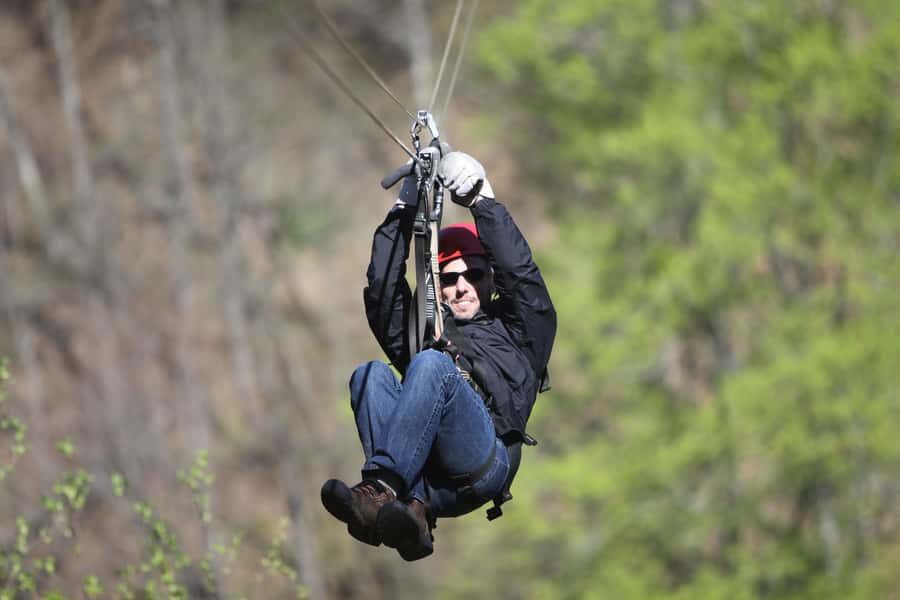
This experience fits best if you want:
- real aerial runs over the canyon and valley views
- a progressive setup (starting easier, ending intense)
- a small-group feel rather than a big crowd
I’d also say it’s a strong option for people who like structure. The four cables are designed with different goals: confidence, speed, longer airtime, and then the best final views.
On the skip side, it’s a clear no for anyone who falls under the listed constraints: heart problems, pregnancy, or mobility impairments. And if you show up without appropriate shoes, you may feel stuck. Plan ahead so you’re not dealing with last-minute footwear issues.
If you’re coming from Cusco and you’re already feeling the altitude a bit, take it slow during the pre-ride moments. Don’t try to “power through” nerves. The tour is already trying to reduce pressure by starting with a softer cable. Use that first run to settle into the rhythm.
Tips for Your Best Ride (No Guesswork Needed)
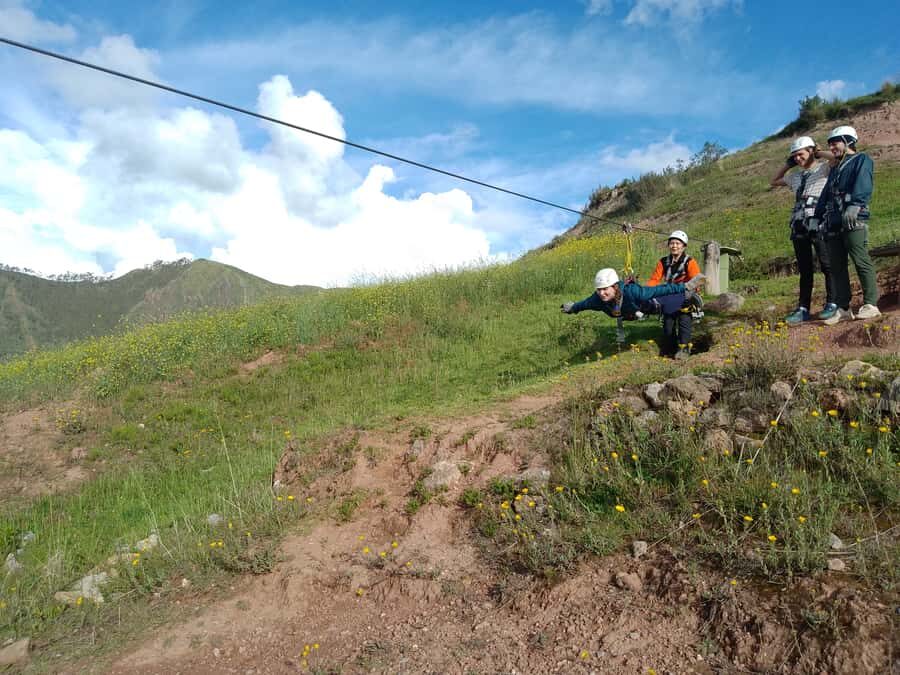
You don’t need special wilderness skills for this. But a few practical moves will make a noticeable difference.
- Wear closed-toe shoes with good grip. Sandals and flip-flops are not allowed.
- Dress for changing conditions. In the Andes, you can feel cool at altitude even when you’re moving, so layers usually help you stay comfortable while you wait.
- Don’t rush your first run. Cable 1 is meant for confidence. Use it to learn how to position your body.
- Bring your focus. Once the cables start, you’ll get the most enjoyment by watching the landing area and the cable path rather than staring at how far down you are.
- Keep your expectations balanced: it’s fun high-adrenaline, but it’s also guided and rule-based. Good rides come from following the plan.
If you’re traveling in a small group of friends, you may find the pace is easier to handle together. With a max of 10 participants, the day can feel organized and calm instead of chaotic.
Should You Book the Cusco Half-Day Zip Line Adventure?
If you want an active Cusco day that still respects your schedule, I think this is a solid booking. For $85, you get four different zip line experiences, a short but scenic transfer from Cusco to Racchi, and drop-off near Plaza Regocijo so you can keep exploring right after. The progressive cable design is especially appealing if you’re not sure how you’ll feel about heights at first.
You should pass if any of the stated medical or mobility limitations apply, or if you’re not prepared to follow the footwear rule. And if you hate the idea of mechanical safety gear and harness procedures, this might feel like too much before you even start flying.
Overall, this is the kind of activity where the views and the ride design support each other. You fly over the Sacred Valley setting, but you also get a sequence that builds confidence instead of throwing you straight into the deepest, fastest run.
FAQ
How long is the Cusco half-day zip line tour?
The total duration is about 3 hours.
How long are you actually on the zip line?
The zip line activity is approximately 1 hour and 30 minutes.
Where do you get picked up in Cusco?
Pickup is included from your accommodation in Cusco city centre.
Where does the tour drop you off afterward?
You’re dropped off at Plaza Regocijo, about two blocks from the main square area.
What cables are included?
You fly on 4 different cables with different speeds. The longest cable is listed at 600 meters, and the deepest segment is listed at around 2,000 meters.
Do you get an English or Spanish guide?
Yes. The guide is available in English or Spanish.
What’s the group size?
It’s a small group limited to 10 participants.
Are meals included?
No meals are included.
Is this tour suitable for everyone?
It is not suitable for pregnant women, people with mobility impairments, or people with heart problems. Sandals or flip-flops are also not allowed.