REVIEW · CUSCO
From Cusco: Full-Day Private Sacred Valley Tour
Book on GetYourGuide →Operated by Inkayni Peru Tours · Bookable on GetYourGuide
Sacred Valley day, packed into nine hours. This private tour strings together Inca sites, high-altitude villages, and market time so you see a lot without feeling like you’re guessing your way around.
I especially like two things: the guide flexibility (they can shift priorities if time is tight) and the way the day connects textiles and archaeology, not just monuments. It’s the kind of route where culture, craft, and stone all sit in the same story.
The main drawback to consider is altitude and pace. You’ll hit Chinchero at about 12,500 ft / 3,800 m, so plan for a slower rhythm and bring sun and rain gear, because weather up high can change fast.
In This Review
- Key highlights worth planning for
- A smooth high-altitude day from your Cusco hotel
- Chinchero’s terraces, colonial church, and textile traditions
- The weaving house demonstration: why it’s more than a sales pitch
- A possible drawback at Chinchero
- Ollantaytambo’s fortress: Inca stonework up close
- What to focus on during the walk
- Urubamba lunch: a real break in the middle of the day
- What to expect from the meal
- Pisac: archaeological site above the valley
- A practical tip for your photo timing
- Pisac Market: shopping for textiles, ceramics, and silver
- How to shop smarter in the market window
- Price and logistics: what the $109 is really paying for
- What to pack for this Sacred Valley route
- Who this private tour is best for
- Should you book this private Sacred Valley tour?
- FAQ
- How long is the Sacred Valley private tour from Cusco?
- What are the main stops on the tour?
- Is pickup and drop-off included?
- Are entrance tickets included in the price?
- Is lunch included?
- What languages does the guide speak?
- Is this tour private or shared?
- What should I bring for the day?
- Is cancellation free?
- Do I need to worry about height or weather?
Key highlights worth planning for
- Chinchero weaving house: see natural dyeing and intricate weaving techniques passed down through generations.
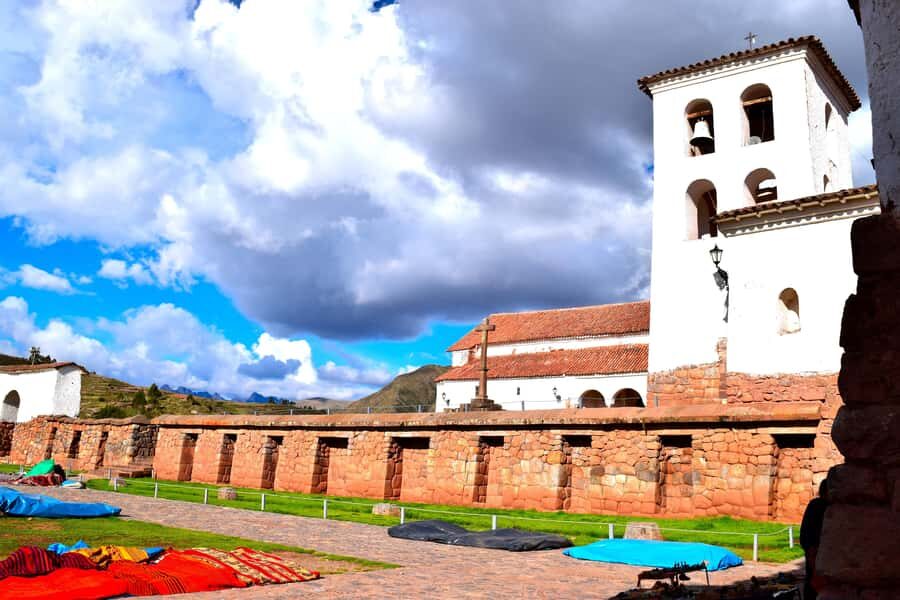
- Chinchero terrace views: Inca land-shaping plus a colonial church in one compact stop.
- Ollantaytambo’s fortress and terraces: Inca stonework carved right into the mountain.
- Pisac ruins with valley views: temples and terraces set dramatically above the valley.
- Pisac market time: textiles, ceramics, and silverwork for practical souvenir hunting.
A smooth high-altitude day from your Cusco hotel
This is set up as a private, door-to-door experience: pickup and drop-off happen at your Cusco city-centre hotel area, and you’re in a car with a guide who handles the route. The timing matters because this region is high and distances add up. Starting early helps you beat crowds at the biggest photo moments and gives you daylight for views.
Because it’s private, you don’t have to fight for attention. The guide is there in your corner, and the pace is adjustable. In the real world, that’s huge—especially if you want extra time for pictures or you run into time pressure between stops.
You’ll also want to be realistic about how your body feels at altitude. Chinchero is the highest point on the route (about 12,500 ft / 3,800 m). Even if you feel fine, build in calm breaths, water sips, and slower walking. Nothing here is technically hard, but the altitude makes everything feel heavier than it looks on a map.
You can also read our reviews of more private tours in Cusco

Chinchero’s terraces, colonial church, and textile traditions
Chinchero is a classic “stop-and-stare” place. It sits high, with Inca-era terraces shaping the hillsides, and you’ll also see a colonial church in the mix. The best part is that the site doesn’t stay stuck in one time period—you get the Inca land engineering and later influences in the same small area.
The tour starts with a guided visit (about 1 hour), then you get a short shopping window (around 20 minutes). That shopping time matters because Chinchero is where the craft side of the Sacred Valley becomes real. It’s not just a souvenir stop; it’s tied to the people and techniques you’ll see next.
The weaving house demonstration: why it’s more than a sales pitch
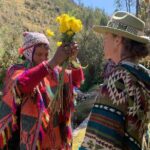
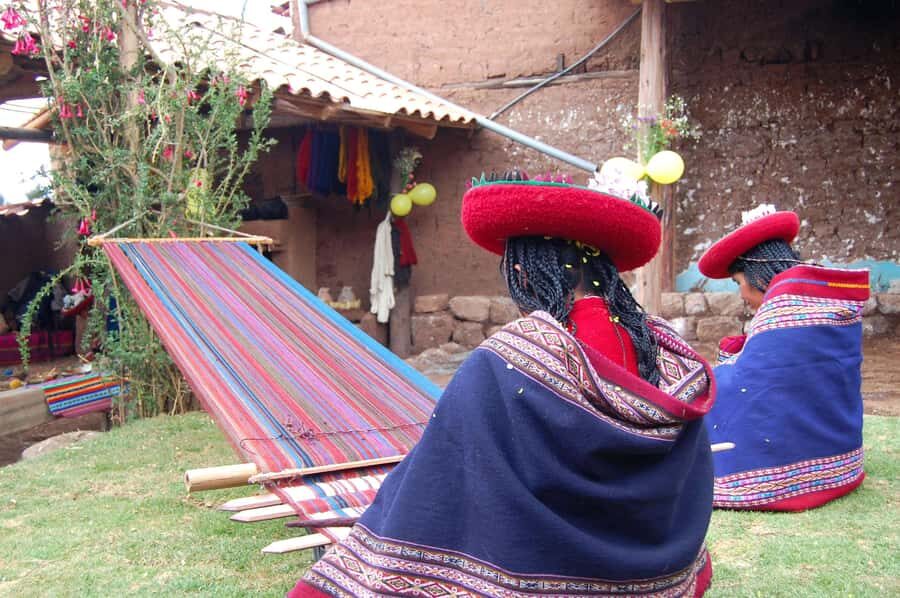
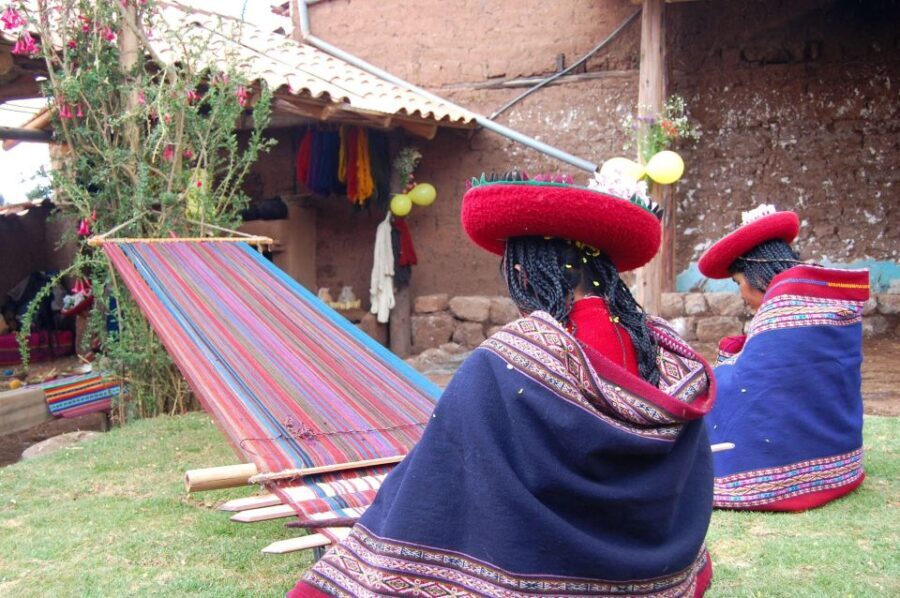
A weaving house visit is included, and it’s the cultural glue of the morning. You’ll watch artisans explain natural dyeing and weaving methods that have been handed down for generations. You learn to look at cloth differently: colors come from materials and processes, and patterns reflect skill and tradition, not just decoration.
Here’s the practical takeaway: if you plan to buy textiles, watching the process first helps you judge quality. You can ask simple questions like what dyes are used and what the weaving technique affects. Even if you don’t buy anything, you’ll leave with a better eye for what you’re seeing later in Pisac’s market.
A possible drawback at Chinchero
Chinchero’s high elevation can make this portion feel long, even though it’s not. If you’re prone to altitude discomfort, you may want to take extra pauses during walking time and keep an eye on hydration. Also, bring sun protection—high sun plus thin air is a bad combo.
Ollantaytambo’s fortress: Inca stonework up close
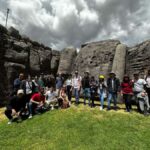
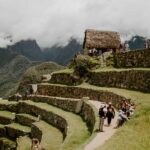
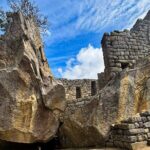
Next comes Ollantaytambo, at about 9,160 ft / 2,792 m. You’ll get a guided tour here for about 1 hour, plus time to walk through the town’s well-preserved Inca layout. The streets feel like they belong to two worlds at once: the stone geometry of the Inca period and everyday life continuing right on top of it.
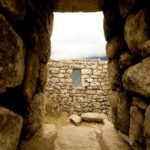
The headline is the Inca fortress. The dramatic part isn’t just that it’s impressive; it’s how it’s built. Massive stone structures and terraces are carved into the mountain slope. You don’t have to imagine the engineering—the setting does the convincing for you.
You can also read our reviews of more tours and experiences in Cusco
What to focus on during the walk
If you want the most out of the visit, don’t rush. Look for the way terraces step the mountainside, and notice how the fortress portion feels both defensive and ceremonial. Your guide can help you read the layout in plain terms, and that’s where having a professional makes a big difference.
The reviews connected to this tour point to guide skill in real time—one person described a guide who shifted priorities effectively when time was shorter than planned. That matters at Ollantaytambo because the best photo angles don’t always match the strictest schedule. If you want a few extra minutes for pictures, this format tends to handle that better than the rigid group bus style.
Urubamba lunch: a real break in the middle of the day
You’ll stop in Urubamba for lunch for about 1 hour. Lunch is included as a buffet in the route description, but note that lunch isn’t included in the tour price you’re paying. In other words: the day gives you time to eat, but you’ll likely be paying separately for the meal.
What I like about this mid-day pause is simple: it keeps the day from turning into a constant sprint. Urubamba is also a calmer base than Cusco’s centre, and the change of pace helps altitude feel less intense.
What to expect from the meal
Since it’s a buffet, you can pick what feels right for your stomach. That’s practical in Peru’s high country, where spicy or heavy food can hit differently. If you’re sensitive to altitude, a mix of simple options often works better than going all-in on the richest dishes.
Pisac: archaeological site above the valley
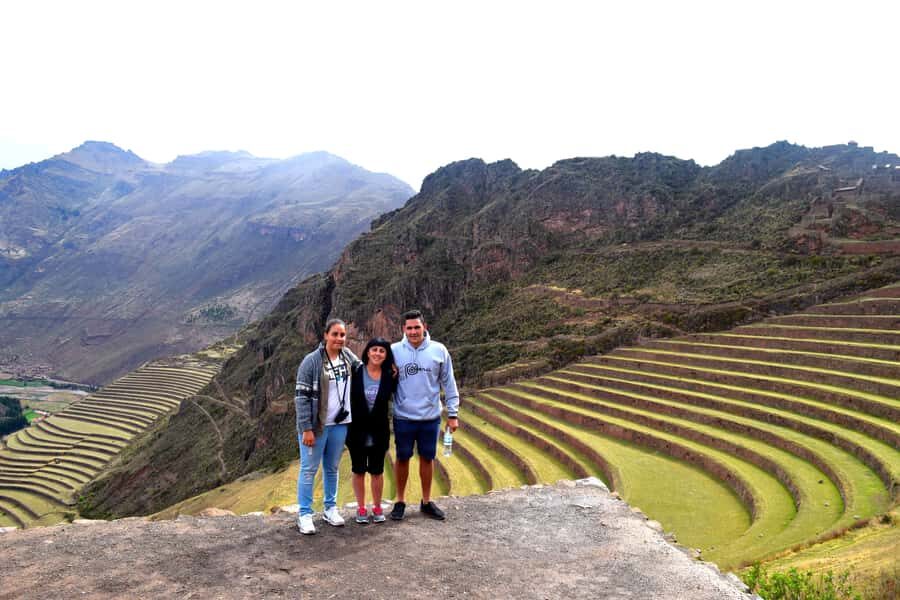
Pisac is where the Sacred Valley really flexes. You’ll visit the archaeological site first (about 1 hour guided). The altitude here is around 9,751 ft / 2,972 m, and the site sits with temples and terraces built dramatically into the hillside.
The views matter. From above, the valley looks structured and intentional—like the mountains and the stonework were planned together. Your guide’s job here is to connect the dots: what you’re seeing, how the terraces relate to movement and agriculture, and why the placement feels strategic.
A practical tip for your photo timing
Plan to spend your mental energy on composition, not just snapping. Look for lines in the terraces, then reframe with the valley in the background. Since this is a guided stop with a time box, the best trick is to take a first set of photos early, then slow down when you’re sure you understand the layout.
If the day is running ahead or behind schedule, guides who adjust priorities (as described in customer feedback) can help you get the key views you came for. That’s worth paying attention to, because Pisac’s best angles aren’t always the first thing you stumble upon.
Pisac Market: shopping for textiles, ceramics, and silver
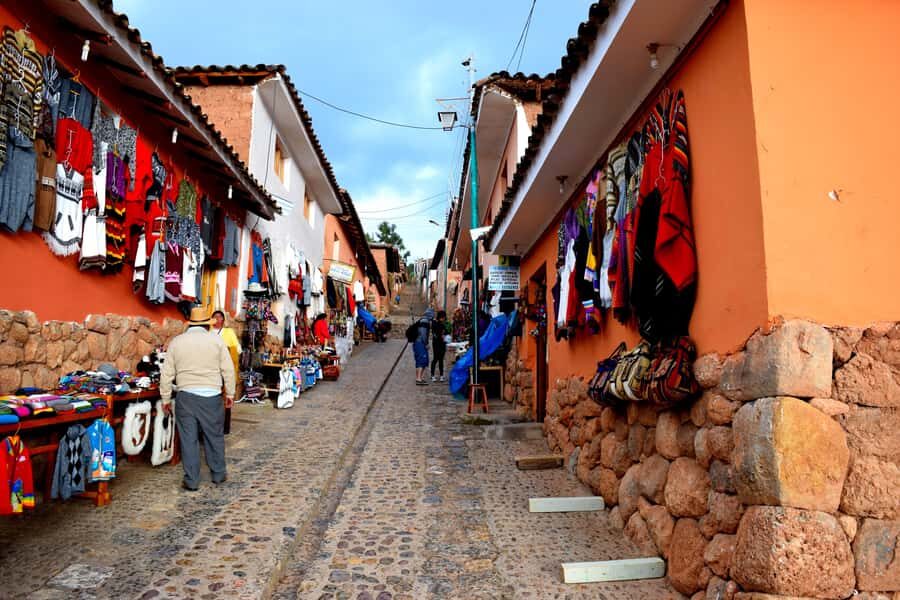
After the archaeological part, the tour heads down to Pisac Market. This is your lively souvenir window, with options including handcrafted textiles, ceramics, and silverwork.
This is where you’ll feel the full “Sacred Valley experience” shift from stone history to everyday craft economy. I like that this stop is separate from the ruins—mentally you get a reset. You can talk to vendors, compare prices, and browse without feeling like you’re rushing across a site.
How to shop smarter in the market window
Because your time is limited, go in with a plan:
- Decide what you actually want: textiles, small ceramics, or silver pieces.
- Ask about materials and weaving/finishing in simple terms so you can compare quality.
- If you’re not sure what’s real value, choose fewer items and spend more time checking details.
The short shopping mindset can save money and prevent impulse buys. Market time is fun—but only if you stay in control of your spending.
Price and logistics: what the $109 is really paying for
At $109 per person for a 9-hour private tour, you’re paying for three main things: a professional guide, private transportation, and hotel pickup/drop-off.
What’s not included is the big variable:
- Entrance tickets (you’ll need the tourist ticket for the archaeological sites)
- Lunch (even though you get a lunch stop, you’ll pay separately)
So the value picture is this: you’re buying convenience and guidance more than raw admission. If you were to piece together transport and tickets on your own—plus manage altitude driving and route timing—you’d likely spend similar money once you factor in time, stress, and the cost of getting it wrong.
Where this route feels especially good is the balance of “big sights” and “real stops.” Chinchero gives you culture and craft. Ollantaytambo gives you Inca fortress scale and a living town. Pisac gives you dramatic ruins and market browsing. That mix is what makes the day feel complete instead of like a checklist.
What to pack for this Sacred Valley route
Even if you travel light, this tour asks for the essentials. You’ll be outdoors at high altitude and you’ll likely deal with sun and possible rain.
Bring:
- Passport or ID card
- Sun hat
- Sunscreen (factor 35 recommended)
- Comfortable clothes for warm sun but cool air
- A waterproof jacket or rain poncho
- Water
- A camera (and any spare film/memory you need)
And keep in mind what isn’t allowed: no pets, and no weapons or sharp objects. Also, don’t show up with alcohol or drugs—this is a tour setting, and the rules are there for everyone’s safety.
Who this private tour is best for
This fits you if you want a focused Sacred Valley day without juggling details. A private tour like this is a strong match for:
- First-time Cusco visitors who want the highlights
- People who prefer a guide who can respond to your timing for photos
- Travelers who care about culture (especially textiles) as much as ruins
It’s less ideal if you want a slow, do-everything wander. This route is efficient by design. There’s no “hang out for hours” option at each stop. You’ll get a lot in one day, but you won’t get total freedom to linger at every corner.
Also, if altitude hits you hard, you’ll need to plan around it. The Chinchero altitude is the main challenge on this itinerary, so go in with realistic expectations and a slow walk plan.
Should you book this private Sacred Valley tour?
If you want an organized, story-based day that connects textiles, Inca engineering, and market life, I’d book it. The private format is the real advantage: you’re not stuck waiting in a crowd, and the guide can adjust priorities when time tightens—exactly the kind of flexibility that helps you get the photos and understanding you came for.
I’d think twice if you’re altitude-sensitive or you hate tight schedules. In that case, the Chinchero height plus the one-day structure could feel demanding.
If you do book, I’d go in prepared: bring sun and rain protection, plan for slower walking at the highest point, and decide what you want to buy before you reach Pisac Market. Do that, and this single-day route can feel like the Sacred Valley in miniature—well paced, well guided, and worth the time.
FAQ
How long is the Sacred Valley private tour from Cusco?
It lasts about 9 hours.
What are the main stops on the tour?
You’ll visit Chinchero, Ollantaytambo, Pisac archaeological site, and Pisac Market.
Is pickup and drop-off included?
Yes. Pickup and return are included at your Cusco city-centre hotel.
Are entrance tickets included in the price?
No. Entrance tickets are not included, and you’ll need a tourist ticket.
Is lunch included?
Lunch is not included in the tour price.
What languages does the guide speak?
The live tour guide speaks Spanish and English.
Is this tour private or shared?
This is a private group tour.
What should I bring for the day?
Bring a passport or ID card, a sun hat, sunscreen, comfortable clothes, a waterproof jacket or rain poncho, water, and a camera.
Is cancellation free?
Yes, free cancellation is available up to 24 hours in advance for a full refund.
Do I need to worry about height or weather?
The itinerary includes high-altitude points, including Chinchero at about 12,500 ft / 3,800 m, and you should bring sun protection plus rain protection just in case.