REVIEW · CUSCO
Sacred Valley Tour from Cusco: Pisac, Ollantaytambo & Inca Ruins
Book on Viator →Operated by Encuentros Peru Adventure · Bookable on Viator
A whole Inca circuit in one long day. I like how this small-group Sacred Valley tour packs Pisac and Ollantaytambo into a tight route, then slows down for lunch in Urubamba. You also get hotel pickup from Cusco’s historic center, which saves time (and saves you from wandering around at 8:00 am).
I also love the way the stops connect to everyday life, not just impressive stone. Pisac’s terraces and irrigation work, and Ollantaytambo’s water-focused temple layout, make the Inca feel practical and organized. With a max group size of 15, it stays easy to ask questions instead of getting ignored.
One consideration: it’s an 8-hour day, so the schedule is efficient. If you need long, slow hangs at each site, plan for a little hustle. And budget extra for an all-sites entrance pass, since the tour price doesn’t cover it.
In This Review
- Key highlights you’ll actually notice
- Sacred Valley logistics: the smooth parts (and the ones to watch)
- Price and entrance tickets: what $39 really covers
- Pisac: terraces, the Intihuatana, and craft-fair energy
- Urubamba lunch: the calm break between big ruins
- Ollantaytambo: water temple, fortress walls, and real Inca engineering
- Chinchero: Sunday market culture, rainbow legends, and Lake Piuri views
- How long is the day, and what to bring for a comfy 8 hours
- Guide quality: what makes this tour feel personal
- Who should book this Sacred Valley tour from Cusco
- Should you book this Sacred Valley Tour from Cusco?
- FAQ
- What is the duration of the Sacred Valley tour from Cusco?
- Which places are included in the itinerary?
- Is lunch included?
- Are entrance tickets included in the tour price?
- How many people are in the group?
- Does the tour include pickup from Cusco?
- What time does the tour start?
- What kind of guide will I have?
Key highlights you’ll actually notice
- Small group (max 15): more conversation with your guide, less waiting around.
- A real lunch break in Urubamba: time to eat well, including vegetarian/vegan-friendly options.
- Pisac for terraces + the Intihuatana: you’ll see the “why” behind the stone work, not just the view.
- Ollantaytambo’s fortress-and-water plan: temple terraces and defensive geometry in one place.
- Chinchero’s Sunday market angle: if your day matches, you get a more local feel than the big tourist markets.
Sacred Valley logistics: the smooth parts (and the ones to watch)
This tour is built around a simple idea: hit the Sacred Valley’s biggest names in one day, without the chaos. You start at 8:00 am, and the pickup is from the Cusco historic center. Transport is described as comfortable and safe, and the day runs about 8 hours, so you’re not stuck on the road all night.
The guide is bilingual and leads you at each stop, which matters more than it sounds. Sacred Valley sites have a lot going on—terraces, ceremonial areas, defensive zones, and agricultural ruins—and a good guide helps you spot what you’d otherwise miss.
The one thing to watch is pace. The itinerary shows time blocks at each location, but travel between stops eats into the feeling of how long you’re really on the ground. You’ll still see a lot, just don’t assume you’ll have a relaxed, empty-sky hour at every single viewpoint.
You can also read our reviews of more tours and experiences in Cusco.


Price and entrance tickets: what $39 really covers
The tour price is $39.00 per person, and it includes the essentials: professional bilingual guide, lunch in Urubamba, and hotel pickup. That’s strong value because you’re paying for real human time (guiding + logistics), not just transport.
What’s not included is the entrance ticket (all sites pass). The info given lists two options: $21 USD for 2 days access and $39 USD for 10 days access. If you’re doing more than one archaeological site during your Cusco stay, the longer pass can be worth considering.
Here’s the practical way to think about it:
- If you’re only doing this day trip, the shorter pass may cover what you need.
- If you’re stacking other tours or site visits, the 10-day option might save you hassle.
Either way, I’d plan your budget so you’re not surprised on the day.
Pisac: terraces, the Intihuatana, and craft-fair energy

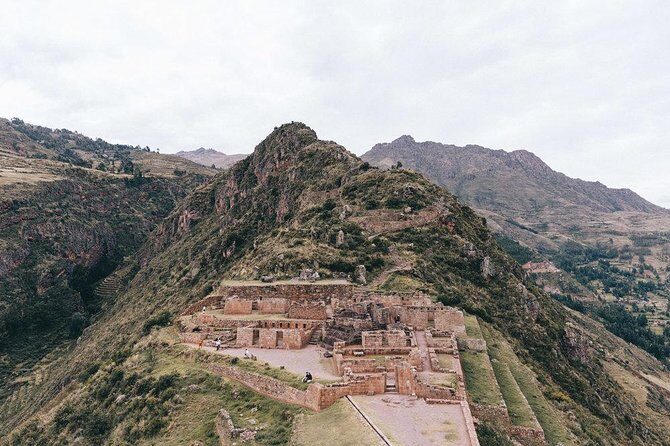
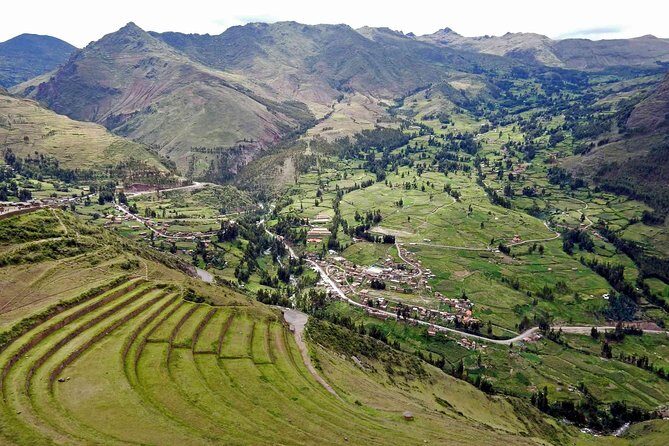
Pisac is the stop that gives you that wow feeling fast. You’re looking at a high-site archaeological complex with neighborhoods, cultivation terraces, and a major ceremonial focus. What I like about Pisac here is the emphasis on systems—how the Incas engineered agriculture and movement through steep terrain.
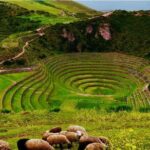
You’ll hear about Pisac’s Incan andenería (terracing) that climbs toward dramatic drop-offs. The design is described as similar to hanging gardens, and the best part is that these terraces weren’t just decoration—they’re tied to farming that can still be used today.
The tour also highlights the Intihuatana, including the idea that it functioned as a solar marker, plus the Intiwatana reference (described as a major pre-Columbian cemetery) and lookout turrets. Even if you’re not a “solar clock” person, this is one of the better ways to understand how ceremonial and practical land use overlap.
Add to that the human side: Pisac is known for craft fairs Thursdays and Sundays, with a colorful tradition and authorities (Varayocs) who go to listen to mass in Quechua. If your tour day lines up with those markets, you’ll feel the place as more than a photo stop.
What to expect in real time: enough walking to see the core features, plus weather risk. One guest noted rain starting while they were in Pisac—bring a light rain layer so your day doesn’t get annoying.
Urubamba lunch: the calm break between big ruins
Urubamba is where the day breathes. The area is described as tucked between tall Andean peaks, with a more relaxed rhythm than the heavier-hit ruins towns.
On this tour, Urubamba is mainly for lunch. That sounds basic, but it’s a smart piece of the design. After morning and pre-lunch walking, you want food you can actually enjoy and time to reset.
The lunch is provided, and one review specifically called out the buffet style with lots of choices, including vegetarian and vegan options. If you’ve had “included lunches” that are mostly side dishes, this is the kind of detail that makes a difference.
You also get a little context for why people choose to stay in Urubamba: it’s a town where you can do more than tour. Hotels and spa options exist nearby, and adventure rides are available at a short distance—so even if you only get one meal here, you’ll understand why it’s a base.
Tip: since you’re on a tight itinerary, eat like you’re fueling for the afternoon. You still have Ollantaytambo and Chinchero ahead.
Ollantaytambo: water temple, fortress walls, and real Inca engineering
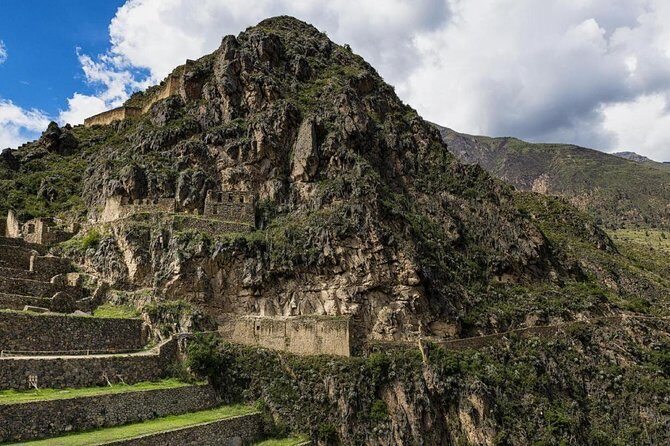
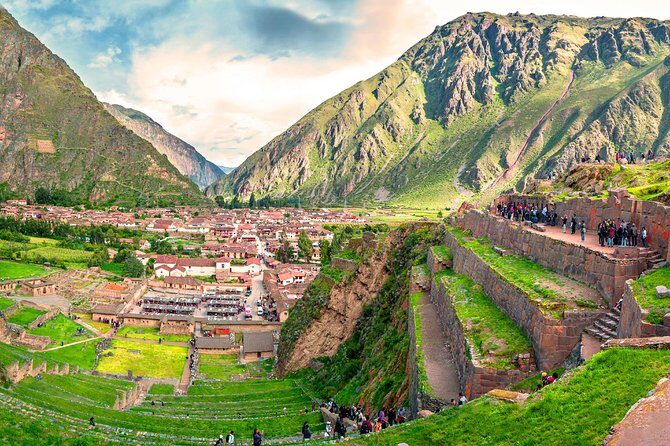
Ollantaytambo is a “built like a plan” kind of place. It sits at about 9,160 feet, and you’ll see why the Incas cared so much about both worship and defense.
The highlights include the ceremonial temple connected to water worship and a fortress that guarded the entrance to the valley between mountains. That pairing matters. The design isn’t random: the valley entrance needed protection, and the valley’s water and terraced agriculture needed sacred attention too.
You’ll also hear about:
- The Temple of Inti (sun god)
- Incamisana
- The baths of the Ñustas (princesses)
- Cachiccata funerary towers
- Stepped terraces on a hillside
- A mountain feature called Pinculluna/Tunupa, with traces of Inca structures that seem to have served as a storehouse for foodstuffs
One of the most helpful ways to look at Ollantaytambo is to treat it like a system: terraces for living and farming, temples for ceremonies, and fortress logic for security. If you only view it as scenery, you miss the structural story.
There’s also a cultural layer beyond the stone. Ollantaytambo functions as a meeting place for nearby communities, and you may spot groups like Huayruros de Willoc recognized by red and black ponchos and hats.
Timing note: this stop is often where the day feels most “alive,” but it can also feel rushed if your schedule is tight. Wear shoes that handle uneven stone and steep steps.




Chinchero: Sunday market culture, rainbow legends, and Lake Piuri views
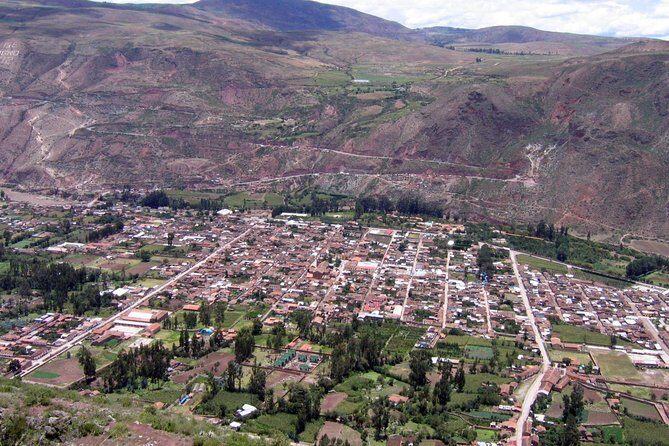
Chinchero adds a different flavor to the route. Pisac and Ollantaytambo focus heavily on Inca architecture and ceremonial sites. Chinchero brings you into an Andean village rhythm, with markets, living craft, and Inca remains mixed with later colonial layers.
You’ll travel to Chinchero, located at about 3,765 m and roughly 30 km from Cusco. Expect big views over the Sacred Valley, with Cordillera Vilcabamba and the snow-capped Salkantay peak on the western horizon.
This is the stop tied to market life: Chinchero is known for its Sunday market, which is described as less tourist-oriented than Pisac’s. If you like shopping, it’s often where you feel like you’re seeing local daily trade instead of only the souvenir circuit.
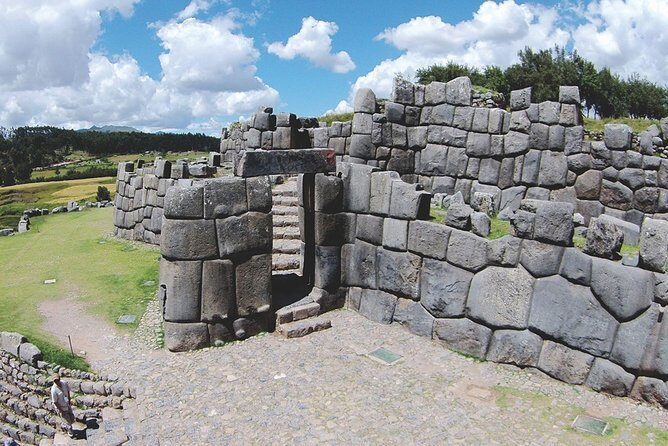
There are also Inca-era remnants in the main plaza—especially a massive stone wall with ten trapezoidal niches. The construction and surrounding terraces are attributed here to Inca Tupac Yupanqui, and the village is suggested as a kind of country resort during Inca times.
Then comes the layered twist: an adobe colonial church from the early seventeenth century sits on foundations of an Inca temple or palace. Its floral and religious designs make the whole area feel like a place where different eras actually overlap.
If you have time (and if conditions allow), there’s also Lake Piuri nearby. The info says you can walk to it, and a full loop around the lake takes about 3 hours, but your tour time here is listed as about 1 hour—so on this itinerary, you’re likely to focus on the village core and quick viewpoints rather than a long lakeside walk.
How long is the day, and what to bring for a comfy 8 hours
An 8-hour day in the Sacred Valley is not short, even if it’s efficient. You’re doing multiple stops, and the schedule likely prioritizes seeing key sites over long breaks between them. One review also noted that some itinerary time blocks can feel tighter than you expect because driving time is part of the schedule math.
So what should you bring?
- Comfortable, grippy shoes for steep stone steps (Ollantaytambo is the one to remember)
- A light rain layer (weather can shift fast; rain happened during Pisac for at least one guest)
- Sunscreen and a hat for high-altitude sun glare
- A small snack stash in case you get hungry between lunch and the last stop
Also, pace yourself during the afternoon. If your morning site walking feels fine, great. If it starts to feel like too much, slow down and focus on the guide’s explanations rather than trying to “win” the photo race.
Guide quality: what makes this tour feel personal
A lot of Sacred Valley tours sound similar on paper. The difference is the guide tone and how much they connect details into a story you can keep in your head.
The guide for this type of tour is consistently described as punctual, fluent in English, and very focused on local traditions and customs. Some examples from previous tours include guides such as Jose, Jose Luis, German, and Stevin (depending on the date). The common thread in the feedback is that commentary doesn’t stop at the gates—it happens while you’re driving too, so you’re learning even when you’re sitting down.
That matters because the Sacred Valley can feel like a series of separate ruins if nobody explains the relationships. With the right guide, Pisac’s terrace logic starts to connect to Ollantaytambo’s water-focused layout, and Chinchero’s plaza wall feels less random.
One more practical thing: small group tours can sometimes turn more personal if conditions change. If the group ends up smaller on your date, you’re more likely to get answers to your questions.
Who should book this Sacred Valley tour from Cusco
This tour is a good fit if you want:
- A single-day overview of the Sacred Valley’s biggest Inca sites
- Hotel pickup and a guide, so you don’t spend your vacation organizing transport
- A balance of ruins + village culture, not just one archaeological park
It’s especially handy for first-timers who want to understand the “shape” of the valley—where farming terracing, ceremonial sites, and defensive architecture all show up.
I’d think twice if:
- You hate long days and prefer unhurried site time
- You’re very sensitive to walking and stairs
- You’re expecting one stop to be the full focus of the day
If you want a taste first and a deeper second pass later, this is a strong starter route.
Should you book this Sacred Valley Tour from Cusco?
Yes, if your priority is a well-run, small-group day that hits Pisac, Urubamba, Ollantaytambo, and Chinchero with lunch included. The combination of pickup, guiding, and food is the value engine here—especially at $39.
My decision checklist:
- You can handle an 8-hour schedule with efficient stop times.
- You’re willing to budget for the all-sites entrance pass.
- You want both architecture (Pisac/Ollantaytambo) and living village culture (Chinchero market).
If that sounds like your style, book it. It’s a smart way to understand why the Sacred Valley kept pulling people back for centuries.
FAQ
What is the duration of the Sacred Valley tour from Cusco?
The tour runs about 8 hours (approx.), starting at 8:00 am.
Which places are included in the itinerary?
You visit Pisac, Urubamba (for lunch), Ollantaytambo, and the Chinchero District.
Is lunch included?
Yes. Lunch in Urubamba is included for your convenience.
Are entrance tickets included in the tour price?
No. Entrance tickets for the sites require an all-sites entrance pass (listed options are $21 USD for 2 days or $39 USD for 10 days).
How many people are in the group?
The tour is limited to a maximum of 15 travelers.
Does the tour include pickup from Cusco?
Yes. Hotel pickup from the Cusco historical center is available.
What time does the tour start?
The start time is 8:00 am.
What kind of guide will I have?
The tour includes a professional bilingual guide.