REVIEW · CUSCO
Full Day Sacred Valley of the Incas (group service)
Book on Viator →Operated by Andean Great Treks · Bookable on Viator
A long day of Inca sights starts early. This group tour is built for squeezing the best Sacred Valley stops into one go, with hotel pickup and entry fees taken care of. You’ll bounce from weaving traditions to agricultural experiments to salt wells, then finish in time to return to Cusco around 19:00.
I love the route logic: you get a clear sequence from highland culture (Chinchero) to Inca engineering (Moray and Ollantaytambo). I also like how the day includes a real pause for food in Urubamba with a buffet lunch, so you’re not surviving on snacks.
One thing to consider: it’s a packed schedule and some parts involve walking uphill and steps, so if you want a slow, photo-only day, this may feel rushed.
In This Review
- Key highlights at a glance
- The big picture: what you’re actually buying for $84.51
- Starting at 6:30: a schedule designed to beat the crowds
- Chinchero: 12 niches, colonial echoes, and textiles you can picture
- Moray: crop experiments hidden in circular terraces
- Maras salt wells: 3,000 years of work, plus pink and purple fleur de sel
- Urubamba lunch: a buffet that actually fuels a long day
- Ollantaytambo: cobblestone streets, water channels, and the Sun and Moon
- Sacred Valley quick stop: views and farmland between ruins
- Pisac: craft market energy and Inca hillside constructions
- Guides and language: why translation makes the day better
- Pace and walking: the one drawback you should plan for
- What you’ll miss (and what you gain) by doing it in one day
- Who this tour is best for
- Should you book this Sacred Valley day trip?
- FAQ
- How long is the Sacred Valley day tour from Cusco?
- Which stops are included in the itinerary?
- Is lunch included?
- Are entrance fees included?
- Is hotel pickup included?
- Where do you get dropped off at the end?
- Are alcoholic drinks included?
- Is a vegetarian meal available?
- How big is the group?
Key highlights at a glance
- Chinchero’s square with 12 niches plus textile spinning and dyeing
- Moray’s circular terraces, where Incas tested crops like corn and quinoa
- Salinas de Maras salt wells with access to the pink and purple fleur de sel
- Ollantaytambo’s cobblestone streets and Sun and Moon temples
- Urubamba buffet lunch that keeps your energy up through the long ride
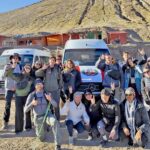
- Max 15 travelers, with guides who translate for English and Spanish speakers
The big picture: what you’re actually buying for $84.51
For $84.51 per person, you’re not just paying for a bus. You’re paying for a day that includes transportation, a local guide working in English/Spanish, lunch, and tickets for Sacred Valley attractions.
That matters because Sacred Valley sites add up fast if you try to DIY. With this tour, you show up, get organized in the morning, and spend your time on the places—not on figuring out entry lines, timings, or which ticket counts for which stop.
The tradeoff is time and pace. This is a one-day “greatest hits” plan: multiple sites, multiple pickups-and-drops within the valley, and not a ton of wiggle room for lingering. If you’re the type who likes to stare at details for hours, you may wish you had two days instead. But if you’re short on time in Cusco, this is a strong way to see the valley without hiring separate drivers for every stop.
You can also read our reviews of more tours and experiences in Cusco
Starting at 6:30: a schedule designed to beat the crowds
You start early, with pickup beginning around 6:30 am. The whole day runs roughly 8 to 12 hours, and you’ll usually get back to Cusco around 19:00.
Early starts in the Sacred Valley are a real advantage. You’re more likely to encounter calmer routes and less pressure once you reach popular sites. Still, it’s a group tour, so you’ll be moving on a timetable. Bring patience for the rhythm of bus, quick orientation, then walking.
Also, the rides can be long and bumpy. One review noted the bus got hot later in the day, and it helped when they asked for the AC/fan to be turned on. If you feel uncomfortable, speak up early—guides can’t read minds, but they can often solve simple issues fast.
Chinchero: 12 niches, colonial echoes, and textiles you can picture
Stop one is the archaeological complex at Chinchero, about an hour from Cusco. You’ll get around 2 hours here, which is enough time to see the main features without feeling totally rushed.
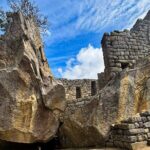
What makes Chinchero worth a first stop is the mix: the Inca-influenced archaeological area plus the colonial temple, all anchored by the plaza famous for twelve niches. It’s the kind of place where the space itself helps you understand why these sites mattered.
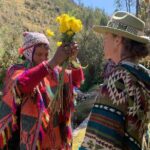
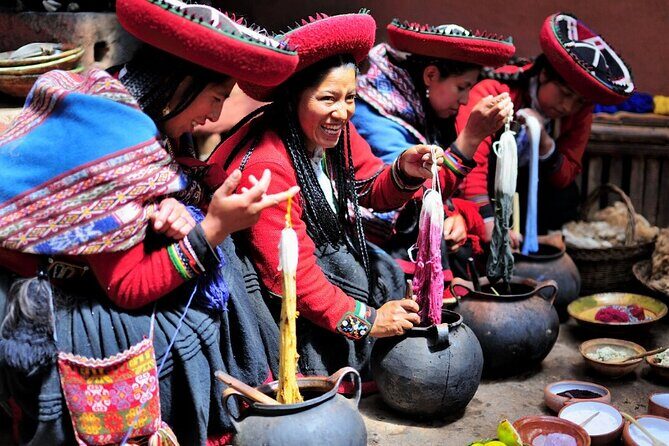
Then there’s the textile side. Chinchero is known for textile centers, and you can learn spinning and dyeing techniques tied to traditions inherited from ancient cultures. Even if you don’t buy anything, you’ll come away with a much clearer idea of why Andean textiles look the way they do—colors, patterns, and the effort behind them.
Practical note: plan for walking on uneven ground. Wear shoes that can handle dirt and steps, because the valley is not made for sandals.
Moray: crop experiments hidden in circular terraces
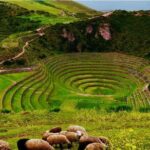
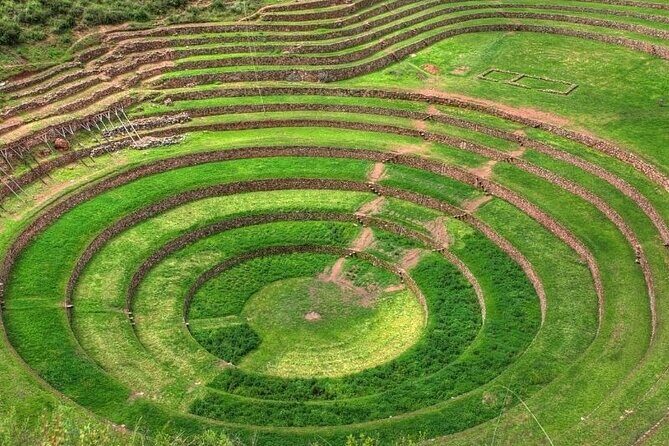
Next up is Moray, usually around 45 minutes on site. Moray’s appeal is that it feels less like a temple and more like a laboratory. This ancient complex is described as an agricultural experimentation center where the Incas tested how to grow key Andean products.
The tour context you’ll hear includes crops like corn, quinoa, potatoes, and kiwicha—grown and tested so the seeds and plants could adapt across different regions. Moray is famous for the circular terraces, and when you stand there, you start to understand why controlled conditions matter in high-altitude farming.
A short stop can be a blessing or a curse. Blessing: you’re not stuck for hours. Curse: you may want more time to look out from the terraces and connect the geography to the agriculture story. If you love science-meets-history, Moray is one of the more rewarding stops on the day.
Maras salt wells: 3,000 years of work, plus pink and purple fleur de sel
After Moray, the route heads to Salinas de Maras, the natural salt wells in the Maras district. This is one of the most visually striking stops, with salt pans stretching down a ravine.
Here’s what to focus on: the tour frames this as an operation with exploitation dating back more than 3,000 years. It also matters because it’s described as the main salt source for Cusco today.
You’ll also hear about specialty salt products made from the area, including pink and purple fleur de sel, sometimes used for therapeutic baths. Even if you’re not buying souvenirs, it’s a good reminder that food and materials are part of culture—not separate from history.
Timing-wise, keep in mind you might be walking along uneven viewpoints and down some paths. Take your time. Salt mines can look flat from a distance, but the ground is not always friendly to rushing.


Urubamba lunch: a buffet that actually fuels a long day
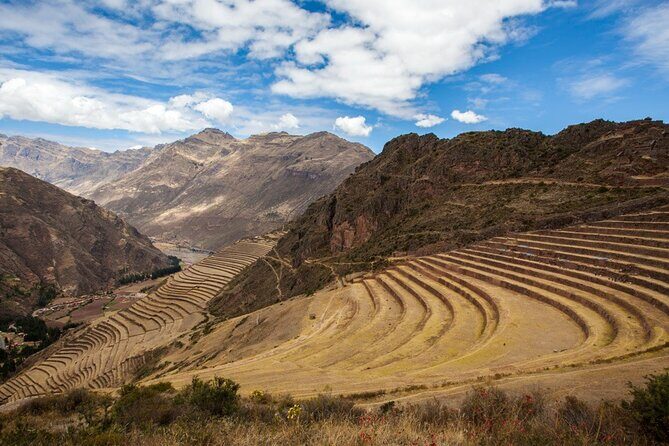
Lunch happens after exploring the Maras area, in Urubamba, with about 2 hours for a buffet meal. This is a key part of the day because you still have big hitters ahead—Ollantaytambo and Pisac.
From the feedback, the lunch tends to be a buffet style with a variety of options, and at least some tours include desserts. You also can request a vegetarian option when booking, which is a big plus for dietary planning.
If you’re prone to getting cold at altitude, eat a little more than you think you need. You’ll likely be sitting on the bus again after lunch, and the temperatures can shift fast.
Ollantaytambo: cobblestone streets, water channels, and the Sun and Moon
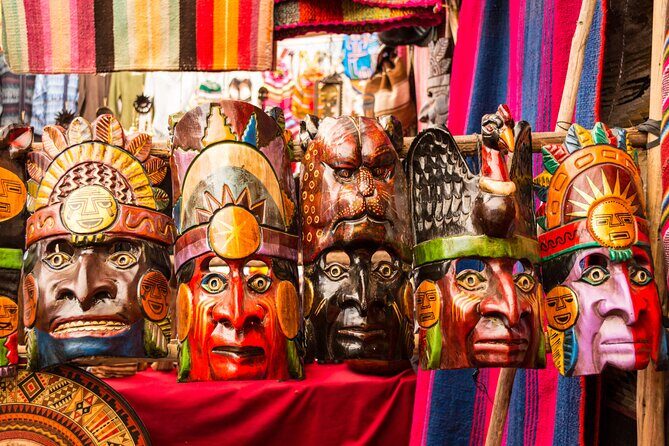
Then you reach Ollantaytambo, typically around 1 hour at the site. This stop is often the emotional peak for many visitors because the town still preserves its layout and stonework.
Expect to walk through old cobblestone streets with water channels, and then move toward ceremonial areas where you’ll see temples associated with the Sun and Moon. The tour also highlights ceremonial water sources, which is important here—water management was part of how the Inca city functioned.
The catch: with only about an hour, you’ll want to prioritize. If you’re short on time, head toward the main ceremonial sections first. If you’re a slower walker, don’t be shy about asking the guide how to route your time best.
Also, some people describe the day as strenuous at moments, especially with stairs and climbing. Ollantaytambo is a place where your calves feel it. Bring water, and don’t treat it like a quick photo stop unless that’s your personal style.
Sacred Valley quick stop: views and farmland between ruins
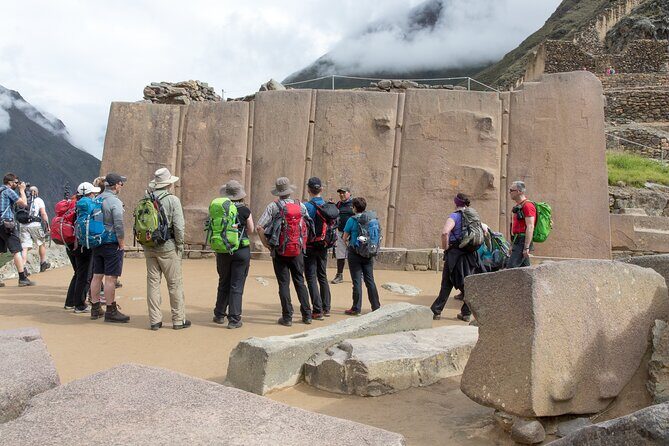
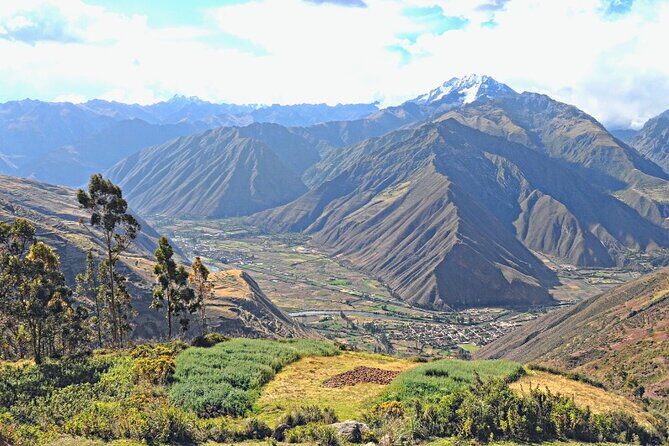
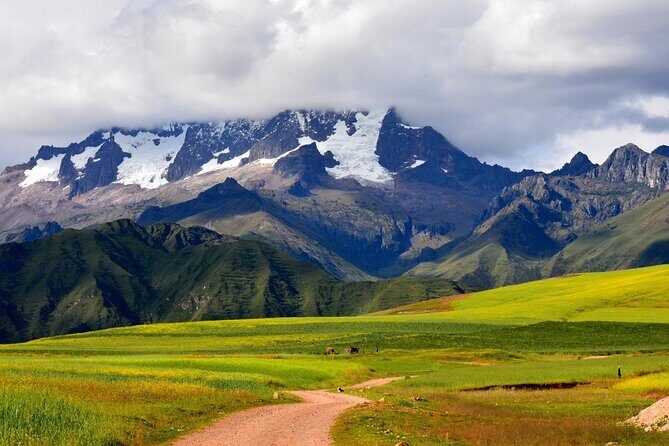
The itinerary also includes a stop labeled simply as Sacred Valley, about 1 hour, described as a natural attraction surrounded by mountains and glaciers, with fields producing crops like corn and colorful fruits and vegetables.
This part is less about one specific monument and more about grounding you in the setting. The Sacred Valley isn’t only ruins—it’s working agriculture and climate. Even if this hour is “just a viewpoint,” it helps you connect what you saw at Moray and what you’ll soon see at Pisac.
One practical tip: use this time to catch your breath. Your next stop is market and hillside structures, and you don’t want to arrive feeling depleted.
Pisac: craft market energy and Inca hillside constructions
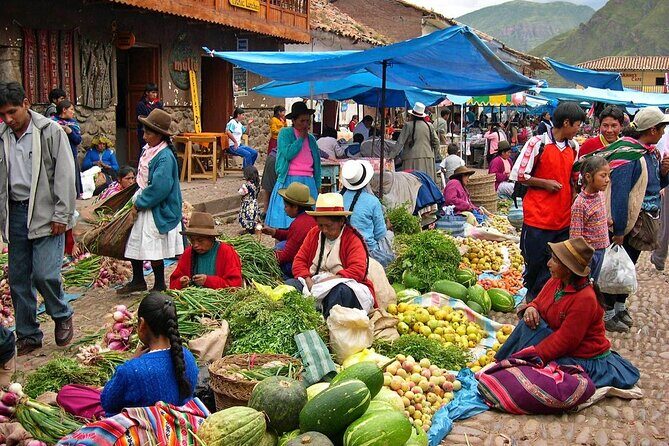
The final major stop is Pisac, usually around 2 hours. Pisac is known for two things: its craft market and Inca construction on the hill.
If you like shopping, this is your moment. You can browse textiles and local crafts, and you’ll also see everyday clothing details—tour descriptions mention Andean community inhabitants in multicolored ponchos and chullos.
If you don’t want to shop, no problem. Pisac also gives you a chance to connect the culture you saw at Chinchero textiles to what people wear and sell today. You’ll come away with a stronger sense of continuity, not just a set of disconnected sites.
The balance to remember: the bus ride rhythm continues, and late-day walking can feel tougher. One review noted difficulty with entering one of the late ruins because of timing and access, but the guide worked with others to allow a short visit. That’s a reminder to stay flexible in the last hours.
Guides and language: why translation makes the day better
This is an English/Spanish local guide setup, and that can change how much you get out of each stop. The best experiences in the reviews mention guides who handled translation thoughtfully.
Names that came up include Frank, Julio, Mike, Raul, Julie, and Junior. Some reviews highlight how guides ensured English speakers weren’t left out, even when the group was mostly Spanish-speaking.
When you choose a tour like this, the guide becomes the difference between seeing stones and understanding systems. You’re looking at sites shaped by agriculture, water, and architecture. Translation quality can make that click.
If you’re an English-only traveler, you’ll likely do best booking with a tour that explicitly supports English guidance (this one does). If you’re Spanish-speaking, you’ll still get value from the way the guide ties stops together.
Pace and walking: the one drawback you should plan for
Most of the Sacred Valley is on uneven ground, and this tour is built around several sites. That means you should expect walking and some stairs. One critique called out that parts felt rushed, with limited time for photos and not much stop-and-stare flexibility.
So here’s my practical advice: assume you won’t get every perfect photo. Instead, aim for fewer, better shots. Take your wide-angle at the start of each stop, then use later minutes to slow down.
If you’re easily tired, plan your day before and after. Drink water, keep snacks handy between stops (even though lunch is included), and wear supportive shoes. Also, bring a light layer. The sun can be strong, but the temperature can shift when you’re higher up or waiting between activities.
What you’ll miss (and what you gain) by doing it in one day
A one-day loop has limits. You won’t have the time to deeply explore smaller corners at each site. You also won’t have a second day for more ruins, more viewpoints, and slower market wandering.
But you gain something important: context. Seeing Chinchero, Moray, Maras, Ollantaytambo, and Pisac back-to-back helps you understand the Sacred Valley as a whole system—culture, farming, water, and trade—rather than as separate postcards.
If your Cusco time is tight, this is a smart way to cover the big names. And if later you decide you want more detail, you’ll know exactly which place deserves a follow-up day trip.
Who this tour is best for
This is a great match if:
- You want a full-day Sacred Valley plan without arranging multiple drivers or tickets.
- You’re okay with a schedule that includes several walking stretches and viewpoints.
- You like guided context, not just photo ops.
- You’re traveling solo or as a couple and want a small group size (up to 15).
It may be less ideal if:
- You want lots of quiet time at each site.
- You have mobility limits and don’t want stair-heavy stops.
- You dislike rushed transitions between locations.
Should you book this Sacred Valley day trip?
If you’re short on time and want the essentials—Chinchero textiles, Moray’s crop experiments, Maras salt wells, Ollantaytambo’s stone city, and Pisac market ruins—this tour is strong value. The price is hard to beat because lunch and entry tickets are included, plus hotel pickup and a bilingual guide help you make sense of what you’re seeing.
Book it if you’re the type who says yes to a packed day. Pass if you want a relaxed, unhurried pace or you’re sensitive to stairs and walking.
FAQ
How long is the Sacred Valley day tour from Cusco?
It runs about 8 to 12 hours. Pickup starts around 6:30 am, and you typically return to Cusco around 19:00.
Which stops are included in the itinerary?
You’ll visit Chinchero, Moray, Salinas de Maras, Ollantaytambo, a Sacred Valley stop, and Pisac.
Is lunch included?
Yes. Lunch is included, and it’s described as a buffet lunch in Urubamba.
Are entrance fees included?
Yes. Tickets for the Sacred Valley attractions are included in the tour.
Is hotel pickup included?
Yes. Hotel pickup is included, but hotel drop-off is not listed as included.
Where do you get dropped off at the end?
Hotel drop-off is not included, but one review notes the tour ended near Plaza de Armas.
Are alcoholic drinks included?
No. Alcoholic drinks are available to purchase, but they are not included.
Is a vegetarian meal available?
Yes. A vegetarian option is available if you request it at booking.
How big is the group?
The tour has a maximum of 15 travelers.