REVIEW · CUSCO
Super Sacred Valley: Chinchero – Salt Mines – Moray & Ollantaytambo
Book on Viator →Operated by Waman Adventures · Bookable on Viator
Four Sacred Valley sites, one full day. This is a smart way to see the region’s main highlights fast, with hotel pickup and drop-off and someone else doing the driving while you focus on the views and the stories.
I especially like the private guide set-up, because you get more back-and-forth than on bigger buses. I also love the mix of hands-on culture (Chinchero’s weaving and dye process) plus geology and Inca engineering at Moray and the salt pools.
The main drawback is the timing and add-ons: it starts early, and you’ll want to budget for archaeological and salt-mine entrance fees plus lunch in Urubamba.
In This Review
- Key things to know before you go
- Why this one-day Sacred Valley plan makes sense from Cusco
- Chinchero weaving village: altitude, dye, and real textile craft
- Moray terraces: reading the Incas’ science in a bowl
- Maras salt mines: 3,000+ pools and a working salt system
- Ollantaytambo: terraces that feel like a town, not a relic
- Price and logistics: what you’re paying for in real terms
- The guide and driver factor: why this route feels smooth
- Who should book this Sacred Valley day trip
- My honest call: should you book Super Sacred Valley?
- FAQ
- What places does this one-day tour cover?
- How long is the tour?
- Is this a private tour?
- What’s included in the price?
- What extra costs should I plan for?
- Where does the tour start and end?
- Can I cancel for free?
Key things to know before you go
- Private transportation all day means fewer stops wasted on logistics and less stress for first-timers
- Chinchero weaving demo gives you more than just photos: you see how cloth gets colored and woven
- Moray’s bowl-shaped terraces show Inca experimentation, not just pretty ruins
- Maras salt mines are all about the scale: over 3,000 salt pools cut into the mountainside
- Ollantaytambo terraces let you feel what an Inca town layout looks like, not just an isolated ruin
- Start/finish in Cusco is convenient, but if you want to begin in the Sacred Valley you’ll need extra payment
Why this one-day Sacred Valley plan makes sense from Cusco
If it’s your first time in Cusco and your schedule is tight, this route does the job. You get a compact loop that covers weaving culture, agricultural engineering, and the salt-mining operation at Maras—all in one day.
The value here is the mix of guided time and driving time. The itinerary is full, but you’re not bouncing between car rentals, ticket lines, and finding your own transport between sites. That matters when you’re adjusting to altitude and want your day to feel calm, not chaotic.
This also helps you choose what to go back for later. If Chinchero is your favorite stop, you’ll know to plan more time around textiles. If Moray and Maras grab you, you may want a longer Sacred Valley route centered on landscape engineering and craft work.
You can also read our reviews of more tours and experiences in Cusco.
Chinchero weaving village: altitude, dye, and real textile craft
Chinchero sits high—about 3,800 meters (12,500 ft.). That altitude is part of the experience, but it also means you should take it easy at first. Expect cold mornings and slower pacing as your body adjusts.
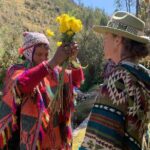
What I like about Chinchero is that it’s not only a viewpoint. You’ll visit a weaving house and get a demonstration on dyeing and weaving techniques, plus time at the Chinchero market. It’s the kind of stop where you can actually connect what you see (pattern, color, fabric structure) to how it’s made.
Chinchero is famous for textiles, and you’ll see that reflected in how the presentation is set up—hands working with materials, demonstrations showing steps, and market energy around craft goods. In practical terms, it’s a great place to ask questions, because the guide can explain what you’re seeing as you look.
From the provider’s guide style praised in past tours, you should expect clear explanations during the weaving portion. Names like Jenny, Ronald, and Yeny show up often in feedback for making each stop feel understandable, not like you’re just herded from one photo spot to another.
One thing to watch: if you’re sensitive to altitude, Chinchero can be more than a quick “walk around.” Move slowly, drink water, and don’t treat the stop like a race to finish shopping.
Moray terraces: reading the Incas’ science in a bowl
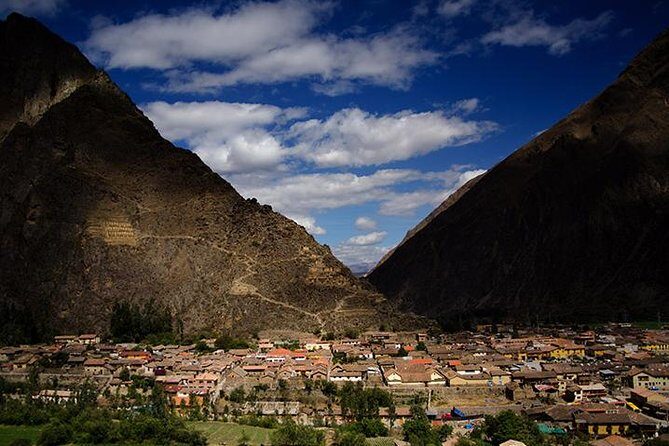
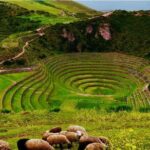
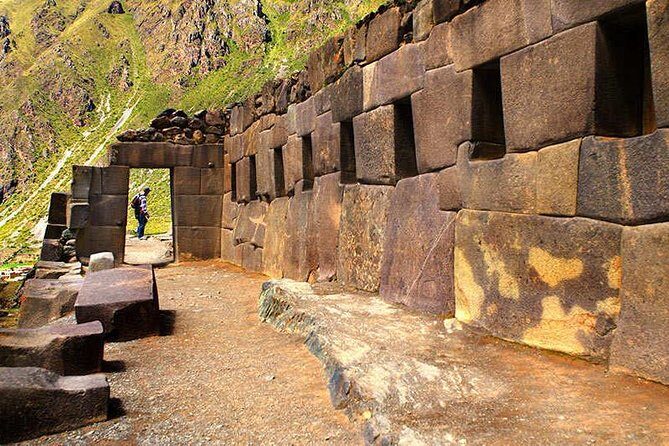
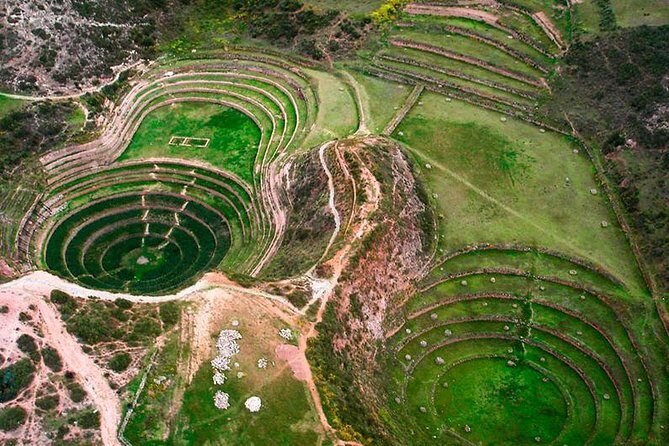
After Chinchero, you descend toward Moray. Moray is striking because it isn’t a single temple or palace. Instead, you’ll see three amphitheater-like terraces carved deep into the earth, forming bowl shapes.
The important idea here is purpose. Moray is thought to have been used to determine optimal crop-growing conditions. In other words, you’re not just looking at ruins; you’re looking at a system designed to test and compare growing environments.
That makes the stop feel different from other Inca sites. You can stand in one spot and imagine how farmers might have adjusted variables like warmth and moisture by changing where crops were planted. The terraces literally help you “see” how experimentation could work.
It’s also a good breather in the itinerary. After the altitude and sensory input of Chinchero’s weaving house and market, Moray’s structure gives you something steady to focus on: lines, tiers, and the way the terraces hold the shape of the bowl.
Practical tip: wear shoes with traction. Even when the walking looks light on the route, terrace edges can be slick depending on conditions.
Maras salt mines: 3,000+ pools and a working salt system
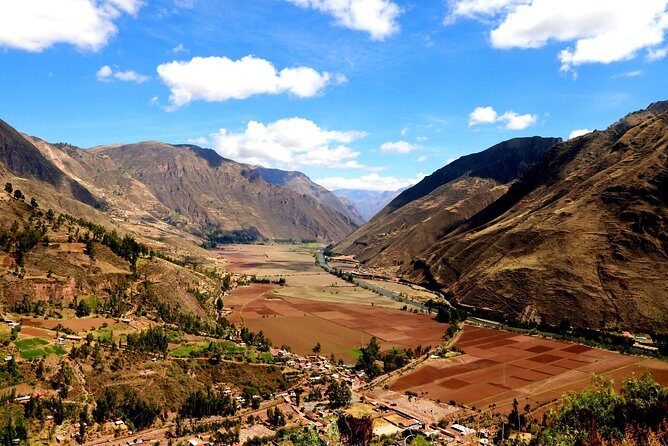
From Moray, you head to the salt mines of Maras. These are in a village area known as a former salt-producing center with roots thought to go back to pre-Inca times.
The headline detail is the scale: over 3,000 salt pools carved into the mountainside. A small stream of water fills the pools daily. That’s what turns this into more than a one-time photo stop. You’re seeing an active process—water moves, pools fill, and salt production happens through repetition.
There’s also a visual logic to how the pools spread. Even if you’re not great at interpreting geography, you can usually find patterns quickly: rows of pools, different surface textures, and a sense of depth as the mountainside steps down.
Maras works especially well for people who like practical, earth-based history. It’s not just ceremonial. It’s industry—built into the hillside, managed through daily flow, and tied to local life over time.
You’ll also want to plan for bright conditions. Salt pools can reflect a lot of light. Bring sunglasses and think about sun protection, especially if your day starts pre-dawn and then turns into a clear morning.
Budget note: the Salt Mines entrance is listed as an extra cost (S/. 10, about $3.3 per person), so don’t assume it’s automatically included.
Ollantaytambo: terraces that feel like a town, not a relic
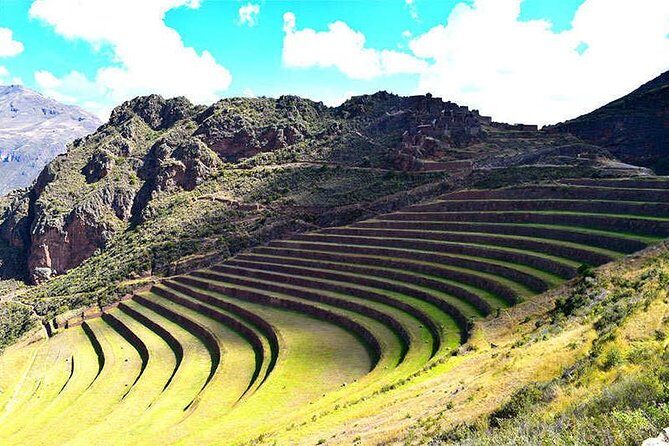
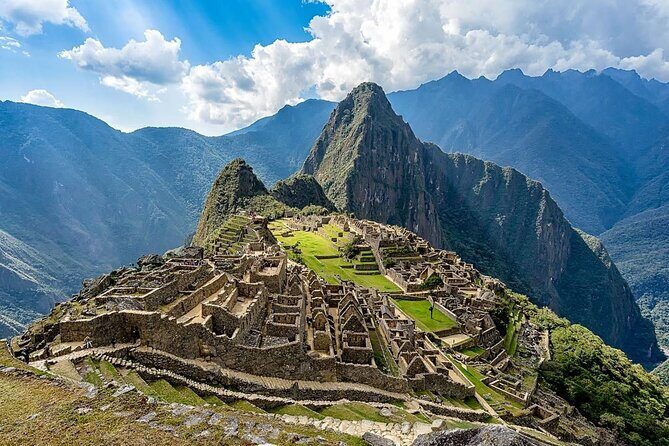
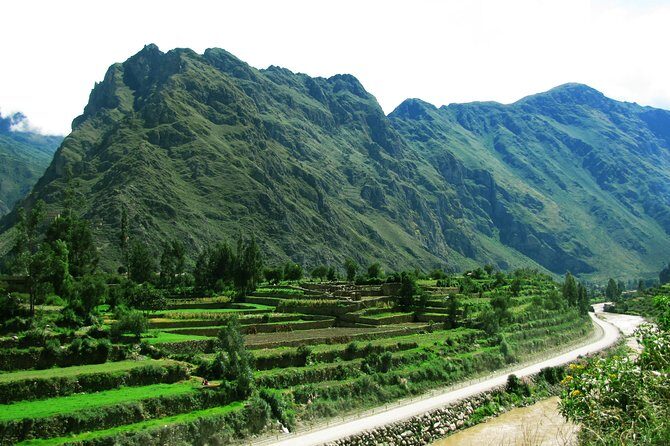
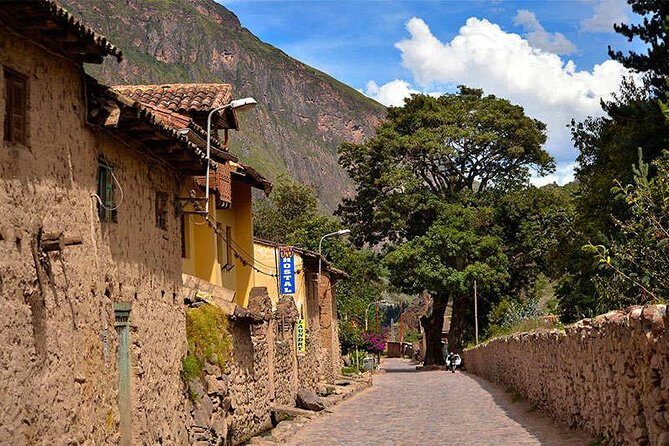
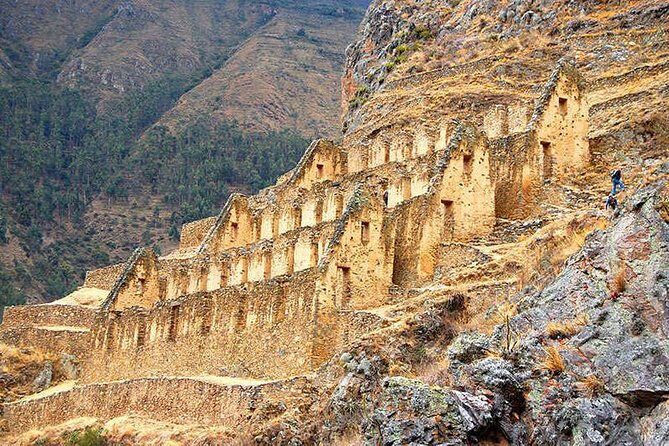
From Maras, you descend to the base of the Sacred Valley and continue on to Ollantaytambo. This stop is famous for an impressive set of terraces leading from the village center.
What makes Ollantaytambo memorable is how the terraces relate to daily space. You’re not just looking at structures that exist “somewhere else.” The design reads like a town layout, with elevation changes and terraces shaping movement and life.
You’ll have time to explore the terraces and the area around the village center. Since this stop comes after Moray and Maras, you’ll likely feel a shift from “science of growing crops” and “salt production mechanics” to “Inca urban and agricultural planning together.”
It’s also a good moment to compare what you noticed earlier. In Chinchero, craft and dye gave you a culture story. In Moray and Maras, engineering and resource extraction told you how people adapted to terrain. Ollantaytambo connects those dots through a built environment that still feels lived-in.


Price and logistics: what you’re paying for in real terms
The tour price is $135 per person, and it includes private transportation and a private tour guide. It also includes hotel pickup and drop-off, which is a big deal in Cusco where coordinating rides can become a time sink.
What’s not included matters for deciding if this is good value for you:
- Tourist ticket for archaeological sites: S/. 70 (about $25 USD) per person
- Salt Mines entrance fee: S/. 10 (about $3.3 USD) per person
- Lunch in Urubamba
So, before lunch, you’re looking at roughly $135 + about $28 in listed entrance fees. Add lunch and you’ll be closer to the mid-$160s range depending on what you choose to eat.
To me, that still reads as fair value because you’re paying for a day that covers four major stops plus private driving between them. If you had to assemble this yourself—tickets, transport, and a guide to explain what you’re seeing—it would be harder to do with the same smooth flow.
One practical thing to confirm: the provided info shows an admission-tickets line that can look contradictory (it says admission ticket free, but also lists ticket fees not included). Before you go, ask the operator what’s included in the ticket you’ll be using for each stop. It’ll save you any awkward moments at the gate.
The guide and driver factor: why this route feels smooth
A one-day Sacred Valley tour can feel either efficient or exhausting. This one leans toward efficient because you’re traveling as a group with a dedicated guide and driver.
In the feedback for this operator, guides like Jenny, Ronald, Yeny, Ernesto Cusi, Jonathon, and Nohemi get praised for clear explanations and friendly attention to questions. Drivers like Miguel also show up in reviews for being skilled and keeping the ride comfortable and safe.
That combination matters because you spend more time understanding each place and less time mentally translating things on your own. When the guide explains what to look for at Moray or how to think about Chinchero’s dye process, you get more out of the limited time you have.
It also helps if you have any mobility needs. One review mentions support for a grandma using a wheelchair, with the team being helpful. Still, I’d treat that as encouragement to ask questions ahead of time if you need specific accommodations.
Who should book this Sacred Valley day trip
I think this tour fits best if:
- You’re in Cusco for the first time and you want a strong Sacred Valley introduction
- You like structure on day one, so you can choose a longer route later
- You’re traveling with family or mixed-age group members who benefit from a private guide
- You prefer not to negotiate transport between sites
It may not be ideal if:
- You want a slow, wandering day with long stays at each site
- You hate early starts (the start time is listed as 12:30 am, so plan for pre-dawn pickup)
- You’re trying to squeeze Sacred Valley views without paying for multiple entry fees
My honest call: should you book Super Sacred Valley?
Yes, I’d book it if you want the biggest Sacred Valley hits in one day without the hassle of coordinating everything. The private guide and transportation make it feel efficient, and the stops actually connect: textiles at Chinchero, experimental terraces at Moray, salt production at Maras, then a more town-like sense of Inca planning at Ollantaytambo.
Just go in with two expectations: you’ll start very early, and you’ll pay separate entrance fees for archaeological sites and the Salt Mines. If you can handle that, this is a solid way to get your bearings fast and decide what to return to when you have more time.
FAQ
What places does this one-day tour cover?
It includes Chinchero (weaving and market), Moray, the Salt Mines of Maras, and Ollantaytambo.
How long is the tour?
The tour is listed as approximately 1 day, with a 6-hour duration.
Is this a private tour?
Yes. It’s a private tour/activity, and only your group participates.
What’s included in the price?
Private transportation and a private tour guide are included, along with hotel pickup and drop-off.
What extra costs should I plan for?
You’ll need to budget for the archaeological site tourist ticket (S/. 70 per person), the Salt Mines entrance fee (S/. 10 per person), and lunch in Urubamba.
Where does the tour start and end?
The tour starts and finishes in Cusco. If you want to start in the Sacred Valley instead, it says extra payment is required.
Can I cancel for free?
Yes. Free cancellation is available if you cancel at least 24 hours before the experience start time.