REVIEW · CUSCO
Sacred Valley Day Trip from Cusco with Maras & Moray
Book on Viator →Operated by Machu Picchu Peru Tours · Bookable on Viator
In the Sacred Valley, one day can feel like a whole week. This 13-hour outing strings together key Inca sites—plus the salt mines at Salinas de Maras—with a guide, hotel pickup, and a real lunch break. It’s a smart way to cover a lot of ground without planning every turn yourself.
What I really like is how the day stays organized from the early start to the last viewpoint. And the people running it seem to take their role seriously—names like Erick and Walter show up in strong guide feedback, and Marilú is also praised for being friendly and doing a great job at the lunch stop.
The one possible drawback is timing: you start at 6:30am, and admission tickets are not included for several major stops (so you may pay about $20 for a partial tourist ticket). If you want a slower pace, this will feel like a lot of driving and short site visits.
In This Review
- Key things to know before you go
- A well-paced Sacred Valley day from Cusco’s doorstep
- Chinchero: Inca palace walls, textiles, and camelid context
- Moray’s amphitheater terraces: an agricultural laboratory, not just ruins
- Salinas de Maras salt mines: thousands of wells in motion
- Urubamba lunch: included buffet you can actually plan around
- Ollantaytambo: still inhabited, plus a fortress climb
- Pisac: handicrafts in town and an Inca agriculture masterpiece
- Price and value: what $50 buys you in real time
- Guides and group size: small enough to feel personal
- Logistics that affect your comfort: pickup, weather, and pace
- Who should book this Sacred Valley day trip
- Should you book it or choose a slower option?
- FAQ
- What time does the tour start?
- How long is the Sacred Valley day trip?
- Is hotel pickup included?
- Is lunch included?
- Are entrance tickets included?
- How big is the group?
- Can the itinerary change for Machu Picchu train plans?
Key things to know before you go
- Early 6:30am start + full loop: You’ll spend most of the day on the move, then slow down at the main stops.
- Two big nature-and-culture stops: Moray (terraced “agricultural lab”) and Salinas de Maras (thousands of salt wells).
- Inca living-on philosophy: Ollantaytambo is still inhabited since Inca times, not just ruins.
- Lunch in Urubamba: A buffet lunch is included, which helps you avoid searching for food between sites.
- Add-on option changes the day: If you’re taking the train from Ollantaytambo to Machu Picchu, you can be dropped near the station and skip Pisac.
- Small group, bilingual when possible: Max 15 people; bilingual service (Spanish/Portuguese) depends on having at least 4 travelers.
A well-paced Sacred Valley day from Cusco’s doorstep
If you’re in Cusco and want the highlights of the Sacred Valley without booking multiple separate tours, this is built for that job. You’ll leave early, ride an air-conditioned vehicle, and return after a full schedule of archaeological stops.
The value here isn’t just that you visit several places—it’s that you get a guide to connect what you’re seeing. For example, Moray makes more sense when explained as an agricultural experiment area, and Chinchero becomes more than a scenic viewpoint once you understand the Inca-era structures and Spanish-era covering.
You can also read our reviews of more tours and experiences in Cusco



Chinchero: Inca palace walls, textiles, and camelid context
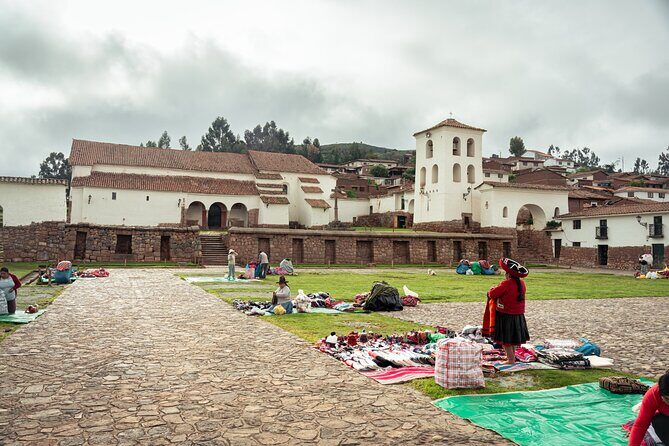
Your first major stop is the Complejo Arqueologico Chinchero, about 2 hours on the schedule. Chinchero is often described as a place where you see layers of history: you’ll find evidence from Inca times, including some walls that studies carried out in the 1960s connected to an Inca palace. Later, those areas were covered by the Spanish.
Chinchero also brings in the human side—there’s an exhibition center focused on textiles and South American camelids. Even if you’re not shopping, it helps you read what you see later in the day, especially around local crafts.
What to watch for:
- Plan for a quick ramp-up. This is the kind of stop where you’ll want to pay attention early, because you’ll be stacking context for the rest of the route.
- Admission isn’t included for this stop, so expect to pay as part of the partial tourist ticket (about $20 total, as noted).
Why it’s worth it: Chinchero gives you a background lens before the more dramatic sites like Moray and the salt mines.
Moray’s amphitheater terraces: an agricultural laboratory, not just ruins
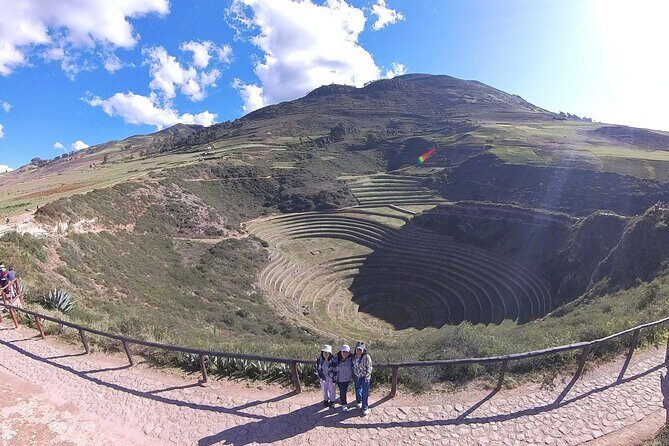
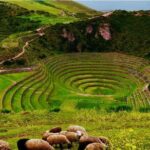
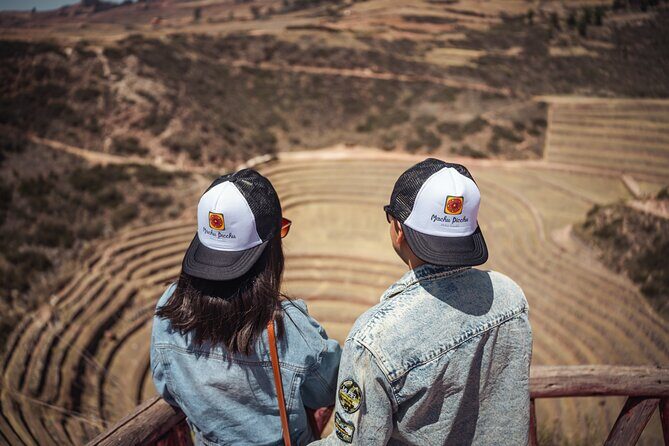
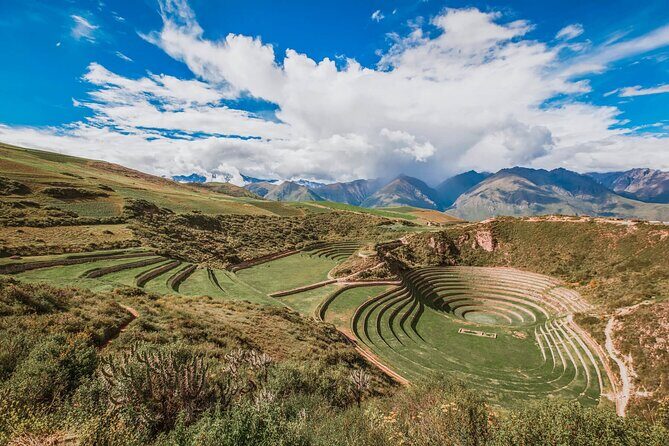
Next is Moray, scheduled for about 2 hours. Moray is famous for its amphitheater-shaped terraces—circular-looking stepped levels that sound like they’d just be for show. The key idea is that the terraces worked as an agricultural testing area in Inca times within Tahuantinsuyo.
The terraces matter because they’re a “how” site, not just a “what” site. You’re essentially looking at a system designed to create different growing conditions through altitude and microclimates. When you understand that, you start seeing architecture as technology.
What to watch for:
- Bring a layer. Even on a clear day, mornings and high areas can feel colder once you’re standing around taking in views.
- Admission isn’t included, so again factor it into your budget for the partial ticket.
Possible drawback: Because the visit is time-limited, you might want to focus on one or two terrace viewpoints rather than trying to “cover everything.” A couple of good angles and explanations will go further than sprinting through.
Salinas de Maras salt mines: thousands of wells in motion
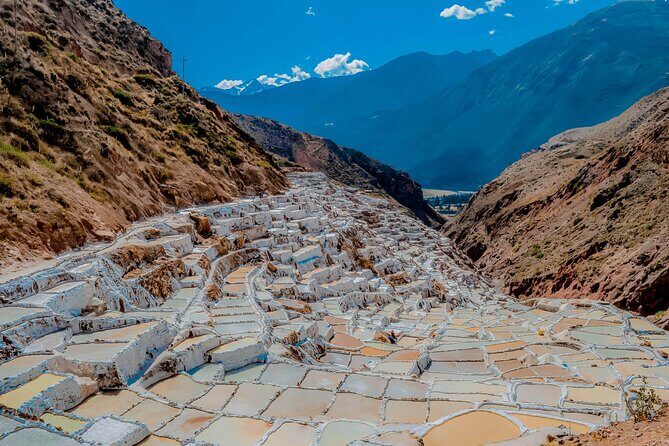
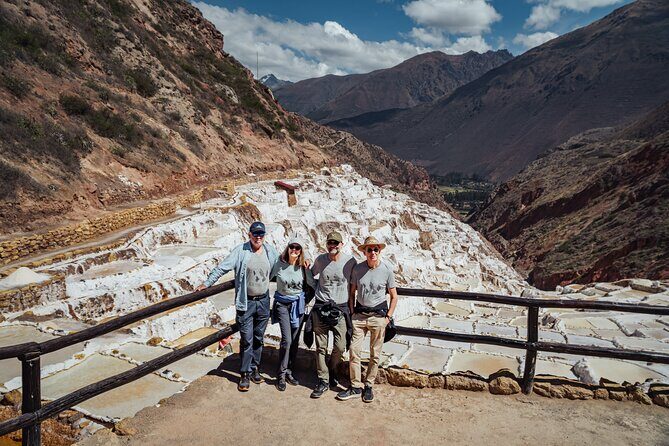
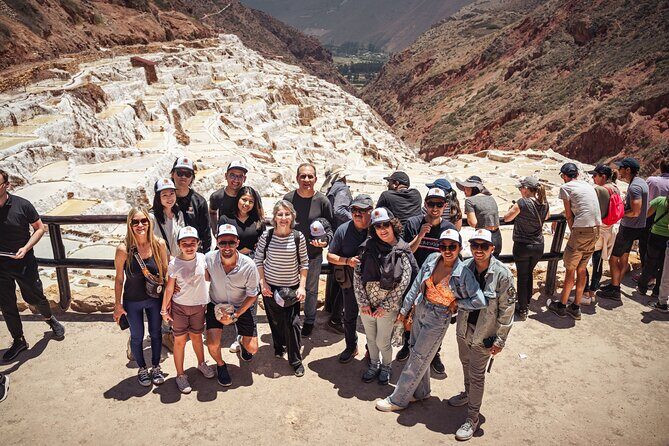
Then you’ll reach Salinas de Maras for about 3 hours. This stop is the visual shock of the day—in a good way. Maras includes salt wells, with more than 5,000 active-looking wells, and the salt is described as being exploited since the Inca period.
This is one of those places where the scale changes how you feel. From a distance it’s a patchwork pattern; up close it becomes a working landscape—something that’s been maintained, not “frozen in time.”
What to do with your time here:
- Take photos, but also watch the workflow if you see people working in the area. It makes the history feel less abstract.
- If weather is clear, the colors and reflections can be striking, so try to find a spot where you can settle for a few minutes rather than moving constantly.
Budget note: Admission for the Salt Flats is also tied to the partial tourist ticket mentioned (not included). The upside is that this is a long enough stop that the ticket cost feels earned.
Urubamba lunch: included buffet you can actually plan around
Your next stop is Urubamba, with about 1 hour for a buffet lunch. The big practical win: lunch is included, which means you don’t have to guess where to eat between sites or negotiate with hunger while your guide keeps things moving.
A buffet is often a mixed bag on tours, but the feedback here is positive, and the schedule gives you a defined window to eat and reset. You’ll also be close enough to keep things low-stress before the next archaeology push.
My advice:
- Eat like you’re going to keep walking—don’t overdo heavy food if you’re sensitive to altitude or motion.
- Bring water if you can; the tour includes lunch, but it doesn’t say anything about water bottles.





Ollantaytambo: still inhabited, plus a fortress climb
Ollantaytambo is on the schedule for about 3 hours, and it’s one of the most satisfying stops because it’s not only ruins. It’s described as uninterruptedly inhabited since Inca times, and the highlight is climbing the iconic fortress built into the side of the mountain.
The fortress is a big reason to choose this itinerary instead of a route that only hits “one-and-done” archaeological parks. Here, you get both context and contrast: everyday life alongside monumental architecture.
What to expect:
- You’ll spend time on the fortress climb, which means you should plan for steps and uneven areas.
- If your plan includes Machu Picchu, Ollantaytambo is the practical pivot point of the day.
Optional change with the Machu Picchu train:
If you have the train from Ollantaytambo to Machu Picchu, the tour can drop you off near the train station afterward. In that case, you won’t do the tour to Pisac. That option can save you time stress—just be sure you’re comfortable losing Pisac from your day.
Pisac: handicrafts in town and an Inca agriculture masterpiece
Your final stop is Parque Arqueologico Pisac, with about 2 hours. This part has two layers: the town experience and the archaeological area.
In town, you’ll have time to explore and find a handicraft market. Then you’ll go to the archaeological area of Pisac, described as a masterpiece of agriculture of the Inca Empire.
This “agriculture-first” framing shows up again after Moray. Together, Moray and Pisac make it easier to see that the Incas weren’t only building cities—they were also engineering growing conditions and managing water and slopes for production.
What to watch for:
- Pisac’s market time can be short, so don’t plan on serious shopping unless you’re okay with quick browsing.
- Admission isn’t included for this stop either, so budget for the partial tourist ticket.
Price and value: what $50 buys you in real time
At $50 per person for roughly 13 hours, this tour is priced for value through logistics. You’re paying for:
- hotel pickup in Cusco’s Historic Center
- an air-conditioned vehicle
- a guide throughout the day
- lunch in Urubamba
- a Maras-related tourist pass being included (while additional partial tickets are still expected)
The big thing: the route itself is long and split across multiple sites. Doing it solo would mean arranging transport, dealing with separate entrance rules, and building a sensible order so you’re not backtracking.
About the partial tourist ticket: the tour notes an expected $20-ish cost for the partial tourist ticket covering Chinchero, Moray, Ollantaytambo, and Pisac. That’s not unusual in Peru, but it matters for your budgeting. If you’re comparing prices, always compare the total cost including entrances.
Guides and group size: small enough to feel personal
This tour caps at 15 travelers, which usually helps you avoid the “everyone just disappears” feeling. It’s still a group day, so you’ll move with the schedule, but small groups tend to make the guide’s job easier.
Language is another practical point. The tour notes that bilingual service (Spanish and Portuguese) requires at least 4 participants. If there aren’t enough people for that, you’ll still get a guide, but the service will run in Spanish and English.
Why this matters to you: if you want explanations (not just directions), a small group and a consistent guide language make the day more satisfying.
Logistics that affect your comfort: pickup, weather, and pace
Pickup starts at 6:30am. Door-to-door service applies only to accommodations in Cusco’s Historic Center. If your place is outside that area—or traffic blocks access—a nearby meeting point will be arranged ahead of time.
Also, this experience requires good weather. If conditions are poor, you’ll be offered a different date or a full refund. In a place like the Sacred Valley, that’s not a small detail; salt flats and viewpoints depend on visibility.
Pace reality check: with around 2 hours at Chinchero, 2 at Moray, 3 at Salinas de Maras, then archaeology time at Ollantaytambo and Pisac, you’re not doing “slow travel.” You’re doing efficient storytelling. If you like that, you’ll probably love this day.
Who should book this Sacred Valley day trip
This is a strong fit if:
- you want a single-day introduction to the Sacred Valley highlights
- you prefer guided explanations, especially for Moray and the Inca agricultural approach
- you’re okay with an early start and a packed schedule
- you value included lunch so the middle of the day doesn’t turn chaotic
It might not be the best match if you’re trying to do only one or two sites per day, or if you hate walking/climbing during archaeological visits.
Should you book it or choose a slower option?
I’d recommend booking this tour if you’re short on time in Cusco and you want a clean, guided path through the Sacred Valley without extra planning. The best part is the combination: Chinchero for cultural context, Moray for how the Incas experimented with agriculture, Salinas de Maras for the dramatic salt mine scale, then Ollantaytambo and Pisac to end with living history and more Inca agricultural engineering.
But if entrances and early starts are a stress point for you, or if you’re the type who wants to linger for long stretches in one place, consider a slower route or a private plan. This itinerary is efficient, not leisurely.
FAQ
What time does the tour start?
Pickup and meeting start at 6:30am.
How long is the Sacred Valley day trip?
The duration is listed as about 13 hours.
Is hotel pickup included?
Yes. Pickup is included from hotels in Cusco’s Historic Center. If door-to-door access isn’t possible, a nearby meeting point will be arranged.
Is lunch included?
Yes. Lunch is included, with a buffet lunch in Urubamba.
Are entrance tickets included?
A Maras Tourist Pass is included, but the partial tourist ticket (for Chinchero, Moray, Ollantaytambo, and Pisac) is not included, and is listed as about $20.
How big is the group?
The tour has a maximum of 15 travelers.
Can the itinerary change for Machu Picchu train plans?
Yes. If you have the train from Ollantaytambo to Machu Picchu, the tour can drop you near the train station afterward, and in that case you won’t do the stop to Pisac.