REVIEW · CUSCO
Sacred Valley: 5 Iconic Sites in One Day Including Maras & Moray
Book on Viator →Operated by Viajes Speedy Tour Operator · Bookable on Viator
Five Inca stops in one long day. This Sacred Valley tour strings together Chinchero, Moray, and Maras, then finishes with the big viewpoints and ruins at Ollantaytambo and Pisac, all with a smooth start from Cusco. I like the hotel pickup that keeps your morning stress low, and the air-conditioned vehicle that makes the ride between sites less punishing at altitude.
Second, the day is guided end-to-end, with a certified English guide who helps you connect what you see to why it mattered. Lunch in Urubamba is built into the schedule too, so you are not hunting for food halfway through the best part of the valley. One guide name that comes up in praise is Beto, noted for adjusting pace when kids are along.
One thing to plan for: the tour price does not include the tourist ticket (PEN 70) or the Maras salt mine fee (PEN 20). Also, you are looking at about 12 hours and some walking on uneven ground, so bring sensible shoes and go easy on day one in Cusco.
In This Review
- Key Things You’ll Notice on This Sacred Valley Day
- Leaving Cusco at 6:00 am: Why this start time matters
- Chinchero: Village life, Inca stonework, and that Sunday market energy
- Moray’s circular terraces: Farming as an experiment, not a guess
- Salinas de Maras salt mines: The mosaic you can still see working
- Urubamba lunch: A buffet that keeps the day on track
- Ollantaytambo: Fortress walls, terraces, and a water temple
- Pisac: Partridge roots, Inca stone precision, and Intihuatana
- Price and logistics: Is $35 good value for this full loop?
- Who this Sacred Valley day tour suits best
- Should you book this Sacred Valley day tour?
- FAQ
- How long is the Sacred Valley tour?
- Where does pickup happen in Cusco?
- What language is the tour guide?
- Is lunch included?
- What entrances cost extra?
- Is there an admission fee for every stop?
- What kind of fitness level do I need?
- Is this tour refundable if my plans change?
- What group size should I expect?
Key Things You’ll Notice on This Sacred Valley Day
- A full Cusco-to-valley routing with pickup and a return to Plaza Regocijo/Plaza de Armas area around 7:00 pm
- Two microclimate stops: Moray’s circular terraces and Maras’s salt pools, both very different, both very photo-friendly
- Chinchero without the crowds feel: a local village market vibe rather than only tourist spectacle
- Urubamba lunch included, positioned as real fuel before the last two ruin-heavy stops
- Small-group style with a maximum of 18 travelers, which matters when you’re navigating altitude and timing
Leaving Cusco at 6:00 am: Why this start time matters
Cusco mornings can feel like a sprint even when you do everything right. This tour starts at 6:00 am, with pickup from your hotel area and the return to Cusco by about 7:00 pm. That early departure is not just about getting more sights in; it helps you beat later crowds and gives you more flexibility if roads are slow.
The ride is in an air-conditioned vehicle, which is a quiet lifesaver in the afternoon when the sun is strong and you are tired. The group is kept to a maximum of 18 travelers, so you are not stuck in a huge herd where you never hear the guide.
One practical note: the tour ends back at the Plaza Regocijo / Plaza de Armas area, so you can usually pivot to dinner without another round of transport juggling. If you are planning a night out, I’d still keep it low-key. This is a long day, and altitude can turn your enthusiasm into foot pain fast.
You can also read our reviews of more tours and experiences in Cusco


Chinchero: Village life, Inca stonework, and that Sunday market energy
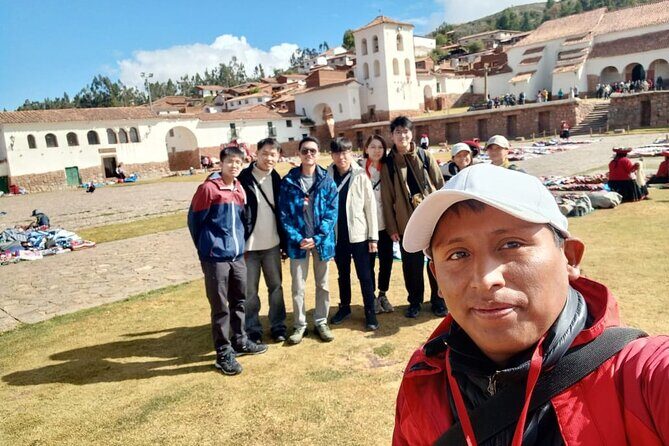
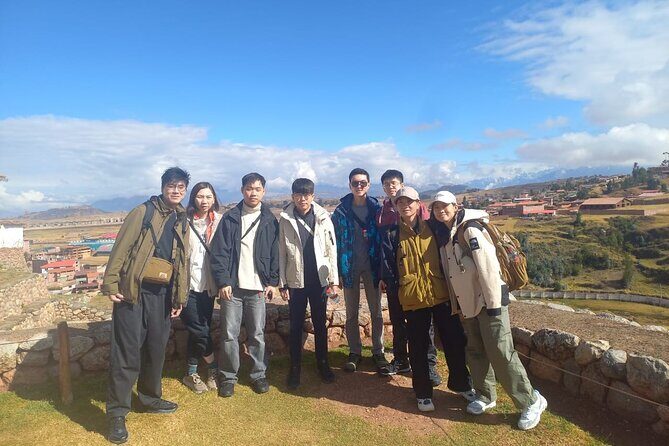
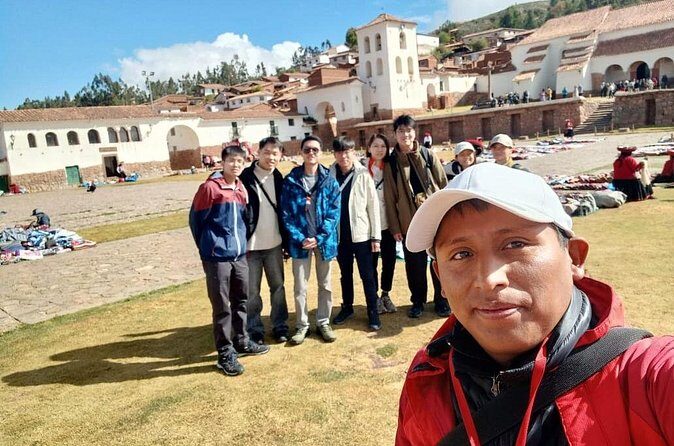
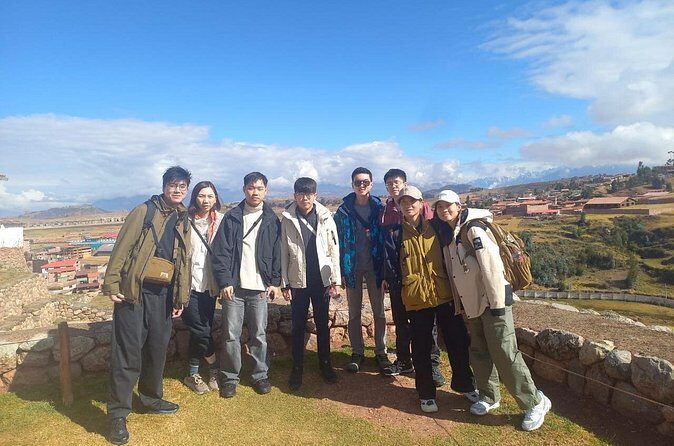
Chinchero is a high Andean village, around 3,765 m, roughly 30 km from Cusco. What I love here is that it is not just another ruin stop. You get views out toward the Sacred Valley, with the Cordillera Vilcabamba and Salkantay’s snow-capped presence shaping the horizon.
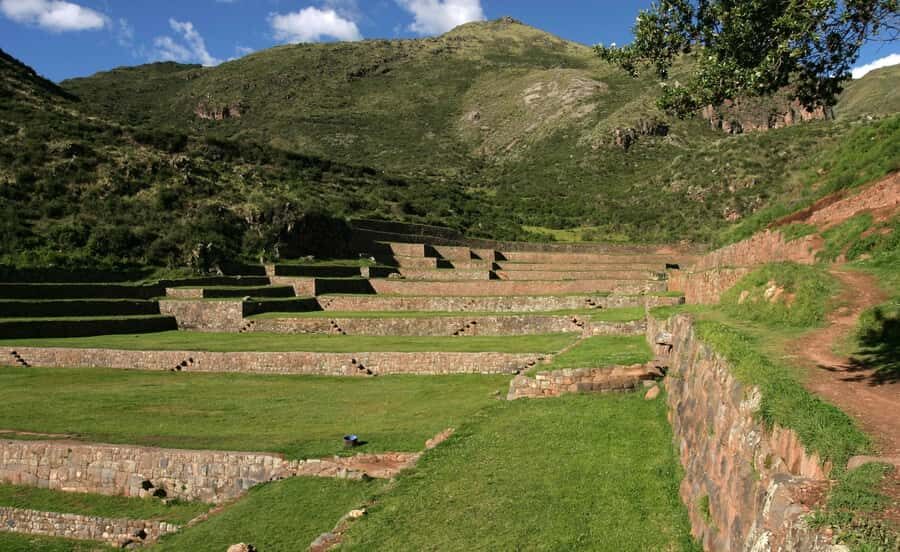
The Inca-era connection is physical and obvious. In the main plaza, there is a massive stone wall with ten trapezoidal niches, a striking remnant tied to Inca building activity attributed to Tupac Yupanqui. Terraces and agricultural work are also still part of daily life, so you are not seeing a museum that could have been frozen in time.
Then there’s the market. Chinchero is known for its colorful Sunday market, and the big point is that it feels less tuned to tourist shopping than the better-known Pisac market. Even if you are not there on a Sunday, the village atmosphere helps you understand why people keep coming back.
The one drawback: Chinchero sits at altitude and the visit is about 2 hours. If you are newly arrived and still feeling the thin-air side effects, pace yourself. Take water breaks before you feel wiped out, not after.
Moray’s circular terraces: Farming as an experiment, not a guess
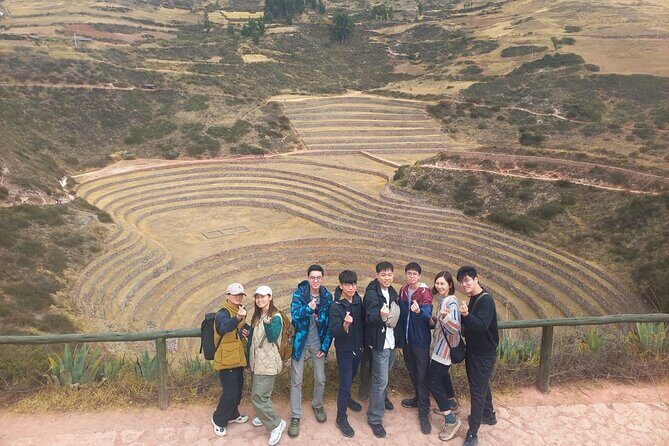
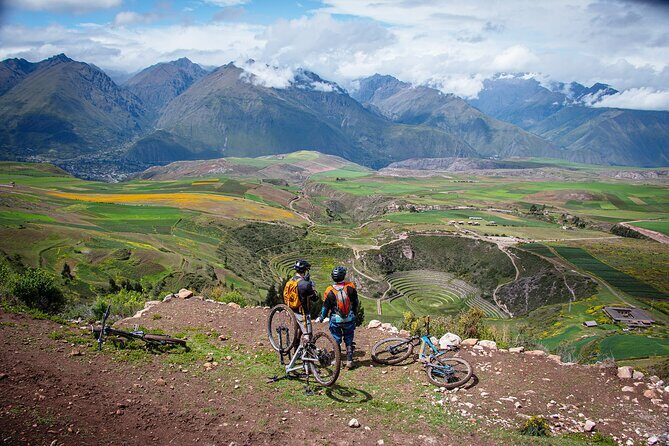
Moray looks like something planned by an engineer with a sense of theater: multiple circular terraces that resemble an amphitheater. The big idea is that the terraces function like an agricultural laboratory. Because each level has its own conditions, the temperature difference between top and bottom can be up to 15°C (27°F).
This is where the story of the Incas shifts from impressive monuments to practical problem-solving. Instead of planting the same crop everywhere, the Incas could test and adapt. The terraces also connect through an irrigation system, showing how seriously they thought about water management and consistent growing conditions.
Your time here is about 1 hour. That sounds short, but Moray rewards slow walking. The paths around the terraces help you see the geometry and the way different levels would create different microclimates.
What to watch for: Moray’s admission is listed as not included, so be ready for an extra fee at the site (or make sure your tourist ticket covers it). Also, because the terraces can be exposed, bring layers and protect your face from sun and wind.
Salinas de Maras salt mines: The mosaic you can still see working
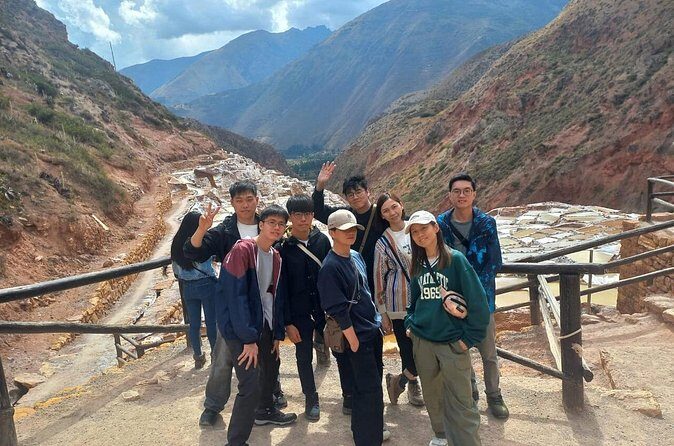
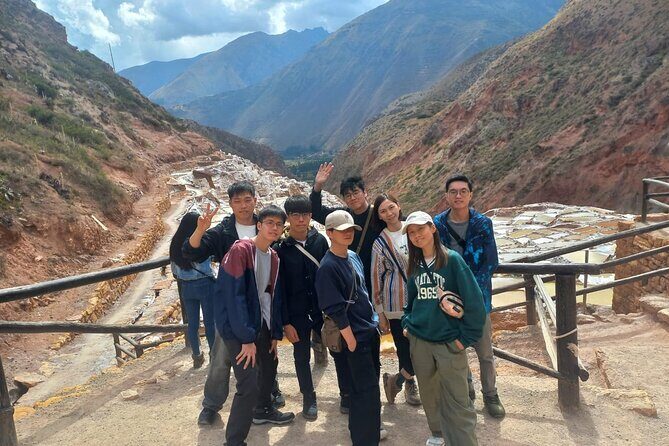
Then you hit Maras, and it’s completely different from the green-and-stone feel of Moray. Salinas de Maras is known for over 3,000 salt pools carved into the mountain slopes, creating a mosaic effect that looks unreal at first glance.
Here’s the practical magic: this salt production is still in use, so you are seeing a working process rather than a fully abandoned industrial scene. That makes photos better too, because there is often real movement in the scene, not just still architecture.
Your visit is about 1 hour, and the salt mine tickets are not included (cost listed as PEN 20 per person). If you like clarity in travel math, think of the tour price as the transport + guide + included lunch, while Maras is one of the key add-ons you should budget for.
One consideration: the ground can be uneven, and you will likely do some walking on and around the pools. Wear grippy shoes. If you have knee issues, take it slow and choose stable spots for photos.
Urubamba lunch: A buffet that keeps the day on track
After the earlier ruins and salt pools, lunch in Urubamba is your scheduled reset. You get about 1 hour, and lunch is included.
This buffet is described as a variety of Peruvian and international dishes, which matters because Sacred Valley days can feel like a parade of tastes and temperatures. What I appreciate most is that the meal is meant to use fresh, locally sourced ingredients, so you are not stuck with mystery food that keeps you chewing on regret later.
The best part of placing lunch in Urubamba is timing. It fuels you for the final two stops, which are the ones that can require more sustained attention and steps: Ollantaytambo and Pisac.
If you are sensitive to spice, you’ll likely find milder options. If you are not, Peru does not hold back. Either way, I’d eat like someone planning to keep moving for the next few hours: not too heavy, not too light.





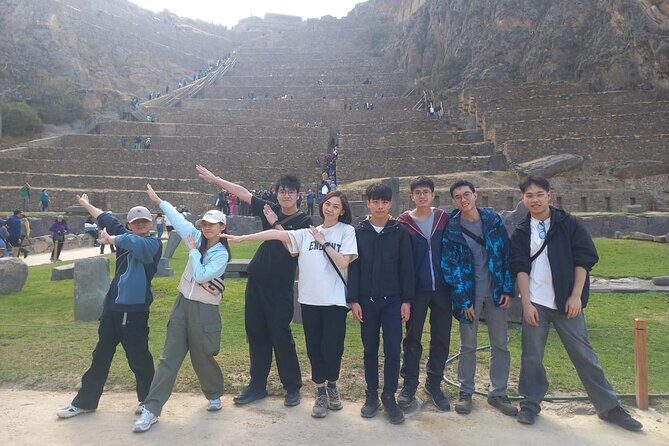
Ollantaytambo: Fortress walls, terraces, and a water temple
Ollantaytambo is where the Sacred Valley stops feeling like a set of separate sites and starts feeling like a system of defenses, worship, and daily life. The village sits at about 9,160 feet, so expect altitude to make even gentle walking feel like a workout.
This stop runs about 2 hours, and the highlights are memorable because they connect stone structures to real-world purpose. You get:
- A ceremonial temple connected to water, with terraces stacked so visitors scale via a steep stairway
- A fortress guarding the valley entrance, built between mountains to repel invasions
- The Temple of Inti for the sun god, plus Incamisana
- The baths of the Ñustas (princesses) and the Cachiccata funerary towers
- Steep tiered terraces on a hillside side
You also learn about Pinculluna, also known as Tunupa, where traces of Inca architecture suggest storehouse use for foodstuffs. And Ollantaytambo is more than ancient stone. It is described as a meeting place for nearby communities such as the Huayruros de Willoq, which helps explain why the area still feels alive.
The drawback to plan for: Ollantaytambo involves more climbing than some other stops. If you tend to cramp when tired, you’ll want breaks and a slower pace. Bring water and do not wait until you feel dizzy.
Pisac: Partridge roots, Inca stone precision, and Intihuatana
Pisac is the last big ruin stop, and it closes the day with a strong sense of place. The site is noted for its balanced stone block walls, with proportion and tight joints that make the architecture feel almost engineered by hand. The name Pisac has a Quechua origin meaning partridge, a detail that helps you remember this is not just an Inca theme park.
There’s also a theory mentioned that Pisac was similar to the Royal Estate of Inca Pachacutec, which helps explain why you see connected elements: terraces, ceremonial rooms, palaces, walls, and towers all tied together without looking random.
Your visit here is about 1 hour, and the key stopping point is Intihuatana. This is described as the most important ceremonial and religious site in Pisac, made of sedimentary rocks. Its Quechua meaning is linked to sundial, and it is considered a Temple of the Sun, also used as an astronomical observatory.
Even if the details don’t stick instantly, the viewpoint does. From higher points, you can appreciate how the Sacred Valley opens up below you. That is part of what makes this final stop work: your brain gets closure, and the ruins look like what they were built for—seeing, timing, and controlling access.
One consideration: because you are finishing the day, fatigue can reduce how much you absorb. Take a few slow minutes near Intihuatana to just watch the light and the valley view, then let the guide’s explanations land.
Price and logistics: Is $35 good value for this full loop?
Let’s talk value in real terms. The tour price is $35 per person, which covers pickup, air-conditioned transport, a certified guide, and lunch. You are also getting a long routing through several major Sacred Valley sites, with enough time allocated to experience each one rather than rushing through everything like a checkpoint line.
But the key costs you should budget for are the tourist ticket (PEN 70) and the Maras salt mine fee (PEN 20). Also, Moray is marked as admission not included, so you may face additional entrance spending depending on what your ticket covers. In other words: this is a good transport-and-guide deal, but you still need to pay to enter at least some of the most important places.
Where this tour feels like a smart buy is for travelers who want structure. If you tried to DIY all these stops with local buses and taxis, you’d burn time and energy fighting timing. Here, the schedule handles the transitions and keeps the day moving.
This tour also fits well if you want a one-day overview and you are planning a multi-day trip afterward. A long day works if you like seeing a lot, but it can be too much if you prefer slow travel and minimal walking.
Who this Sacred Valley day tour suits best
This is a great fit if you:
- Want a single-day Sacred Valley overview with the main names: Chinchero, Moray, Maras, Ollantaytambo, and Pisac
- Like having a guide connect the visuals to the “why,” especially for Moray and Intihuatana
- Value included lunch instead of guessing what you’ll eat while traveling between sites
- Prefer a smaller group size (max 18 travelers) so you can hear the guide and keep your pace
It might be less ideal if you:
- Are very sensitive to walking and stairs, especially at Ollantaytambo and in parts of Pisac
- Want to minimize additional entrance fees beyond the base tour price
- Arrive in Cusco and need a totally gentle day (this one is not gentle)
Should you book this Sacred Valley day tour?
I’d book it if your goal is to see the Sacred Valley’s greatest hits in one day without the headache of coordinating separate tickets and rides. The mix of stops is strong: Chinchero gives you village character, Moray explains Inca agriculture logic, Maras shows a still-working salt production system, and the last two stops deliver classic Inca stone power at Ollantaytambo and Pisac.
I’d think twice if you know you get hit hard by altitude, because this is long and involves walking on real ground. In that case, you might consider a lighter first day and save the heavier ruin stops for when your body feels steadier.
If you do book, go in prepared: good shoes, water, and an honest expectation that you will spend extra on entrance fees. Then you’ll get a full day that feels like you actually learned something, not just checked boxes.
FAQ
How long is the Sacred Valley tour?
It runs for about 12 hours (approx.), starting at 6:00 am and returning to the Cusco meeting point around 7:00 pm.
Where does pickup happen in Cusco?
Pickup is from your hotel in Cusco. The meeting point is Plaza Regocijo, and you should wait inside the lobby a few minutes before pickup time.
What language is the tour guide?
The tour is offered in English.
Is lunch included?
Yes. You get a buffet lunch in Urubamba, included in the price.
What entrances cost extra?
The tourist ticket (PEN 70 per person) is not included, and salt mine tickets for Maras (PEN 20 per person) are not included. Moray is also marked as not included for admission.
Is there an admission fee for every stop?
Not every stop. Chinchero, Ollantaytambo, and Pisac are marked as admission ticket free, while Moray and Maras salt mines are marked as not included.
What kind of fitness level do I need?
The tour requires moderate physical fitness. There is walking at multiple sites, including some steep stair areas.
Is this tour refundable if my plans change?
Yes. You can cancel for free up to 24 hours before the experience start time for a full refund.
What group size should I expect?
The tour has a maximum of 18 travelers.