REVIEW · CUSCO
Cusco: The best of The Sacred Valley PRIVATE Tour
Book on Viator →Operated by Into Peru · Bookable on Viator
One day, five Sacred Valley highlights. This private Cusco tour strings together Chinchero’s textile workshop and Sunday-market feel, Moray’s circular terraces, Maras salt pans, plus Inca sites at Ollantaytambo and Pisac, all with an English-speaking guide.
I also like that pickup and drop-off are handled for you, so the day runs on schedule instead of on guesswork.
The only real catch is the timing: it starts around 7:00 am and lasts about 12 hours, so you’ll want to be ready for a full, packed day (even though each stop is planned). If you prefer to linger for hours in one place, you may feel it’s a sprint.
In This Review
- Key things worth your attention
- A route that hits the Sacred Valley’s greatest hits
- Morning pickup in Cusco: 7:00 am, then you’re rolling
- Chinchero’s textiles and Inca-plus-colonial atmosphere
- Moray’s circular terraces: ancient farming experiments made visible
- Maras salt pans: a 500-year process you can watch
- Urubamba buffet lunch: the mid-day reset
- Ollantaytambo fortress and temple: Inca power at the valley’s edge
- Pisac ruins and market: terraces built with real scale
- Price and value: is $225 per person fair for this day?
- The guide experience: what makes the day click
- Who should book this Cusco Sacred Valley day?
- Should you book this private Sacred Valley tour?
- FAQ
- What time does the tour start, and how long is it?
- Is this a private tour?
- Which stops are included in the day?
- Is lunch included?
- Are admission tickets included at the sites?
- Will the guide speak English?
- What is the cancellation policy?
- Is pickup and drop-off included?
Key things worth your attention

- Private group = less waiting and fewer crowd headaches at the main stops
- English-speaking guide helps you connect the dots fast, and answer questions clearly
- Textiles at Chinchero go beyond photos, with a master weaver walking through the full process
- Moray + Maras turn two very different “how did they do that?” sites into one logical arc
- Lunch in Urubamba gives you a real pause mid-day with a buffet included
- Pisac ruins + market pair big Inca building skill with everyday local shopping energy
A route that hits the Sacred Valley’s greatest hits

This tour is designed for people who want to see a lot without feeling lost. You’re not just ticking off names; the day is built around themes: how Andean communities make textiles, how people shaped crops in an ancient “agricultural lab,” and how salt production worked for centuries.
I like the pacing because it’s structured. Each stop gets time that matches what it is: shorter at Moray, longer where you’ll want to walk and look around. That matters in the Sacred Valley, where viewpoints and ruins reward slow attention.
You’ll also get the practical win of a private setup. No squeezing into a bigger bus plan. No awkward “where’s the rest of the group?” moments. It’s just your party, your guide, and a driver moving you from one highlight to the next.
You can also read our reviews of more private tours in Cusco



Morning pickup in Cusco: 7:00 am, then you’re rolling
You start around 7:00 am with hotel pickup, and that early move shapes the whole day. Starting sooner helps you spend more of your morning in a calmer rhythm before the busiest parts of the valley build up.
You should expect the tour to run for about 12 hours, so plan your day accordingly. Bring layers even if Cusco feels mild that morning—conditions in the Sacred Valley can shift fast, and you’ll be outside at several stops.
If you get motion sick, it’s worth taking it seriously here too. You’ll be in a vehicle for multiple legs between sites. The upside is that you’re not driving yourself or coordinating separate transport.
Chinchero’s textiles and Inca-plus-colonial atmosphere
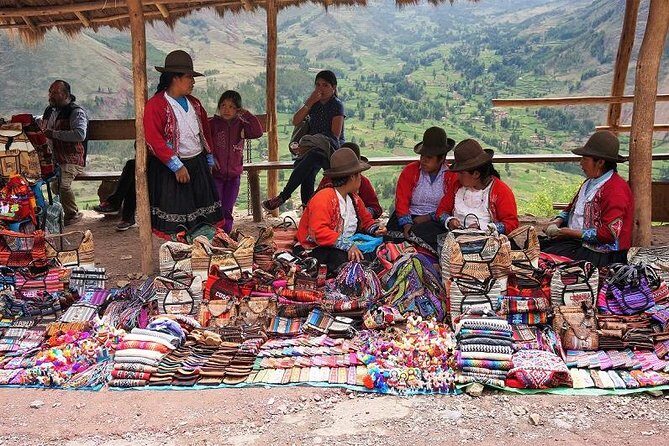
Chinchero is where the day gains personality. It’s a typical Andean village with Inca ruins and a colonial church, plus mountain views and a colorful Sunday market. Even if you’re only there for about an hour, it’s the kind of stop that makes the Sacred Valley feel like a living place, not a museum.
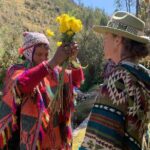
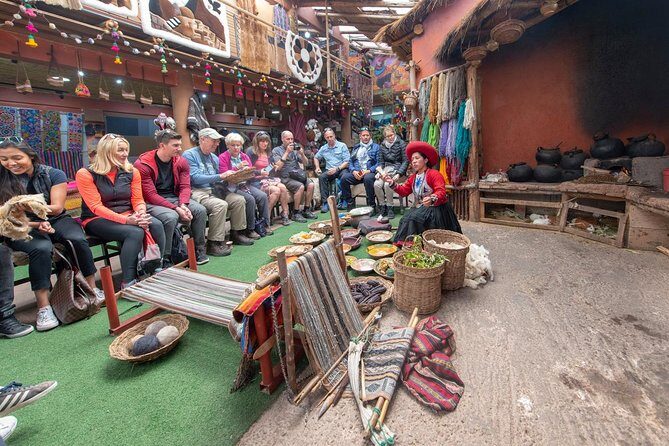
The highlight is the textile demonstration with a master weaver. You’ll learn the stages step by step, from gathering raw materials to washing, then dying threads using natural dyes. The practical value here is that the process suddenly makes sense. Instead of thinking of textiles as a finished product, you understand them as a chain of skills and choices.
Then there’s the bonus: you can buy products at the end of the demonstration. That’s the best time to shop if you want to connect what you’re seeing with what you’re buying. If you’re looking for a specific color or item type, watching the process first helps you ask smarter questions.
Admittedly, Chinchero can feel a bit “on schedule,” since the stop is time-limited. Still, it’s one of the best ways to avoid a cookie-cutter ruins day.
Moray’s circular terraces: ancient farming experiments made visible
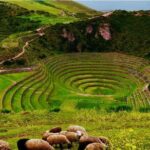
Next up is Moray, an archaeological site located about 4.5 miles from Maras and 39 miles from Cusco. The headline feature is its circular agricultural terraces, dug down as deep as about 330 feet.
Some people believe the Incas used Moray like a laboratory to test optimal crop conditions for different species. Whether you treat that idea as theory or fact, the terraces themselves are visually effective. You can stand and actually picture how controlled conditions might matter—sun exposure, temperature differences by depth, and farming experimentation.
Your time here is about 30 minutes, and that’s about right. This isn’t a “wander for half a day” place. It’s a quick hit where you focus on one main thing: the unusual shape and the terraces’ depth.
Tickets are included for Moray in this tour, so you don’t have to handle that extra step mid-day. It’s one less little thing to think about while you’re moving.
Maras salt pans: a 500-year process you can watch
After Moras, you continue to Maras. The plan includes a visit to the colonial town of Maras and its church, then on to the ancient salt pans carved into the mountainside.
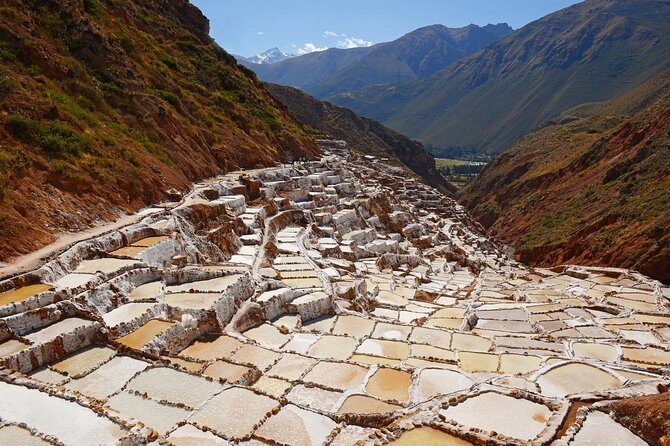
This is one of those stops where the details matter. The salt pans are made of thousands of shallow pools filled with salt water. Over time, the water evaporates, leaving crystallized salt behind. This process has been practiced for more than 500 years.
What I like about pairing the town and the salt pans is that you don’t get only one side of the story. The church and town give you a sense of place and continuity, while the pans show the working landscape side—salt production shaped into the mountain.
Your salt pans stop is about an hour, which is useful. You’ll want that time to walk the area and take in how many small pools make the whole operation look like an intricate grid.
Admission is included at Salinas de Maras on this tour. That helps keep the day smooth, and it means you can focus on the experience instead of logistics.



Urubamba buffet lunch: the mid-day reset
Urubamba is where you eat, with a buffet lunch included. This is a practical and underrated part of the tour plan. After mornings spent walking around different sites, you need a break that’s comfortable and predictable.
Buffets also work well in a day like this because you can choose what suits you without waiting for a single set menu. You’ll likely find it easier to keep energy up for the afternoon ruins.
One small consideration: since the whole day is about maximizing sightseeing time, lunch is a stop that resets you rather than stretches out into an all-afternoon linger. It’s about refueling and getting back on the move.
Ollantaytambo fortress and temple: Inca power at the valley’s edge
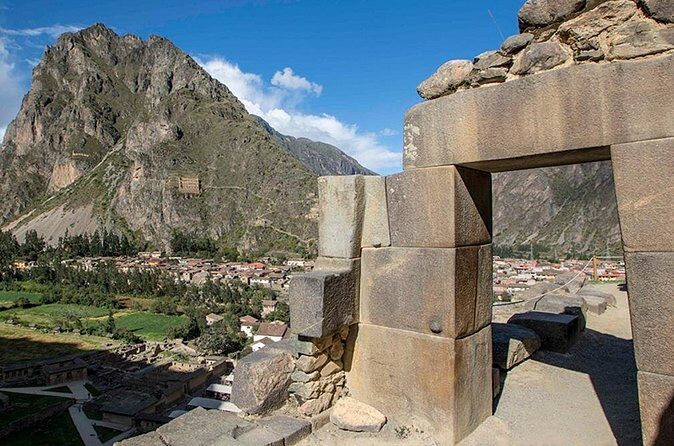
Then you head to the Archaeological Park Ollantaytambo, described here as an ancient Inca temple and fortress. It sits at the northwestern end of the Sacred Valley of the Incas, so it has that “edge-of-the-valley” feel where the geography seems to frame the site.
This stop is about one hour. That time length works because you’re not trying to do everything at once—you’re getting a focused look at the temple and fortress layout, and you can pick out what draws your eye.
The value for you is in the contrast. Earlier you saw farming terraces (Moray) and salt production (Maras). Here, the emphasis shifts to how the Incas built durable, strategic spaces for worship and defense.
Admission is included for Ollantaytambo on this tour, which keeps the day streamlined.
Pisac ruins and market: terraces built with real scale
Pisac is where the day turns toward big-picture Inca engineering. You’ll visit the archaeological park at Pisac and also the local market, with time planned so you’re not just looking from one spot.
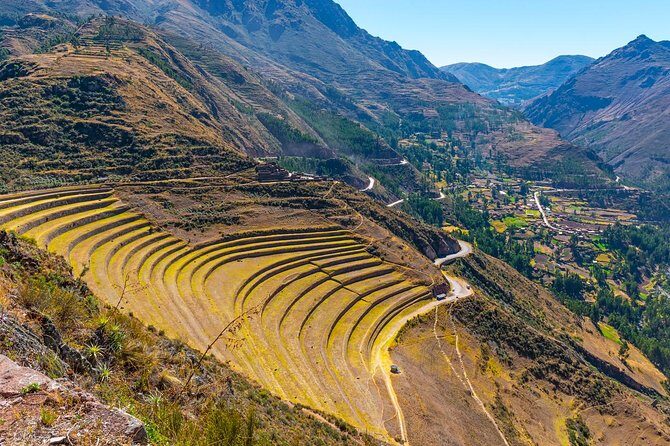
The ruins have a relatively small number of tourists visiting daily, which matters for how you experience them. You can spend time moving around and paying attention to the different structures—plazas, temples, pools, and other building areas constructed between the 10th and 11th centuries AD.
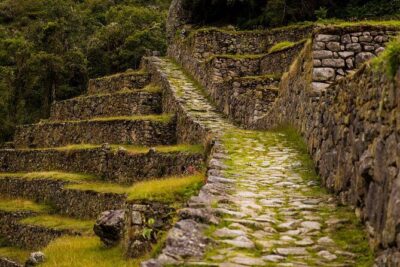
A specific detail that’s worth holding onto: the Inca architecture uses techniques to build enormous terraces that go from south to east, covering a huge mountain at about 3,000–3,450 masl. That’s not trivia for its own sake. It helps you understand why Pisac feels so visually commanding. You’re seeing the way architecture and agriculture overlap.
Your time here is best treated as “walk and look,” not “check one view and go.” The tour plan even notes you’ll want to reserve several hours to explore—so if your schedule only allows one major ruins day, Pisac is the place to prioritize in your own head.
Admission is included for Pisac in this tour, and the market gives you a chance to bring the day back to current local life. It’s the rare pairing of stone history plus everyday shopping energy.
Price and value: is $225 per person fair for this day?
At $225 per person for about 12 hours, the price can feel high at first glance—until you break down what’s actually included.
You’re paying for a private tour, which means you’re not sharing the guide or vehicle with strangers. You’re also getting an English-speaking guide that helps you understand what you’re seeing, not just point at it. On a day packed with different kinds of sites, that interpretation time is a big part of the value.
Then there’s the route coverage. This one day touches Chinchero, Moray, Maras salt pans, Urubamba, Ollantaytambo, and Pisac. That’s a lot of movement and a lot of “separate errands” you’d normally handle with separate tickets, taxis, and multiple guides.
Lunch is included at Urubamba as a buffet. For many people, that alone makes planning easier and budgeting calmer.
Also, this is typically booked about 45 days in advance on average. That timing tells you something: it’s not just popular, it’s the kind of itinerary people reserve early when they want a full Sacred Valley day without hassle. If you’re traveling in a busier period, booking sooner rather than later is smart.
The guide experience: what makes the day click
One of the most praised parts of this tour is the guide. In particular, Jenny is highlighted as exceptional, answering questions and bringing the culture and history of the Sacred Valley to life.
That’s exactly what you want from a private English-speaking guide here. When you’re moving from textile traditions to farming terraces to salt production, you need someone to connect why each site matters. The guide also helps you ask better questions—like what you’re seeing in the demonstration, what the terraces might have been used for, and why the salt pans have endured.
I’d also pay attention to how the guide keeps you on track. A packed day can become stressful if the pacing is sloppy. Here, the itinerary structure suggests the guide will manage timing so you still see the main highlights without running into major dead spots.
Who should book this Cusco Sacred Valley day?
This tour fits best if you:
- Want a private Sacred Valley day with your group only
- Prefer an English-speaking guide to handle interpretation and questions
- Want to see multiple signature sites in one stretch rather than doing them one by one
- Like having lunch handled for you with the Urubamba buffet
It may not be your best match if you hate early starts or you need long, slow time in one place. With about 12 hours on the clock, the whole day is planned to maximize sightseeing, not to linger at every turn.
That said, for most people, the balance between stop length and variety is a win: you end the day with a bigger picture of the Sacred Valley than if you only saw one or two spots.
Should you book this private Sacred Valley tour?
If you want an efficient, well-structured day that covers the Sacred Valley’s major landmarks with a guide who can explain what you’re seeing, I think this is a strong pick. The Chinchero textile demonstration, Moray’s circular terraces, the Maras salt pans, and the two major ruins stops at Ollantaytambo and Pisac give you a mix of daily life, ancient tech, and big architecture.
Book it when your priority is a single-day overview with less friction. Consider a different style tour if your perfect day is slow and quiet, with lots of unplanned extra time.
FAQ
What time does the tour start, and how long is it?
It starts at 7:00 am and runs for about 12 hours.
Is this a private tour?
Yes. It’s private, meaning only your group participates.
Which stops are included in the day?
You’ll visit Chinchero, Moray, Salinas de Maras, Urubamba (for lunch), Ollantaytambo, and Pisac.
Is lunch included?
Yes. Lunch is a buffet in Urubamba.
Are admission tickets included at the sites?
Admission is listed as free for Chinchero and Urubamba. It’s included for Moray, Salinas de Maras, Ollantaytambo, and Pisac.
Will the guide speak English?
Yes. The tour is described as having an English-speaking guide.
What is the cancellation policy?
You can cancel for a full refund up to 24 hours before the experience’s start time.
Is pickup and drop-off included?
Yes. The tour includes hassle-free pickup and drop-off.