REVIEW · CUSCO
From Cusco: Sacred Valley and Salt Mines of Maras with Lunch
Book on Viator →Operated by World Explorer Peru · Bookable on Viator
A day in the Sacred Valley, packed but doable. You’ll bounce from Inca agriculture sites to working salt wells, then end in Pisac with market energy. What makes this itinerary especially fun is how often the places connect to everyday life, not just ruins.
I really like Chinchero for the artisan market—color, movement, and textile work that traces back to pre-Columbian styles. I also love Maras salt mines because it’s a real, still-working system: thousands of small wells where salt dries in the sun from an underground stream.
One thing to consider: it’s about 12 hours and there’s a fair amount of walking across multiple stops. If you’re not used to uneven ground at altitude, take your time, and plan on a slower pace.
In This Review
- Key Highlights You’ll Care About
- How This 12-Hour Sacred Valley Loop Works From Cusco
- Chinchero Artisan Market: Textiles, Barter Roots, and Inca-Base Charm
- Moray’s Circular Terraces: Agricultural Experiments and Pachamama Energy
- Maras Salt Mines: The Still-Working System Behind ~3,000 Wells
- Urubamba Buffet Lunch: Maize, Fruit Trees, and a Real Break
- Ollantaytambo Inca Village: Temples, Intihuatana, and Stone Built to Last
- Pisac Archaeological Park and Artisan Market: Late-Day Atmosphere Pays Off
- Price and Logistics: Is This $40 Tour a Good Deal?
- Who This Tour Fits Best (and Who Should Skip It)
- Should You Book This Tour?
- FAQ
- What’s included in the tour package?
- What tickets do I need to pay for separately?
- How long is the tour?
- How physically demanding is it?
- What language will the guide use?
- Can I cancel for a full refund?
Key Highlights You’ll Care About
- Chinchero artisan market with a textiles focus and barter-rooted trading tradition
- Moray’s circular terraces used for agricultural experimentation, tied to Pachamama ideas
- Maras salt mines’ ~3,000 wells fed by an underground stream that dries in sunlight
- Urubamba buffet lunch in the fertile valley, known for maize and fruit production
- Ollantaytambo’s temple structures like the Temple of the Sun and Intihuatana
- Pisac archaeological area and artisan market, often timed with late-day atmosphere
How This 12-Hour Sacred Valley Loop Works From Cusco
This tour is built as a long one-day circuit. You’ll get pickup from your hotel, ride in a group, and move through several “signature” Sacred Valley stops: Chinchero, Moray, Maras, Urubamba, Ollantaytambo, and Pisac. With about 12 hours total, it’s the kind of day that feels full from start to finish.
Because it’s a group format, the pace is steady rather than rushed. You’ll spend enough time at each place to understand what you’re looking at—especially if your guide likes to talk and explain. In past groups on this route, guides such as Rudy and Jose have been praised for patient, clear explanations (and Rudy even handled English-only needs well). If you care about language, this is one of those tours where having a guide who actively explains in English can make a huge difference.
Also, keep your expectations realistic: you’re seeing a lot of ground, not lingering in one location all day. If you like hopping between highlights, this works. If you prefer deep, slow museum-style visits, you may feel the squeeze.
You can also read our reviews of more tours and experiences in Cusco

Chinchero Artisan Market: Textiles, Barter Roots, and Inca-Base Charm
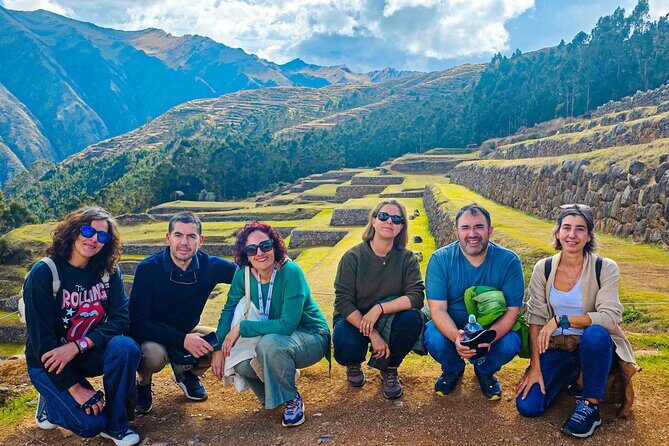
Your first major stop is Chinchero, about 28 km from Cusco on the tarmac road toward Urubamba. The town itself sits on top of Inca foundations, with a colonial temple feel that gives the area a layered vibe—even before you reach the market.
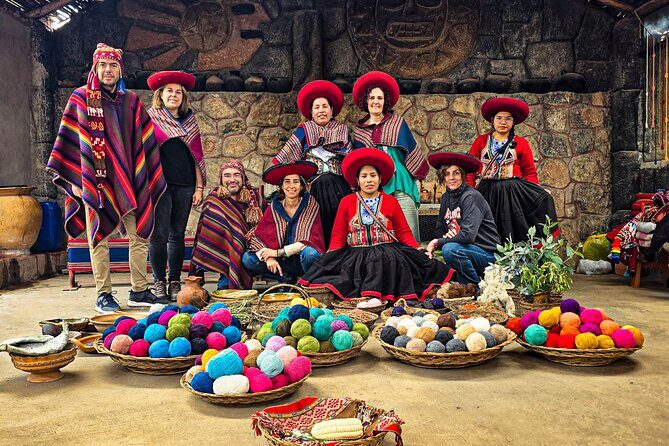
The real star here is the artisanal market. This market originally served barter of agricultural products between valley communities and higher mountain ranges. Today, that barter logic has turned into a craft and textile show. You’ll see garments made in what’s described as pure pre-Columbian style, which makes Chinchero more than just a souvenir stop. It’s a place where you can watch how textiles and craft-making connect to the region’s identity.
What I like about this stop for you: it gives you an early “culture lens” for the rest of the day. After Chinchero, Moray and Ollantaytambo aren’t just ruins—they feel tied to a way of life, including farming and making.
Practical tip: markets can be lively and tactile. If you want photos, move slowly at the edges first, then step in once you’ve found the angle you want. Also, if you’re shopping, don’t feel pressured. Chinchero is a good place to learn what things look like in real life before you decide later.
Moray’s Circular Terraces: Agricultural Experiments and Pachamama Energy
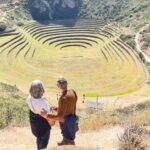
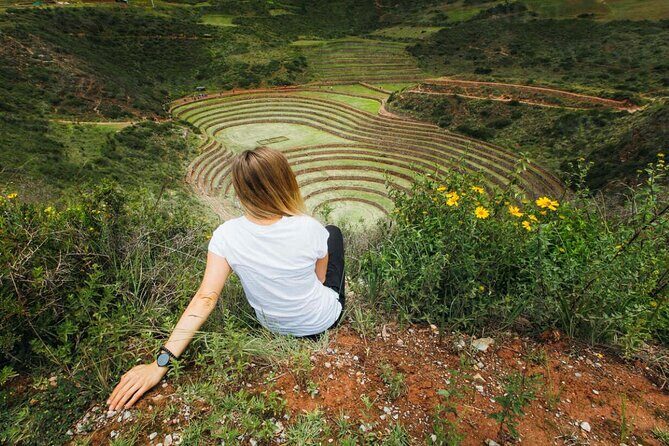
Next up is Moray, located about 7 km from Maras. It’s described as a powerful visit because of its circular terraces in different sizes. Even if you don’t know farming details, the shape helps you grasp the idea: these terraces are laid out to create changing conditions.
Moray is tied to agriculture experimentation—terraces that likely helped test how crops might respond to different microclimates. There’s also a spiritual layer here: the terraces are associated with ideas of female energy and considered a magnetic center of Pachamama. You don’t have to treat that as literal to appreciate how locals interpret the place. It adds meaning to why people value it.
What to watch for: the geometry. Look for how the terraces step down and around each other. It’s easier to understand once you treat it like an outdoor diagram of experimentation—rather than just “cool circles.”
A consideration: Moray is outdoors. If weather is harsh—wind, cold, or sun—dress in layers. The tour is long, and you’ll want comfort so you can actually focus on what you’re seeing.
Maras Salt Mines: The Still-Working System Behind ~3,000 Wells
Then you reach Maras Salt Mines, often called salt mines. This area sits northwest of the town of Maras and includes around 3,000 small wells. Here’s the key idea: this isn’t just a historic site you look at from a distance. It’s a working process.
Salt is made through a drying system using saltwater that comes from an underground stream. Water flows, then sun evaporation does the hard work. Once the salt crystallizes, it’s ready for sale. That “drying in the sun” part is what makes the mines feel grounded and real.
Why you’ll enjoy this stop: Maras turns “resources” into something visible. You can see the pattern, the repetition of wells, and how human labor interacts with climate. Compared to stone temples, it’s a different kind of engineering—and it’s still operating.
Practical tip: bring water and plan for time to look. The scale is what gets you. Don’t just snap wide photos—walk enough to see the repetition of the wells and how they change perspective as you move.
Tickets matter: the Salt Mines ticket is not included and is listed at $6 per person. Budget for it so you’re not stuck at the last moment.
Urubamba Buffet Lunch: Maize, Fruit Trees, and a Real Break

Between archaeology stops, there’s Urubamba, a countryside area known for Inca production of maize and today for fruit trees. This is also where your included typical local buffet lunch happens.
Lunch is more than calories on this kind of tour. It’s your recovery window from altitude walking and long rides. A buffet also helps because you can choose what your body feels like handling—especially if you’re tired and the idea of a heavy meal doesn’t sound great.
What I like for you here: Urubamba helps the day feel balanced. After Chinchero’s market and Moray’s terraces, lunch in a productive valley makes the whole Sacred Valley theme click: farming still matters here, and food is part of the story.
Value note: your lunch is included, which helps stretch the budget on a day that otherwise has several paid entry items.






Ollantaytambo Inca Village: Temples, Intihuatana, and Stone Built to Last

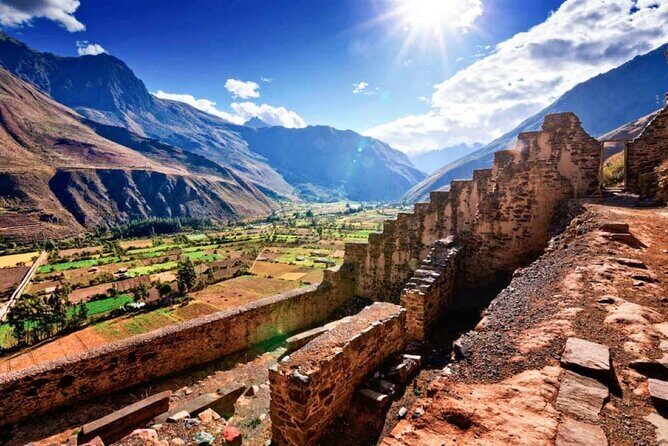
Next comes Ollantaytambo, a classic Inca town about 21 km from Urubamba at around 2,800 meters. The name traces to Ollanta, a chieftain tied to an affair story involving an Inca princess (daughter of Pachacutec). Even if you skip the romance plot, you’ll still see why people remember the place: it’s a town where architecture feels built to work with the hill it sits on.
The archaeological focus here includes one of the best-preserved areas north of Hanan Huacaypata Square. You’re looking at roughly 15 blocks of mansion walls made of tilled stone. Key structures include the Temple of the Sun, the Intihuatana, and the Baths of the Princess.
What makes this stop land: Ollantaytambo doesn’t feel like a dead-end ruin. It feels like a real town site with monumental parts. You can often walk and picture how daily life and ceremony overlapped.
Walk-smart tip: stone paths can be uneven. Take your time, especially if you’re feeling altitude fatigue later in the day. This is one of the best places to slow down because the layout rewards careful observation.
Pisac Archaeological Park and Artisan Market: Late-Day Atmosphere Pays Off
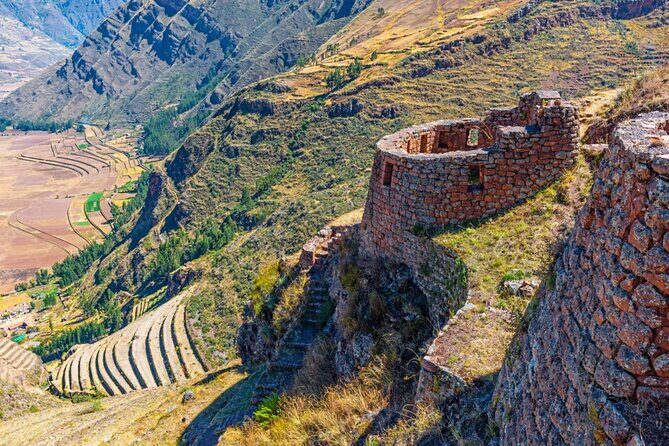
The final major stop is Pisac, about 33 km from Cusco by tarmac road. Here you get both the archaeological site and the artisan market. Pisac is described as one of the most important sites in the Cusco area, plus it has a modern town with colonial origins.
The artisan market is a big draw—so big it’s said to attract thousands of visitors. This is where you’ll likely feel the energy shift from earlier ruins and terraces toward a more “living” market scene.
There’s also a timing bonus that can make Pisac especially memorable. In a recent group experience on this route, the day ended with Pisac at sunset and the moon rising, which turned the area into more than just sights. If your schedule allows for late-day light, you’ll get a softer, more atmospheric feel for the stonework.
Practical caution: markets can be crowded. If you want to shop, set a rough budget in your mind first, then look for quality and materials rather than just the loudest stall. If you’re not shopping, give yourself a few minutes to watch people move through the market before you head into photo mode.
Price and Logistics: Is This $40 Tour a Good Deal?

The listed price is $40 per person, with pickup included and a group guide who covers Spanish/English. Lunch is included too. That’s solid value for a full-day circuit with multiple major stops.
But here’s the honest math you should do before you book: Sacred Valley tourist tickets are not included and are listed at $20 per person, and the Salt Mines ticket is $6 per person. That puts your all-in cost around $66 per person, based on the ticket amounts provided. Still, it can be worthwhile if you’re trying to see the essentials in one day.
The other logistics piece: this is a long day with moderate physical fitness expected. The tour isn’t just a bus ride with quick stops. You’ll be out and moving through archaeological areas and market terrain.
For value seekers: if you’ve only got a short time in Cusco and you want to hit Chinchero, Moray, Maras, and the big Inca towns like Ollantaytambo and Pisac, the structure is efficient. If you’re traveling slowly and want fewer transitions, you might feel better with a shorter route.
Who This Tour Fits Best (and Who Should Skip It)
This tour is best for you if you:
- Want a one-day Sacred Valley highlights circuit from Cusco
- Like guides who explain in Spanish/English and keep the day understandable
- Appreciate both craft culture (Chinchero and Pisac markets) and working processes (Maras salt production)
- Can handle about 12 hours and some walking at altitude
It may not be ideal if you:
- Want a short, low-walking day with time to relax at each stop
- Get worn down easily by long schedules and moving between locations
Also, if you’re the kind of person who enjoys learning how a place connects to daily life—farming terraces, textiles, salt making—this route is built for you.
Should You Book This Tour?
If you’re deciding today, I’d book it when you want a lot of Sacred Valley in one go and you’re okay with a full schedule. The combination of Chinchero market craft, Moray’s farming terraces, Maras’ active salt wells, and the town-scale feel of Ollantaytambo plus Pisac can make one day feel like a complete snapshot of the region.
I’d hesitate only if your priority is slow travel over packed highlights, or if you know you struggle with long days of standing and walking. For many people, though, this is a straightforward way to see the big names without having to organize the whole circuit yourself.
If you do book, do two simple things: wear layers for outdoor stops, and budget for the two extra ticket costs mentioned ($20 Sacred Valley + $6 Salt Mines). That way you’ll spend your energy where it matters—on the sights and the stories behind them.
FAQ
What’s included in the tour package?
The tour includes hotel pickup, a professional Spanish/English guide (group), lunch buffet, and group service.
What tickets do I need to pay for separately?
You’ll need to pay the Sacred Valley tourist ticket ($20 per person) and the Salt Mines ticket ($6 per person). These are not included.
How long is the tour?
The duration is listed as approximately 12 hours.
How physically demanding is it?
The experience notes that travelers should have moderate physical fitness. Expect walking and time outdoors across multiple sites.
What language will the guide use?
The guide is listed as Spanish/English (group), so you can expect explanations in those languages.
Can I cancel for a full refund?
Yes. Free cancellation is offered. You must cancel at least 24 hours before the experience’s start time for a full refund.