REVIEW · CUSCO
Q’eswachaka – Private Day Trip to the Last Inca Bridge
Book on Viator →Operated by Minka Peru Expeditions · Bookable on Viator
One bridge, one tradition, one big nerve test. This private day trip to Q’eswachaka pairs a real, living Inca-style crossing with guide-led culture and natural history learning. I also like how it adds more than just the bridge, with a visit to Rumicolqa and a stop by four high Andean lagoons. The main drawback is simple: it’s a long day, with a round trip that can feel closer to 12 hours.
You’ll leave Cusco very early (the tour shows a 4:30am start time, and pickup is described as around 6am depending on your hotel). After the drive, you get a calm stretch near the lagoons—Pomacanchi, Storage, Asnaqocha, and Pampamarca or Tungasuca—plus a quick scenic stop near the small volcano of pavilions near Yanaoca.
The value is decent for what you get: pickup, transport, a bilingual guide, breakfast and lunch are included. Just budget for the bridge entrance ticket separately, listed at 25 Soles per person, and plan to be back in Cusco around 5pm.
In This Review
- Key things to know before you go
- A very early departure from Cusco (and what you’ll feel by mid-morning)
- The four lagoons stop: why the quiet matters
- Getting to the Apurímac River: Q’eswachaka bridge context that clicks
- Crossing Q’eswachaka: the nerve part, the emotion part
- Rumicolqa after the bridge: archaeology with a practical purpose
- Timing and meals: how the included breakfast and lunch help on a long day
- Price and value: is $120 worth it for Q’eswachaka?
- What to watch for: the one drawback that matters
- Who should book (and who should skip)
- Should you book this Q’eswachaka private day trip?
- FAQ
- What time does the Q’eswachaka private day trip start?
- How long is the tour?
- How much does it cost?
- Is hotel pickup included?
- What’s included in the price?
- Is the bridge entrance ticket included?
- Do you cross the Q’eswachaka bridge?
- Where is Rumiqolqa located?
- What is the cancellation policy?
Key things to know before you go
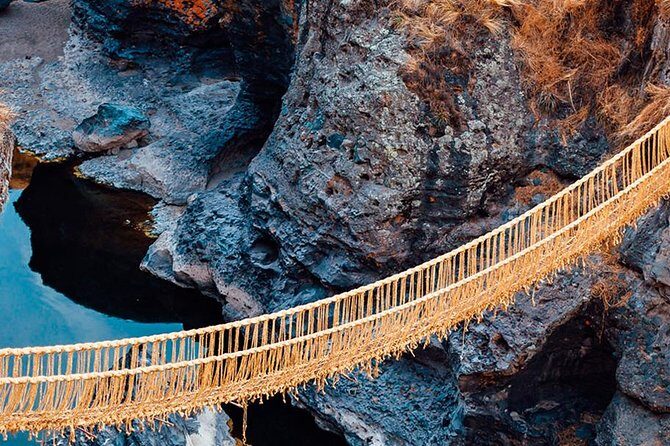
- Last Inca bridge tradition: the bridge is made from vegetable fibre (ichu) and maintained yearly by four local communities.
- You can cross: it looks doable, but the crossing takes courage and focus.
- Guide-led context, not just sightseeing: you’ll learn about culture, nature, and why an offering is made to Pachamama before renewal.
- Four lagoons + a volcano viewpoint: you stop near Pomacanchi, Storage, Asnaqocha, Pampamarca or Tungasuca, plus the small volcano of pavilions near Yanaoca.
- Rumicolqa checkpoint ruins: the site connects Tiahuanaco-Huari-era building foundations with later Inca stonework, including door-side protuberances tied to ideas about ideographic writing.
A very early departure from Cusco (and what you’ll feel by mid-morning)
This is one of those Cusco days where the schedule starts before you’re fully human. The tour is listed with a 4:30am start time, and pickup is described as around 6am; either way, you’ll be in the car early. The payoff is that you’re out of town before the day gets loud, and you spend the morning building toward the bridge moment.
You’ll spend a chunk of time traveling south-west out of Cusco before the first big stops. Once you arrive near the lagoons, the tone changes. It goes from motion to stillness, with a quiet moment built in so you can actually look instead of just snapping photos while moving.
The downside is that you’re committing to a long round trip. Even when the stops are interesting, the time on the road is real. If your energy or schedule is tight, this is the part to think about first.
You can also read our reviews of more private tours in Cusco


The four lagoons stop: why the quiet matters
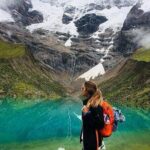
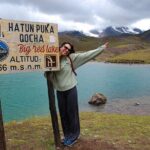
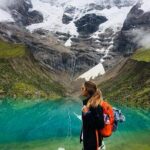
The day’s first major scenery stretch is a lagoon loop that includes Pomacanchi, Storage, Asnaqocha, and Pampamarca or Tungasuca. You’ll have time to linger, not just pass through, which matters more than you’d think. The best part of this stop is that it slows your brain down enough to register what you’re seeing—and to take in your guide’s explanation of the place.
What I like about adding lagoons early is how it frames the bridge visit. You’re not jumping straight from Cusco into archaeology mode. Instead, you’re learning the setting: high Andean water systems and local ways of living around them, shared through your guide’s natural history and culture talk.
Then you get a smaller detour: the small volcano of pavilions near the town of Yanaoca. It’s not the main event, but it helps break up the drive. Think of it as a visual reset before you head toward the Apurímac River.
Getting to the Apurímac River: Q’eswachaka bridge context that clicks
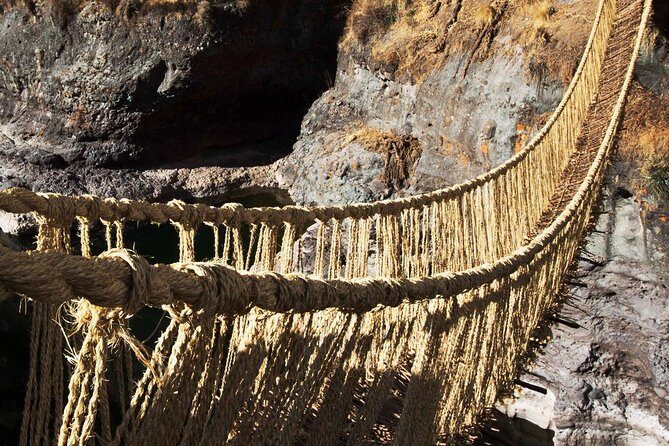
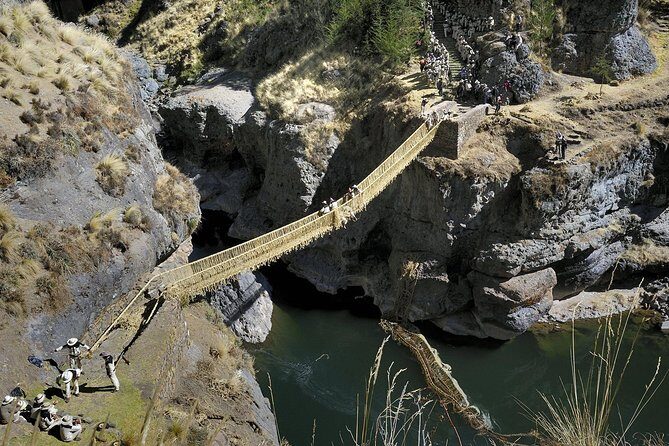
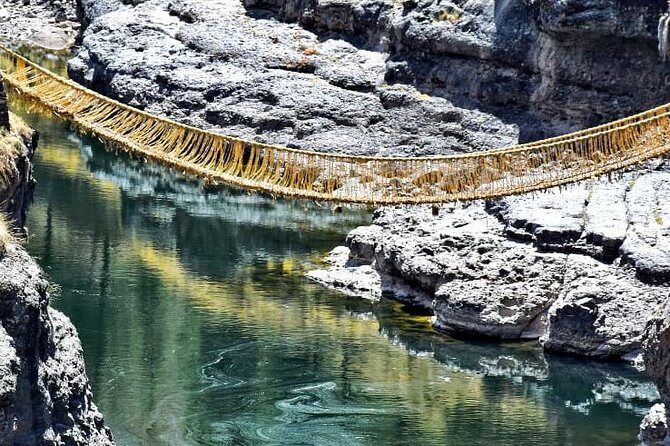
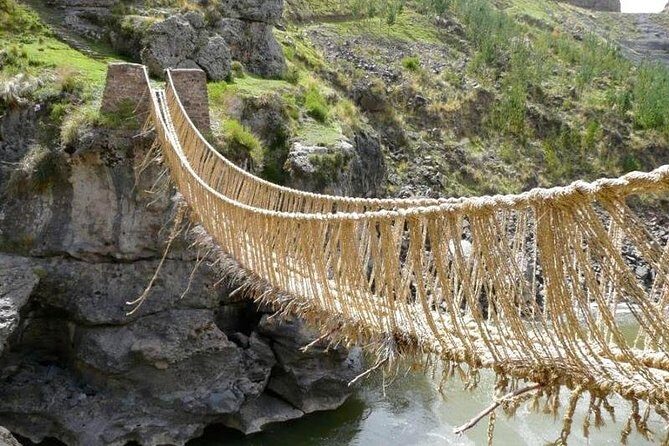
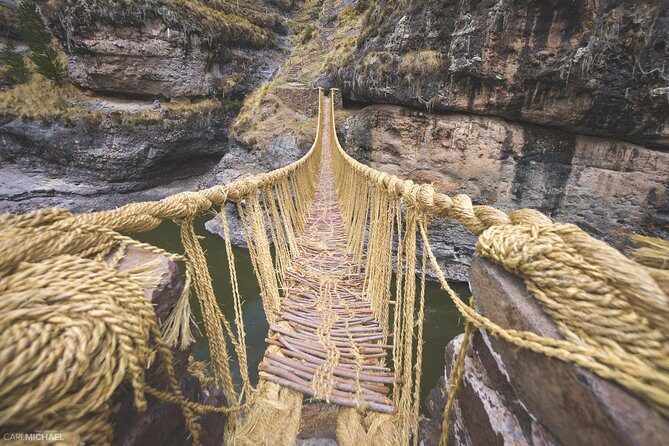
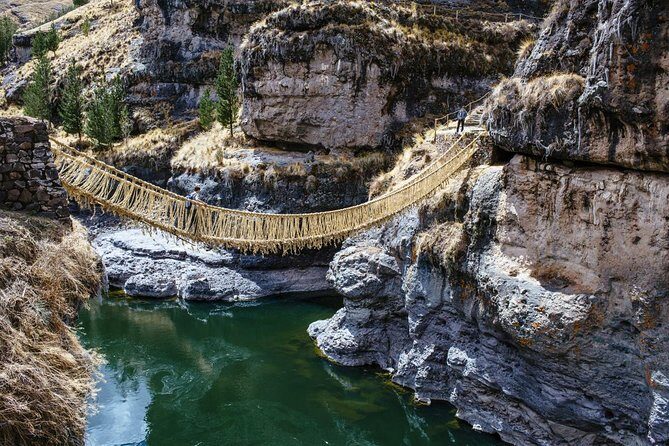
After the lagoon and volcano stops, the trip finally arrives at the Apurímac River and the Q’eswachaka hanging bridge. This bridge is made of vegetable fibre called ichu, and it sits in the district of Quehue. The key thing to know is that it isn’t a modern replica. The bridge’s existence is described as dating from the Inca period.
Here’s where the guide work pays off. Before the bridge renewal, an offering is given as a sign of respect and gratitude to Pachamama. That detail changes how you see what you’re about to do. The crossing isn’t just a thrill photo; it’s tied to a ritual rhythm that local people maintain once a year.
You’ll also learn that the bridge is renovated and maintained by people from four communities around the area. That community upkeep is the heart of why Q’eswachaka matters. A bridge like this survives because the work is shared locally, not because it’s frozen in time.
Crossing Q’eswachaka: the nerve part, the emotion part
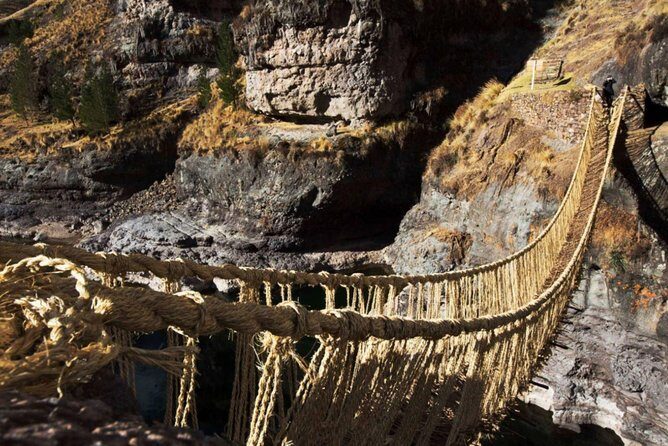
You’ll have the opportunity to cross the Inca bridge. The simple warning is also the real one: it looks easy, but it takes courage. The bridge is hanging over the Apurímac River, and the feeling is described as emotional, like Indiana Jones energy.
Even if you’re comfortable with heights, treat this crossing as a body-and-mind activity. Your job is not to rush. It’s to stay steady, listen to your guide’s direction, and move with intention. If you’re prone to panic on moving or narrow platforms, plan ahead mentally—this is the part that can make or break the experience for you.
What makes Q’eswachaka different from many “famous” sights is that you’re interacting with a living practice. You’re witnessing and participating in a tradition that still gets repaired annually by local communities. That’s the reason the bridge tends to stick in people’s minds long after the road fatigue fades.
If you get nervous, you’re not failing. You’re reacting the way the crossing is designed to make you feel. The courage piece is part of the point.
Rumicolqa after the bridge: archaeology with a practical purpose
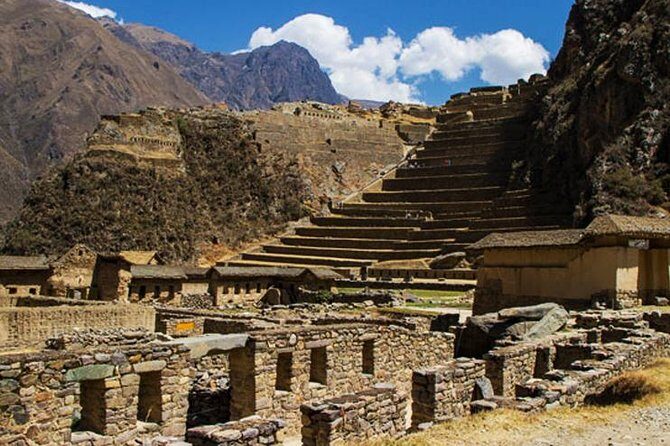
On the way back, you visit Rumiqolqa (often written Rumicolqa), an archaeological site that works like a history book with physical evidence. The site is described as being about 31 km southeast of Cusco near Piquillacta, on the edge of the Cusco-Puno highway.
Your guide explains that Rumiqolqa likely dates to the time of the Tiahuanaco-Huari civilization, and later the Incas covered it with stones carved and polished. That layering is important. It’s not just one culture repeating itself. It’s culture contact and building-on-top-of-building.
Rumiqolqa also served as a checkpoint. In other words, it wasn’t only symbolic. It had a job—helping manage movement and access through the region. That makes the site easier to visualize once you hear it explained that way, especially after the morning’s bridge story.
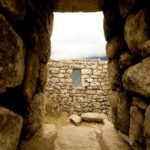
Then there’s the door detail. Stones on the inner sides of the door have mysterious protuberances that show up on Picasa and other Inca monuments. According to Victor Angles, this is a form of ideographic writing. Even if you don’t 100% buy any one theory, it’s the kind of detail your guide can help you think about, instead of just repeating facts.
You can also read our reviews of more tours and experiences in Cusco



Timing and meals: how the included breakfast and lunch help on a long day
You’re not going hungry on this one. The tour includes breakfast and lunch, plus transport and a bilingual guide. On a day that can feel like it runs from very early morning to around 5pm in Cusco, included food is more than convenience—it’s energy security.
This is also a private setup, so you’re not getting split off into a big mixed group that keeps stopping to wait for people. You’re with your group only, and your guide can keep the pacing sane across a long route.
One cost note: the bridge entrance ticket isn’t included and is listed at 25 Soles per person. Budget for that separately so there’s no surprise at the bridge.
Price and value: is $120 worth it for Q’eswachaka?
At $120 per person, this tour sits in the category where you’re paying for more than entry tickets. You’re paying for pickup from your hotel, private transport, a professional bilingual guide, and meals. Those add up fast on trips that involve a long road day, especially when the main activity is physical and needs explanation.
Where it gets very honest is the bridge entrance ticket. Since that part costs 25 PEN extra, your true total is basically $120 plus the local fee per person. Still, the rest of the package helps justify the price if you want someone to guide the meaning behind what you’re seeing.
One practical point: this tour is described as being booked on average 57 days in advance. That’s a hint to plan early, especially if you’re traveling in higher-demand weeks.
What to watch for: the one drawback that matters
The most common caution with Q’eswachaka is time. The day is described as long—about a 12-hour round trip—so you’ll want to be realistic. The bridge is worth it, but it doesn’t erase the fact that you’ll spend a lot of hours in transit.
So the real question is not whether the bridge is cool. It is. The real question is whether you can handle a full day built around an early departure and long drive.
Also, keep in mind that while you get the chance to cross, it’s not described as effortless. If you’re dealing with mobility limits or you get anxious with heights, think hard before committing.
Who should book (and who should skip)
This is a strong fit if you love history, architecture, and traditions with real-world continuity. The combo of the Q’eswachaka crossing plus Rumiqolqa checkpoint ruins makes the day feel more connected than a simple sightseeing drive.
It’s also a good choice if you like learning as you go. The guide-led natural history and culture explanations are part of the experience, not an add-on.
You might want to think twice if:
- your schedule is tight in Cusco
- you don’t enjoy long drives
- you’re not comfortable with a physical crossing that asks for courage
If you’re on the fence, it helps to remember what you’re buying: a real bridge tradition, not just a photo stop.
Should you book this Q’eswachaka private day trip?
I think it’s worth booking if you want the full Q’eswachaka experience—bridge, meaning, and extra archaeological context—with a guide who can explain the setting instead of just moving you along. The included breakfast, lunch, and private transport make the long day more tolerable, and Rumiqolqa adds a payoff for history and architecture lovers.
But if you know you struggle with long travel days, this one can feel like a slog. For those cases, the bridge may not be worth the time cost.
FAQ
What time does the Q’eswachaka private day trip start?
The tour is listed with a start time of 4:30am.
How long is the tour?
It runs about 11 hours approximately.
How much does it cost?
The price is $120.00 per person.
Is hotel pickup included?
Yes, pickup from your hotel is included.
What’s included in the price?
Included are pickup, a professional bilingual guide, lunch, breakfast, and transport.
Is the bridge entrance ticket included?
No. The entrance is listed as 25 Soles (PEN25.00) per person.
Do you cross the Q’eswachaka bridge?
You have the opportunity to cross the bridge.
Where is Rumiqolqa located?
Rumiqolqa is described as about 31 km southeast of Cusco, near Piquillacta, on the edge of the Cusco-Puno highway.
What is the cancellation policy?
Free cancellation is available. You can cancel up to 24 hours in advance for a full refund, based on local time.